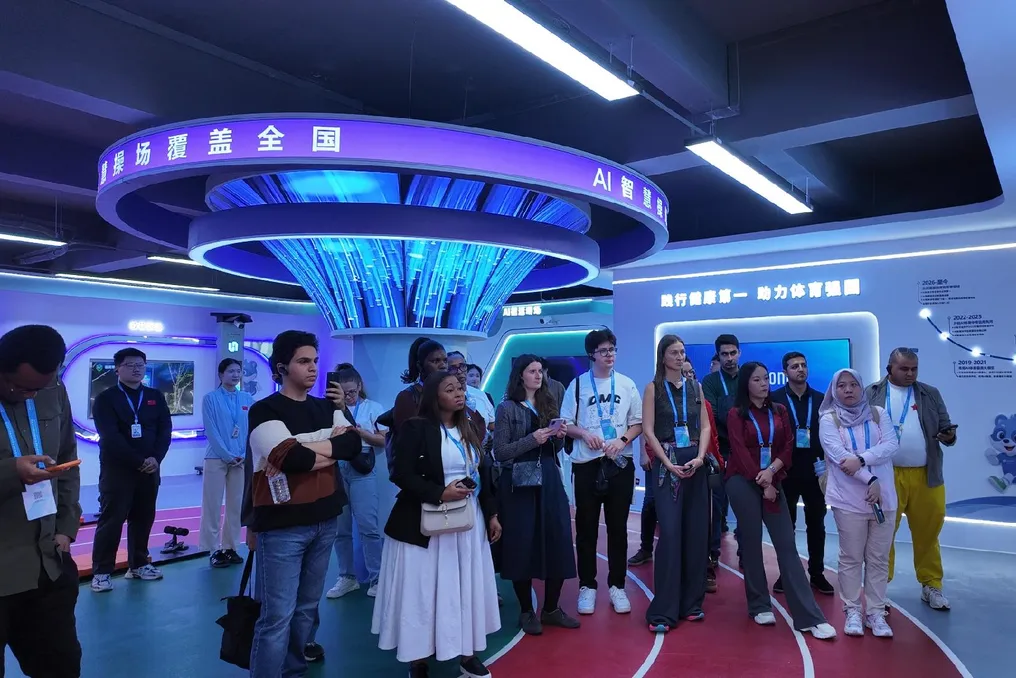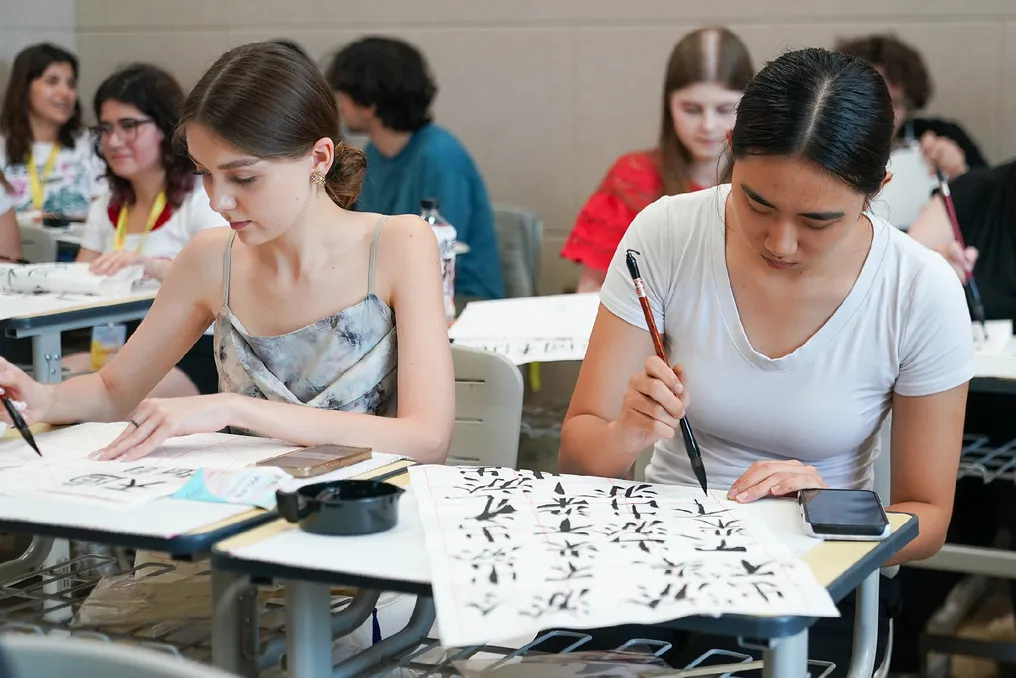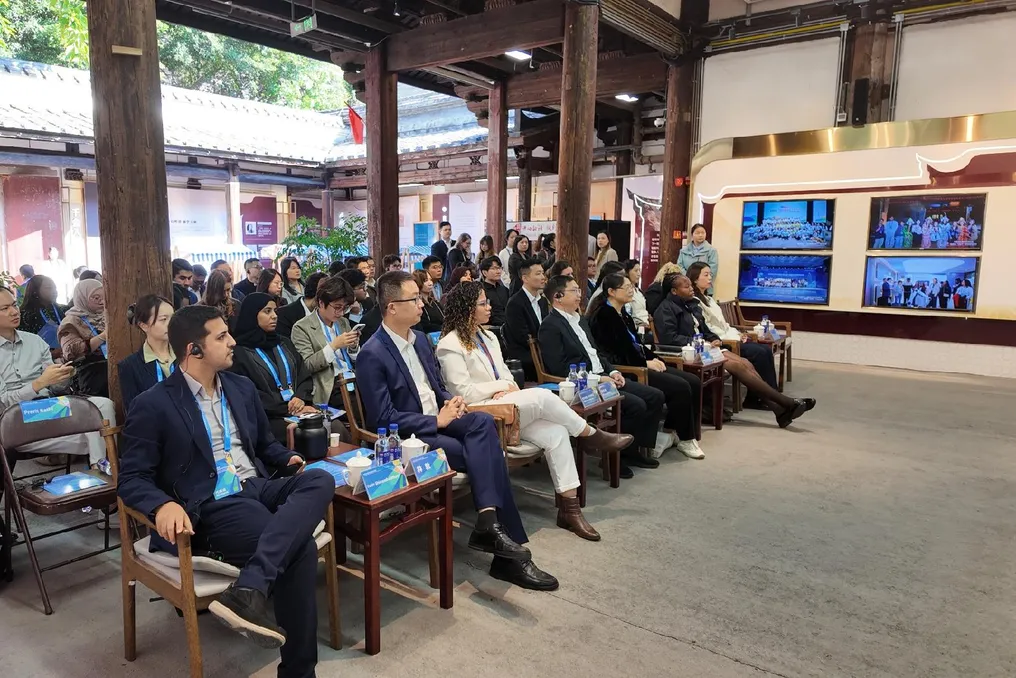
In an old building on the riverbank in Fuzhou, Fujian Province, southeastern China, young representatives from BRICS countries gathered on Tuesday to discuss ways to preserve, reinterpret, and exchange cultural heritage across borders.
The event, titled the International Youth Dialogue on the Global Civilization Initiative, took place in the historical zone of Zhucizifang Fan Harbor, where traditional buildings were preserved and adapted for modern use.
Organized by the China Center for International Youth Exchange and hosted by the Fuzhou Youth Federation, this event aimed to promote intercultural understanding and encourage the exchange of ideas among youth from different countries regarding the preservation of traditional culture and the search for new forms of cultural expression using digital technologies.
At the event, Zhang Afeng, Vice President of the Fuzhou Youth Federation, emphasized the significance of the Global Civilization Initiative (GCI) for youth interaction. This initiative, proposed by China in March 2023, calls for respect for the diversity of civilizations, the promotion of common human values, recognition of the importance of civilizational inheritance and innovation, as well as strengthening international exchange and cooperation.
Zhang noted that Fujian maintains close ties with BRICS countries, and cooperation extends beyond trade to include areas such as healthcare, education, maritime, and digital economy. He added that in 2025, trade between Fujian and BRICS countries will account for nearly one-fifth of the province's total foreign trade volume.
He also stated that the Fuzhou Youth Federation will continue to create platforms for exchange between Chinese and foreign youth, encouraging them to use technology as a bridge and civilization as a link to deepen mutual understanding and achieve common development.
Dung Lin, Associate Professor at Fujian Polytechnic Normal University, introduced the young participants to the history and cultural traditions of Fujian, including folk songs and traditional wood carving. The subsequent discussion focused on two issues: how youth can pass on traditional culture and integrate it into modern life, and how digital technologies can open up new opportunities for cultural expression.
Participants shared examples of using digital supply chains to present traditional tea culture to modern consumers, as well as applying digital avatars and artificial intelligence to increase the accessibility and interactivity of traditional lacquerware. Others discussed the potential of generative AI and augmented reality in lowering barriers to cultural participation and providing opportunities for people from different social strata to engage in creativity.
The discussions demonstrated that youth can act not only as preservers of traditional culture but also as drivers of its renewal. Through technology, creative approaches, and intercultural cooperation, they are capable of giving cultural heritage new forms of expression and making it more relevant to contemporary audiences.
Cultural exchange also extended beyond the venue of the discussions. The day before, young delegates visited the Yantai Hill Historical and Cultural District, known for its blend of Chinese and Western architectural styles. There, they learned about efforts to preserve and renew historic buildings, transmit architectural heritage, and integrate cultural tourism into urban development.
Marwan Elsafty, CEO of Grecem, a technology firm from Egypt, told CGTN that cultural exchange helps people from different countries find common ground despite differences in thinking. He stressed: 'We have some differences, so we need to find the golden mean. How can we find this golden mean? Simply through cultural exchange.'
For Anastasia Semenova, CEO of the Russian video technology company ViSaver LLC, the exchange is important because people living in their own country may not fully understand how others perceive the same events, opportunities, or technologies. She noted: 'When we constantly live in one country, in our own country, although it is our homeland and beloved, we still do not know exactly how the same things, the same events, the same opportunities, technologies are perceived in other countries, how people in other countries think about the same things.'
Siska Pebiana, a researcher from Indonesia's National Research and Innovation Agency (BRIN), stated that studying different cultures broadens youth horizons and helps them build friendships across borders. She added that an open mind and understanding of different cultural characteristics facilitate communication with people from other countries.
From exploring historical districts to exchanging views on technology and cultural innovations, these events not only reflected the GCI's emphasis on dialogue and mutual learning between civilizations but also highlighted the role youth can play in maintaining cultural heritage and finding new ways to disseminate it across borders.