Unitree opens subsidiary in Tianjin for prototyping inspection and logistics robots
Read more
Pandaily
pandaily.com

Unitree opens subsidiary in Tianjin for prototyping inspection and logistics robots

A subsidiary of Unitree Robotics began its operations on November 7th in the Economic and Technological Development Zone of Tianjin. This was reported by the official account Tianjin Release, with information relayed to Chinese media on November 9th. The official English name of this subsidiary has not been confirmed, so it is currently referred to as a fully owned Unitree division in Tianjin.

The facility is located in a science and technology industrial park, occupying an area of about 4,000 square meters in a four-story building. It is situated within 8 kilometers of the Binhai high-speed railway station and the Jinbin expressway entrance. According to available data, work commenced less than three months after business registration.

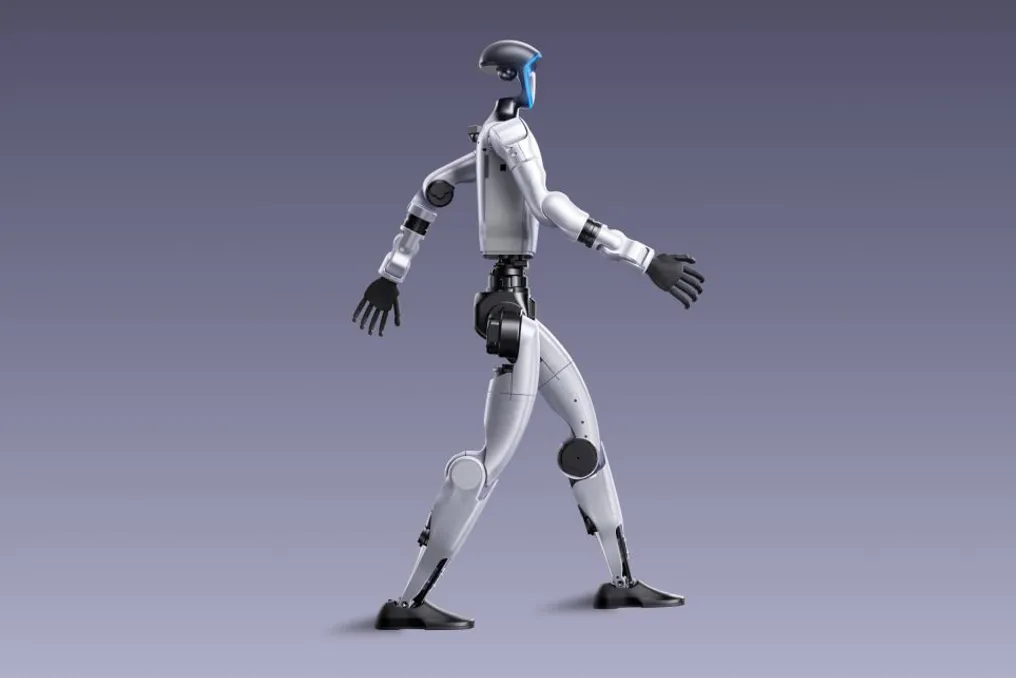
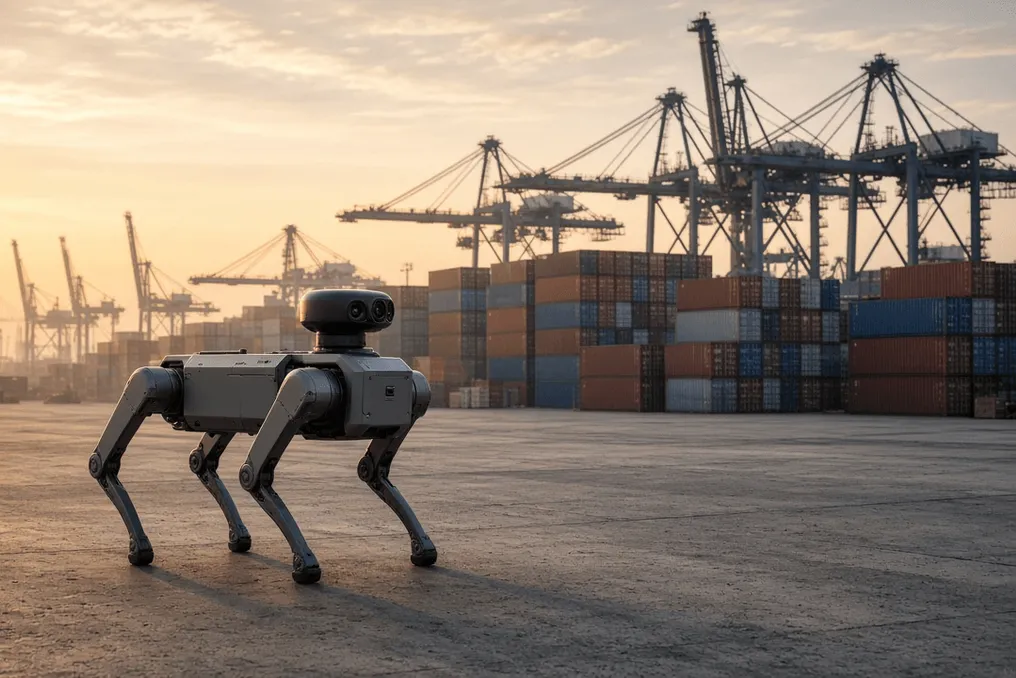
The initial tasks of this division include developing prototypes and debugging robots for inspecting energy systems, as well as robots for sorting goods in logistics. Furthermore, this division will conduct joint research and commercialization with major state-owned enterprises, such as the national pipeline operator and the Port of Tianjin, in areas including container control, intelligent patrolling, and security monitoring. The reports do not specify robot models, whether they are based on existing Unitree quadruped or humanoid models, nor do they provide a prototype creation timeline.

Chen Li, a co-founder of Unitree, told local media that Tianjin was chosen due to its port, which facilitates exports, and its wide range of industrial applications. These reports describe this move as Unitree's first presence in Tianjin and the company's eighth city in China.

Chinese media tracking company registrations note that Unitree has established approximately eight subsidiaries in two years. This process began in late 2024 with divisions in Shanghai and Beijing, followed by Shenzhen, Ningbo, and Chongqing. In the current year, divisions have been opened in Hangzhou, Shanghai, and Tianjin, with the most recent being in Chengdu. It should be noted that this is an incomplete count based on business registration data. Media outlets assign various functions to these locations: in Beijing and Shanghai—a liaison with policy and advanced research; in Ningbo—a planned manufacturing base, which is the hometown of founder Wang Xinsing; in Chongqing—a western operations center; and in Chengdu—a planned pilot production base, a hub for film, robotics, and education, as well as a scene innovation and data collection center. These roles are based on media reports and hiring announcements, not official company statements.

Similar stories

Unitree and Star Plus Legend Unveil Limited Edition UNI-DOGGIE Robot Priced at 43,900 Yuan
Read more
pandaily.com

Unitree and Star Plus Legend Unveil Limited Edition UNI-DOGGIE Robot Priced at 43,900 Yuan

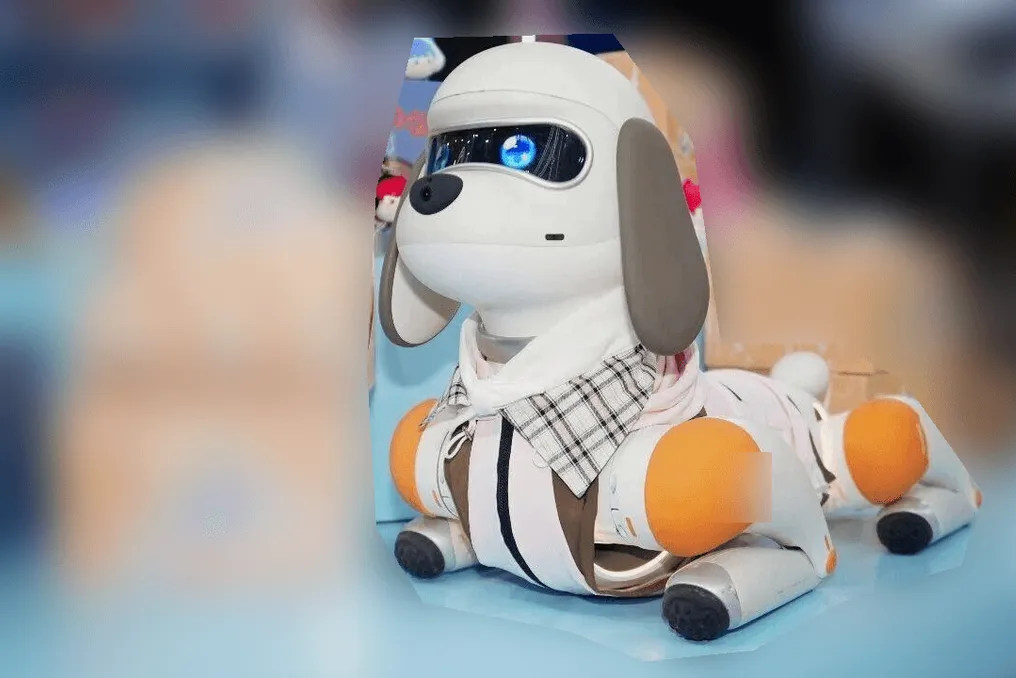
Unitree Robotics, in collaboration with Star Plus Legend, has released the collectible consumer robot dog UNI-DOGGIE, priced at 43,900 yuan. The product presentation took place on November 6th at the Ninth China International Import Expo in Shanghai. According to information obtained from Jiemian News via Sina and IT Home, the global production limit is set at 2,000 units.

The partners position this machine as a combination of a quadruped robot, character-based design, and a collectible consumer item. Promotional materials emphasize social use, interaction, and companionship rather than cargo transport or industrial inspection. The companies themselves state that UNI-DOGGIE is Unitree's first collectible robot dog for consumers.

The physical specifications of UNI-DOGGIE are as follows: it measures 72 by 37 by 71 centimeters when standing and weighs approximately 19 kilograms. Its locomotion system is equipped with 12 aluminum alloy joint motors, and the stated maximum speed reaches two meters per second. According to published specifications, the robot is capable of overcoming steps up to 16 centimeters high and inclines up to 40 degrees, as well as moving across tiled floors, carpets, flat surfaces, and shallow grass. It is important to note that these figures are supplier specifications, not results from independent testing.

Interaction functionalities include running, jumping, handstands, dancing, lion dance gait, shaking hands, and heart-shaped gestures. The robot is equipped with a camera in its snout, allowing it to take photos and videos alongside the user. Furthermore, the product is advertised with features such as automatic leash-free following, 4G network application control, and over-the-air software updates.

According to launch reports, distributor ADATA acquired 1,000 units. This purchase volume by the distributor accounts for half of the announced limited run, but this does not equate to 1,000 confirmed sales to individual consumers. Reports lack data on retail sales or a detailed supply schedule.

The potential applications for the robot range from family interaction and outdoor walks to participation in branded performances and parent-child engagement. Thus, the launch tests a consumer offering focused on entertainment and presentation, as well as mobility. However, the published launch information does not specify how reliably the robot performs these functions in a typical home environment.

InSpatio Opens Simulation-Based Robot Data Center in Hangzhou to Process Millions of Hours Monthly
Read more
pandaily.com

InSpatio Opens Simulation-Based Robot Data Center in Hangzhou to Process Millions of Hours Monthly

InSpatio, a startup founded in 2025 by SenseTime and specializing in spatial intelligence models, opened what it calls the first simulation-based embodied AI data collection center in China in Hangzhou on October 29. This center is aimed at producing one million hours of data monthly, which equates to approximately 100,000 hours per day.

According to InSpatio, robots lack not only data volume but also diversity. For instance, a robot can reliably grasp an object on a fixed shelf, but its efficiency decreases if the shelf rotates, the target object is obscured by another row of drinks, or the robot has to reach from another side.

Data from the Chinese Academy of Information and Communications Technology indicates that over 70 robot training arenas were operational in China by the end of June, with plans for another 40. However, many of these focus on simple tasks such as folding clothes and cleaning tables. Any change in layout requires rebooking the venue and operators, leading to increased costs.

InSpatio's approach changes the calculation formula from 'people multiplied by hours' to 'environment configurations multiplied by parallel computing.' The system starts with a small number of demonstrations performed by real robots or via teleoperation, and then combines motion planning, policy runs, and automated physics checks to generate closed trajectories in hundreds of parallel environments. These trajectories are accompanied by synchronized RGB, depth, segmentation, 6D pose, and action labels.

Scene assets are sourced from two channels. One channel utilizes a partnership with Hesai's Kosmo 3D world engine, which reportedly can scan a 100 square meter room in about 15 minutes with millimeter-level 3DGS reconstruction. InSpatio then segments this static scan into individual objects with defined physical properties. The second channel uses InSpatio's proprietary world simulator, Topos Pro, which converts single images, multiple images, video, LiDAR data, or aerial photography into object-level scenes where the table, chair, and equipment properties, including collision properties, can be selected, replaced, and assigned.

Scene processing involves separating target objects into individual instances, filling in hidden geometry and restoring the background, as well as calibrating mass, center of mass, and friction for each task. The company also defines three levels of service: L1 for navigation, L2 for dexterous grasping with millimeter-level geometry and dense occlusion, and L3 for contact and articulated dynamics, such as opening drawers. It is claimed that the advantage of simulation increases at higher levels, although final policies are still verified on real robots.

Unitree's first report after IPO shows nearly 70% growth in quarterly revenue
Read more
technode.com

Unitree's first report after IPO shows nearly 70% growth in quarterly revenue

Chinese robotics manufacturer Unitree has released its first quarterly report following its listing on the Shanghai STAR market. According to the report, third-quarter revenue reached 665 million yuan, which is 69.93% higher compared to the same period last year. Net profit attributable to shareholders amounted to 113 million yuan.

Over the first nine months, the company's operations showed significant growth: revenue increased by 55.71% to reach 1.817 billion yuan, and net profit attributable to shareholders grew by 270.54%, totaling 387 million yuan. Unitree explained that the increase in profit was partly due to stock-based payments recorded the previous year.

Excluding irregular expenses, net profit for the nine months decreased by 18.78% to 349 million yuan. The company is actively expanding beyond hardware, implementing embodied AI models and applications. Over the first nine months, research and development expenses reached 263 million yuan, representing a 191.48% increase and equivalent to 14.47% of total revenue.

Popular