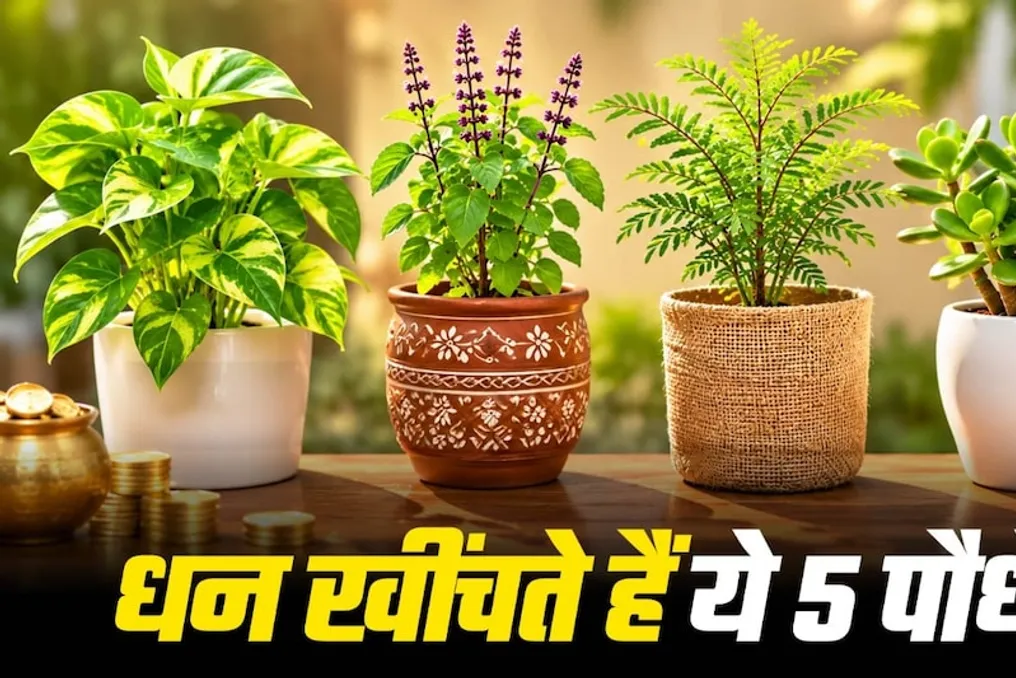
According to Vastu, five plants attract wealth and improve luck in the home
Read more
Aaj Tak
www.aajtak.in

According to Vastu, five plants attract wealth and improve luck in the home

Everyone wishes for their home to never lack money, for the blessings of Mother Lakshmi to remain with the family, and for happiness and prosperity to reign in the household. Therefore, people use various methods, from worship to different Vastu practices. However, perhaps you do not know that some plants planted in the home are also associated with prosperity and wealth?

Vastu Shastra mentions five such plants that are considered extremely auspicious for the home. There is a belief that planting them in the correct direction brings positive energy into the house. The following discusses these five plants and where they should be placed in the dwelling.

Auspicious Plants According to Vastu

1. Money Plant

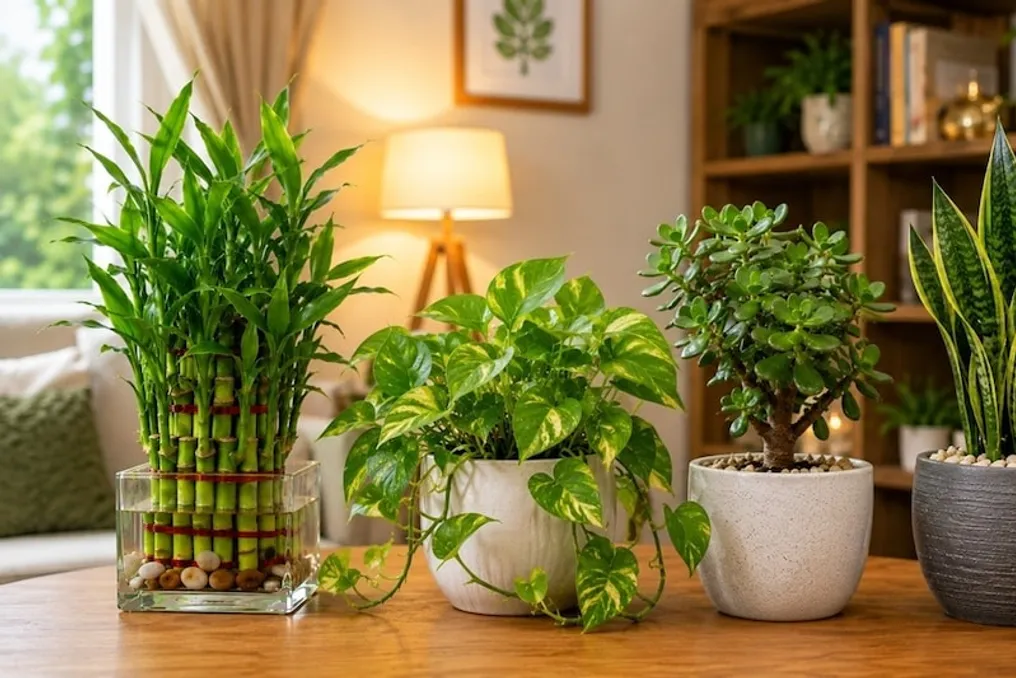
The Money Plant is considered a symbol of well-being and financial prosperity in the home. According to Vastu, it is most favorable to place it in the southeast direction of the house. It is believed that placing the Money Plant in this direction promotes good opportunities related to money. It is important to always keep its shoots in a green state: water regularly and remove dried leaves.

2. Tulsi Plant

In Hinduism, the Tulsi plant is considered very sacred. Its presence in the home brings good luck. According to religious beliefs, a home where the Tulsi plant remains green maintains peace, tranquility, and positivity. It should be placed in the yard or on the balcony in a spot that receives good sunlight. In many homes, there is a tradition of lighting a lamp next to the Tulsi daily.

3. Shami Plant

The Shami plant is also considered very auspicious in Hinduism. It is associated with the god Shiva and the god Shani. According to belief, having the Shami plant in the home eliminates negativity and supports prosperity. According to Vastu, it is best to plant it in the north or east direction of the house.

4. Jade Plant

The Jade Plant, also called Crassula or Money Tree, is associated with wealth and progress due to its thick green leaves. According to Vastu, it is favorable to keep it near the main entrance of the house. It should be placed where soft sunlight falls. It is believed that this plant brings happiness and well-being into the home.

5. Bamboo Plant

The lucky bamboo is considered beneficial for the home. It is a symbol of peace, progress, and luck. This plant holds special significance in Feng Shui as well. According to belief, placing it in a home or office creates a favorable atmosphere. It should be placed in a spot with sufficient light.
Similar stories

Vastu Consultation: 8 Types of Plants That Can Bring Financial Problems Despite Their Beauty
Read more
www.aajtak.in

Vastu Consultation: 8 Types of Plants That Can Bring Financial Problems Despite Their Beauty

Although placing plants in the home is a good way to make living space more beautiful and pleasant, as greenery improves aesthetics and creates a sense of natural freshness, Vastu Shastra recommends considering not only the appearance of the plants but also their growth pattern and associated traditional beliefs.

According to Vastu principles, some plants are associated with negative energy, stagnation, and family discord. Therefore, it is advised to avoid planting thorny, dry plants, and certain trees inside the house.

Cactus: Although cacti are popular for home decoration due to their ability to stay green with minimal care, Vastu beliefs associate their sharp spines with stress, disagreements, and bitterness in relationships. For this reason, it is not recommended to keep them in the living room or bedroom. If you like cacti, it is better to place them on a balcony or roof.

Bonsai: Bonsai holds a special place in decor due to its small and attractive form, achieved by controlling the tree's natural growth. However, according to some Vastu beliefs, bonsai is considered a symbol of stagnation and obstacles to life progress precisely because of this. Preference should be given to naturally growing plants instead of these.

Peepal (Imli): The Peepal is known for its dense leaves and sour fruits. In some traditional Vastu beliefs, it is not recommended to plant it too close to the house, as its presence may negatively affect the atmosphere of the dwelling.

Dry and Withered Plants: Although wilting or yellowing of houseplants can be common, constantly ignoring this process is unacceptable. Vastu associates dry and dead plants with stagnant energy and negativity. Furthermore, such plants detract from the appearance of the home. Regular pruning, removal of dry leaves, and watering as needed are necessary. If a plant has completely dried up and has no chance of revival, it is best to remove it.

Cotton: The cotton bush is easily recognizable by its white fluff and is used for various purposes, including textile production. Nevertheless, some traditional beliefs advise against planting cotton indoors, as in these beliefs, it is viewed as a symbol of mourning and misfortune.

Henna Leaves: Henna is used to create patterns on hands and dye hair, possessing traditional and cultural significance. Despite this, some Vastu beliefs caution against placing henna indoors, believing that the traditions associated with it are unfavorable for the home environment.

Acacia (Babool): Acacia is known for its thorns and strong branches. According to some Vastu beliefs, thorny trees should not be planted inside the house or too close to the main entrance, as they are associated with tension and relationship obstacles. However, acacia is useful in its natural environment, so when deciding to plant it near the house, its height, spread, and potential thorn-related problems should be taken into account.

Mango Tree (Madar): The mango tree is known for its unique flowers and milky sap. Some traditional beliefs advise against planting it indoors. However, the most important aspect is safety: the milky sap of the mango tree can cause skin and eye irritation. Therefore, if there are small children or pets in the house, it should be kept out of their reach. Avoiding indoor planting is also a good option from a safety perspective.

How to Grow Plants in Glass Bottles According to Vastu Principles: Plants for Attracting Prosperity
Read more
www.aajtak.in

How to Grow Plants in Glass Bottles According to Vastu Principles: Plants for Attracting Prosperity

The popularity of using plants to decorate living spaces is rapidly growing. Notably, some types of plants do not require soil and large pots to grow; they can be easily cultivated in glass jars or bottles. These plants allow a home to become green and beautiful even in small spaces. Furthermore, in Vastu teachings, some plants are associated with luck, prosperity, and positivity. According to beliefs, placing such plants in the house in the correct direction helps create a pleasant atmosphere.

Let's look at three types of plants that can be grown in water and used to decorate your home.

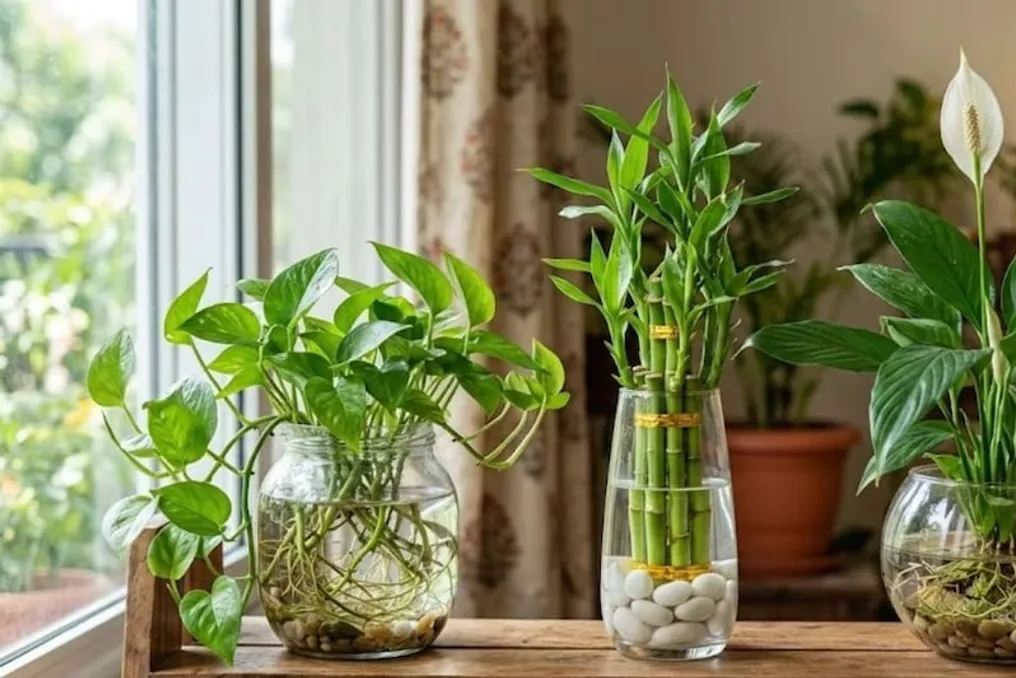
The Money Plant is a popular choice for homes. Its fast-growing leaves and stems enhance the appearance of the dwelling. In Vastu and Feng Shui, it is considered a symbol of wealth, prosperity, and success. It is believed that having a green money plant in the house supports positive energy and brings happiness.

Growing this plant in water is quite simple: place a healthy cutting of the money plant in a jar of clean water. It is important that the node of the plant is in the water, which allows the roots to develop. According to Vastu, the southeast direction is considered favorable for the money plant. To maintain the plant's health, regularly change the water and remove yellow or dry leaves. The financial benefits mentioned in Vastu are based on religious beliefs.

Lucky Bamboo is very popular for decorating homes and offices due to its attractive stalks and green leaves. In Feng Shui, it is associated with luck, success, and abundance. It is believed that its presence creates a positive environment and motivates development in life.

Lucky Bamboo can also be grown in water instead of soil. To do this, pour clean water into a tall glass container and place the plant's roots in it. Small decorative stones can be added to the container to support the plant. According to Vastu and Feng Shui beliefs, it is best placed in the east or northeast. When caring for it, you should monitor the water quality and change it regularly, as well as clean the container. The plant should be in a place with sufficient light, but without direct intense sun.

The Peony Lily is known for its bright green leaves and white flowers. This plant can add beauty to the living room, study area, or a well-lit spot. In Vastu, it is associated with peace, purity, and harmony.

Peony Lilies can also be grown in water, but first, the roots must be carefully cleaned of soil. Then, the roots are placed in water. Care must be taken to ensure that the leaves are not submerged in the water and that the plant receives enough diffused light. According to Vastu, it is favorable to place the peony lily in the north or east. However, one cannot rely solely on direction; the plant's needs for light, temperature, and watering must also be considered. Additionally, the peony lily should be kept away from pets and small children, as it can be harmful if ingested.

The method of growing plants in water can be useful for residents of small apartments and studios. However, constant care is required to keep the plants in a green state.

  • Use clean containers: Using a glass jar or bottle makes it easier to observe the condition of the roots.
  • Change water regularly: Change the water immediately if it becomes dirty or starts to smell unpleasant.
  • Monitor lighting: Provide the plants with enough light according to their needs. Direct intense sunlight can damage the leaves of many houseplants.
  • Check roots: If the roots start to turn black or rot, remove the damaged parts and clean the container.
  • Understand plant needs: Not all plants grow equally well in water. Choosing the right plant is crucial.

Do Water Plants Really Bring Wealth and Happiness?

In Vastu and Feng Shui, plants such as the Money Plant, Lucky Bamboo, and Peony Lily are associated with positivity and prosperity. Their real benefit lies in improving the aesthetics of the home, the feeling of connection with nature, and maintaining greenery around.

Five Vastu Tips to Increase Prosperity from Dhanteras to Diwali
Read more
www.aajtak.in

Five Vastu Tips to Increase Prosperity from Dhanteras to Diwali

Diwali is considered a symbol of happiness, light, and prosperity. During this festival, people not only tidy up their homes but also decorate them with lanterns, rangoli, and flowers. According to religious beliefs, worshipping the goddesses Lakshmi and Ganesha during Diwali brings wealth into the home. Furthermore, within the framework of Vastu Shastra, it is recommended to pay attention to certain special moments from Dhanteras to Bhai Dooj.

This year, Diwali will be celebrated on November 8, 2026, on a Sunday, when the goddesses Lakshmi and Ganesha will be worshipped. Preparations for Dhanteras, small Diwali, and other festivals begin before Diwali. If you also want the atmosphere in your home to remain positive and joyful during the holidays, you can apply these Vastu tips.

The five-day festival, starting from Dhanteras to Diwali, includes the worship of Lord Dhanvantari, Goddess Lakshmi, and Lord Kubera. According to Vastu beliefs, it is considered auspicious to keep the main entrance of the house clean and decorated with flowers or a toran. There is a tradition of buying gold and silver jewelry, utensils, or other useful items on Dhanteras. After purchasing, the items should be placed in a clean place, and a place for storing money and a safe should be organized in the house. It is believed that this creates an atmosphere of prosperity in the home.

Small Diwali, or Naraka Chaturdashi, holds special significance in terms of house cleaning. On this day, dust and dirt accumulated in corners, near windows, and doors of the house must be removed. According to Vastu beliefs, the northeastern corner of the house, known as Ishan Kon, should be clean and organized. In the evening, it is recommended to light lamps in the house, and creating a rangoli at the main entrance is also considered auspicious. One should avoid accumulating unnecessary things and clutter in the house, as this allows the house to look clean and beautiful during the festival.

During Diwali, the worship of Goddess Lakshmi and Ganesha is particularly important. The place of worship must be thoroughly cleaned, then the idols of the deities should be installed, and lamps, flowers, sweets, and other items for worship should be prepared. According to Vastu Shastra, placing the place of worship in the northeastern direction of the house is considered auspicious. However, when organizing the worship, one should consider the available space in the house and family traditions. After the evening worship, it is recommended to light lights at the main entrance, windows, and balcony. Maintaining order in the cupboard or safe for storing money is also advised. Keeping the house clean and adequately lit can enhance the preparation for the festival.

After Diwali, Govardhan Puja is celebrated. On this day, there is a tradition of worshipping Lord Krishna and Mount Govardhan. Many homes prepare Annakoot and offer it to the gods. According to Vastu beliefs, on this day, the kitchen should be cleaned and grains and food items organized. Special attention should be paid to hygiene while cooking. If there are plants in the house, including Tulsi, they should be taken care of.

Bhai Dooj is an important part of the Diwali festival. On this day, sisters tie a tilak on their brothers, wishing them longevity and prosperity. Family members spend time together and share joy. According to Vastu beliefs, it is important to maintain cleanliness in the house and preserve a loving atmosphere among family members. On this day, one should keep the house decorations tidy and clean the place of worship. The main message of this festival is to maintain love, respect, and trust in the relationship between brother and sister.

When decorating the house during Diwali, several general points should be considered. Broken and useless items must be removed from the house. The place of worship should be clean, and lamps should be lit in places where there is no risk of fire. Also, the wires of electric garlands and other decorative lights should be checked.

Popular