Huge jaw with teeth found on the banks of the Narmada River; locals begin worshipping it as a deity
Read more
Aaj Tak
www.aajtak.in

Huge jaw with teeth found on the banks of the Narmada River; locals begin worshipping it as a deity

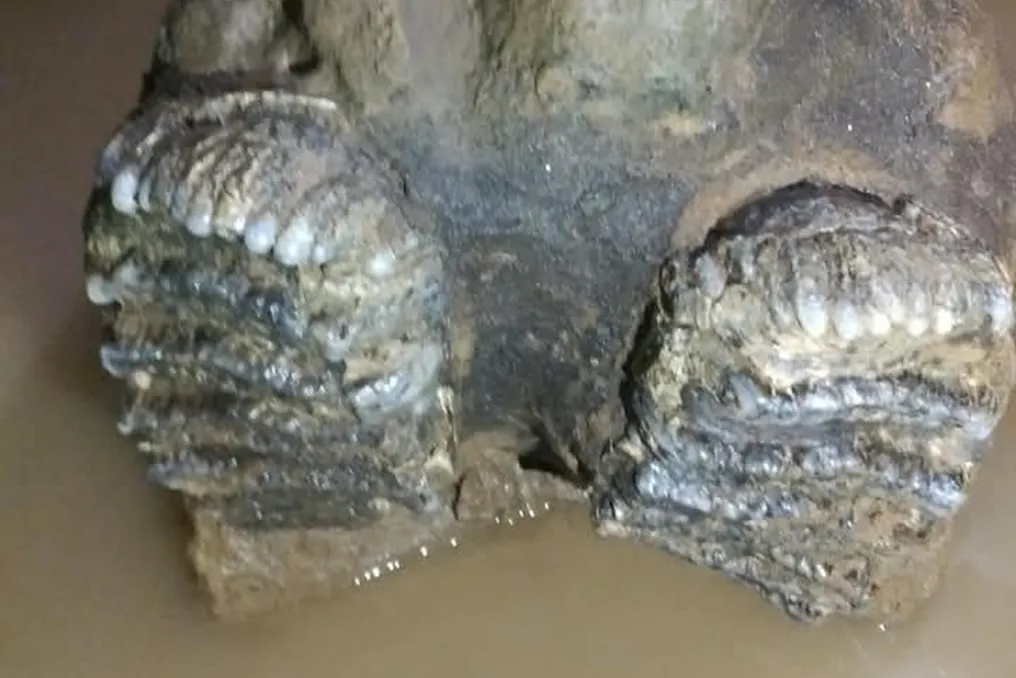
In the village of Patai, located in the Raisen district of Madhya Pradesh state, a large and mysterious structure was discovered on the banks of the Narmada River. Children playing in the mud noticed a strange stone with teeth that looked like the jaw of a large animal.

Local residents suggest that it is the jaw of an ancient elephant, but the final determination of its nature is only possible after scientific research. The discovery occurred when children were digging in the ground on the banks of the Narmada River in the village of Patai.

The villagers were astonished upon seeing this structure. Some of them began to worship it, considering it an image of an unknown deity. Residents shared photos and videos and appealed to experts to conduct a scientific examination.

After receiving information about this potential fossil, contact was made with collector Rohit Sisonia from Raisen. He reported by phone that the find site is under protection, and contact is being maintained with scientists to determine the true nature of the object.

At the local level, there is a presumption that it is the jaw of an ancient elephant, but no expert or scientific institution has confirmed this version yet. It is worth noting that the Narmada valley region is considered important in terms of remains and fossils of prehistoric creatures, as dinosaur eggs and fossils of other ancient animals have been found there before.

Thus, the scientific study of the structure found in Patai village may provide new information about the archaeological and natural history of the region. Currently, the administration is preparing to ensure the preservation of the site and conduct an inspection with the participation of specialists. Only after scientific tests will it become clear what creature this structure belongs to and how ancient it is.

Similar stories

Brazilian fossils from 115 million years ago may show traces of dinosaur blood
Read more
super.abril.com.br

Brazilian fossils from 115 million years ago may show traces of dinosaur blood

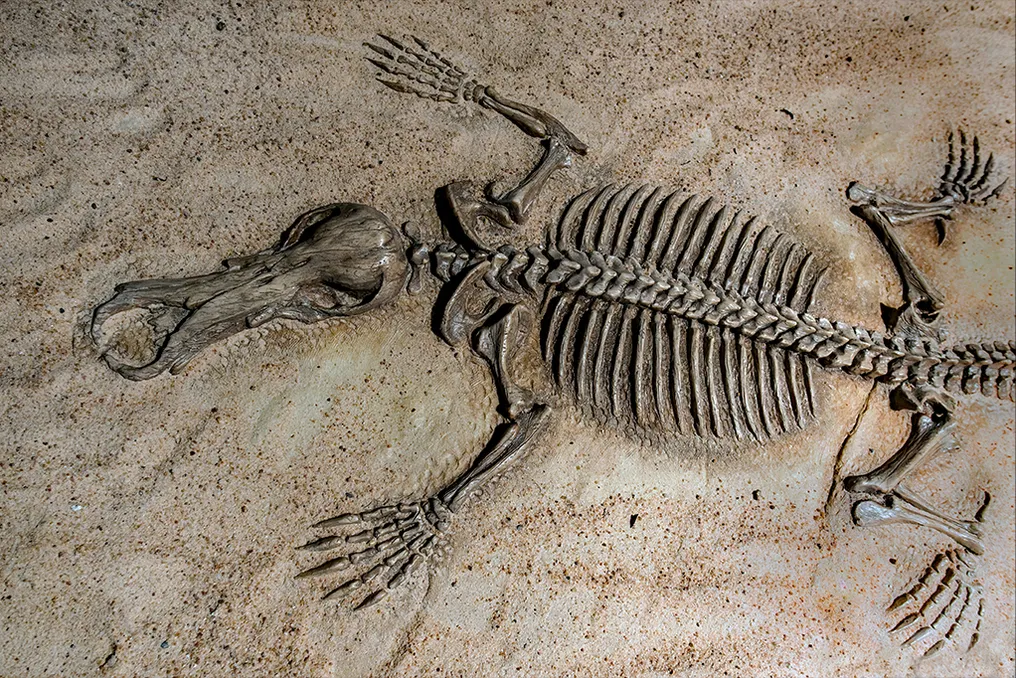
Evidence that dinosaurs inhabited Earth is abundant, ranging from massive bones and serrated teeth to feather impressions, fossilized eggs, and petrified feces. However, a crucial element for understanding the life of these animals—blood—is rarely found in fossil records.

For decades, scientists have searched for blood traces in dinosaur fossils. Such investigations require rigorous exclusion of any possibility of contamination by blood from other species or the presence of structures that merely mimic blood cells.

Recently, a study involving the Regional University of Cariri (URCA) and the Federal University of Rio de Janeiro (UFRJ) reported the identification of what appear to be fossilized red blood cells in a Brazilian dinosaur dated to 115 million years ago. The analyzed material comes from a leg bone of an Aratasaurus museunacionali, which inhabited the Chapada do Araripe region, on the border between Ceará, Pernambuco, and Piauí.

According to the researchers, this dinosaur was about three meters long and weighed approximately 34 kg. After its death, the body sank into an aquatic environment, where a layer of microorganisms grew over the carcass, burying it and allowing the preservation of its remains.

Paleontologist Alexander Kellner, director of the National Museum of UFRJ and co-author of the article published in the Proceedings of the National Academy of Sciences, stated that finding biochemical traces linked to biological components in a fossil older than 100 million years helps expand knowledge about what can be preserved over time. He emphasized that this offers a chance to investigate the history of these animals beyond their anatomical and skeletal characteristics.

Under the microscope, the team detected several microscopic structures located within vascular channels, which previously functioned as conduits for blood vessels in the bone. The morphology, size, and location of these structures were consistent with red blood cells.

This hypothesis gained greater support after chemical tests confirmed the presence of heme, a compound inherent to hemoglobin, the protein responsible for oxygen transport in blood.

Kliti Grice, the research author, explained to Live Science that the red blood cell-like structures were mineralized with hausmannite, a manganese oxide mineral (Mn3O4). Mineralization is the process by which fragile biological structures, which degrade easily, are replaced by more durable substances, allowing for the formation of fossils.

The researchers believe that this early mineralization contributed to stabilizing or replicating microscopic biological structures before they were completely destroyed, and that aspects of the associated chemistry survived, albeit modified.

However, not all experts agree that this discovery truly represents traces of blood. There is a reason for the skepticism: blood cells do not fossilize easily. Without the rigidity provided by bones and teeth, they decompose rapidly after death, leaving few traces for future studies.

For such cells to survive, exceptional conditions are necessary, such as anoxic environments that inhibit microbial activity, or minerals capable of stabilizing their structure. Even under these circumstances, proving their origin is a challenge, as certain minerals can imitate the rounded shape of cells under a microscope, generating distrust in any claim of 'ancient blood.'

Mary Schweitzer, a paleontologist at the North Carolina State University, USA, who did not participate in the study, raised objections. She pointed out to Live Science that the structures do not correspond to the expected appearance of red blood cells in non-mammalian animals. Unlike what occurs in mammals, birds, and reptiles, the Aratasaurus museunacionali did not exhibit this characteristic mark.

Additionally, it is possible that the microstructures found are remnants of fungi or other microbes that colonized the bones after death but before fossilization. However, if this were the case, the team found no signs of filaments, spores, biofilms, or other associated structures.

For the authors, the divergence of opinions is welcome. The Aratasaurus museunacionali fossil has been under investigation for at least 18 years, since its discovery in 2008. A notable aspect is that this specimen survived the 2018 fire that devastated the National Museum of UFRJ and part of its collection. Its name literally means 'lizard born of fire.'

Kellner informed Science that during this period, he sought a collaborator capable of analyzing the biomolecules and microstructures present in the National Museum's fossils. It was in this context that Grice emerged and accepted the challenge last year.
Paricatuba Ruins, a historic village near Manaus, receive a new tourist route
Read more
viagemeturismo.abril.com.br

Paricatuba Ruins, a historic village near Manaus, receive a new tourist route

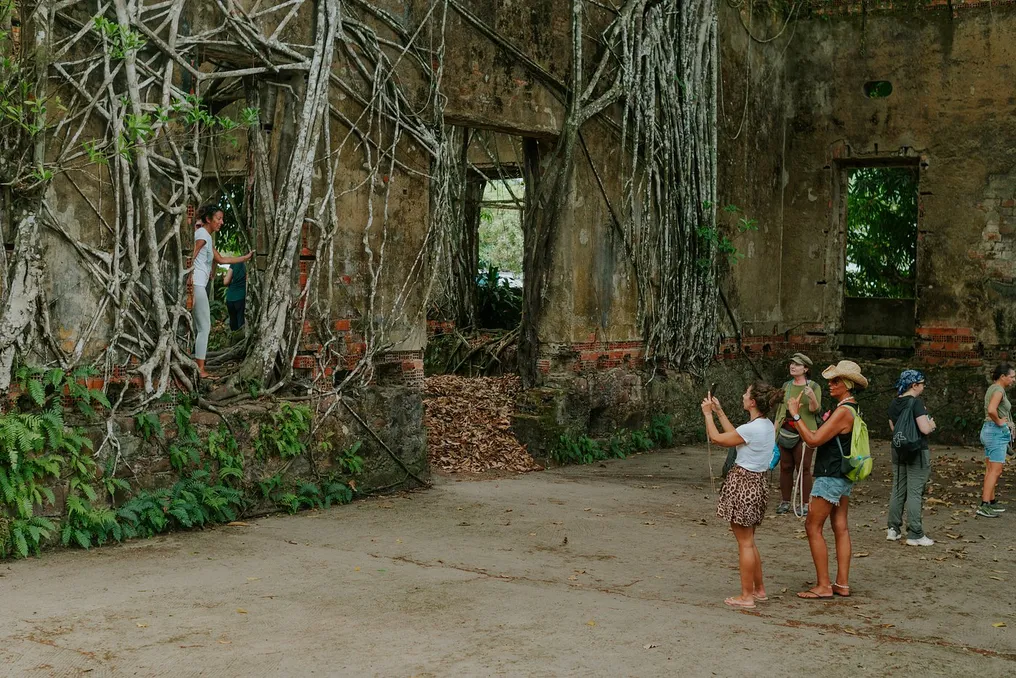
On the banks of the Rio Negro, in the village of Paricatuba, Amazonas state, are the Paricatuba Ruins—the remains of a magnificent century-old building. This village, recognized as a historical and cultural heritage site of the state, is located in the municipality of Iranduba, approximately 40 kilometers from Manaus.

Special attention is drawn to the stone structure overgrown with the huge roots of kapok trees—trees that embrace the walls and help them remain stable, creating a unique landscape. Construction began in the late 19th century with the aim of housing a hotel for Italian immigrants. Materials imported from Europe were used for the building's construction, which were considered expensive and valuable at the time.

Throughout the 20th century, this place served as a venue for various educational initiatives and was also converted into an isolation hospital for the compulsory treatment of people with hansen's disease (an infectious disease previously known as leprosy). Around the mid-1980s, construction was abandoned and overtaken by Amazonian vegetation, leading to the formation of the current landscape.

In September of this year, the village of Paricatuba received a full-fledged tourist route. The Paricatuba Tourist Trail was launched on September 26, 2026, as part of the Viva Paricatuba project, implemented by Impact Hub Manaus in collaboration with village residents and the Paricatuba Community Association.

Along with the launch of an official website containing information for travelers, the new tourist route included the installation of bilingual road signs and information stands throughout the village. These structures mark historical attractions such as the old morgue, the church, and one of Paricatuba's oldest houses.

The century-old ruins of the settlement have also undergone changes. A museum has been opened inside the ruins, displaying photographs, traditional regional artifacts, and old community items, all preserved and presented in glass display cases and on display tables.

Another piece of news was the creation of an open art mural called Muro Parikás, executed by graffiti artist and cultural producer Valdemiro Nascimento. This work combines illustrations of local animals and fruits, which were developed, in part, collectively based on discussions with the Paricatuba community.

The inauguration was also marked by the release of the comic book 'Paricatuba, Village of a Thousand Stories,' created by Romax Mascarenhas, an artist belonging to the Mauricio de Sousa Produções team. The work tells the story of a boy from Manaus who visits his grandmother in the village, and it can be purchased on site.

The easiest way to get to the village of Paricatuba is from Manaus. From the capital of Amazonas, one must cross the Rio Negro Bridge and travel along the Manoel Urbano Highway (AM-070) to kilometer 21 in the municipality of Iranduba. The trip by car or bus takes about 40 minutes to enter the village.

In the village itself, visitors can arrange tours of the attractions led by local residents who tell tourists the history of this historic place. For those planning to stay longer, the region also offers community guesthouses and other accommodation options, as well as restaurants and establishments serving regional breakfast with typical Amazonian flavors.

Wild elephant roamed the streets of Puranpur town in Pilibhit, broke cemetery wall
Read more
www.aajtak.in

Wild elephant roamed the streets of Puranpur town in Pilibhit, broke cemetery wall

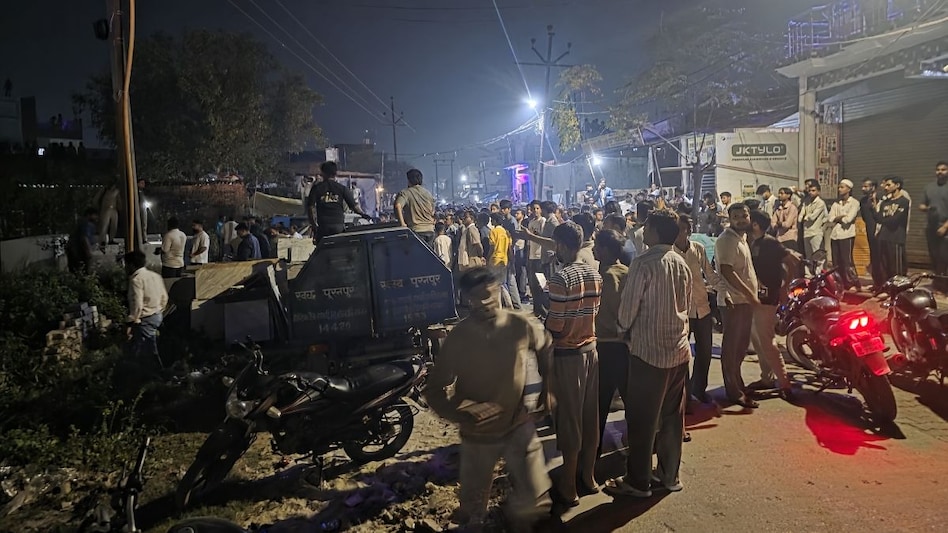
A wild elephant was spotted on the streets of Puranpur town in Pilibhit during the night. Initially, people did not believe it, but as soon as the elephant entered the colony from the town's streets, chaos ensued. Some people started making videos with mobile phones, while others ran behind to watch it. Some residents began chasing the elephant with sticks and mobile light.

This incident took place in Puranpur town of Pilibhit district, Uttar Pradesh, where a wild elephant reached a residential area during the night. The elephant was seen roaming in the streets, the colony, and the cemetery, causing a large number of people to gather. Police also arrived at the scene, but safely removing the elephant from the town proved to be a major challenge.

After the sudden appearance of the elephant, nearby people gathered, and it moved towards Har Narayanpuram Colony. The arrival of the elephant in the residential area caused fear among the people. Some people came out of their homes, while others were recording its video from a distance. As news of the elephant spread, the crowd grew, and people started following it.

The elephant passed through Har Narayanpuram Colony and reached a nearby cemetery, where it even broke a wall. After this, it went into the dark part of the cemetery. Despite reaching the cemetery, a crowd gathered, and some people kept trying to see it with mobile lights, while many were seen following it with sticks.

This raised concerns because a wild elephant can suddenly become aggressive when surrounded by people or if it feels threatened. In such a situation, getting close to it or trying to drive it away can be risky for people. Since it was near Puranpur Kotwali, the police were present, and heavy police force was deployed. The forest department team was informed to safely remove the elephant from the town.

The elephant roamed in the town for about two hours and was seen in various streets, lanes, and neighborhoods. At some places, it was also seen roaming on the main market road. Local resident Rajveer Singh stated that the elephant had entered their colony, causing panic in the colony. According to him, the elephant went towards the back path of the colony. The roaming of such a large wild animal in a residential area at night became a cause of fear for the people. On one hand, people were coming out to see the elephant, while on the other hand, there was a risk of it suddenly appearing in any lane.

In such a situation, the most important thing is for people to maintain distance from the elephant. Chasing it, making noise, showing sticks, or going near it to make videos can be dangerous. When the elephant appears, one should move to a safe place and immediately inform the police or the forest department. One should not try to chase it away or surround it oneself. The less the crowd, the more help can be provided in safely removing the elephant.

Popular