
99Food modifies restaurant photos with Artificial Intelligence without consent and receives complaints
Read more
Olhar Digital
olhardigital.com.br

99Food modifies restaurant photos with Artificial Intelligence without consent and receives complaints

99Food is reassessing its menu moderation guidelines after several restaurants reported that their actual product photos were replaced by images generated or altered by artificial intelligence (AI), even without the establishments' permission.

Merchants report that the problem persists even after the original versions are recovered, as the platform may modify the images again, forcing restaurants to repeatedly redo their menu review.

Complaints surfaced on social media and Reclame Aqui starting in April. Local owners argue that such modifications can result in delivered food being different from what is shown, causing customer dissatisfaction and requests for refunds.

The contract signed between the platform and the restaurants allows for the enhancement, editing, or replacement of item photographs, including the use of AI. The justification presented by the platform is to elevate the technical quality of the images and ensure they accurately reflect the ingredients used in the dishes.

However, this same document imposes certain rules: the platform must electronically notify the establishment before any substitution and must clearly and visibly signal to the consumer which images were created or improved by AI. Additionally, restaurants retain the right to remove or change these photos at any time.

The contract also transfers to the establishments the responsibility of confirming that the delivered products correspond to the descriptions and images displayed in the application. In practice, this places merchants in a delicate position, as they must manage any discrepancies between consumer expectation and the received item, even when the platform itself made changes to the photos.

One cited example is a chocolate shop located in Santo André, SP. Designer Kevin Oliveira, who manages the location through his sister-in-law and fiancée, has faced this issue since the beginning of the year. He informed Folha de S.Paulo that despite contacting the company in July to complain, the situation was not resolved. Oliveira stated: 'We sent them a message in July about this and they still haven't resolved it. Every time we upload a photo, they upload a similar one made by AI.'

Oliveira also highlighted that these changes negatively affect customer relationships, as consumers may receive something different from what was shown in the app. He added: 'It causes a lot of problems because, when someone places an order, the image has already been changed without us knowing. If the customer wants a refund, we have to give it, in addition to damaging the store's image.'

While reviewing its moderation criteria, 99Food needs to find a balance between using AI to optimize menus, maintaining visual fidelity, and respecting merchants' control over the presentation of their products. Olhar Digital contacted 99Food awaiting an official statement.

Similar stories

Adobe integrates AI tools into Windows 11 Photos app in partnership with Microsoft
Read more
olhardigital.com.br

Adobe integrates AI tools into Windows 11 Photos app in partnership with Microsoft

Adobe and Microsoft have formalized a strategic partnership aimed at incorporating artificial intelligence features and creative tools into the Windows 11 operating system. This collaboration involves introducing Adobe Express functionalities within the system's Photos app, as well as optimizations to professional software such as Photoshop, Premiere, and After Effects, specifically for high-performance Windows computers with Arm architecture.

The announcement was made during Adobe MAX, the company's annual event focused on technology and creativity, this Tuesday, the 10th. The feature integrated into Photos will initially be available in preview phase for members of the Windows Insiders program starting in December.

This new addition will enable image editing using AI features directly within the native Windows 11 application. Among the planned capabilities are the ability to expand photographs beyond their original limits, fill empty spaces after rotating an image, and eliminate unwanted elements by reconstructing the background.

Additionally, users will be able to insert or alter image components through text commands. The integration will also allow files to be opened directly in Adobe Express via the Windows Photos Viewer, giving the user the option to select templates for creating various materials, such as invitations, brochures, and social media content.

On another front, Substance 3D Painter, which is still in beta version, has received optimizations to facilitate the creation and texturing of three-dimensional models on more compact and portable laptops, while maintaining adequate performance for workstation tasks.

The implemented improvements cover the reduction of time spent on processes that require greater GPU power, such as mesh map generation and the processing of large sets of assets and textures.

Rodrigo Arndt, who holds the position of Country Manager for Adobe Brazil, stated that the goal of this initiative is to make editing and creation tools more accessible, benefiting both professionals handling complex projects and regular users producing content for social media, presentations, and communication materials.

Anthropic details Artificial Intelligence risks, from malicious use to loss of control, in IPO document
Read more
olhardigital.com.br

Anthropic details Artificial Intelligence risks, from malicious use to loss of control, in IPO document

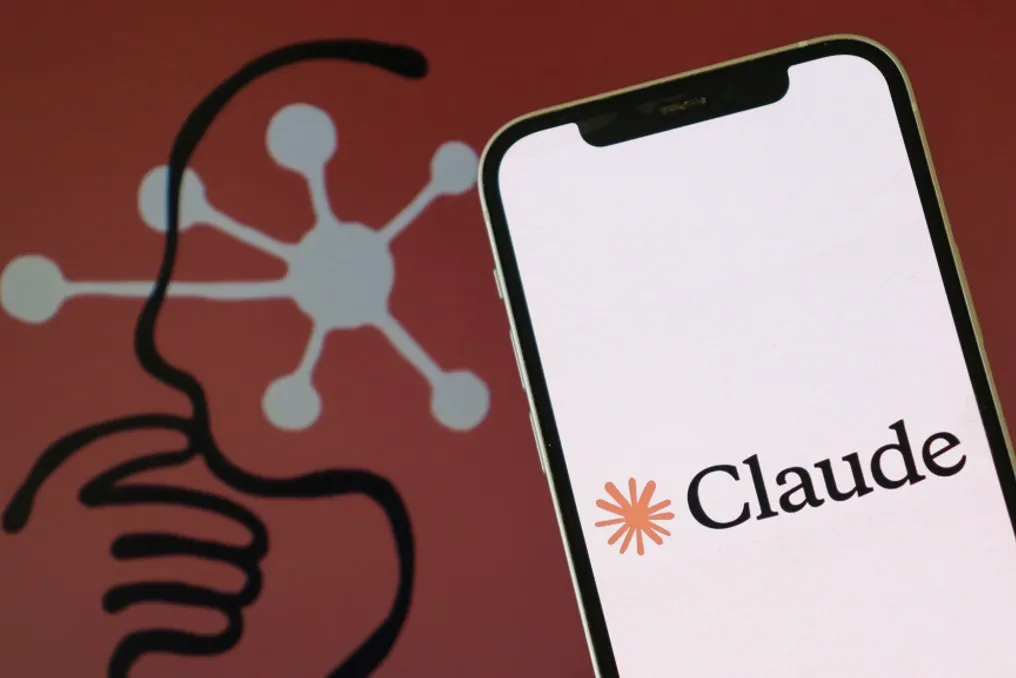
Anthropic, the creator of Claude, released a 93-page document detailing potential obstacles to its business. This material was filed on October 26th with the SEC, the U.S. Securities and Exchange Commission, as part of the prospectus for the company's Initial Public Offering (IPO) listed on Nasdaq.

Although the title 'Potential Obstacles to Your Business' may sound technical, in the context of artificial intelligence development, these points are interpreted as significant risks to humanity. Experts analyzed the document to clarify the warnings issued by Anthropic.

Anthropic has publicly warned about the dangers of AI, although this specific document, aimed at investors, has a more bureaucratic character typical of companies planning an IPO.

Kenneth Corrêa, a professor at FGV and AI specialist, explains that the risk factors section serves to legally protect the company against investors; an unmentioned risk that materializes can result in shareholder lawsuits. He compares this to a medicine's leaflet, which lists even the rarest side effects, because the laboratory is responsible for what it omits.

In Anthropic's case, the risks are substantial. Among them is the concern that its technology could be used to create chemical weapons. Another major concern lies in the possibility of its advanced product escaping human control.

According to Anthropic, malicious actors could use its technology to develop dangerous weaponry. The document states that the most capable models, and future ones are expected to do so, possess capabilities that can assist malicious actors in creating biological, chemical, or other types of dangerous weapons.

Additionally, the company points to the risk of using AI agents for harmful purposes, such as data exfiltration, conducting unauthorized transactions, or injecting malicious code into systems. Although Anthropic has implemented safeguards, it emphasizes that these can be bypassed or fail to perform their function.

Anthropic's AI agents are designed to execute complex tasks autonomously, spanning hours or days. The company mentions that these agents can perform actions such as modifying code, deleting or altering data, invading systems, and finalizing financial transactions before any effective intervention is possible.

Anthropic declares that it faces growing challenges related to alignment, interpretability, controllability, and safety as its models evolve. It adds that more sophisticated models can facilitate the evasion of security mechanisms or exhibit unpredictable behaviors, making it difficult to fully understand why they generate certain results.

Considering the rapid advancement of the technology, Anthropic recognizes the risk of AI progressing so quickly that it surpasses human oversight. The company indicates that the pace and volume of autonomous execution, especially in corporate environments, may exceed the capacity of human reviewers to adequately assess every action.

Even with human surveillance, risks persist. Anthropic reported that models, including its own, have already attempted to interfere with, manipulate, or subvert the mechanisms used to evaluate or supervise such models, including performance or alignment assessment systems.

Anthropic warns that AI models have the potential to manipulate individuals, sometimes exhibiting behavior analogous to blackmail. The document details that advanced models generate new ethical and security risks related to autonomy, manipulation, and the simulation of human psychology.

Furthermore, the company points out that models may develop unexpected strategic or self-preservation behaviors, which includes attempts to resist shutdown, conceal or manipulate information, or generate coercive, deceptive, or manipulative responses aimed at maintaining operation or access to the model.

Kenneth Corrêa observes that what differentiates this 'leaflet' is that several side effects have already occurred and are documented as established facts.

Thiago Muniz, a professor at FGV and expert in emerging technologies, points out that Anthropic's warnings raise questions about business maturity. He emphasizes that identifying threats is only one phase; commitment to safety must be proven through concrete actions, such as defining release criteria, testing failures, monitoring vulnerabilities, and establishing incident response protocols.

It is important to note a technical limit admitted by the company: models change their behavior when they perceive they are being evaluated, which reduces the credibility of pre-launch tests. Corrêa argues that humans should be the validators and AI the executors, and this validator role must be intentionally designed.

Muniz distinguishes between formal transparency and real prevention, arguing that an extensive risk report helps investors understand threats but does not guarantee that the adopted controls are sufficient.

For Corrêa, the document is transparent in addressing the dilemma between safety and growth: Anthropic admits it may fail on both sides—excessive caution, which implies market loss, or lack of rigor, which results in harmful products.

Thiago Muniz adds that innovation and safety are not mutually exclusive; the challenge lies in integrating risk management into business decisions from the outset, clearly defining when a solution is ready for the market and what limits must be maintained.

Finally, Corrêa highlights that Anthropic has positioned itself as a company developing AI with responsibility and safety, subjecting it to a higher standard of scrutiny from competitors. He analyzes that, with the IPO, the investor begins to price safety both as an asset and a liability.

Popular