Parliamentary Committee Removes Air Pollution Issue in NCR from Agenda; Mayken Protests
Read more
The times of India
timesofindia.indiatimes.com

Parliamentary Committee Removes Air Pollution Issue in NCR from Agenda; Mayken Protests

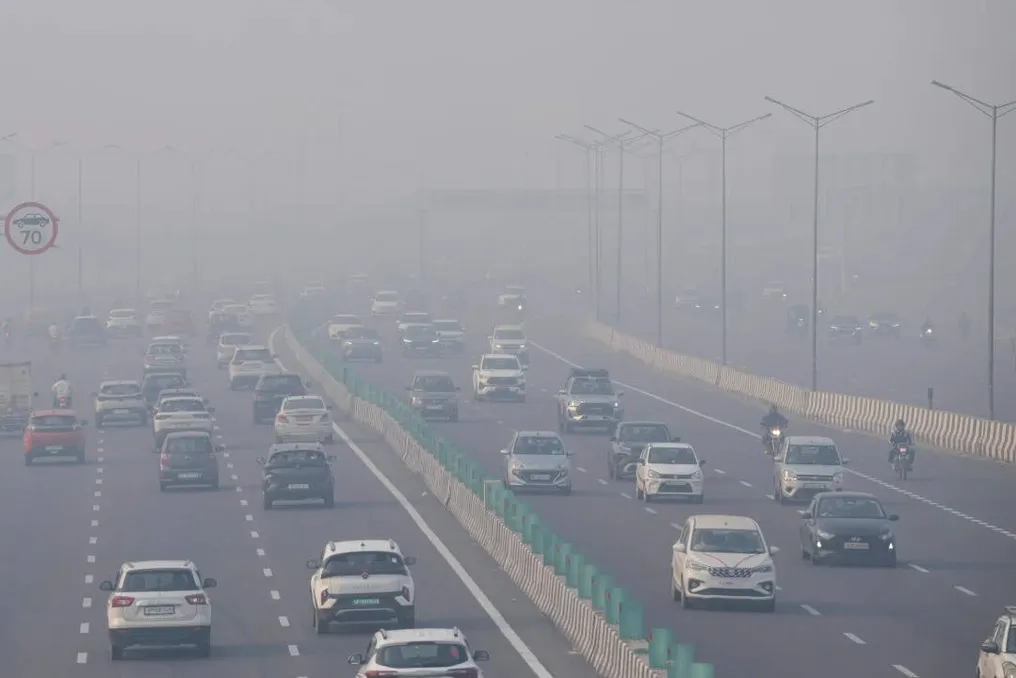
In Delhi, where the air is smoggy due to pollution, the parliamentary committee's decision to exclude the issue from the November 17th meeting agenda without explanation sparked a sharp reaction from Congressman Ajay Mayken, a member of the standing committee on internal affairs.

Emphasizing that 'the air pollution crisis in Delhi must be treated as a public health emergency,' Mayken wrote to the committee chairman Radhe Mohan Das Agrawal, requesting that the hearing be reinstated on the same day or rescheduled at the earliest possible date with an explanation for the change.

In a letter dated November 7th, Mayken officially registered his 'objection' regarding the exclusion of the air pollution hearing from the revised November 17th agenda. He stated: 'My concern relates specifically to the cancellation of the scheduled hearing on November 17th when these health risks require timely examination. Its exclusion requires an explanation and a specific date for consideration.'

The deputy reminded that he had previously requested consideration of the air pollution issue in his letter of November 2nd, and that the committee had included this topic in its annual plan for 2026–27. He also pointed out that the initial public notice of November 5th stipulated hearings on November 17th at 2:00 PM.

The original agenda circulated among members contained the item: 'Hear opinions of the Ministry of Home Affairs and relevant agencies on the topic of 'Air Pollution in Delhi-NCR: Ensuring compliance with regulations, effective implementation of GRAP measures, protection of vulnerable populations, and coordination between law enforcement agencies and government institutions.' '

However, the revised public notice of November 6th omits the hearing on the pollution issue. Mayken added that 'there are no reasons for this change.' He stressed that 'protecting vulnerable people, ensuring effective compliance, and coordinating between agencies require urgent attention. An immediate hearing would allow the Committee to examine what responsible agencies are doing, whether implementation is lagging, and what immediate corrective actions are necessary.'

Mayken noted that according to the official schedule of meetings published at 12:56 IST on November 10th, sessions were planned for November 16–17, but the air pollution item was absent, and no new date was announced.
Similar stories

Supreme Court strengthens control over air pollution in Delhi-NCR, requests reports on transport inspections
Read more
www.aajtak.in

Supreme Court strengthens control over air pollution in Delhi-NCR, requests reports on transport inspections

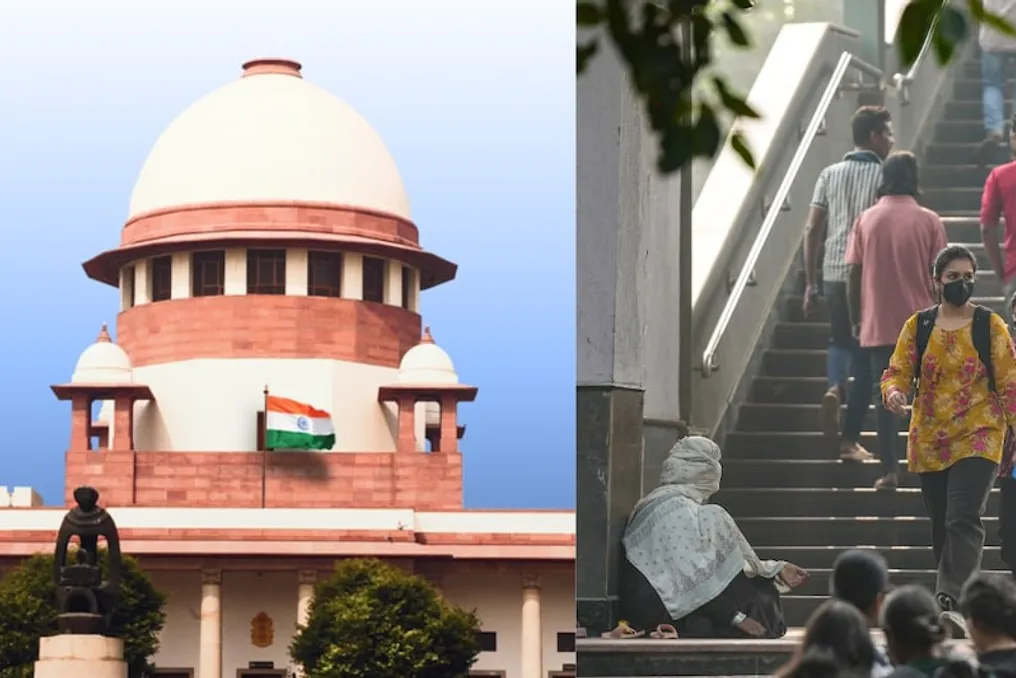
The Supreme Court has adopted a strict stance regarding the growing air pollution in the Delhi-NCR region, particularly that caused by vehicle emissions. The court has demanded that the governments of Delhi, Haryana, Uttar Pradesh, and Rajasthan submit detailed action plans within two weeks.

The bench, comprising Chief Justice Suryakant, Justice Joymalya Bagchi, and Justice V. Mohan, instructed the government of Delhi, MCD, the Delhi Police Transport Department, as well as the governments of Haryana, Uttar Pradesh, and Rajasthan, to develop a comprehensive strategy for controlling traffic movement, ensuring emission standards compliance, and restricting polluting vehicles.

The court also requested information on the criteria and procedures for adhering to vehicle emission norms and standards, as well as details of the rules for issuing Pollution Under Control (PUC) certificates. Furthermore, information was sought regarding measures taken against vehicles that do not meet old and established standards. The court required the submission of complete statistics on the number of inspected vehicles and issued fines.

The states were given two weeks to submit their responses, and the next hearing on this matter is scheduled for November 23.

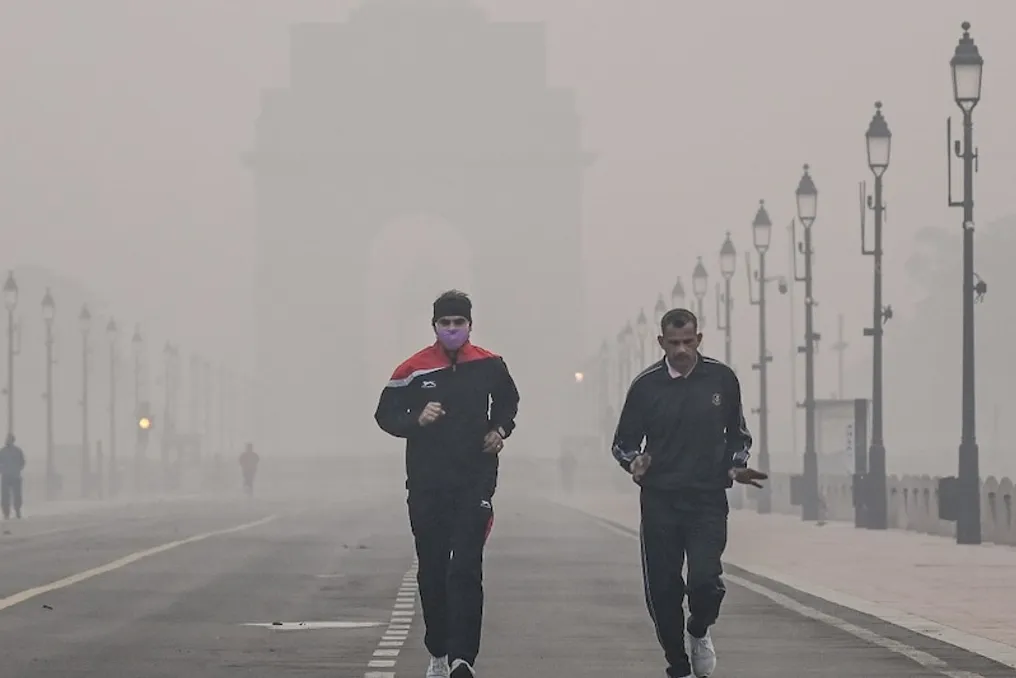
The situation with air pollution and Air Quality Index (AQI) in the capital city of Delhi remains serious. According to data from the Central Pollution Control Board (CPCB) as of the morning of November 10, many areas of the capital recorded an AQI above 300.

The worst situation was observed in Chandni Chowk, where the AQI reached 400. In Pusa, the AQI was 398. Other recorded values include 380 in the Commonwealth Olympic Complex, 384 in NSUT Jafpur, 373 in Tokra Garden, 372 on Matura Road, and 375 in Sirifort. Readings of 360 were also noted in Aya Nagar, 364 at Burari Crossing, and 361 at IIT Delhi.

Air quality in other parts of the capital was also extremely poor. In Shadipur, the AQI was 325, on Lodhi Road it was 324, in Burari it was 315, in Jadroda Kalan it was 320, in Mandir Marg it was 307, and in Bavana it was 328. An AQI of 296 was registered in Tikri Kalan, and 295 in Vasundhara Enclave.

According to CPCB standards, an AQI level from 301 to 400 is classified as 'very poor', while values from 401 to 500 are considered 'hazardous'. Consequently, in most monitoring points in Delhi, including Chandni Chowk, the air quality was categorized as 'very poor'.

High court expresses concern over air pollution levels in Delhi, questions measures being taken.
Read more
www.aajtak.in

High court expresses concern over air pollution levels in Delhi, questions measures being taken.

The Supreme Court expressed serious concern regarding the air quality in Delhi. During the hearings, the Chief Justice of India (CJI) inquired about the steps being taken to combat pollution, despite everyone enjoying the weather in Delhi.

Amicus Curiae Apradjit stated that the residents of Delhi are breathing air equivalent to smoking 30 cigarettes daily, and that this is even affecting their voice. It was noted that the Air Quality Index (AQI) remains in the critical category.

The CJI mentioned that the pollution level recently decreased due to rain. However, Amicus Curiae argued that the focus should not solely be on stubble burning; Delhi is already heavily polluted, and stubble burning only exacerbates the situation. He emphasized that the primary cause of pollution in the NCR is transportation, although stubble burning also plays a significant role.

During the hearings, Amicus Curiae pointed out the large number of vehicles in Delhi. In response, the CJI indicated that the problem lies not only in the quantity of vehicles but also in the fact that vehicles from all over the country arrive in Delhi, which complicates monitoring the condition and exhaust fumes of these vehicles. Even if a vehicle is in Delhi for only two hours, it pollutes the air.

A representative from the ASG reported that the government has taken measures: geo-tagging is being implemented for the issuance of PUC certificates at pollution testing centers, and steps are being taken to stop vehicles emitting visible smoke.

Amicus Curiae explained that the central and regional governments have provided farmers with agricultural machinery and equipment, but farmers cannot afford to pay for fuel for these machines, which is particularly difficult for small farmers. Furthermore, due to the Water Conservation Act, farmers had to postpone sowing. The CJI noted that instances of stubble burning are decreasing, and farmers are preparing to sow wheat instead of rice.

During the hearings, the tradition of gift-giving during Diwali was also discussed. One lawyer suggested that perhaps the practice of giving gifts during Diwali should cease. The CJI linked this to cultural changes, stating that people need to understand what their true culture is and what they should do. Justice Joymalya Bagchi added that the commercialization of festivals and using them as commodities is also a problem.

Popular