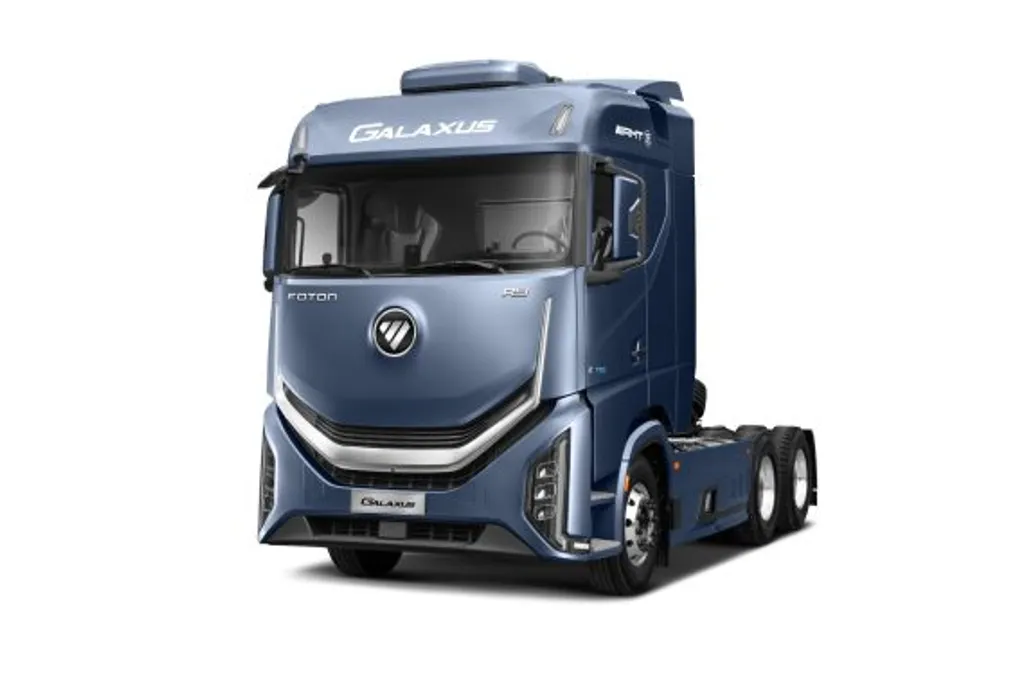
Foton debuts at Fenatran presenting innovations in vehicles, services, and infrastructure in Brazil
Read more
AutoPapo
autopapo.com.br

Foton debuts at Fenatran presenting innovations in vehicles, services, and infrastructure in Brazil

Foton made its debut at the National Transport Fair (Fenatran) with a vast range of new products, signaling its entry into the Brazilian heavy truck market and expanding its presence in the commercial vehicle sector. With this participation, the company reinforces its position among brands considered 'full range' in the segment, which offer a complete range of vehicles, from light models to the most robust ones.

One of the highlights presented by the manufacturer is the heavy truck Galaxus R9, whose arrival at dealerships is scheduled for the second half of 2027. This model features 6x4 traction, is equipped with a 12.89-liter Cummins X13 engine generating 560 hp and 2,600 Nm of torque, and uses the 12-speed ZF TraXon 2 automated transmission. With the Galaxus R9, Foton completes its offering in the country, covering everything from pickups and light utilities to heavy trucks.

In the urban and entry-level distribution niche, Foton launched the Wonder mini truck, powered by gasoline with a 1.6-liter, 120 hp engine, with an initial price of R$105 thousand and expected to reach stores in 2026, coexisting with its electric version. Additionally, the electric eMiler VUC (Urban Cargo Vehicle) was presented, offering an autonomy of up to 260 km, a payload capacity of 2,270 kg, and can be driven by drivers with Category B licenses, with a launch forecast for the first half of 2027.

The brand also exhibited the Daystar concept, a fully electric VUC designed to optimize urban logistics. In the 7T configuration shown at the event, this model features a permanent magnet synchronous electric motor that provides 190 hp and 390 Nm of torque, powered by a 100.07 kWh battery.

To support the increase in sales—which grew by 100% between January and September 2026 compared to the same period in 2025—the manufacturer inaugurated an Automotive Distribution Center in Araquari (SC), spanning 60,000 m². Furthermore, an Automotive Technical Center will open in Barra Funda, São Paulo, in December, strengthening the national structure for services, training, and after-sales support.
Similar stories

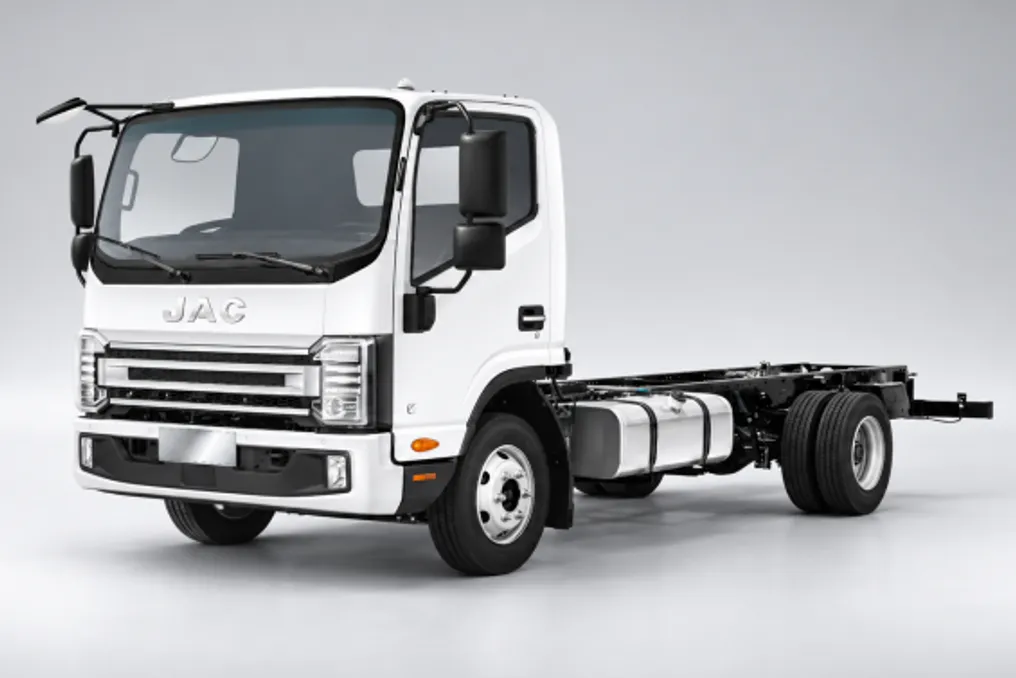
Jac Caminhões debuts at Fenatran with light truck N 11.170, capable of transporting 7 tons
Read more
autopapo.com.br

Jac Caminhões debuts at Fenatran with light truck N 11.170, capable of transporting 7 tons

Jac Caminhões will debut at Fenatran, the country's main cargo transport fair, which will take place in São Paulo between November 9th and 13th. This event marks a distinct moment for the brand in Brazil, contrasting with the situation of Grupo SHC, owned by Sergio Habib, which filed for judicial recovery in October.

Jac Caminhões, which is directly controlled by its Chinese headquarters, will present the N 11.170 model. This is a light truck specifically designed to meet the needs of both urban and regional deliveries.

The vehicle's name reflects its technical characteristics: the initial digit, 11, indicates a rounded Gross Vehicle Weight (GVW) of 10.5 tons, while the second number refers to the power. The N 11.170 has a carrying capacity of up to 7 tons of cargo.

Mechanically, it uses a diesel engine supplied by Cummins, which delivers 170 hp and 61.2 kgfm. The manual transmission is manufactured by Eaton, both companies recognized by fleet operators in Brazil.

In terms of safety and comfort features, the model is equipped with air brakes with ABS, as well as traction and stability control systems, and a hill start assist. Items such as driver and passenger airbags, multimedia center, cameras, and parking sensors are available as options.

The cabin offers air conditioning, electric windows and locks, and the driver's seat has pneumatic suspension, aiming to provide greater comfort by dampening bumps.

Jac Caminhões entered the Brazilian market in December 2025, operating with entirely Chinese capital. Its headquarters is a state-owned enterprise established in 1964 and has already exported over 1.5 million trucks to approximately 130 nations.

With this launch, the brand's product line in Brazil will include five models, with GVWs ranging from 9 to 25 tons. All these vehicles are imported from China and come with a two-year or 200,000-kilometer warranty.

The current sales network comprises ten points, with plans to expand to thirty stores by the end of 2027. Additionally, the company is studying the possibility of assembling trucks locally, using components sourced from China, following a system already implemented in 19 factories globally.

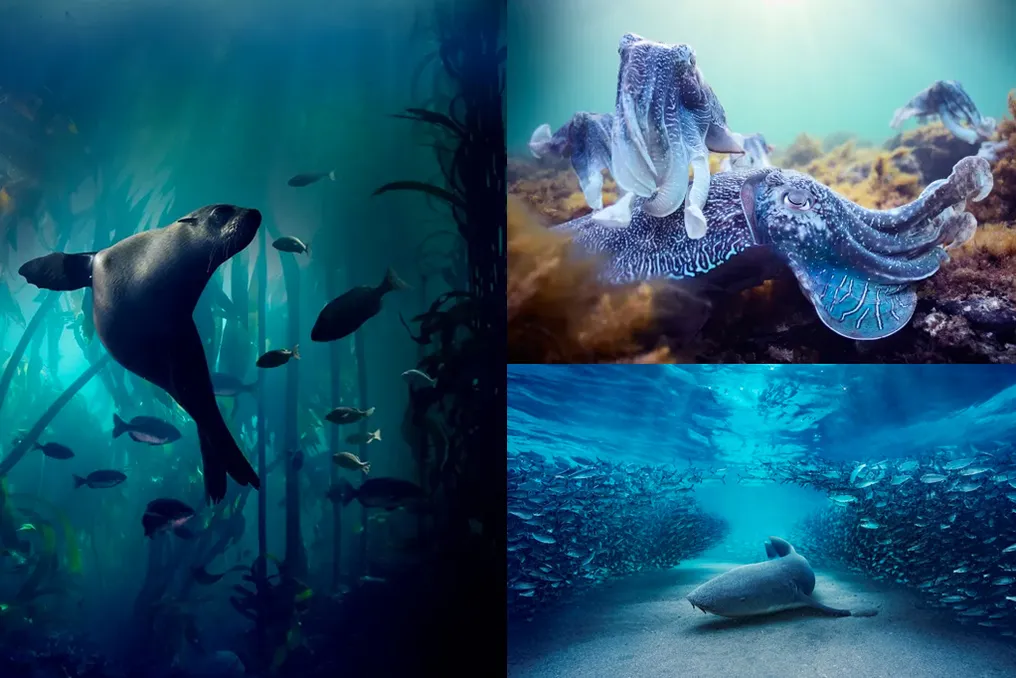
Techniques and equipment to obtain sharp images in marine life documentaries
Read more
super.abril.com.br

Techniques and equipment to obtain sharp images in marine life documentaries

Obtaining high-definition images in marine life documentaries depends on a combination of professional underwater equipment, specific techniques, and controlled proximity to the animals.

Although the cameras used are similar to those employed on land, they are adapted with specialized lenses and custom sealing. Additionally, lens and lighting systems specific to the aquatic environment are necessary.

When diving to record videos, cinematographers must apply a technique distinct from that used on land. According to Fabi Fregonesi, an underwater photographer, water directly impacts light because it absorbs certain colors and scatters light due to suspended particles. This phenomenon reduces contrast, sharpness, and saturation; red tones, for example, are among the first to disappear with increasing depth. The use of lighting systems helps compensate for this light loss, restoring detail and contrast in the scenes.

To ensure sharp images, it is essential to stay as close as possible to the subject being filmed, minimizing the amount of water and particles between the camera and the animal. However, this closeness must always respect the well-being of the living beings.

The photographer emphasizes that proximity should never be prioritized over the animal itself. Instead of chasing it, the professional must seek to understand its movements and, when appropriate, position themselves naturally in its path, waiting. It is crucial to know the species' behavior and identify any signs of stress, as every animal has a safe approach distance, requiring the filmmaker to move away upon noticing any sign of disturbance.

Another common practice involves fixing the equipment and letting it record for a prolonged period. This allows the animal to be recorded without direct human intervention, which is feasible considering that dives have limited time and humans have a safe limit for remaining at great depths.

In situations of extreme depth, remote operation technologies are frequently implemented. In these cases, the cinematographer does not need to be physically underwater, controlling the camera remotely, although the fundamental technique remains the same.

Popular