Instagram Co-founder Takes Lead of Artificial Intelligence Division at Anthropic
Read more
Olhar Digital
olhardigital.com.br

Instagram Co-founder Takes Lead of Artificial Intelligence Division at Anthropic

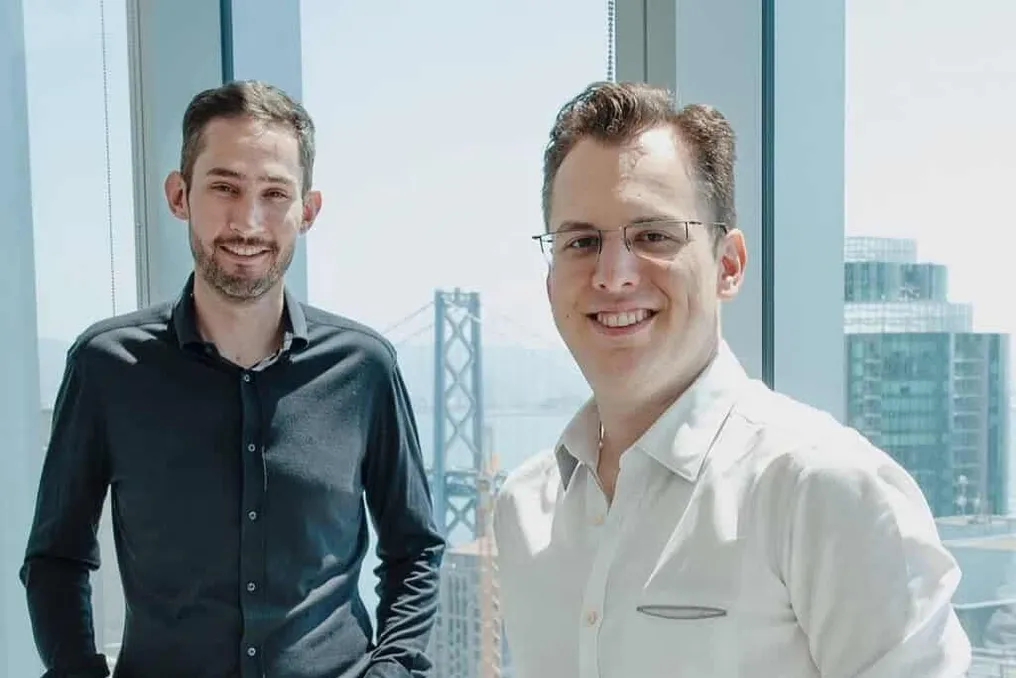
Mike Krieger, the co-founder of Instagram, who held about 10% of the company when Facebook acquired it for $1 billion in 2012, is now involved in a billion-dollar technological dispute, leading an Anthropic division focused on exploring the potential of artificial intelligence (AI).

Krieger's journey in Silicon Valley began before the acquisition of Instagram. In 2004, at age 18, he, whose name is Michel, left São Paulo to study at Stanford University in California, USA, where he adopted the nickname Mike. The son of a beverage industry executive, he lived in various global cities, such as Lisbon, Buenos Aires, and Miami, in addition to Alphaville, in Greater São Paulo, and his education in a bilingual school facilitated these moves.

At university, he chose Symbolic Systems, a course that integrates computer science, psychology, linguistics, and philosophy. He later completed a master's degree at the same institution, where he met Kevin Systrom, with whom he would develop the project that changed their lives.

Before entrepreneurship, Krieger worked as a software engineer at Meebo, a service that combined several online chat tools. Shortly after, he received an invitation from Systrom to create an application that would allow sharing photos, locations, and comments. The duo's first project was Burbn, a multifunctional check-in platform, but the proposal proved excessively complex. During testing, both noticed that users were more interested in one specific function: publishing and sharing photographs.

Instead of sticking to the initial idea, they decided to focus on developing this functionality, which led to the creation of Instagram, a name derived from the English words 'instant' and 'telegram'. Between September and October 2010, Krieger and Systrom spent nights programming the new platform, which was launched on the Apple store in October of that year, initially only for iPhones, and achieved rapid success.

While Systrom handled the product and business vision, Krieger was responsible for engineering and technological infrastructure, ensuring the service functioned despite the rapid increase in access and posts. The success attracted large technology companies, culminating in Facebook's purchase of Instagram in April 2012, for about $1 billion, just over two years after its launch.

Krieger owned approximately 10% of the company, which represented about $100 million upon sale, as mentioned in his biography 'The Click of a Billion Dollars' by Filipe Vilicic. This deal established Krieger as one of the most notable entrepreneurs of his generation in Silicon Valley. Despite the acquisition, he maintained his role as CTO, while Systrom remained in charge of the company. Under Facebook's control, Instagram expanded its global presence and surpassed the one billion monthly user mark.

In 2015, Krieger was included in the Forbes Under 30 list, which recognizes young professionals and entrepreneurs from various fields. Three years later, in September 2018, he and Systrom announced their departure from the company after eight years of collaboration, stating that they wished to explore new ideas.

Outside of Instagram, Krieger did not stop innovating. During the Covid-19 pandemic in 2020, he collaborated again with Systrom on an initiative focused on monitoring the disease in the United States. They developed a website that used statistical models to track the progression of coronavirus cases across different American states, aiding in tracking the transmission rate during a period of great health uncertainty.

In 2023, the two launched a new AI-focused project called Artifact. This application provided personalized news using machine learning to select content aligned with each user's interests. Although the intention was to offer an adapted reading experience, the project had a short lifespan, being shut down in January 2024, and its technology was acquired by Yahoo in April of the same year.

Artifact marked a more direct transition for Krieger into AI, an area that would dominate his career. His experience in automated recommendation services complemented his knowledge in creating large-scale digital platforms. On May 15, 2024, Anthropic announced the hiring of the Brazilian as its first Chief Product Officer (CPO). Anthropic, founded in 2021 by former OpenAI members, including Dario and Daniela Amodei, develops AI models, with Claude as its main competitor to ChatGPT.

Krieger's arrival came at a time of strong company expansion, having received billions in investment from giants like Amazon and Alphabet (Google's parent company). His mission was to increase product offerings, consolidate Claude's presence in the corporate market, and create more intuitive ways to interact with AI systems. Dario Amodei highlighted the value of Mike's experience in developing intuitive products for creating new interactions with Claude.

Krieger expressed enthusiasm about the move, mentioning in a LinkedIn post that the Anthropic team was exceptional and that he felt welcomed from the first contacts. He expressed anticipation about contributing to shaping the future of AI-powered products.

During his tenure in product leadership, he oversaw the expansion of Claude's applications to meet various demands from users and businesses. In July 2025, he also joined the board of directors of Figma, a design tool company, but left that position in April 2026. In January 2026, Krieger took on a new role at Anthropic, working in Labs, the division dedicated to experimentation and the development of products based on the latest capabilities of the company's models, sharing leadership with Ben Mann.

Among the team's developments are Claude Code, which assists with coding and editing, and Claude Cowork, which applies similar features to professional tasks without requiring programming knowledge. Another advancement is the Model Context Protocol (MCP), a protocol that facilitates linking AI models with external applications, tools, and data sources. The division's philosophy is to design not just what the models do today, but what they can achieve soon.

In an interview with The Verge earlier this year, Krieger justified the importance of this moment for developing new applications: 'We have reached a decisive moment in AI: the capabilities of the models are advancing so rapidly that the window of opportunity to define how they will be used is now. That is why I am returning to creator mode.'

The speed of current development differs greatly from the time he created Instagram. In April 2026, during the Brazil at Silicon Valley conference in Sunnyvale, California, Krieger reported being able to recreate Burbn with AI assistance in 'basically two hours.' This exercise demonstrated how current tools drastically shorten the time between idea and functional prototype. However, he emphasized, quoting Exame magazine, that 'there is still a lot of human in entrepreneurship.'

This perspective defines the role he seeks at Anthropic: while AI optimizes coding and experimentation, it is crucial to identify problems, understand human behavior, and find solutions of real value. In a conversation with the Big Technology podcast, Krieger detailed how the team anticipates opportunities by analyzing the difference between the current capabilities of the models and the actual use of the technology by people. He proposes: 'Imagine something where the models still have deficiencies today, but where they will be really good in six months, and let's ensure we have a product ready for that by that date. Think about the gap between what the models can do today and how most people use them. Can we fill that gap?'

This ability to identify opportunities has accompanied Krieger since the beginning of his career, whether by simplifying Instagram to focus on photos or by proposing Artifact to reorganize news consumption with AI. Currently, at Anthropic, the challenge is to explore applications for a technology that is still in the development phase.

Similar stories

Meta expands AI use on Instagram to identify teenagers who misrepresent their age
Read more
olhardigital.com.br

Meta expands AI use on Instagram to identify teenagers who misrepresent their age

Meta has announced the global expansion of its artificial intelligence (AI) technology used on Instagram, aimed at identifying adolescent users. This system has the capability to estimate people's ages based on information present in their profiles, allowing minors to be placed in accounts with specific protections, even if they have provided a date of birth indicating they are adults.

This new feature was announced this Monday (9). According to the company, millions of teenagers in various countries will now be recognized by this technology and automatically migrated to so-called Teen Accounts. The main objective of this action is to make it more difficult for underage individuals to bypass the age restrictions imposed by the platform.

The implementation of this technology occurs in a context of intense judicial pressure in the United States, where there are lawsuits against Meta's social networks accusing them of causing harm to young users. When the system detects a profile that may belong to a teenager, the account can be transferred to the Teen Account experience, which offers stricter security settings.

In addition to Instagram, Meta is also increasing the use of similar technologies on Facebook. For Threads, the expectation is that the global expansion will only begin in 2026. This technological expansion happens during a period of strong legal scrutiny over the company.

In August, Meta reached agreements that could total around US$ 18 billion (equivalent to approximately R$ 96 billion) with almost all states and territories in the United States. These lawsuits questioned the effects of the company's platforms on young people and demanded improvements in the recognition of children and adolescents. According to the company itself, these agreements involved 52 state and territorial attorneys general.

Meta assures that the expansion of AI is part of its commitment to identifying minors and providing appropriate experiences for each age group. Additionally, the company announced a complementary measure in Australia: the use of the age rating signal provided by Apple. With parental permission, the app store can share a user's age indication with developers, helping to determine if they meet the age requirements of each service.

According to Meta, this identification method can ensure greater uniformity in protections across different applications, eliminating the need for each platform to perform the verification process in isolation.

Social inequality impacts knowledge of Artificial Intelligence in Brazil, points out study
Read more
olhardigital.com.br

Social inequality impacts knowledge of Artificial Intelligence in Brazil, points out study

Artificial intelligence (AI) is emerging as a new factor of digital exclusion in Brazil. Despite the advancement in knowledge about digital platforms in the country, a notable disparity persists between different social classes when it comes to AI tools, according to the third edition of the Reglab Index of Trust and Security in the Digital Economy, referring to the third quarter of 2026.

The survey data indicates that 97.3% of individuals from Class A have knowledge about the evaluated AI tools, compared to 85.4% in Classes D/E, representing a difference of almost 12 percentage points.

This contrast is accentuated when analyzing the mastery of the four main AI tools included in the research. While 92.7% of Class A respondents know all these tools, this index drops to 69.2% among Classes D/E, meaning that almost a third of this group still does not know all the examined solutions, including Claude and Perplexity.

Marina Garrote, Director of Operations and Research at Reglab, emphasizes that merely expanding internet access is not enough to solve digital inequalities. She states that with the universalization of the internet, the focus of public policies must shift to technological literacy, preventing lower classes from being left behind in the new economy.

The study also observed a general improvement in the familiarity of connected Brazilians with digital platforms; about seven in ten respondents reported knowing all the evaluated platforms, an increase from six in ten in the previous edition.

However, the inequality manifests differently depending on the type of service. In areas such as streaming and digital government, the level of knowledge between Classes A and D/E is relatively similar. In the area of AI, the difference remains considerable.

This finding centers technological literacy in the debate on digital inclusion, because besides accessing the internet, it is crucial to know how to use and understand the available tools, something that gains increasing importance with the integration of AI into daily and professional routines.

Another relevant result from the third edition is the stability in the perception of Brazilians regarding security and trust in the digital environment. The survey suggests that opinions tend to remain consistent over time, even after isolated events.

Of the individuals who showed lower confidence in digital platforms in the previous quarter, 77% maintained this stance. Similarly, 70% of the group that showed higher confidence continued with a positive assessment.

Pedro Henrique Ramos explains that trust in the digital environment behaves more like an intrinsic characteristic of each person than a volatile opinion, as campaigns or isolated occurrences have a limited impact on this perception, which is built or lost gradually.

Data collection for the third edition of the Reglab Index involved 1,099 adults connected to the internet, conducted between October 2 and 9, 2026, through a national panel conducted by Norstat. The study analyzed 26 platforms distributed across five categories: social networks, streaming and entertainment, platform economy, AI, and digital government. The research reports an overall confidence level of 95% and an overall margin of error of three percentage points, evaluating the platforms across four dimensions: overall trust, information integrity, data protection, and adolescent protection.

Google expands AI Mode ads to ten new countries, including Brazil in 2026
Read more
olhardigital.com.br

Google expands AI Mode ads to ten new countries, including Brazil in 2026

Google announced the expansion of ad display in Search's AI Mode to ten new nations, placing Brazil among the markets that will receive this feature by the fourth quarter of 2026. This measure aims to increase the visibility of advertising in searches conducted through artificial intelligence (AI), keeping pace with the transformation in how users search for products and information on the internet.

Shashi Thakur, Vice President and General Manager of Google Search Ads, detailed that queries made in AI Mode tend to be, on average, three times longer than conventional searches. The company argues that this conversational format aids in a deeper understanding of user needs, allowing for the presentation of relevant offers.

Besides Brazil, the expansion schedule covers Australia, Canada, India, Kenya, Malaysia, New Zealand, Nigeria, Pakistan, the Philippines, and Singapore. Additionally, the company plans to introduce the feature in Mexico and the United Kingdom this quarter.

This expansion coincides with the integration of AI experiences into Google's main search service. Users are no longer solely dependent on short keywords but can now describe scenarios, compare options, and ask sequential questions to refine their searches.

For advertisers, this new pattern of behavior offers the opportunity to display their services and products at more precise points in the buying journey. However, for users themselves, the challenge arises of differentiating advertising recommendations from organic information, even when ads are embedded in an AI-based search experience.

Google assured that it will continue testing different formats to ensure that ads remain relevant and useful. Although the forecast for Brazil is the fourth quarter of 2026, the company did not specify an exact date for the implementation of the feature in the country.

Popular