The island of Flores in Indonesia is renowned for its natural beauty, including crystal-clear beaches, mountainous terrain, caves, waterfalls, and unique species such as the Komodo dragon. However, beneath the surface of this picturesque landscape lie archaeological finds dating back hundreds of thousands of years. This is where Homo floresiensis, a distant relative of humans known as the 'hobbit' due to its low stature, lived.
The first fossils of these hominids were discovered in 2003 in the Liang Bua cave. This cave, which is about 50 meters long, has already provided evidence in the form of stone tools and remains of various animals that are still being studied. One mysterious bone was recently described scientifically for the first time: it belongs to a new species of prehistoric bird.
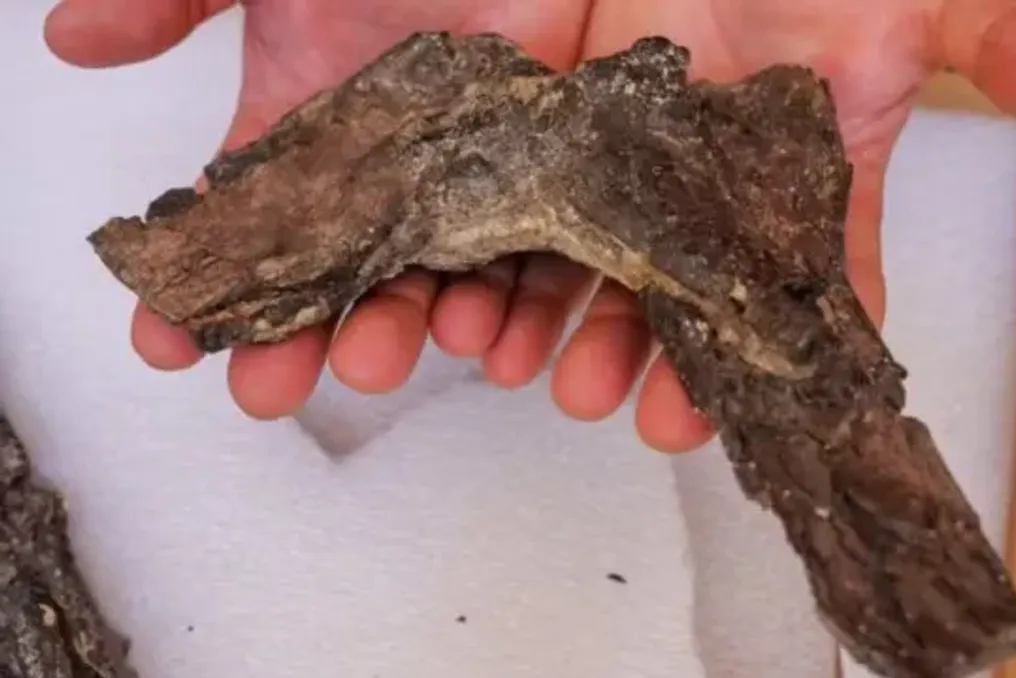
In 2009, archaeologists found the lower part of a large bone in the cave, which appeared to belong to a bird's leg. This bone was extracted from deposits dated between 190,000 and 120,000 years ago and was stored, forgotten, because scientists did not know what species it belonged to.
Recently, this bone became an object of study again when a group of researchers from institutions in different countries, such as Norway, Australia, and Indonesia, decided to give this material a new chance. Analyzing the sample, a team led by paleontologist Hanneke Meyer from the Bergen Museum University discovered that it belongs to a megapode—a medium or large ground bird belonging to the genus Megapodius.
Nevertheless, when comparing the bone with samples of other species in this genus, the researchers did not notice sufficient similarity. The shape and size of the finger joints of the bone differed. Thus, they concluded that the fossil represents an extinct and previously unknown species of this group of birds.
The species was named Megapodius rokusi in honor of Indonesian zooarchaeologist Rokus Du Ave, who passed away in 2015 and was the first to correctly identify the H. floresiensis bones. This was reported in an article published in the scientific journal Alcheringa: An Australasian Journal of Palaeontology.
This is the first megapode fossil described in Wallacea—the region of islands between continental Asia and Australia, of which Flores is a part. Furthermore, it is the largest bird of this genus described. According to researchers' estimates, the bird weighed almost 4 kg, which is significantly more than Megapodius reinwardt, the only megapode living today on Flores, which weighs between 0.5 and 1.2 kg. The study authors note: 'Megapodius rokusi is significantly larger than other Megapodius species. The metatarsus [name of the found bone] exceeds the size of existing species, as well as extinct large (and presumably flightless) species M. amissus and M. alimentum.'
Since scientists only have a part of the animal's leg bone, some characteristics of the new species remain unknown, including its ability to fly, lifestyle, geographical distribution, and extinction time.
Researchers conclude: 'A more detailed analysis of its locomotor abilities and phylogenetic relationships with other Megapodius species, as well as with the closely related genus Eulipoa, will be possible once more skeletal material of M. rokusi is found.'
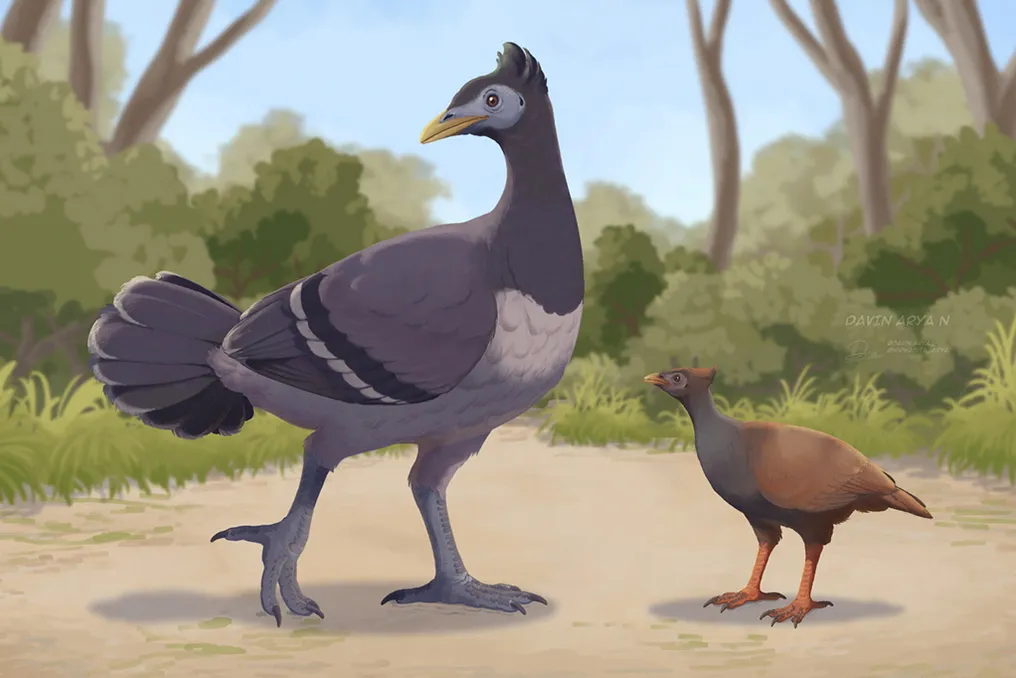
The cover illustration, created by David Arya Nirwasita and published in the study, is an illustration of the presumed appearance of M. rokusi. For its creation, the typical silhouette of Megapodius species, adapted to the size of the found bone, was taken into account. Next to the reconstruction is M. reinwardt, which looks much smaller.
Megapodes, which resemble chickens, mainly inhabit the ground, although most modern species are capable of flying. One of their most curious features is their reproductive behavior: instead of incubating eggs, they bury them in piles of decaying vegetation, in burrows, or in soil warmed by the sun or volcanic activity, allowing the ambient heat to provide incubation. Chicks are born independent and do not receive parental care. The oldest known megapode fossils come from Australia, and today this species lives almost exclusively east of the Wallace line—an imaginary boundary marking the transition from Asian to Australian fauna, in places such as Australia, New Guinea, eastern Indonesia, Melanesia, and the Philippines.