Honda develops motorcycles focused on women and Generation Z due to the growth of these demographics
Read more
AutoPapo
autopapo.com.br

Honda develops motorcycles focused on women and Generation Z due to the growth of these demographics

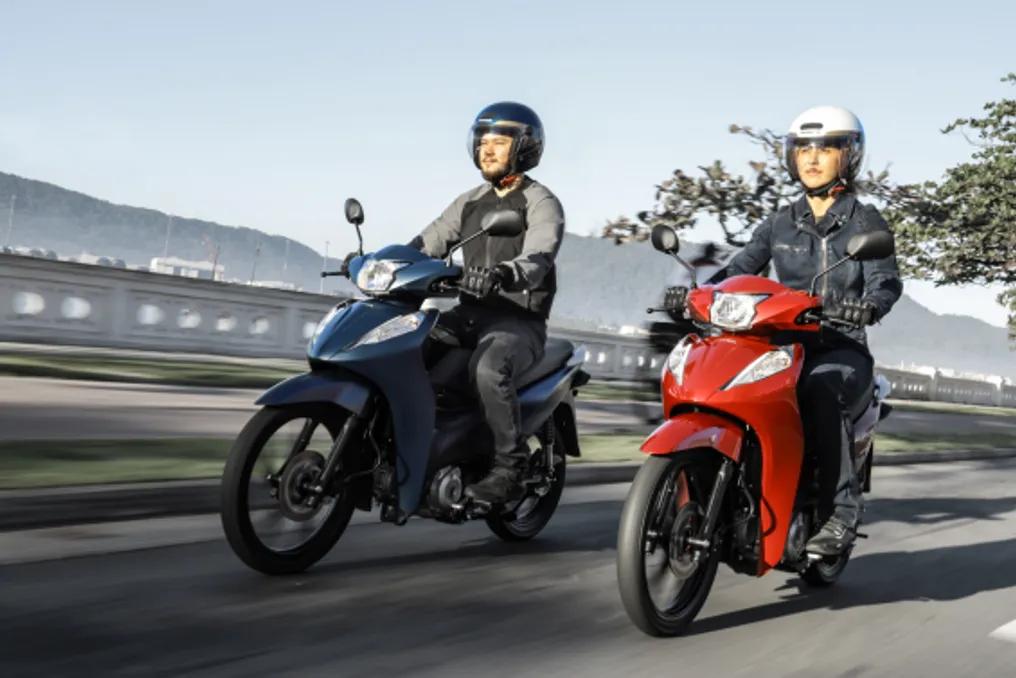
Honda is already developing new motorcycles aimed at serving both the growing female audience and young consumers belonging to Generation Z. This information was disclosed by executives of the Japanese manufacturer during a special press conference celebrating the company's 50th anniversary in Brazil, held on the 4th in Manaus (AM).

The announcement that new products are under study, focusing on these demographic groups, was the highlight of the event. Marcelo Takashi, responsible for Honda Planning, stated that the company is deeply analyzing these audiences not only to meet current demands but also to create a new motorcycle market.

Takashi clarified that, for now, the studies do not involve electric models, and the brand has not provided deadlines, nor specified segments or confirmed which studies will result in final products.

Data shows a significant increase in the number of women licensed in Category A, which jumped from 6.8 million to 10.8 million in the last decade, representing a growth of 58.9%, according to an Abraciclo survey using data from Senatran. Conversely, the advancement among men in the same period was 33.3%.

Despite this growth, women still constitute a minority, representing approximately a quarter of all licensed individuals in the country, which justifies Takashi's mention of the need to 'develop the market itself.'

Regarding young people, surveys conducted by the MAPFRE Foundation indicate that the start of riding practice occurs early in Brazil: 26.5% of motorcyclists started at age 18, and another 27.5% were between 19 and 24 years old, meaning more than half were already riding before the age of 25.

Globally, the number of Category A licensees in Brazil increased by 39% in ten years, rising from 30.7 million to 42.7 million. A survey conducted by Abraciclo associates in 2024 revealed that the moped is the best-selling category for the female public, accounting for 58% of sales, followed by the scooter, with 31%.

Similar stories

Honda launches 750W electric mountain bike in partnership with Rotwild
Read more
olhardigital.com.br

Honda launches 750W electric mountain bike in partnership with Rotwild

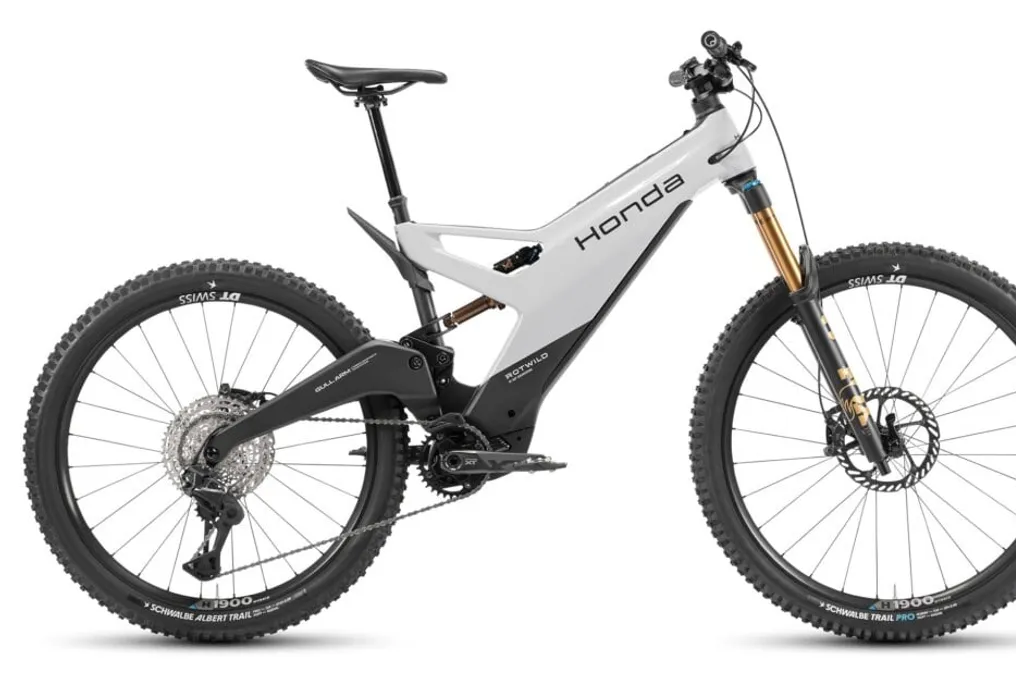
Honda unveiled its first high-performance electric mountain bike during EICMA 2026, a motorcycle event held in Milan, Italy. This new model, named RN0, was developed in collaboration with the German manufacturer Rotwild, blending aesthetic elements inspired by Rotwild motorcycles with components focused on off-road cycling.

The RN0 is positioned in the market as a premium offering of electric bikes. Although it incorporates advanced technology and a carbon fiber frame, it also integrates automated systems to simplify the experience for novice cyclists. The sale of this model will be restricted to specific Honda dealerships.

The propulsion system used in the RN0 is the EP810, supplied by Shimano, which has the capacity to generate up to 750W of maximum power and 100 Nm of torque. Power is supplied by a removable 720 Wh lithium-ion battery.

A notable feature is the Shimano Di2 electronic shifting system, which includes AUTO SHIFT and AUTO ASSIST functionalities. These features automate both gear changes and part of the electric assistance management, reducing the need for cyclist intervention during the ride.

Additionally, the motor ensures that power is delivered to the rear wheel for a brief period after pedaling stops, a characteristic that, according to the proposal, helps the bike overcome obstacles when the cyclist stops pedaling.

However, such features may not be ideal for more experienced mountain bikers, who generally prefer to maintain manual control over power and transmission. On complex trails, maintaining electric assistance can result in less predictable bike behavior.

Structurally, the Honda RN0 features a monocoque frame made of high-modulus carbon fiber, equipped with a reinforced front tube and a large bottom tube to house the battery. Its robust design recalls the style of motocross motorcycles.

The bike uses parts from renowned industry manufacturers. The front suspension is a Fox 36 Float Factory, with a 160 mm travel, while the rear features a Fox Float X Factory shock absorber, offering 145 mm of travel. The wheels have a mixed configuration: 29 inches in the front and 27.5 inches in the rear. The braking system consists of four-piston Shimano Deore XT hydraulic brakes, coupled with 203 mm discs, and the tires are Schwalbe Albert Evo radial.

In the large size version, the RN0 weighs 24 kg. Despite the quality of construction and finish, preliminary tests identified an acoustic issue: the hollow carbon frame tends to amplify mechanical noises generated by the chain and transmission vibrations during use.

The RN0's distribution approach sets it apart from other electric mountain bikes. Instead of being sold in specialized cycling stores, the model will be exclusively marketed at selected Honda dealerships that sell motorcycles, automobiles, and boats.

This strategy aims to bring the bike closer to customers who already frequent these establishments looking for higher-value vehicles. The collaboration with Rotwild also signals the Japanese manufacturer's entry into this niche of electric mountain bikes for the end consumer.

Rotwild, the German company, already has experience working with high-end automotive brands such as Porsche and Mercedes-Benz. The RN0 makes a historical reference to Honda, as its name evokes the RN01, a downhill bike presented in the mid-2000s that won a World Cup title in the discipline.

Although Honda has not yet released the official price of the RN0, market estimates suggest a range of US$ 9,000 to US$ 12,000. At this price point, the model will compete with bikes such as the Specialized Turbo Levo and the Santa Cruz Heckler.

Honda's R$ 3.3 billion investment aims to increase motorcycle production in Brazil
Read more
autopapo.com.br

Honda's R$ 3.3 billion investment aims to increase motorcycle production in Brazil

Honda announced this week an investment of R$ 3.3 billion dedicated to its motorcycle production in Brazil. According to the manufacturer, this injection will allow it to double the number of production units in Manaus, from two to four, aiming for an annual capacity of 2.3 million units by 2029.

This move represents a considerable challenge for competitors, given that Honda already holds a dominant position in the market. The situation can be interpreted as an effort to capture a large part of the market, as the company is expected to end the year with 1.6 million motorcycles, while the Manaus Industrial Pole projects the manufacturing of 2.1 million units, according to Abraciclo data.

Honda's goal of 2.3 million motorcycles by 2029 is almost equivalent to the total number of vehicles sold in Brazil in 2026, representing an increase of approximately 44% compared to the expected volume for the current year. Theoretically, this would be enough to restore Honda's market share percentages to the range of 70% or 80%.

Current Market Share Situation

Currently, Honda holds 65.62% of the Brazilian market share. This percentage dropped after the Covid-19 pandemic and the increased presence of Indian and Chinese brands in the country. Although Honda continues to sell in growing volume, its percentage share has decreased; in the first half of 2025, it registered 67.67%, and in the same period this year, 65.73%.

During this period, there have been consistent, albeit small, advances by brands such as Shineray, which rose from 5.73% to 6.27%; Bajaj, which went from 1.13% to 1.53%; and Haojue, which evolved from 1.01% to 1.18%. These gains were concentrated in entry-level categories that sustain Honda's sales volume.

Expert Analysis of the Investment

Luiz Vicente F. de Mello, a motorcycle specialist at Bright Consulting, argues that the investment is not primarily a response to competition, but rather a solution to an internal problem within Honda itself: the inability to meet existing demand. He points out that the brand faces pent-up demand, where there are waiting lists for certain models, even when production is ongoing.

According to Mello, the injected capital aims to align factory capacity with the company's actual sales volume. He explains that sometimes consumers who wanted to buy a Honda could not due to long waiting times, opting instead to purchase products from immediately available competitors. Thus, part of the growth of Chinese and Indian brands occurred due to the lack of stock from the leader.

However, if Honda solves this logistical bottleneck, the market dynamic could change drastically. The specialist states that a well-executed investment will force other brands to react, under penalty of suffering a reduction in their market share. This would cause rivalries to shift focus to the dispute over product and price, and no longer just availability.

Additionally, the general economic scenario favors Honda's leadership. Mello observes a trend of migration from car use to motorcycles, driven by growth projections until 2027 and the current cost of automobiles. He believes that even with sales growth, Honda can capture an even larger share of the national market.

Stakeholder Positions

Marcos Bento, Commercial Director of Honda Motos and also President of Abraciclo, stated that the company positively receives the entry of new competitors, provided that the competition occurs within the competitive norms established by the market.

The real threat to rival companies lies not in the size of the new factory unit, but in what it eliminates: waiting time. The brands Shineray, Bajaj, and Haojue combined still do not reach 10% of the market, while Honda maintains the CG 160 with over 22% of participation in all registrations, in addition to owning seven of the ten best-selling motorcycles in the country. Much of the success of the newcomers was achieved by taking advantage of gaps that the leader could not fill.

It is concluded that if the market continues to expand, Honda will grow along with the guarantee of immediate delivery; if there is a slowdown, there will be idle capacity.
Honda announces R$ 3.3 billion investment in Brazil to expand production in Manaus
Read more
autopapo.com.br

Honda announces R$ 3.3 billion investment in Brazil to expand production in Manaus

Honda announced a financial injection of R$ 3.3 billion designated for the Brazilian market. This investment aims to increase productive capacity and boost vehicle manufacturing, focusing on the city of Manaus, in the state of Amazonas.

The news was presented last Wednesday (4) during a press conference held to celebrate the brand's 50 years of presence in the country. According to Japanese representatives, the plan includes the construction of two new production facilities, each equipped with its own assembly line.

With this expansion, Honda aims to achieve an installed capacity of 2.3 million motorcycles by 2029. This volume exceeds the total of 1.9 million currently produced by all brands in the national market.

Investment Details and Employment Impact

The R$ 3.3 billion will be applied between 2026 and 2030, adding to a previous investment of R$ 1.6 billion made last year. In addition to increasing capacity, the expansion of operations in Manaus is expected to generate 2,000 new jobs to support production growth. Currently, the factory has 9,000 direct employees.

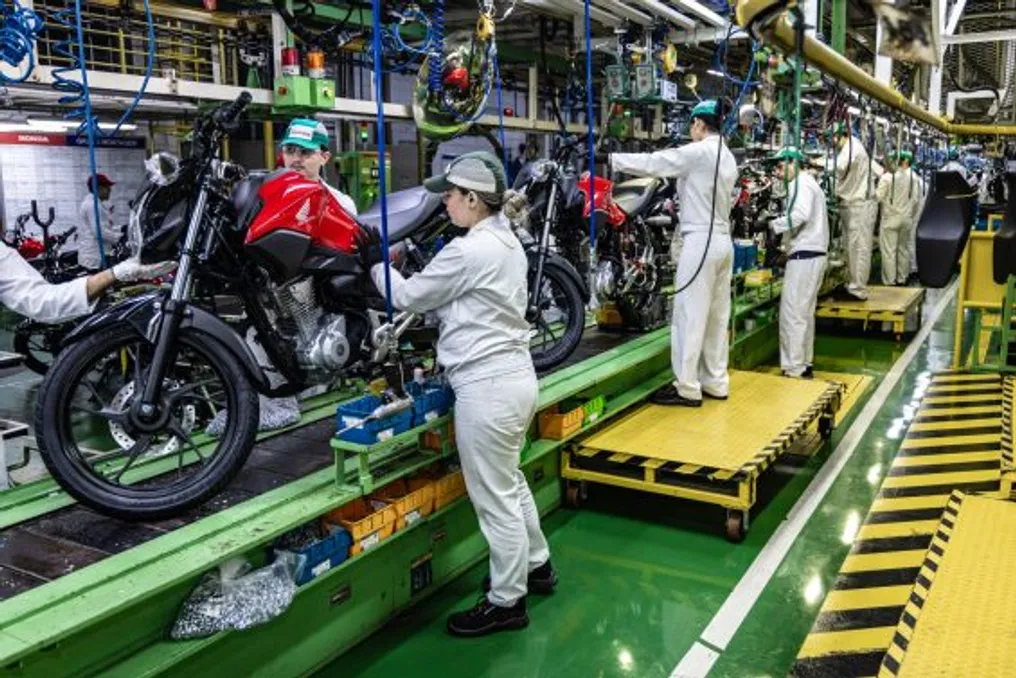
The Manaus complex already has four assembly lines spread across two production units. The new investment cycle foresees the construction of two more units within this same complex, each with its dedicated assembly line and other associated manufacturing processes.

Market Strategy and Competition

In response to questions about whether the strategy is related to a gradual loss of market share, Marcos Bento, Honda's sales director in Brazil, assured that the company's objective is to maintain leadership. He emphasized that any increase in market share, returning to higher levels, is always positive.

Currently, Honda holds 64.05% of the national motorcycle market, although this percentage has decreased due to the growth in the number of competitors, despite having once approached 80%. Despite this scenario, the manufacturer expressed no concern, as its sales are on the rise. Beto stated that Honda positively receives the arrival of new competitors, provided that competition occurs under the sector's competitive norms.

Operations and Technology

During the event, executives also addressed other aspects of the Brazilian operation. Regarding the introduction of electrified models, the Japanese company mentioned that it constantly monitors the needs of each consumer and country but did not confirm any specific launch. In the context of the 'energy race,' Honda emphasizes that its focus in Brazil is the FlexOne technology, which allows for the use of both ethanol and gasoline.

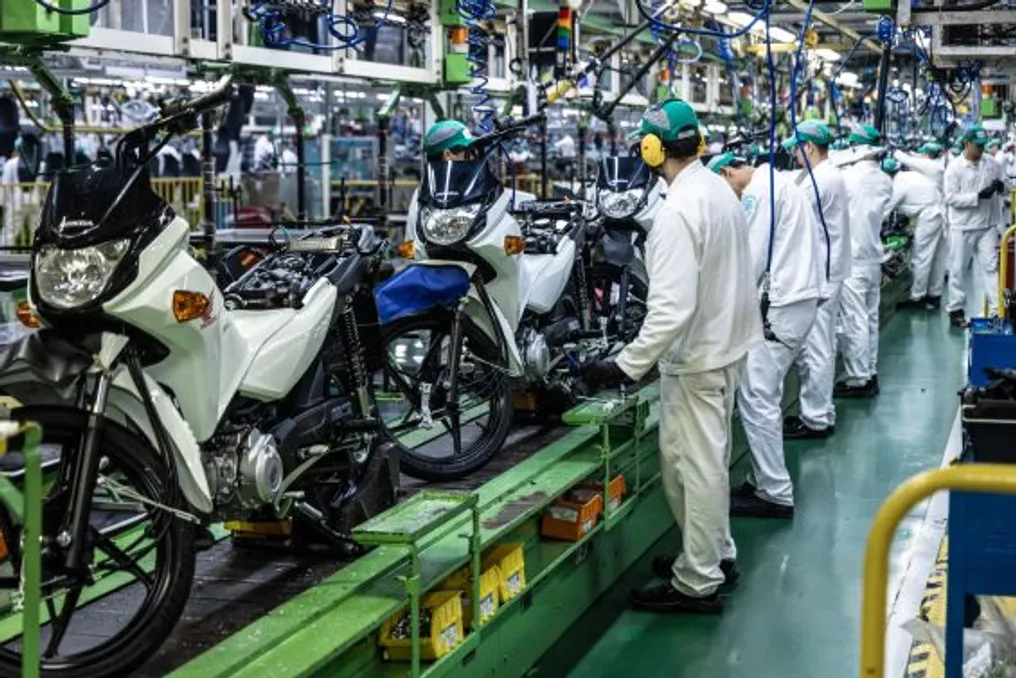
The factory, established in the Free Trade Zone since 1976 and responsible for all Honda motorcycle production in Brazil, has assembled over 33 million units over five decades. Daily, 7,200 motorcycles are produced, covering 20 models with engine displacements ranging from 110 cm³ to 1,100 cm³.

Beyond the domestic market, the unit exports to 19 nations, including the United States, Australia, and Mexico. Honda describes this operation as the most vertically integrated globally for the group, as it manufactures most components internally, such as chassis, wheels, seats, and engines. The company also maintains more than 1,200 points of sale and more than 120 direct suppliers in the country.

Popular