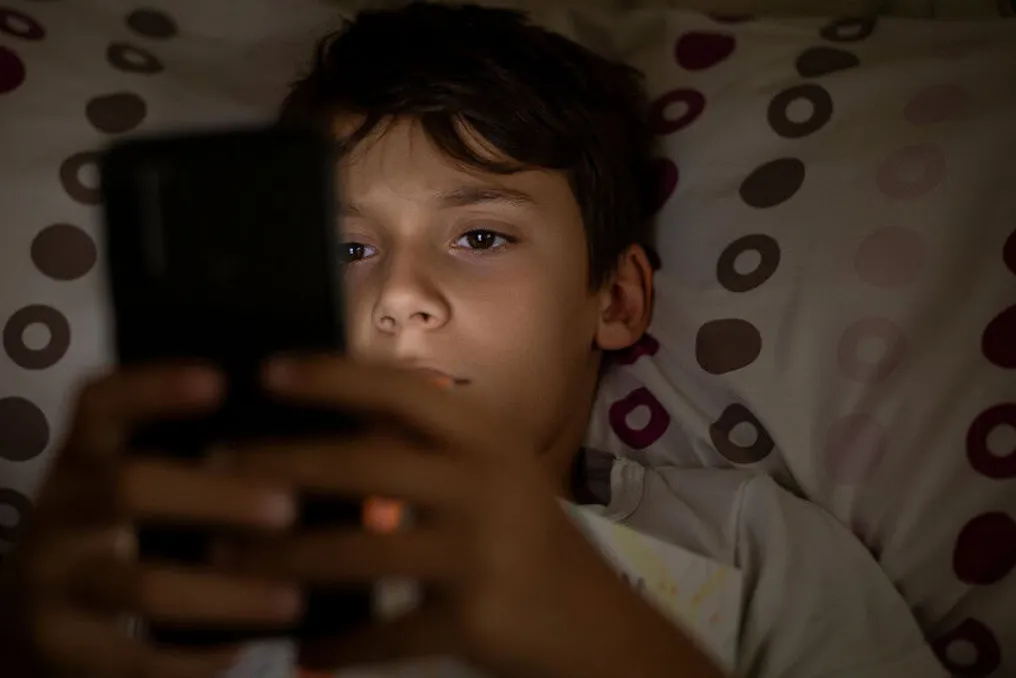
The question of how much time a person spends using a mobile phone often causes concern, especially when constant fatigue is felt. The common belief is that high screen time is the culprit for this condition, but experts point out that this is not always the case.
There are certain limits that require attention, for example, if the average phone usage time approaches eight hours. Nevertheless, the key point is not so much counting hours as analyzing how exactly that time is spent.
Specialists quoted by Olhar Digital advise asking oneself questions about the content of one's screen time. According to recent studies, the focus is shifting from simply counting hours to the quality of gadget use.
According to Kenneth Correa, a professor at FGV and a specialist in new technologies, the latest scientific data published in July 2025 in the Journal of the American Medical Association (JAMA) has moved away from assessing screen time solely in hours and minutes.
Researchers from Weill Cornell, the medical faculty of Cornell University in New York, analyzed about 4300 American children aged ten to fourteen. Correa noted that total screen time at the beginning of the study did not correlate with deteriorating mental health. Instead, a significant indicator was compulsive usage patterns: difficulties in stopping use and a growing need for it.
Correa emphasized that although consensus on the scale of harm is still lacking, recent evidence points to usage patterns as a more reliable indicator than the clock itself. He compared measuring mental health through screen time to assessing a person's diet based on the time they spend at the table.
In Brazil, a study by the consulting company Bain & Company, published in September 2025, shows that Brazilians spend an average of about 9 hours and 13 minutes per day connected to the internet. The average global figure is 6 hours and 38 minutes. Correa notes that by any hourly scale, the entire country is at risk.
For him, healthy device use is determined by what happens on the screen. He argues that programming, writing texts, searching for information, or video calling a friend uses the same device as two hours of endless short video viewing, but has a completely different impact on the user.
Psychologist Fredy Finyer stated that a healthy attitude towards technology begins when a person is able to establish a conscious connection with it without harming their well-being, daily routine, and self-care. He believes that a smartphone should serve as a tool for life, not the other way around.
Finyer also highlights the difference between intentional and automatic phone use. He notes that people often pick up a device without knowing what they are looking for and may find that 40 minutes have passed just by entering a social network for some information.
In the psychologist's opinion, excessive phone use has psychological consequences. The first is reduced concentration, as the constant stream of stimuli, notifications, and news promotes fragmented attention, making it difficult to stay engaged in one activity for long. Another problem is social comparison: users often compare their everyday struggles with carefully selected moments from others' lives on social networks, which can generate feelings of inadequacy, disappointment, and dissatisfaction.
Furthermore, Finyer points to anxiety and emotional escape. People tend to turn to the device when experiencing anxiety, frustration, loneliness, or boredom to avoid confronting these feelings.
Regarding the degree of harm caused by screen time, science remains divided, according to Correa. On one hand, he refers to social psychologist Jonathan Haidt from New York University, author of the book 'The Anxious Generation.' In March, Haidt co-authored a chapter in the annual World Happiness Report 2026, published by Oxford University in collaboration with the Gallup Institute and the UN network. There, he argues that social media harms adolescents on a population level and advocates following Australia's example, which banned accounts for those under 16 in December 2025.
On the other hand, Correa cites psychologist Candice Oger from the University of Irvine in California, who refuted Haidt's book in the journal Nature. She states that hundreds of researchers have looked for such effects and found null, small, or mixed correlations.
Correa also mentions a 2025 study involving 32 experiments where volunteers were randomly assigned to reduce social media use. According to him, this study 'landed in the middle': reduction improves some well-being indicators, but marginally.
Faced with these disagreements, Correa defines healthy use as that in which the person decides when to start and when to stop. Such use should complement life, not take its place.
Correa emphasizes that an hour using a laptop differs from an hour using a tablet, which in turn differs from an hour using a smartphone. This difference is due to the fact that each device type can have its own mode of use. For example, a person might use a laptop only for work, a tablet for reading and games, and a phone for accessing social networks. Smart TVs fall into this category as well.
He draws a comparison: a TV in the living room functions like a campfire around which the family gathers, and the content becomes a topic for dinner. A phone, however, is like a flashlight directed at the face of one person within arm's reach. Therefore, in Kenneth Correa's view, a 'honest count' of screen time should be based on four questions that phone usage reports do not answer.
The Bain & Company study also shows that screen time tops the list of habits Brazilians wish to change, surpassing diet and sedentary lifestyle.
If you are one of those Brazilians who wishes to change their screen time (now considering the importance of context behind that number), you should start by setting boundaries. Correa proposed three levels based on behavior, not on time itself. The main question transforms from 'How many hours?' to 'Who decides when the use ends: the person or the feed?'
Psychologist Fredy Finyer also provided recommendations on this topic.
_