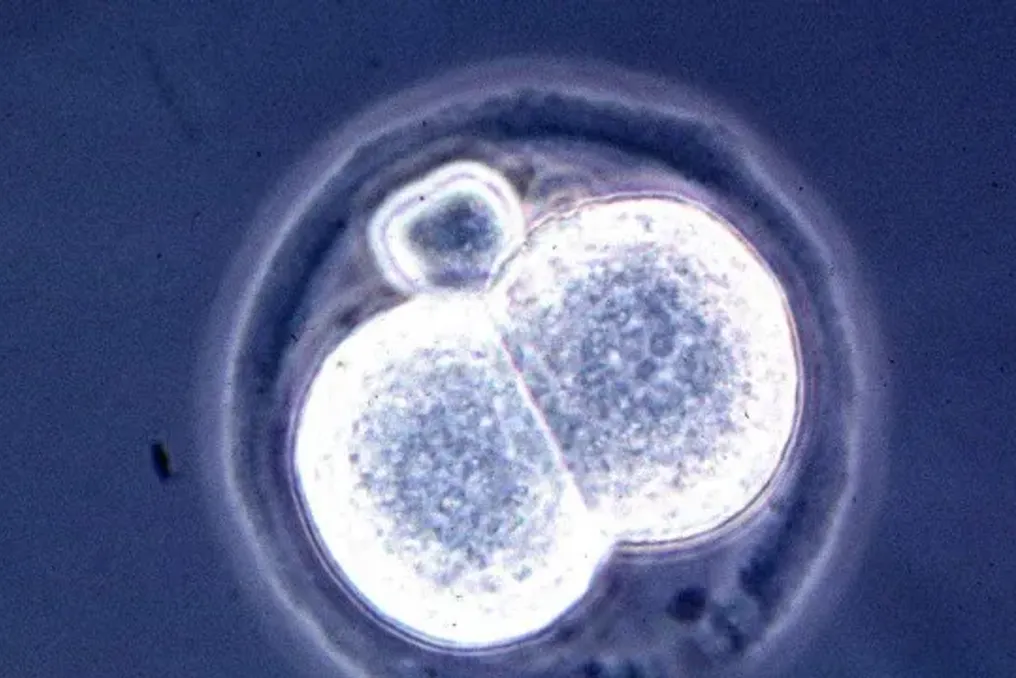
The Dutch Senate has approved a legislative reform that will permit the creation of human embryos specifically for scientific investigation. The goal of this initiative is to advance the study of hereditary diseases and improve fertility treatment methods.
The proposal was put forward by the liberal-progressive party D66 and the liberal-conservative party VVD. It was approved by a majority of 38 votes to 35 after the Dutch parliament had supported it back in December of last year, with 90 votes in favor and 59 against.
Previously, Dutch legislation only allowed research using surplus embryos obtained from in vitro fertilization (IVF) procedures—an assisted reproductive technology involving fertilizing eggs in a laboratory. However, these embryos were already at a stage of development too advanced for studying the earliest moments after fertilization.
The new reform will allow scientists to create embryos exclusively to study processes occurring in the first hours and days of development, which could potentially contribute to improving fertility treatments.
Supporters of this initiative believe it will accelerate medical progress. At the same time, critics express concerns about creating human life that will subsequently be destroyed, warning of a possible opening to so-called 'designer babies' with genetically selected characteristics chosen by parents.
Among the main opponents are the religiously oriented parties SGP (Calvinist) and ChristenUnie (Christian Democratic), which advocate for the protection of human life from its earliest stages.
With this approval, the Netherlands joins a number of other European countries, such as the United Kingdom, Belgium, Sweden, and Finland, where the creation of embryos for scientific purposes is permitted under certain conditions. In contrast, countries like Germany, Italy, and Austria maintain stricter regulations regarding embryo research.