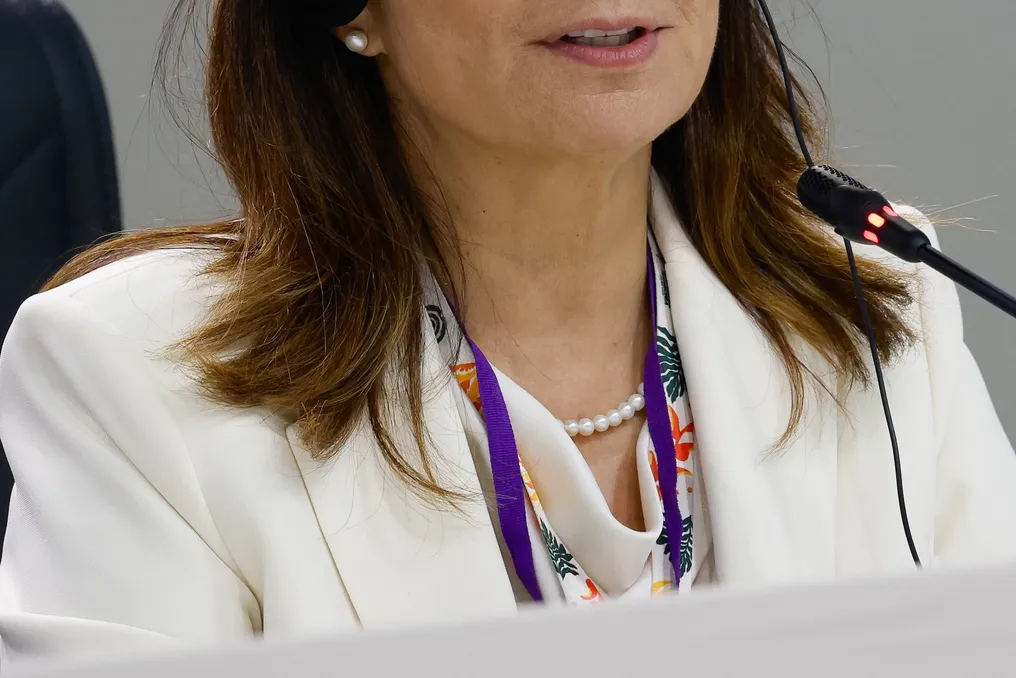
Ana Toni, who chaired the climate conference COP30 in Brazil last year, led the development of the Roadmap for Transitioning Away from Fossil Fuels. This map was presented in Brasilia on November 3, six days before the opening of the current COP31 conference.
The roadmap suggests that each country conduct a self-assessment of its dependence on and readiness to abandon fossil fuels using a special tool. It then points to relevant policy options, divided into three phases calculated up to 2033. Although countries are not obliged to follow these recommendations, the presidency hopes they will prompt states to develop their own national plans.
To date, three major countries have taken such steps: France, the Netherlands, and Germany. Reducing and ceasing the burning of fossil fuels is critical to preventing the worst consequences of climate change, but at UN climate conferences, this has not always been clearly reflected in final decisions.
At COP28 in Dubai, there was a call for 'transitioning away from fossil fuels in energy systems,' but progress slowed due to resistance from oil-producing countries and the United States' withdrawal from the Paris Agreement. At COP30, a large group of countries insisted on including the roadmap in the final document, but opposition prevented this. As a result, the presidency announced it would develop such a map outside the UN process, based on the results of the first international conference on the transition away from fossil fuels, which took place in Colombia in April with the participation of 57 countries.
In an interview with Dialogue Earth, Ana Toni spoke about the potential of these roadmaps in combating climate change. She emphasized that the map aligns with the 1.5°C goal but is not a universal solution, as it recognizes the different starting points, energy resources, and capabilities of countries.
Citing China as an example, she noted that the country has historically been heavily dependent on coal but is rapidly expanding renewable energy sources, whereas about 90% of electricity in Brazil already comes from renewable sources. These differences must be considered when planning the transition.
The first step is understanding the degree of dependence on fossil fuels in terms of demand, supply, and the broader economy. Without this understanding, it is impossible to determine suitable policies and levers for moving forward. Therefore, a readiness index and various country archetypes were developed to help states assess their dependence and identify the most relevant policy options for their specific conditions.
Ana Toni added that beyond simply transitioning from one technology to another, it is necessary to plan the exit from fossil fuels while considering the social and economic consequences of this process. Feedback from organizations in China showed the need to account for the social impacts of the transition on the elderly, which could improve the roadmap and national plans before COP33.
China has demonstrated the ability not only to create plans but also to implement them, sometimes exceeding its own targets. Many developed and developing countries can learn lessons from this experience. There are two views on China's role: some believe it can accelerate efforts to decarbonize the economy and energy, especially regarding peaking emissions; others see its role in assisting other countries with decarbonization. Without China's contribution, the transition for countries like Brazil and many African nations would be much more difficult. Its participation in expanding access to renewable energy technologies helped make them more accessible and cheaper.
Ultimately, China's climate impact must be viewed in two dimensions: its domestic decarbonization efforts and international support for the transition. Both aspects are crucial for global climate efforts.
The hope is that the roadmap, along with the national plans being developed, will help assess the progress made, identify gaps, and determine what else needs to be done to have a clearer picture of the steps required to abandon fossil fuels by that time.
If we do not discuss the difficulties of the transition and simply add renewable sources, we will always have two parallel systems. The next key opportunity will be the second Global Stocktake (GST 2), which begins this year and concludes in 2028 at COP33. At COP28, the first Global Stocktake set main goals for the energy sector: tripling renewable energy capacity, doubling the annual rate of energy efficiency improvement, and transitioning away from fossil fuels. At GST 2, progress on these three goals must be assessed, for example, noting that the energy efficiency goal remains far from being achieved.
This roadmap was adopted by the COP30 presidency and does not have a mandate from the UNFCCC. Unfortunately, there is currently no comprehensive UN-based institute covering energy. The International Energy Agency (IEA) has about 35 member countries, and the International Renewable Energy Agency (IRENA) has a much wider membership but focuses only on renewable sources. There is a lack of a specialized international forum to address energy issues in general, especially the transition away from fossil fuels.
Such an body may appear in the future. However, the priority now should remain understanding our dependence on fossil fuels—not only in terms of energy supply but also considering broader economic consequences. Ana Toni believes that policymakers, governments, civil society, and the media do not fully grasp how deeply this dependence is woven into tax systems and local and regional economies. Without this awareness, it is impossible to determine the right levers for moving forward.
Within the COP30 agenda, there are many items on which multilateral groups, countries, or multilateral groups are already working. For example, countries and companies are working on reducing methane emissions from the oil and gas sector. China is a very active participant in methane commitments. We need to focus on smaller contributing topics instead of viewing it as something magical. For instance, Ethiopia adopted legislation banning the import of internal combustion engine vehicles, allowing only electric vehicles from this year, and Rwanda is following this example.
Attention is now focused on many aspects necessary for the transition. The proposed '35 by 35' electrification target is obviously an important part of this. This proposal, put forward by the COP31 presidency earlier this year, calls for setting a global target to increase the share of electricity in final energy consumption from approximately 20% currently to 35% by 2035.
Other key elements that need to be addressed include fossil fuel subsidies, the economic dependence of some countries on fossil fuel exports, and methane emissions. COP31 can help deepen discussions on these issues. While our roadmap may provide a broader framework for addressing various elements over time, future COPs will advance specific aspects.
Civil society can support this work, but it would be valuable if an organization like the IEA, IRENA, or the UN Environment Programme supported the overall structure. Since each COP advances individual priorities, someone is needed to ensure a holistic view of progress across all policies required for a successful transition away from fossil fuels.