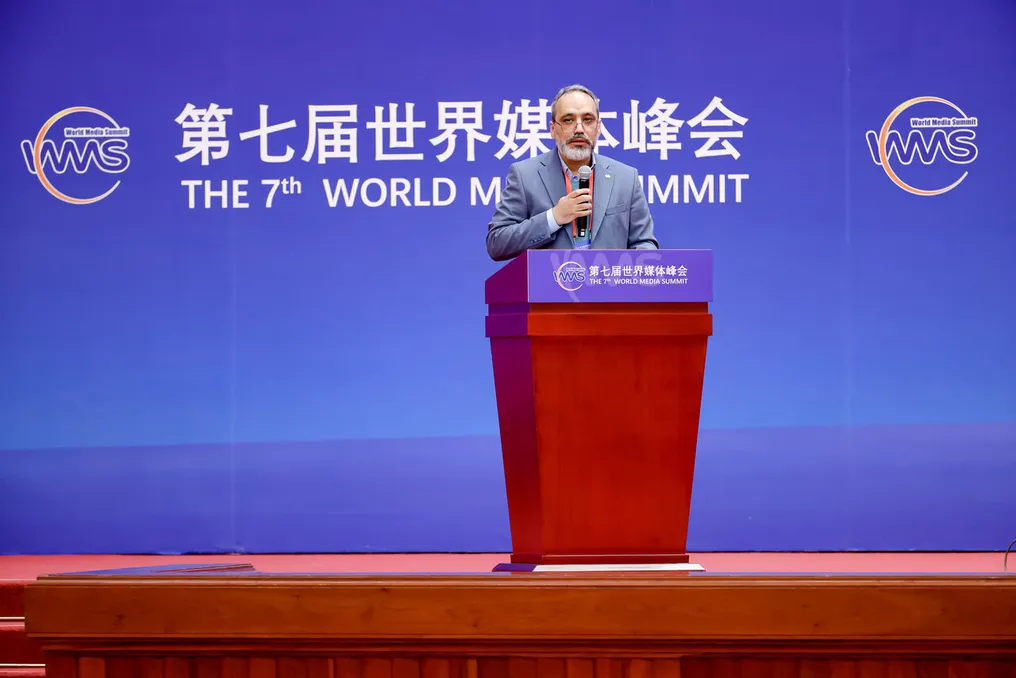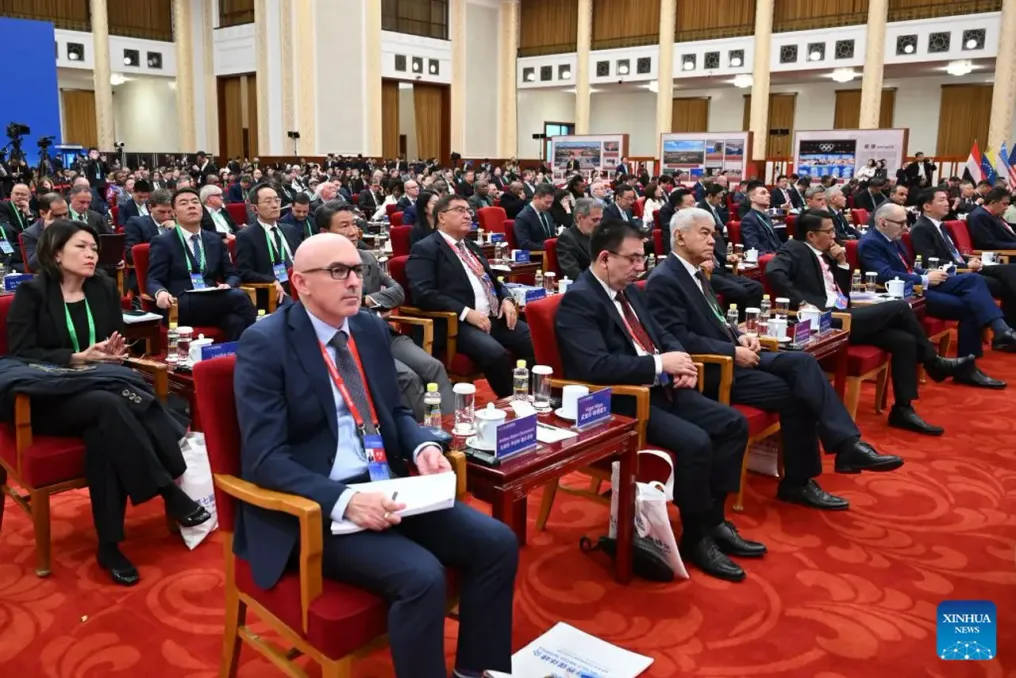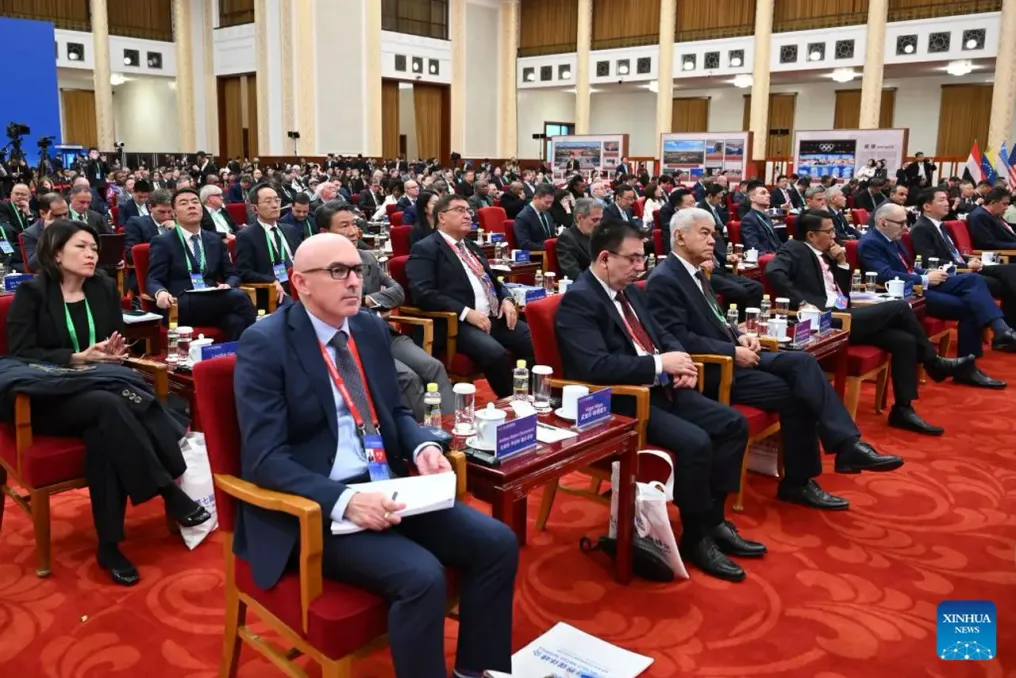
At the World Media Summit in Beijing, the discussion about artificial intelligence has moved from theoretical debates to the development of concrete rules. For Central Asian and broader Global South editorial offices, the key issue remains the participation of these groups in creating these standards.
During the seventh World Media Summit, which gathered around 500 media leaders from 112 countries, the theme 'Media in the Intellectual Age: From Consensus to Action' reflected the industry's growing impatience. After three years of discussing artificial intelligence, the focus has now shifted to the necessity of establishing regulations.
However, the rules will only be effective if the people who are supposed to follow these norms participate in their formation, and if they protect the only asset that no algorithm can create—trust.
Several summit participants agreed that AI already affects almost every stage of news creation: from drafts and translation to editing, summarizing, recommendations, and distribution. Xinhua demonstrated an AI-based information agent with source checking and verification functions, as well as two humanoid host robots. The technology is accessible and will become cheaper.
It changes the conversation about the cost of error. Generative AI makes it easy to create fake voices, videos, or quotes. One such fabricated piece that passes an editor's check can undermine the trust of a news publication that has built it over decades. Marek Tracki from the Polish Media Association framed the problem this way: 'Speed is not accuracy; anyone can broadcast, but who is responsible?' Kamel Mansari from the Algerian publication Le Jeune Indépendant went further, calling the unconditional dependence on automated content 'editorial suicide.'
Reuters President Paul Baskobert voiced a similar view from another part of the industry: tools have fundamentally changed, but the fundamental principles remain the same. The work done by humans remains the most important element of journalism.
The potential of AI is real and should not be ignored in favor of warnings. When used correctly, AI allows a small publication to translate materials faster, summarize long official documents, cross-reference figures with databases, and reach readers in more languages than a team could manage alone. Xinhua President Fu Hua stated that media must provide all professionals with equal opportunities to benefit from AI. AFP Chairman Fabrice Fries expressed a similar opinion: the benefits of this technological revolution should reach much wider than just a handful of companies or countries.
Both statements are easy to accept. The more complex question is what is needed for these statements to become true for a twenty-person news organization in Tashkent, Dushanbe, or Bishkek, rather than for a global agency with its own engineering department.
A second uncomfortable truth emerged during a panel discussion on the impact of AI and trust. Now, news editors do not make decisions about what audiences see unilaterally. Decisions are made by platforms and their ranking systems, as well as by creators with millions of subscribers.
Allavod Pulya from RT China stated directly that large technology companies have become new gatekeepers. One leading panelist admitted that content created with real money and effort often loses to 'fun fake material.' For an editor, this can be described as a market failure. Verification requires costs, while lies are cheap, and the algorithm does not care which.
The panel could not agree on who should be held responsible for misleading content created with AI: the creator, the publisher, the platform, or the AI provider. It was concluded that responsibility cannot lie with one specific controller. This may be true for the ecosystem as a whole. However, the publisher has no reason to wait: their name is attached to what they publish. Regardless of what tools created the text, the responsibility lies with them.
The same panel discussed why young viewers increasingly turn to individual creators rather than established news brands. The answers related less to technology and more to tone. Mexican creator Diego Ruzzarin, with over 10 million subscribers across various platforms, argued that life experience and cultural connection matter more than an institutional logo. Pulya called on traditional media to engage with popular culture, noting that genuine emotional attachment is what every publication should learn.
It is easy to dismiss this as advice for entertainment channels. But it is not. In Uzbekistan, as in many regions, a significant portion of readers receives news primarily from Telegram channels and social media accounts managed by private individuals. Many of these are timely and engaging; only a few publicly correct their mistakes. Established publishers cannot win this contest solely on speed, nor should they try to win by lowering their standards.
What can be done is combine the strengths of creators with our own: the human voice, explanations instead of dry headlines, formats adapted for mobile phones, and pre-publication verification discipline. AI can help with the first part, turning a long report into an understandable explanation or a short video script. Only editors can guarantee the second part.
The most concrete outcome of the summit was the Global Media Initiative for joint development of AI application standards. Twenty-two founders, including Xinhua, TASS, Bernama, and Independent Media from South Africa, plan to develop these standards over approximately two years and test them in real newsrooms. Participants also supported the creation of a global database of AI applications for media and called for the exchange of open-source models, educational resources, and verification practices.
Delegates from Africa, Asia, and small island states emphasized what is most important for publications like theirs. Aminat Namza from the State Media of the Maldives asked how small countries can have a significant voice in shaping AI, since most models are trained predominantly on societies with a large digital footprint. Vasan Subramoney from Independent Media South Africa countered that the Global South must participate in the development, governance, and ownership of these technologies, not just consume them. Wong Chun Wai from Bernama added that access to basic AI tools is not enough: newsrooms must invest in advanced tools and train people in their competent use.
For residents of Tashkent, all of this is not abstract. They publish in Russian, Uzbek in two alphabets, and English. For most commercial models, Uzbek remains a low-resource language. Machine translation of economic news still requires a human who can distinguish between a presidential decree and a draft resolution, or a tax rate and a tax base. If the standards resulting from this process are geared towards English-language newsrooms with large technology budgets, then these will be standards for someone else.
The initiative is also largely led by state news agencies. Its standards will only carry weight if commercial, independent, and regional publishers from various editorial traditions can join the development and testing on equal terms. A standard that has not helped shape the majority of the industry is a recommendation, not a standard.
Some of the most useful proposals in Beijing came from African delegates, and they were characterized by specificity. Subramoney proposed cooperation in five areas: AI translation, multimedia production, journalist training, content verification, and technical experience sharing. Agnes Kalekye Nguna from Kenya Broadcasting Corporation called for dialogue between civilizations on equal footing. Gislen Ruffin Etuget Nzuet from Gabon Broadcasting Corporation noted that the summit provided African countries with a platform to tell their own stories, highlighting how little the rest of the world knows about the continent.
Nadjih Missaui from Tunis Afrique Presse characterized the standards initiative as a shift from talking about AI to joint action and setting rules. Mohammed Alami from the Union of News Agencies OIK expressed hope that the standards would be applicable to media organizations of any size and resource level.
The last condition will be the criterion for evaluating the entire initiative. Media in Central Asia are familiar with the feeling described by Etuget Nzuet: the region is often known through reports written by other people in other languages and shaped by different priorities. AI can exacerbate this if models trained on external sources become the standard way of perceiving the world about them. Or it can improve the situation if their own reporting in native languages enters the database, and their own editors participate in setting the rules. The list of five areas of African cooperation will serve Central Asian newsrooms as well as themselves and partners from all directions.
There is no need to wait two years to start acting. Five steps are available to any news publication today:
- Develop your own rules for using AI. Decide what can be automated, what must always be checked by a human, and how to label AI-generated material. Publish these rules so readers can demand compliance.
- Consider verification as part of the product, not as an expense. In an environment saturated with synthetic content, the ability to verify is a competitive advantage.
- Participate in setting standards. National news agencies, publishers' associations, and journalism schools in the region should apply to participate in the two-year process and offer their newsrooms as test sites.
- Carry out regional cooperation on languages. Central Asian publications share languages, markets, and histories. Common glossaries, translation memories, and verification resources will cost everyone a little and help everyone.
- Invest in people, not just licenses. Subscribing to an AI tool is not a strategy. The strategy is editors who understand both the tool and the story.
Trust is infrastructure.
Abdul Hakim from Antara News Agency Indonesia summarized the summit better than any communiqué: 'Technology makes media faster. Intelligence makes media smarter. But trust makes media meaningful.'
The stakes go beyond our industry. At the smart media forum, speakers linked responsible media practice and technological cooperation to global security, food and energy security, climate change, and sustainable development. Xinhua Deputy Editor Ren Weidong stated that media should not be 'observers' in the face of global challenges. In a crisis, a fabricated video or a mistranslated statement can cause real damage within hours. Accurate, verified reporting is part of how societies maintain their stability.
Abdusaid Kuchimov, CEO of the National News Agency of Uzbekistan, stated in Beijing that information should build bridges between people, not walls. AI can help us build these bridges faster and in more languages. It cannot decide what is true, nor can it take responsibility when we make mistakes. That part of the work remains ours, and it must remain so.