Robot Assembles Structure in Earth Orbit Independently for the First Time Without Direct Human Control
Read more
Olhar Digital
olhardigital.com.br

Robot Assembles Structure in Earth Orbit Independently for the First Time Without Direct Human Control

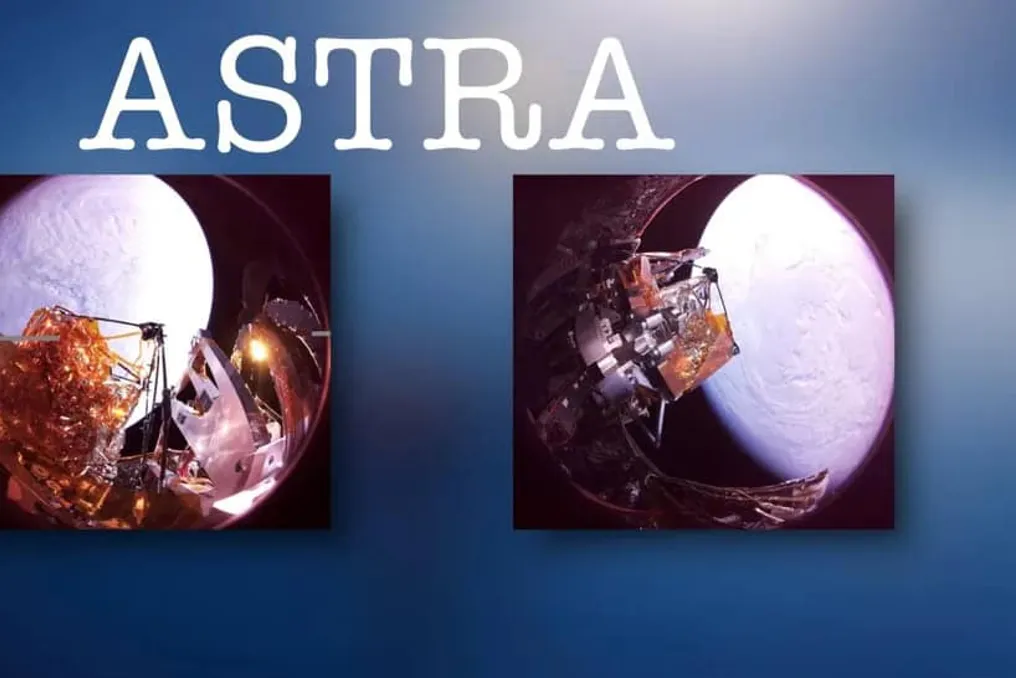
For the first time in history, a robot was able to autonomously assemble a structure in Earth orbit. This experiment, funded by the Defense Advanced Research Projects Agency (DARPA) of the United States and conducted by researchers from the California Institute of Technology (Caltech), demonstrated the possibility of robots performing construction work in space with minimal human intervention.

The project, named Autonomous In-Space Tensioned Reflector Assembly (ASTRA), used robotic equipment to assemble a 1.4-meter wide reflector antenna. The structure was made of Kapton film, composite tubes, and aluminum joints.

Sergiu Pellegrino, a professor of aerospace and civil engineering at Caltech and the team leader, stated that this is the first case of autonomous structure assembly in space. This demonstration is a significant step forward for future space missions, where robots can assemble large equipment or repair satellites directly in orbit.

The ASTRA experiment is part of a broader DARPA initiative called Novel Orbital and Moon Manufacturing, Materials, and Mass-efficient Design (NOM4D). The goal of this program is to develop technologies that allow for the erection of much larger structures in orbit, potentially reaching hundreds of meters or even kilometers in size.

Currently, equipment sent into space must fit within a rocket fairing, which protects the cargo during launch. On-orbit assembly could bypass this limitation, allowing for the creation of equipment too large to be transported ready-made.

Potential applications include communication antennas, large solar panels, and more advanced space telescopes. According to Pellegrino, this technology could also benefit projects in astronomy and astrophysics, as well as communication systems and future space-based solar power structures.

Although this demonstration does not yet enable giant construction, it represents an important proof of concept: machines are already capable of performing structural assembly tasks outside of Earth autonomously.
Similar stories

Ant Group's Robbyant releases LingBot-Touch model for tactile perception of robotic hands
Read more
pandaily.com

Ant Group's Robbyant releases LingBot-Touch model for tactile perception of robotic hands

Robbyant, a subsidiary of Ant Group, has released the LingBot-Touch model to the public. This fundamental tactile model is designed to provide robotic hands with a unified sense of touch.

Announced on November 10, the model was pre-trained on data collected from nearly 5000 hours of real tactile experience. It covers three sensory principles: magnetic, visual-tactile, and piezoresistive. The model code is available under the Apache-2.0 license, and the Tiny and Small checkpoints are hosted on Hugging Face and ModelScope.

The main problem that LingBot-Touch solves is the incompatibility of raw signals generated by different tactile sensors; touch experience gained from one type of sensor is rarely applicable to another. LingBot-Touch addresses this by providing each sensor type with its own input tokenizer, which feeds data into a common Transformer. The model maps contact points into a single fingertip coordinate space and outputs unified tactile tokens that can be used by various action models.

The repository describes a target approach in the JEPA style, which predicts latent representations from the spatio-temporal context of touch. Training data was obtained from both human-worn tactile gloves and teleoperated dexterous hands.

Testing the model on robotics tasks

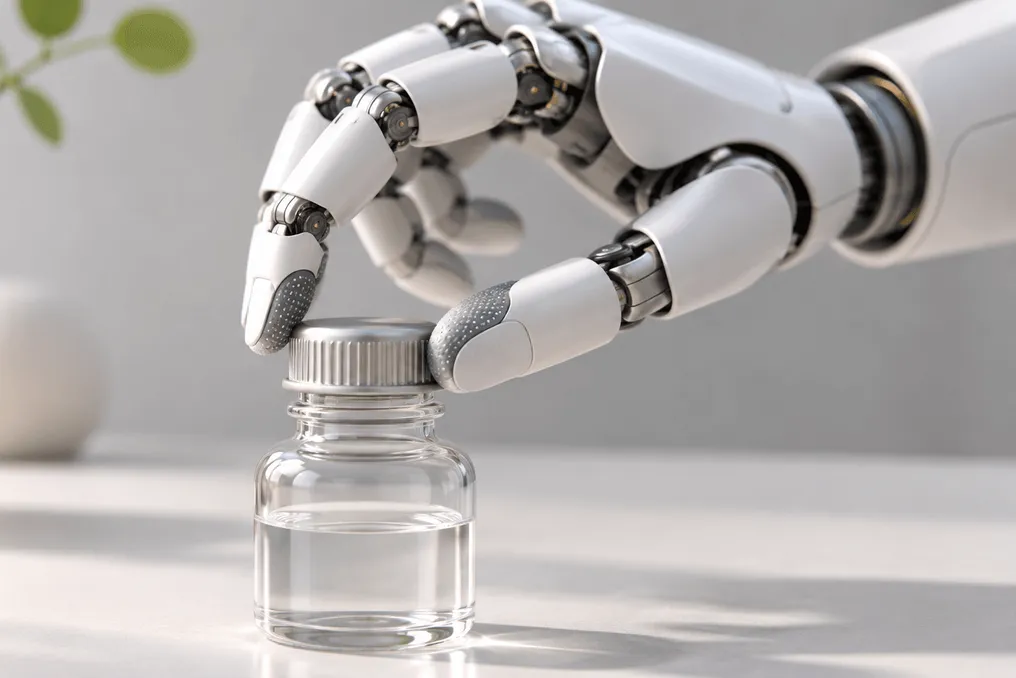
Robbyant tested the model on two dexterous hands—Sharpa Wave and XHand—across 26 tasks performed by real robots. These tasks included turning pages, twisting bottle caps, and identifying Mahjong tiles. When adding the LingBot-Touch representation to four action models—LingBot-VLA, $\pi$0.5, Diffusion Policy, and T-Rex—the average task success rate increased by approximately 14–26 percentage points compared to versions without tactile feedback.

In one instance, when T-Rex attempted to twist caps on Sharpa Wave, the success rate was 56.25% without tactility, 62.5% using raw sensor signals, and 90% after integrating LingBot-Touch.

All 26 tests were conducted using the Tiny version, which has about 5 million parameters and increases the size of connected policies by only 0.13%–0.16%. The team notes that the larger Small version continues to improve as the volume of training data increases to 5000 hours.

To verify knowledge transfer across different hardware platforms, the team froze the encoder on XHand, whose magnetic sensing module was absent in the pre-training data, and trained only the action model on XHand demonstrations. Knowledge of magnetic touch in this case was acquired exclusively from human glove data.

Robbyant positions this model as a neutral layer between tactile sensors and action models, rather than a component tied to its proprietary LingBot-VLA. This allows hardware manufacturers to choose sensors based on cost, while system teams can retain their own policies.

All presented results belong to Robbyant itself, and the company has not reported independent reproduction of this data. The release on GitHub is an inference release containing the frozen encoder and utilities for extracting tactile features.

Xinhua unveils humanoid robots for news broadcasting
Read more
uzdaily.uz

Xinhua unveils humanoid robots for news broadcasting

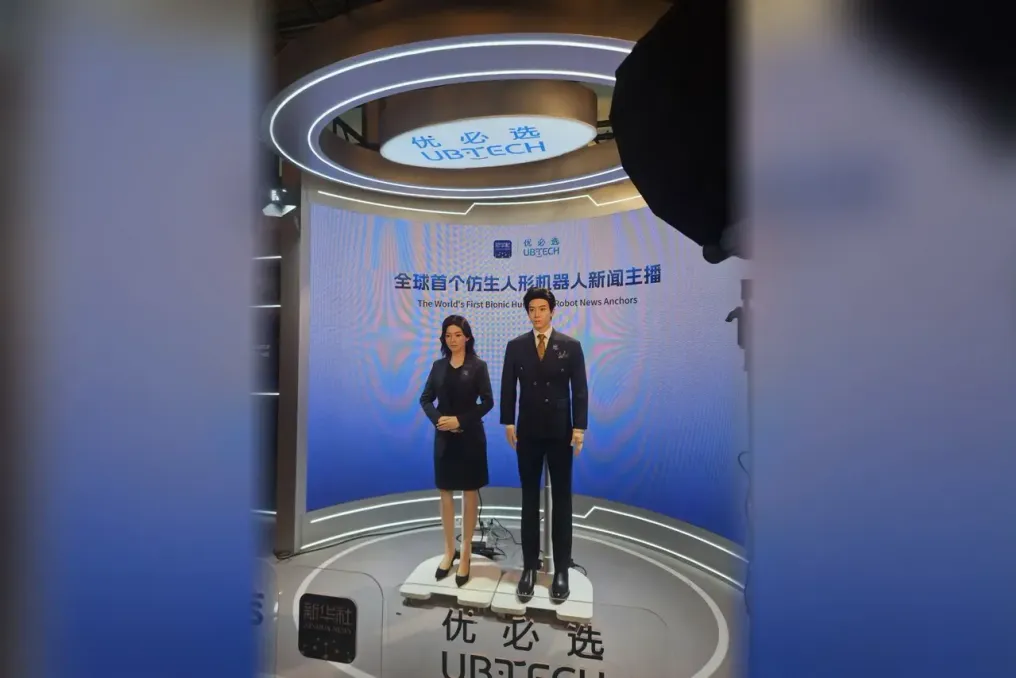
China's state news agency Xinhua, in collaboration with UBTECH, unveiled two humanoid news anchor robots on November 5th. The presentation took place at the China AI and Modernization Forum in Beijing. Xinhua described these robots as the world's first bionic robots of their kind.

The robots, named Xinyu and Xinyan, are life-sized and designed for use in news programs. During the forum, one of them demonstrated its capabilities by presenting an opening news segment on stage.

The chief designer of the robots' appearance was renowned Chinese film director Zhang Yimou. The design considered the look and behavior expected of television presenters, as well as the goal of achieving a natural resemblance to humans.

According to Xinhua, the robots are integrated with the agency's AI information agent, Xinhua Yudian. This agent utilizes the agency's established database of news and public affairs materials. The company asserts that this system allows the robots to receive up-to-date information from authoritative sources while maintaining control over the content of their reports.

UBTECH was responsible for developing the bionic skin, hardware platform, operating system, and artificial intelligence model, as well as manufacturing the robots themselves. UBTECH Chairman Zhou Jian noted that the technological system integrates information processing, facial expressions, and motion control. He added that using verified materials should reduce the risk of errors associated with generative artificial intelligence.

Xinhua emphasized that the robots will not replace journalists or editors. Tian Tung, Director of the agency's New Media Center, characterized them as a new element of editorial work. The robots will handle information presentation, content broadcasting in various languages, and audience interaction. News preparation and editorial oversight will remain the responsibility of agency staff.

Potential applications for the robots include research centers, city visitor centers, international cultural events, and coverage of deep space research.

The forum also featured a signing ceremony for the establishment of Xinhua's AI base in Beijing. Furthermore, a research project was launched to study mobile news shooting technologies and standards for ensuring the reliability of visual materials.

The forum is part of the seventh World Media Summit, organized by Xinhua in cooperation with the municipal government of Beijing. The event will run until November 9th and is expected to gather about 500 representatives from nearly 330 media organizations, think tanks, government agencies, and international organizations from 112 countries and regions.

RoboParty releases source code for its humanoid robot RP1, including mechanical design and control software
Read more
pandaily.com

RoboParty releases source code for its humanoid robot RP1, including mechanical design and control software

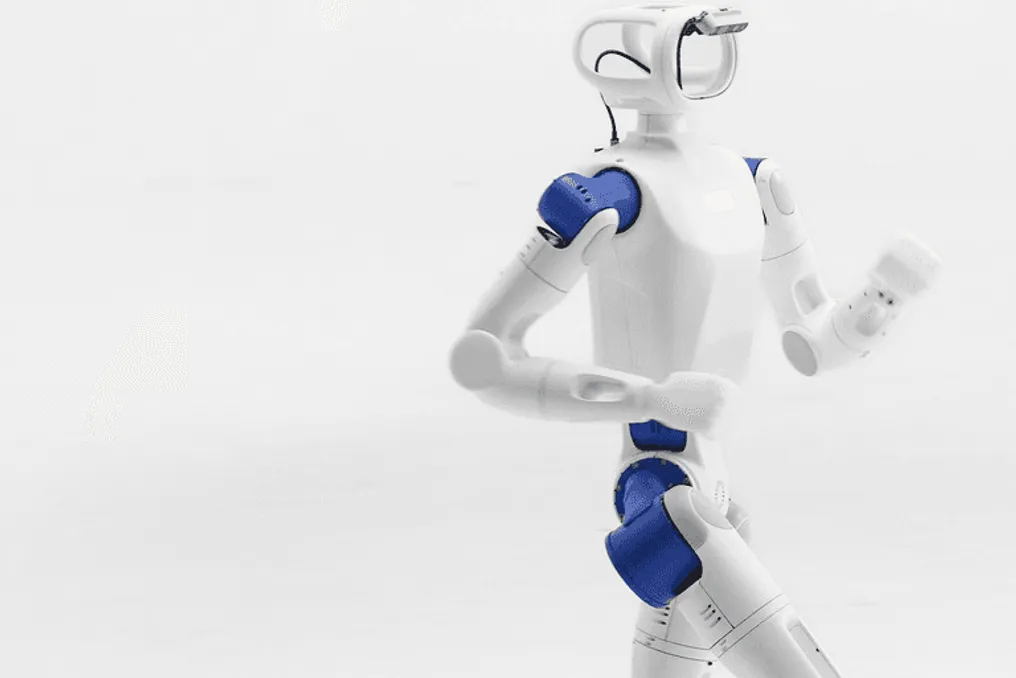
RoboParty has released the RP1, a humanoid robot positioned as a fully open, fully functional platform. Instead of providing only a Software Development Kit (SDK) or a few Application Programming Interfaces (APIs), the company is publishing materials across the entire development chain: from mechanical and electrical design and proprietary joint modules to firmware, robot models, deployment tools, and training. The description of this project was presented in technical documentation on October 25th.

The RP1 robot stands 135 cm tall. The open version is equipped with 24 active degrees of freedom, while the Professional version offers 30 degrees of freedom, including two in the head and seven in each arm, suitable for more complex manipulation research. The head and hand modules can be replaced for use in various applications such as education, scientific research, data collection, tours, or entertainment. RoboParty demonstrated the robot's ability to walk continuously, track human movements, recover from pushes, and stand up after falls.

The hardware is based on ROMOMO, RoboParty's integrated rotary joint module. According to published specifications, the nominal peak torque ranges from 25 to 160 Newton-meters when powered by 48V and using CAN-FD communication. These modules combine inner rotor motors with planetary gearboxes, allowing for the sacrifice of low rotor inertia for fast response, stiffness, overload resistance, and reduced cost. RP1 uses an off-axis hip joint and a parallel ankle, where two motors jointly control pitch and roll, and the hollow cable routing attachment simplifies joint disassembly.

On the GitHub platform, the RP1 overview repository contains links to subprojects dedicated to mechanical source files, electronics, testing and assembly procedures, ROMOMO joint firmware, and host tools, as well as the RP Hand dexterity with SDKs in C++, Python, and ROS 2, full machine testing, and controller application. The repository lists mechanical CAD models, schematics, PCB layouts, Gerber files, material specifications, and assembly documentation for the hardware, while URDF, MJCF, and mesh models are available for simulation. The original article notes that the exact scope of each release should be checked in individual repositories.

Regarding software, the embedded stack connects motors, inertial sensors, and the battery management system through a unified device interface, enabling control at a frequency of 500 Hz and policy updates at 50 Hz. An open-source motion remapping tool called hhtools maps human movements onto the robot while respecting joint limits and ground contact. Within the basic development platform, RoboParty's PartyOS opens parts of the base motion layer, including hhtools, MimicLite, and UFO—a recovery project for disturbances and falls. Higher levels for intent representation and agent skill orchestration remain under research.

RoboParty has opened applications for the RP1 beta program, intended for developers and teams with real projects ready to report issues and provide feedback on this platform.

Popular