Amazon launches Ring Robotics with flying drone and security robot for surveillance
Read more
Olhar Digital
olhardigital.com.br

Amazon launches Ring Robotics with flying drone and security robot for surveillance

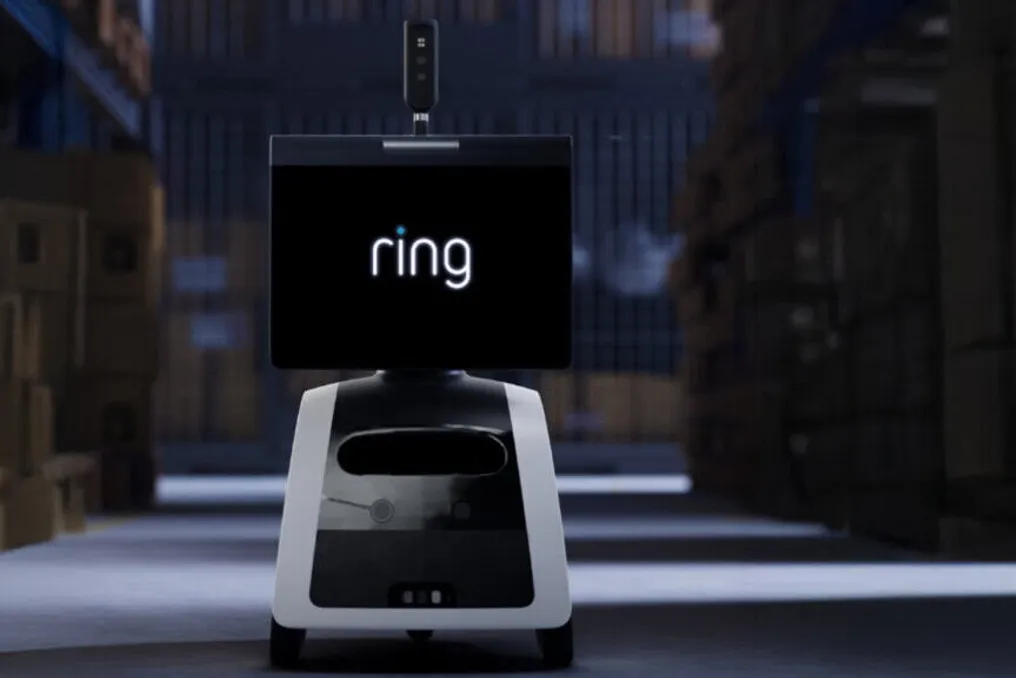
Ring, an Amazon subsidiary, has introduced the Ring Robotics line, which consists of autonomous security devices. This line includes an aerial camera intended for residences and a mobile robot aimed at business use. These devices are designed to patrol, investigate incidents, and integrate with the company's existing ecosystem of alarms and cameras.

The initial models presented are the Ring Drone Cam and the Ring Rover Cam. Both devices utilize artificial intelligence to map spaces, detect points of interest, and operate autonomously.

Both units employ AI Pilot, a system created by Ring, the company that was acquired by Amazon in 2018. This system integrates cameras, advanced computer vision models, sensors, and cloud processing, enabling independent navigation for the robots.

During the setup phase, the user can guide the Drone through environments so it can record the space. The Rover, however, has the capability to explore the location without human intervention. Based on this collected information, the system generates a map of the area, identifies rooms, and suggests ideal patrolling areas, such as hallways, doors, windows, and cash registers. It is also possible to add specific locations defined by the user.

When starting a patrol, AI Pilot determines a route to the pre-selected points, ensuring automatic detours around obstacles like shelves and furniture.

The Ring Drone Cam functions as an aerial camera capable of monitoring various rooms without the need to install fixed equipment in each area. When not in operation, it returns to a base and shuts down the camera.

The Ring Rover Cam was specifically designed to ensure the security of commercial establishments. This robot circulates through environments performing scheduled patrols and checking for any occurrences signaled by connected devices.

The development of the Rover benefited from the experiences gained with the Amazon Astro. According to Ring, customers of the home robot had praised the security patrol functionality. Therefore, the team decided to create a dedicated device for protecting commercial spaces.

The Rover features a camera that transmits images in up to 4K resolution and performs complete 360-degree scans upon reaching patrol points. Furthermore, it has an adjustable mast, allowing visibility of areas located above counters and shelves.

Other notable features include: Ring reports that the Drone deactivates its camera while at the base; on the Rover, Sleep mode retracts the periscope and deactivates the microphone. Both devices have recording LED indicators, and the Rover displays this information directly on its screen.

Recorded videos will be protected by the encryption system called Throw Away the Key Encryption (TAKE), which the company presents as its most robust encryption method to date.

Initially, the launch of these products is planned for the United States. The company has not yet announced a date for the devices' arrival in other markets.

Similar stories

Startup Aina from Bengaluru introduces AI ring to predict user actions
Read more
business-standard.com

Startup Aina from Bengaluru introduces AI ring to predict user actions

Aina, a startup based in Bengaluru, has unveiled an artificial intelligence-enabled ring capable of anticipating user needs, managing applications, and controlling devices. Pre-orders for the gadget are available starting from $399.

Aina, a consumer electronics company that has secured venture funding, was founded by Apurva Shankar, a former hardware vice president at Ultrahuman. The company presented a display ring designed to guess daily activities and control agents, phone apps, Mac computers, and other connected devices. This launch followed 15 months of closed beta testing.

The ring operates on a proprietary context-sensitive operating system. It independently learns user usage patterns, gathering context from their phones, computers, and agents, after which it predicts the three most likely next actions. Users can approve or reject the suggested option simply by swiping up or down with their finger.

Pre-orders open on November 5th, with a special price of $399 for the earliest buyers for a limited quantity. Shipping is planned to begin in January 2027.

The company describes Aina as a new AI interface in the form of a ring that understands user desires. Additionally, users can press and hold the central button to interact with their agents.

Vision for Future Interaction

Shankar stated that they began developing Aina with the conviction that artificial intelligence would evolve from following instructions to anticipating human needs. He noted that this transition has already begun with proactive agents, and agents like Muse, Instinct, and Dots will soon perform hundreds of daily tasks.

He added that today people give commands via text or voice, but in the future, agents will learn to recognize patterns, consider context, and become proactive in almost all interactions, awaiting only user approval. Since one has to choose between options daily, using a phone for every such binary moment is inefficient. Therefore, hardware interfaces different from the phone are being developed for this future, focusing on quick approvals and voice control, and Aina is created precisely for this purpose.

Shankar emphasized that every major shift in computing has occurred through the collaboration of software and hardware. He cited examples: the mouse and graphical user interface led to personal computing, while the touchscreen and App Store led to mobile. Now, with Aina and AI agents, a new era is dawning—personalized computing accessible right at your fingertips.

Ways to Use Aina

Aina Voice

Users can integrate their existing agents through the Aina app and then press and hold the central button to communicate with them. A quick note-taking function is also provided. When an agent requires the user's attention, a notification appears on the screen. A simple swipe up is enough for quick approval. Users can also hold the button to respond with voice. Aina is equipped with a built-in speaker for conversations with AI agents and making phone calls. The user can initiate a call with a voice command and bring their hand to their ear to talk and listen.

Aina Cues:

Aina gathers context from the user's phone, Mac, and agents. It analyzes application usage patterns, location, and calendar details to determine what the user might need next. For example, if the user is heading to work at nine o'clock, Aina saves a shortcut, or 'Cue', for booking an Uber ride, ready just before it is needed.

The Aina Remote feature allows the ring to adapt to the user's current actions and display a live shortcut to control that activity. If music is playing, the ring turns into a music remote control. During a meeting, it becomes a controller for the microphone, camera, and a note-taking tool.

From HCI Lab to Consumer Product

Aina was founded by Shankar in May 2025 as a Human-Computer Interaction lab, where physical interfaces were tested in various scenarios of everyday computing. At the CES exhibition in 2026, the team demonstrated three experimental AI interface concepts. In April, the company introduced Dune—a context-aware three-button keyboard for Mac that adapts its controls to the application being used. Dune was sent to hundreds of early users.

The company tested Aina with a controlled group of private pilot users starting in October, using the feedback received to refine the hardware and user experience before the public announcement.

Aina's availability will be global. At launch, the device supports iOS and Mac. Further information on supported integrations will be announced after sales begin.

British startup proposes using AI-armed CubeSat swarms for orbital defense
Read more
olhardigital.com.br

British startup proposes using AI-armed CubeSat swarms for orbital defense

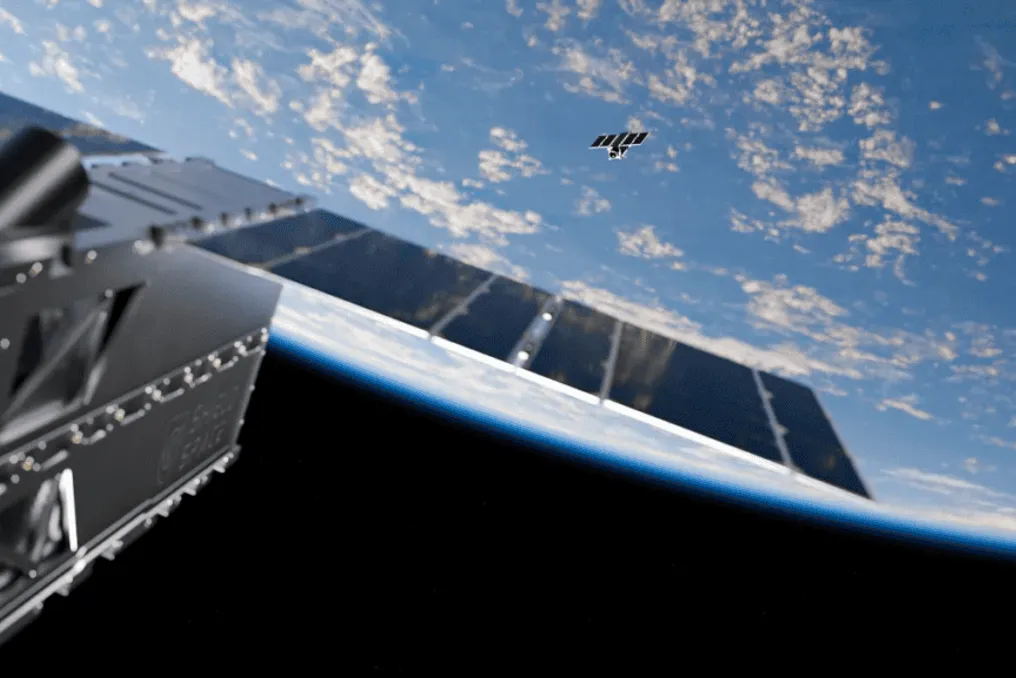
A British company is developing a proposal to convert small satellites into a type of orbital defense squadron. This initiative aims to launch groups of autonomous spacecraft, equipped with technologies such as lasers, microwaves, and physical interception methods, to protect Western satellites against potential threats.

Shield Space is the company responsible for this plan, seeking to adapt drone warfare concepts observed in terrestrial conflicts to the space environment. The central idea is to place dozens of small satellites, known as CubeSats, into orbit that would have the capacity to operate in a coordinated manner, even if they lose contact with ground operators.

Interest in this type of technology gained prominence after an incident in May 2026. On that date, four Russian military satellites approached the ICEYE-X36, a commercial synthetic aperture radar satellite widely considered a crucial intelligence source for Ukraine on the battlefield.

This approach was interpreted as a risky and potentially intimidating maneuver. Nearby satellites can cause interference in the signals of other equipment, blind them with lasers, damage them, or force them to change their course, consuming fuel.

In October, one of these same Russian satellites came within just 500 meters of the ICEYE-X36. This event reinforced concerns about the security of equipment in orbit and spurred the development of space defense systems.

The first stage of this project will be Project Broadsword, which is scheduled to be demonstrated in the fourth quarter of 2027. The mission is expected to be launched using SpaceX's shared flight service, called Transporter-21.

This experiment will involve two devices: an 8U CubeSat and a smaller 3U one that will serve as a target. The team plans to prove the ability to bring these two spacecraft from an initial distance of one hundred kilometers to only one hundred meters.

The test will also cover the evaluation of four levels of autonomy, starting with human participation in control and progressing to a level that the company describes as almost fully autonomous. For comparison, each unit of a CubeSat, designated as U, is equivalent to a cube with a ten-centimeter edge; thus, an 8U model has a volume equivalent to eight of these units.

The notion of satellites operating together is not new. In 2023, NASA launched the civilian Starling project, which demonstrated how a group of four small satellites can collaborate and function autonomously in scientific missions. However, the distinction lies in the fact that Shield Space intends to apply this principle to military operations, which require more intricate decisions and threat response capabilities.

Despite the grand ambitions, realizing this proposal into an operational defense system represents a major challenge. The small satellites need to incorporate propulsion systems, sensors, cameras, computational capacity for Artificial Intelligence (AI), and defense equipment in an extremely restricted space.

Shield Space itself recognizes obstacles related to dimensions, weight, and power consumption. Another critical point is the training of autonomous systems: according to its founders, there is a scarcity of real space operation data, and current simulations are not yet sufficient to replicate all necessary conditions.

There is also concern regarding engagement guidelines. An autonomous system designed for military scenarios must be able to adhere to predefined limits and instructions for the use of force.

Professor Bleddyn Bowen, an astropolitics expert at the University of Durham (England), expressed caution regarding the project. He drew an analogy with Brilliant Pebbles, a Cold War program that envisioned thousands of autonomous interceptors in orbit to neutralize Soviet ballistic missiles.

For Bowen, although many technologies are achievable with adequate investment, several years of development and testing will still be required. Among the difficulties mentioned is the need to evaluate kinetic weapons in space without generating orbital debris.

Shield Space is already planning subsequent phases to the first test. The company aims to evolve to demonstrations with two larger 16U CubeSats, followed by a mothership capable of carrying ten satellites, and eventually, a configuration with ten of these motherships distributed in different orbits.

The ultimate goal is to establish a network capable of protecting vast areas of orbital space. Ritchie terms this vision 'space-based carrier strike', referencing the aircraft carrier groups used in terrestrial military operations. However, at the moment, the proposal is far from being a proven capability, depending on future tests to confirm whether small autonomous satellites can operate together and respond to real threats without introducing new risks to the orbital environment.

Elon Musk discusses a future where AI and robots do all the work, and the associated risks
Read more
www.aajtak.in

Elon Musk discusses a future where AI and robots do all the work, and the associated risks

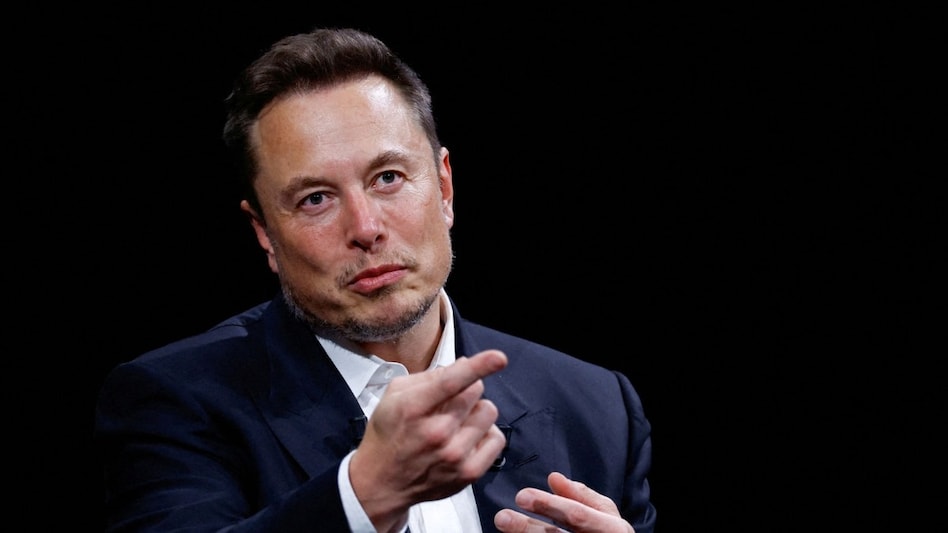
Tech magnate Elon Musk presented his vision of the future at the 'All-in Summit,' where he detailed the impact of artificial intelligence (AI) and robotics on human life. Musk predicts that in the near future, technology will free people from the need to work for a living.

Musk is confident that soon, Tesla's humanoid robots, such as 'Optimus,' combined with AI, will be able to perform any task analogous to a human. He stated that this will lead to the emergence of a 'Universal High Income,' making labor not a necessity, but merely a choice.

According to Musk, the transformation will affect not only physical labor but also highly skilled positions, including office work and data processing. He believes that automation will create such an abundance of goods and services that people can live significantly better than they do now.

Unlike the concept of 'Universal Basic Income' (UBI), Musk envisions a more extensive development—a universal high income. Production, transportation, agriculture, and healthcare will become so accessible and cheap that they will ensure a high quality of life for everyone.

Despite the seemingly utopian nature of this scenario, Elon Musk emphasized that the path to such a future will be difficult and fraught with numerous threats. He acknowledged that the period when machines begin replacing jobs will not be easy.

Families whose income depends entirely on salaries and physical labor may face financial difficulties before this 'great prosperous era' arrives. A fundamental question arises about how wealth will be distributed in an automated world and who will truly own these machines. Musk has previously mentioned in podcasts that this transition will be a 'shaky and difficult journey.'

Popular