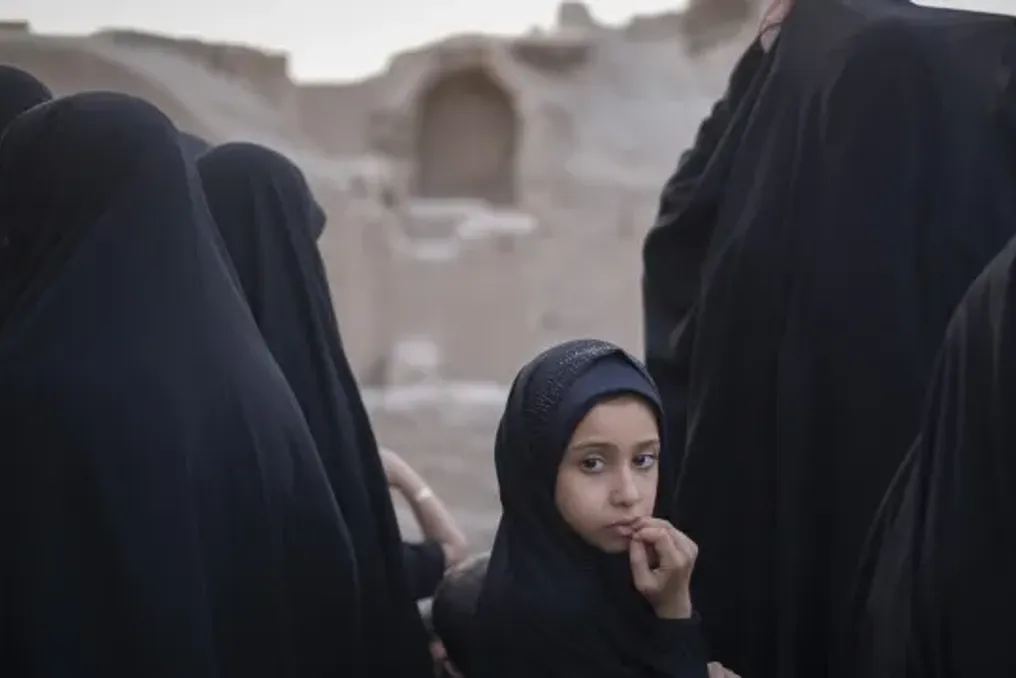
The Tehran prosecutor's office announced the detention of several women for not wearing the Islamic veil, characterizing the significant increase in women without head coverings over the last year as part of a campaign against the 'hijab'.
According to the Mizan agency, linked to the Iranian judicial system, these arrests took place on Iranshahr Street in the Iranian capital, a central area known for its cafes and frequented by young people, including many women who choose not to wear the veil.
The detained women were accused of being associated with groups that openly promote the violation of the 'hijab' rule, and the prosecutor's office warned that it would take legal action against such practices in coordination with security forces.
The intervention by the Tehran prosecutor's office occurred in compliance with directives issued by the head of the Judiciary, Gholamhossein Mohseni Ejei. These instructions aimed to identify and combat organized groups that encourage behaviors considered socially inappropriate, such as the absence of veil use or body exposure.
At the end of September, Ejei had instructed the State Prosecutor General to 'firmly combat social anomalies,' specifically referring to women who did not cover their bodies or did not wear the Islamic veil, which triggered a series of actions by the authorities.
In October, the capital's prosecutor's office initiated legal proceedings against the organizers of the Tehran Art Fair, alleging violations of 'legal and Islamic norms.' Furthermore, an investigation was opened into the Fitex sports fair, motivated by criticism from conservative media outlets regarding the participation of women who allegedly infringed upon Islamic dress codes.
The intensification of these measures is due to the growing presence of women in large urban centers, such as Tehran, or at social events without covering their hair, occasionally wearing clothes like short-sleeved 't-shirts', tank tops, or short 'tops', especially during the last year.
This situation has its roots in a movement of female civil disobedience that emerged after the death of Mahsa Amini, a 22-year-old Kurdish woman, in September 2022. She was detained for not wearing the Islamic veil correctly and suffered assaults from the Revolutionary Guard until she fell into a coma, was hospitalized, and died days later.
This incident sparked mass demonstrations against the Islamic Republic and its 'Moral Police,' using the slogan 'Woman, Life, Freedom.' According to human rights organizations, these protests were violently suppressed by the authorities, resulting in hundreds of deaths and thousands of detentions.