TSMC plans to invest up to $1 billion in Anthropic and OpenAI
Read more
Olhar Digital
olhardigital.com.br

TSMC plans to invest up to $1 billion in Anthropic and OpenAI

TSMC, recognized as the world's largest third-party chip manufacturer, has announced plans to inject up to $1 billion (equivalent to about R$ 5.55 billion) into the artificial intelligence development companies, Anthropic and OpenAI, which are responsible for the Claude and ChatGPT systems, respectively.

This initiative signals the Taiwanese manufacturer's strong interest in the advancement of AI, despite growing concerns regarding operational costs in this sector.

TSMC's board of directors approved two investments, each capped at $500 million (R$ 2.775 billion). The first investment will be directed towards acquiring shares in Anthropic during its Initial Public Offering (IPO). The second contribution involves purchasing preferred shares in OpenAI, which do not grant voting rights.

This decision comes as Anthropic prepares for its stock market listing. Last Tuesday (the 10th), the company set a price range between $70 (R$ 388.50) and $78 (R$ 433) per share, aiming for a market valuation of up to $1.4 trillion (approximately R$ 7.63 trillion). If this level is reached, the transaction could become one of the largest IPOs ever recorded.

Additionally, Anthropic is raising $26 billion (about R$ 144.3 billion) through a private placement, where shares are sold directly to selected investors. Among these participants are Google, Nvidia, AMD, and Microsoft.

Currently, TSMC already supplies semiconductors to major technology corporations, including Nvidia, whose graphics processors are crucial for the operation of various contemporary AI models. The investments made in the two developers constitute another avenue for the manufacturer to participate in this market.

TSMC's recent performance helps to understand the context in which the company will make these new investments. The company highlighted the high demand for semiconductors focused on artificial intelligence but also expressed caution regarding projections for 2027.
Similar stories

IFC to Provide Up to $33 Million for Agricultural Services in Central Asia
Read more
uzdaily.uz

IFC to Provide Up to $33 Million for Agricultural Services in Central Asia

The International Finance Corporation (IFC), part of the World Bank Group, will provide up to $33 million in funding to Eurasia Group to expand its network of agricultural machinery service centers in Kazakhstan and Kyrgyzstan.

According to an IFC statement, this project involves constructing four energy-efficient service centers, developing training programs for farmers, and improving access to modern agricultural equipment.

The initial funding package will amount to $18 million, of which $15 million is designated for Kazakhstan and $3 million for Kyrgyzstan. An additional $15 million may be allocated later to support the expansion of Eurasia Group's operations in Kazakhstan.

The funds will be used to build three service centers in Kazakhstan—in the cities of Astana, Pavlodar, and Petropavlovsk—as well as one center in Bishkek. The latter will become the first specialized John Deere service center in Kyrgyzstan.

The financing will be provided in euros and local currencies, which, according to stakeholders, will help Eurasia Group mitigate exchange rate risks. The new infrastructure is expected to increase farmers' access to genuine spare parts, maintenance, and prompt repairs. The project will cover approximately 1,700 farms in both countries.

Eurasia Group has been operating in the region since 2002 and serves as a distributor and exclusive dealer for John Deere. Currently, the company employs over 600 staff, and project participants estimate that the investment will support around 1,600 direct and indirect jobs.

Key areas of cooperation will include farmer training, the implementation of new technologies and digital tools, which is expected to increase crop yields and equipment efficiency.

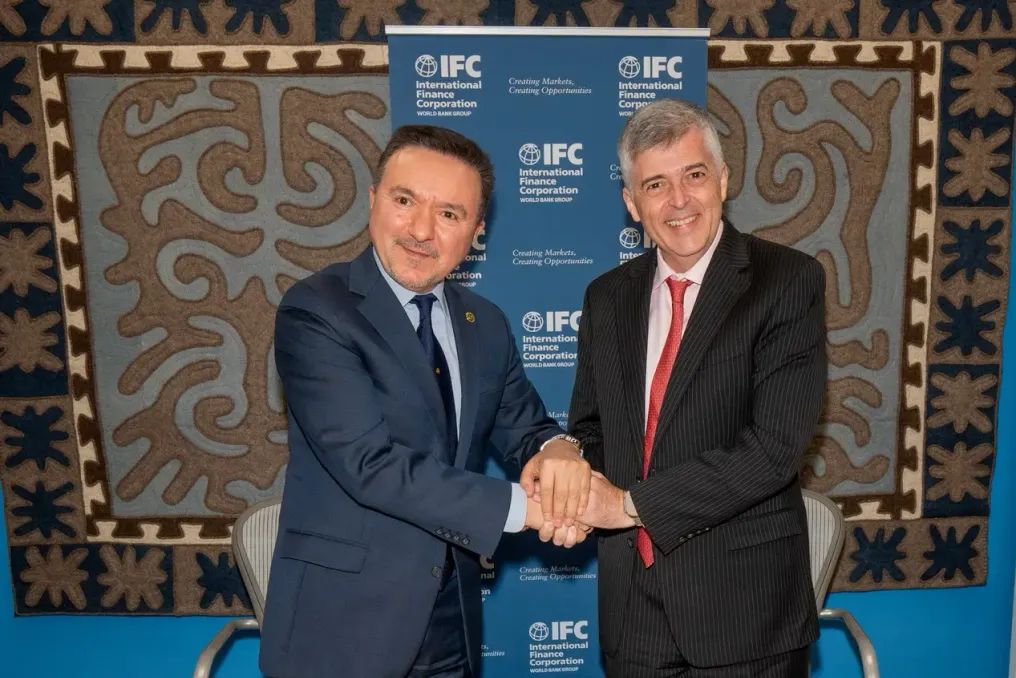
Mustafa Zakhin, President and CEO of Eurasia Group AG, described the company's expansion in Kazakhstan and the opening of the first service center in Kyrgyzstan as an important milestone for the business and farmers of the region. He noted that IFC's support will bring equipment and services closer to farmers while promoting further investment in skills development and knowledge transfer.

Wagner Albuquerque de Almeida, IFC Regional Director for Production, Agribusiness, and Services in the Middle East and Central Asia, stated that modern service centers can help farmers increase productivity, improve rural community welfare, and adapt to climate change.

All four facilities are planned to be certified under the IFC EDGE green building standard (Excellence in Design for Greater Efficiencies). Preliminary estimates suggest this will reduce the buildings' energy consumption by 20% and prevent the emission of approximately 1,674 tons of greenhouse gases annually.

Eurasia Group also reported working on improving workplace safety and expanding career opportunities for women, who currently make up about 26% of the company's staff.

Solex Energy plans US market entry for international debut
Read more
business-standard.com

Solex Energy plans US market entry for international debut

Solex Energy is considering entering the US market to commence its international operations. This expansion is part of the company's broader investment plan, which involves investing $1.5 billion by 2030, as the company aims to capitalize on the demand for clean energy components.

Solex Energy intends to establish solar module and cell manufacturing facilities in the United States, striving to secure a position in the global renewable energy market. Company head Chetan Shah noted that although the US remains the world's largest solar energy market, high anti-dumping duties on Chinese imports make India the only viable supplier of affordable alternatives.

Confirming its plans to expand into the US, Shah explained that the primary goal is to leverage the massive global demand for clean energy components and position the company as a reliable and cost-effective alternative to Chinese manufacturers. He stated that the US represents a high-potential market, and while many Indian corporations are already operating there, a significant number of business entities, including Solex Energy, are also interested in investing in the country.

Currently, the company operates a 4 gigawatt (GW) module production facility in Gujarat, India, and plans to increase this capacity to 10 GW. Furthermore, it is in the process of establishing 10 GW cell production capacities, as well as 2 GW ingot and wafer production. However, Shah did not disclose details of the American projects due to regulatory compliance requirements, clarifying only that these investments are part of the company's $1.5 billion plan through 2030. A special team has been formed to study various parameters, including required investments and locations in the US.

Regarding the ALMM-II structure, Shah emphasized that the sector aligns with the goals of the government initiative and has already invested thousands of crores in setting up module manufacturing capacities in India to support the country's net-zero emission targets. Nevertheless, he added that under current market conditions, the industry requires an extension of the ALMM-II program by at least 12 months due to cell availability issues. The ALMM-II framework mandates the use of cells manufactured in India from an approved list of module manufacturers (ALMM).

As of October 2026, India had a module production capacity of approximately 262 GW, while cell capacity was only about 37 GW. Shah pointed out a significant gap between module and cell capacities in India, noting that most installed capacity uses outdated MONO PERC technology, and some capacity is non-operational. Meanwhile, the module production capacities are configured to use the latest TOPcon technology.

Popular