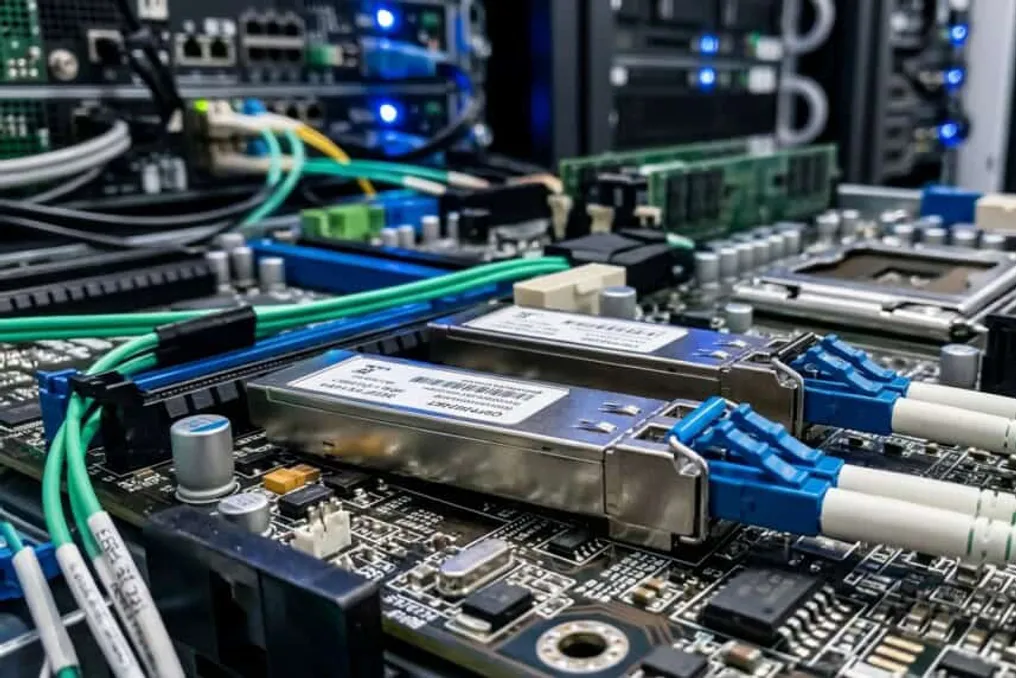
Microsoft is pressuring the United States government to drop the restriction on importing Chinese optical transceivers, which are crucial components for the operation of data centers. The company argues that this limitation could slow down the expansion of these facilities and harm the country's pursuit of leadership in artificial intelligence.
This mobilization includes other corporations and industry groups that express concern about the potential effects of this regulation on cloud computing infrastructure and the supply chain.
The measure proposed by Donald Trump's administration aims to veto the entry of new models of optical transceivers originating from China. These devices are fundamental for data transmission via fiber optic cables within data centers. The main concern raised by Washington is the risk of Beijing using this equipment to conduct data theft, install malicious software, or cause disruptions to American structures.
The potential restriction generates significant anxiety among companies planning to increase their presence in the United States. According to Cleanview, a market intelligence firm specializing in monitoring data centers, Microsoft has 35 units under construction and another 134 planned in the American territory.
In September, Microsoft participated in meetings with representatives from the National Security Council and the White House Office of Science and Technology Policy, seeking to warn about the problems the ban could create in the supply chain, according to reports obtained by Reuters.
The issue also covers the artificial intelligence chips already acquired by cloud computing providers to equip their future data centers. John Miller, General Counsel of the Information Technology Industry Council (ITI), told Reuters that the situation represents a real threat to paralyzing the implementation of data centers.
Miller added that without optical transceivers, these chips could remain unusable until companies manage to obtain the necessary equipment to establish the connection.
Resistance to this policy brings together various companies and associations that view the veto as an obstacle to U.S. competitiveness against China. The arguments presented also take into account the vast quantity of these components, given that some data centers require millions of optical transceivers to interconnect routers, switches, and servers.
The U.S. Federal Communications Commission (FCC), the body responsible for supervising the telecommunications sector, is involved in drafting this prohibition. Meanwhile, companies are working to meet the growing demand for cloud computing and artificial intelligence services. However, the expansion of data centers faces criticism in the U.S. due to high water consumption and rising energy costs.