São Paulo Government releases 2027 IPVA payment schedule with 3% discount
Read more
AutoPapo
autopapo.com.br

São Paulo Government releases 2027 IPVA payment schedule with 3% discount

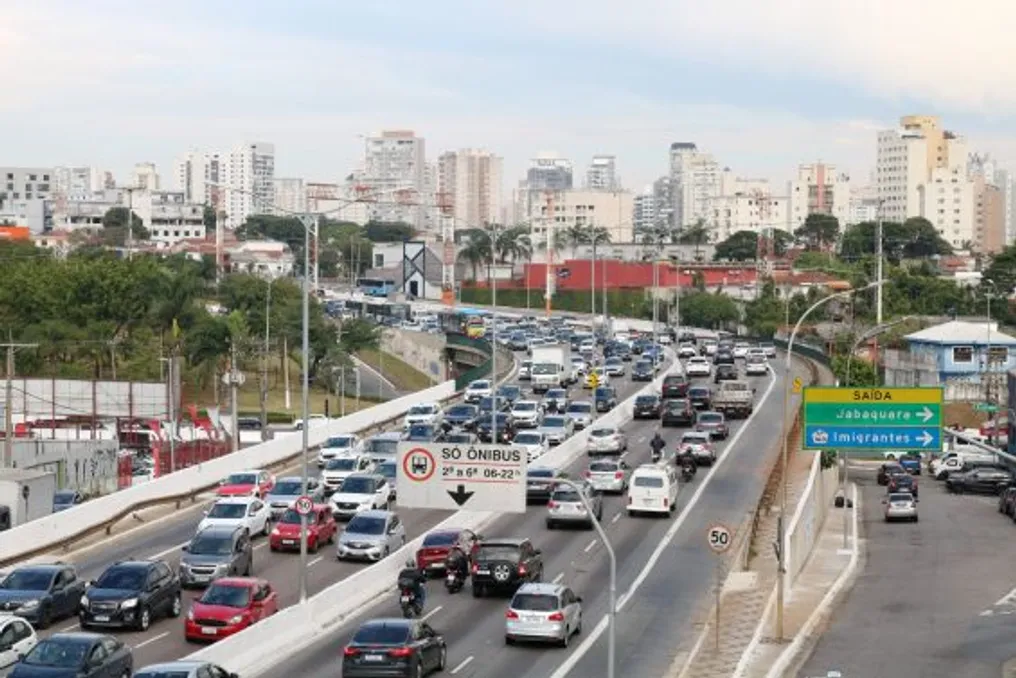
The São Paulo Government announced on Monday (9th) the payment schedule for the 2027 IPVA. The guidelines were formally published in the Official State Gazette through a decree signed by Governor Tarcísio de Freitas, who belongs to the Republicanos party.

Owners have the option to pay the tax in full in January, taking advantage of a 3% reduction, or choose installment payments up to five times, without any reduction in value. Due dates start on January 11th and extend until January 22nd, determined by the last digit of the vehicle's license plate. Those who opt to pay the total amount without the discount benefit can do so during February, maintaining the same dates established for January.

IPVA installments are available between January and May, and can be divided into three, four, or five monthly payments, depending on the tax amount. Subsequent due dates will follow the day corresponding to the last number of the car's license plate.

IPVA rates remain unchanged compared to 2026. For passenger cars, the applied rate is 4%. For motorcycles, pickup trucks with single cabs, microbuses, buses, and heavy machinery, the rate is 2%. Trucks have a percentage of 1.5%, while rental vehicles are taxed at 1%.

To check the vehicle's assessed value, which serves as the basis for calculating the tax, it is necessary to access the Vehicle System (Sivei) on the portal of the São Paulo Treasury and Planning Secretariat (Sefaz-SP). Additionally, the IPVA amount can be checked through internet banking, at bank ATMs, or directly on the Sefaz-SP website, by providing the Renavam number.

Payment methods include online payment, at self-service terminals, and through other channels provided by banks. It is also possible to settle the tax through the accredited banking network, using the Renavam, at lottery houses, or with a credit card, via companies authorized by the Treasury Secretariat.

For newly acquired vehicles, the 3% discount will be applied to the full payment made up to the fifth business day after the issuance of the invoice. An alternative is to pay the tax in up to five consecutive monthly installments without a discount. In this scenario, the first installment must be paid within 30 days after the invoice is issued. The decree also regulates early licensing, which depends on the full payment of the tax, and defines specific rules for trucks and tractor-trailers.

In the specific case of trucks, the full payment without discount can be made until April 22, 2027. Installments for this category will have fixed due dates on the 22nd, regardless of the last digit of the license plate, according to the number of installments chosen.

Similar stories

Eighth Pay Commission: Salary Hike Timelines and Fund Deposits
Read more
www.aajtak.in

Eighth Pay Commission: Salary Hike Timelines and Fund Deposits

A year has passed since the formation of the Eighth Central Pay Commission (8th CPC), yet government employees are still awaiting clarity regarding the timelines for salary review and the date when increased amounts will start being deposited into their bank accounts. The commission's work continues, facing numerous demands, including a request to increase the fitment factor, which plays a key role in salary increases. Nevertheless, the picture regarding the new salary structure remains unclear.

The 8th Pay Commission was given 18 months to submit its report, and 12 months of that period have already passed.

The Eighth Commission was formed by the government led by Prime Minister Narendra Modi on November 3, 2025. Despite the passage of a year, information about salary hikes or the fitment factor remains uncertain. The deadline for submitting the eighth commission's report is set for May 2027, leaving only six months.

Regarding when employees will receive the increased salary, everyone is looking for an answer. The commission must submit its report within 18 months. Furthermore, the salary increase will not happen automatically; first, the government must review the commission's recommendations before deciding whether to accept them entirely or approve them with amendments. Only after receiving government approval will the situation regarding the salary hike become clear.

According to experts, the commission was allocated about 18 months from November 2025 to discuss issues of wages, allowances, and pensions and present its recommendations. Although the 8th CPC is tasked with reviewing salaries effective January 1, 2026, past experience shows that there is usually a delay between the effective date and the receipt of the first increased salary in the account. For example, the salary review under the seventh commission came into effect in January 2016, but Cabinet approval was received in June of the same year, and arrears payments were made in subsequent months.

Since there is no official data yet on the amount of the salary increase after the implementation of the eighth commission, experts are putting forward various assumptions based on employee union demands. Analyzing previous commissions, it is noted that after the introduction of the sixth commission, the average salary increased by approximately 40%. The seventh commission provided employees with a salary increase of about 23–25% with a fitment factor of 2.57. Currently, the main demand for the eighth commission is to set the fitment factor at 3.83, which would lead to a significant salary increase.

It is important to understand that the fitment factor is the metric used by the central pay commission to convert the previously revised basic salary (or pension) into a new, adjusted structure. Any change directly affects the salary, pension, and associated arrears.

How will the salary change on 51000

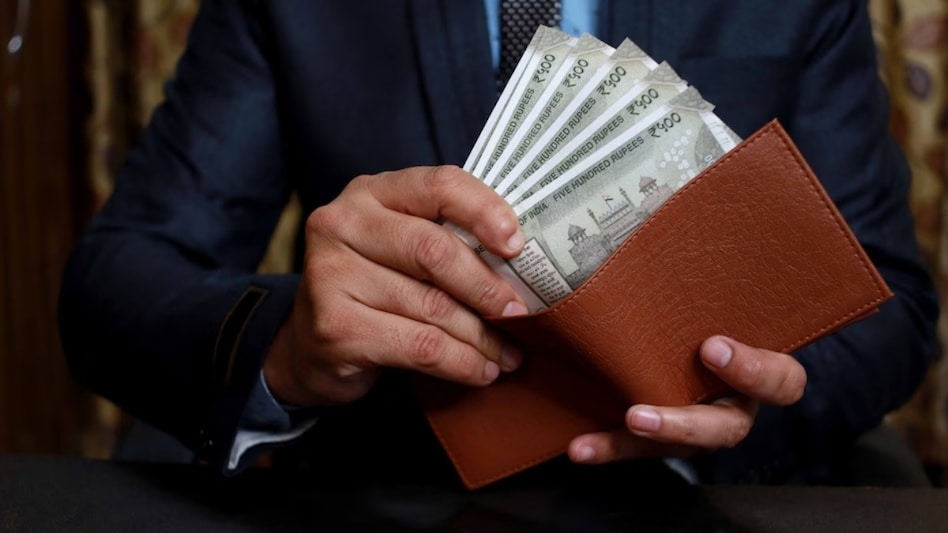
The significance of the fitment factor is evident in its calculation and impact on salary. The calculation formula is: 'New Basic Salary: Current Basic Salary x FF'. Thus, in the sixth commission, the minimum basic salary was 7 thousand rupees, which grew to 18 thousand rupees after applying a FF of 2.57. If the government approves an increase to 3.83, the minimum basic salary will be 68,940 rupees (18000 x 3.83), leading to a direct salary increase of 51,000 rupees. However, the final decision rests with the government.

New Selective Tax on Cars Will Have Higher Rates Than IPI, But Will Not Raise the Final Price of Vehicles
Read more
autopapo.com.br

New Selective Tax on Cars Will Have Higher Rates Than IPI, But Will Not Raise the Final Price of Vehicles

The federal government released Provisional Measure 1,399 this Wednesday (4th), which establishes the value of the Selective Tax, known as the 'sin tax,' to be applied to automobiles starting February 2, 2027.

This new tax will replace the IPI for vehicles and has higher rates. Despite this, it is expected that the cost of cars will remain close to the current level.

The adopted rates follow the structure of the Green IPI, in effect since November of the previous year: 6.3% for passenger cars and 3.9% for pickup trucks and light commercial vehicles, with possible adjustments based on factors such as fuel type, power, efficiency, safety, and recycling capacity.

The reason for maintaining the price lies in the calculation base. While the IPI was calculated on the total value of the vehicle, including ICMS, PIS, and Cofins, the Selective Tax is charged on a lower value, excluding these taxes.

To balance this difference, the MP applies a multiplier of 1.21 to the current rates, a value that represents, on average nationally, how much the calculation base with taxes exceeds the base without them. In simplified examples, the amount paid remains similar.

In practice, the financial balance varies by model, and there may be small differences in the final value.

Electric models will not be exempt, maintaining the two percentage point discount that already existed under the IPI. Pickup trucks will also not suffer drastic increases, as they use a specific table where diesel adds 2.5 points, in contrast to the 12 points applied to passenger cars. This means a model like the Toro costs significantly less than the Commander, even using the same engine.

The applicable discounts depend on three criteria evaluated individually for each model. Energy efficiency can generate a deduction of up to 2 points if energy consumption is lower than a limit determined by the vehicle's own weight. Safety grants 1 point and requires standard equipment such as stability control, automatic emergency braking, lane departure warning, and pedestrian protection.

Finally, recyclability allows a discount of up to 2 points, conditioned on the manufacturer's policy of sending an old vehicle to dismantling for every five or ten units produced of the respective model. Summing these criteria, about 6 points are subtracted from the Selective Tax, ensuring that the rate never falls below zero. In the case of the Compass, for example, the rate would go from 9.44% to 3.39%, but since these discounts were already valid, the price comparison does not change.

The Mobi remains eligible for the Sustainable Car program, and the MP ensures the maintenance of the zero rate for these models. The same benefits extend to buyers with disabilities, people with autism, and taxi drivers.

In January, the CBS, a federal tax introduced by the tax reform, will take the place of PIS and Cofins, which currently influence the price of automobiles. The Federal Court of Accounts (TCU) estimated the reference rate for the CBS at 11.3%, and the Senate has until December 15th to define this percentage. The projected revenue from the Selective Tax will be considered to reduce the CBS, although the direct impact on the price of each car is not yet clear.

The rates defined in the MP are not final. The government has until May 31, 2027, to present a bill to Congress containing the percentages for 2028. Before that, the Chamber and the Senate must approve the MP, which may be subject to amendments. According to the Constitution, an MP that creates or increases taxes will only be valid in the subsequent year if converted into law by the end of the year it was promulgated.

Additionally, the government proposed a constitutional amendment aimed at keeping the IPI active in January 2027, given that the new tax will only come into force in February.

EPFO makes a decision: PF funds will be credited to accounts without an application
Read more
www.aajtak.in

EPFO makes a decision: PF funds will be credited to accounts without an application

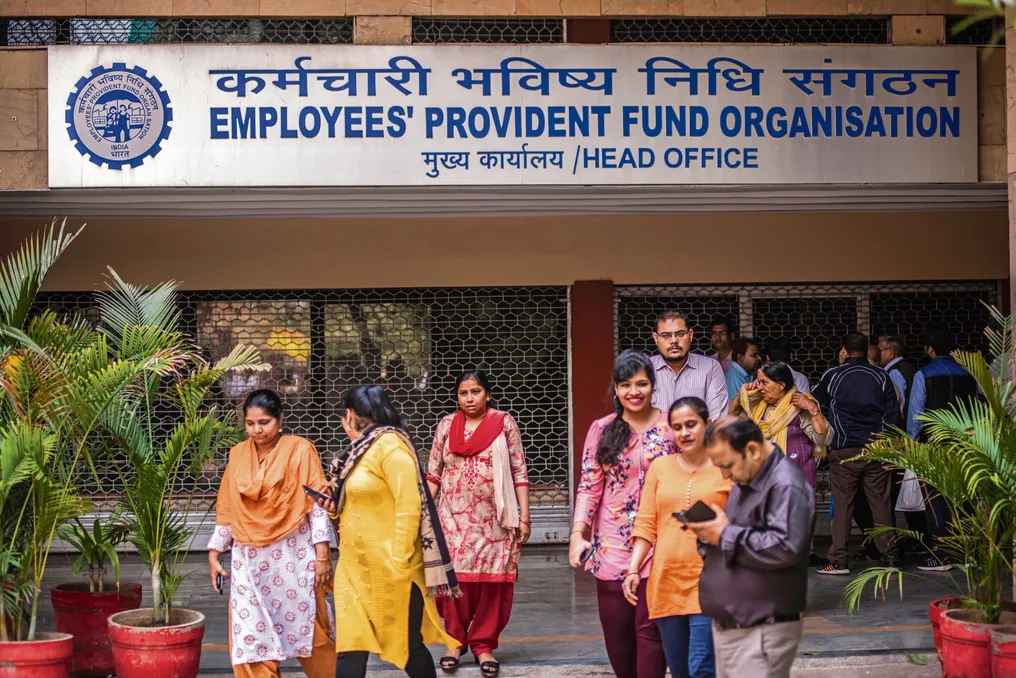
The Employees' Provident Fund Organisation (EPFO) has announced a significant decision: funds from inactive Pension Fund (PF) accounts will be automatically transferred to account holders without the need to apply for the funds.

This relief applies to those whose old PF accounts have been unused for a long time and contain an amount of 1000 rupees or less. EPFO will now independently conduct the settlement process for such eligible account holders.

After completing identity and bank account verification through Aadhaar, EPFO will initiate the payout procedure. Thus, the account holder will not need to submit a separate application or claim to receive the money.

On the occasion of the 74th anniversary of EPFO's establishment, an automatic settlement feature for small amounts accumulated in inactive Provident Funds (EPF) was launched. Funds in such accounts, not exceeding 1000 rupees, will be transferred to owners without requiring a separate request. This service is available only for accounts verified through Aadhaar.

First, EPFO will conduct the necessary identity and bank account verification of the owner. Then, the organization itself will initiate the disbursement procedure for the funds held in the respective account. This means the account holder will not need to file an application or claim to withdraw the funds. If you have an old PF account, it is recommended to check its balance and Aadhaar and bank verification. If the amount is 1000 rupees or less and the account meets the conditions of the new service, EPFO may start the settlement process without a separate request.

This EPFO initiative is expected to benefit approximately 100 thousand inactive accounts. The calculation could be made for an amount of about 50 million rupees accumulated in these accounts. The goal is to assist people who have small amounts remaining in old PF accounts and who could not withdraw them for some reason.

Certain conditions have been set for this service. The PF account must be inactive. The amount in the account must be 1000 rupees or less. It is crucial that the account holder is verified through Aadhaar. Necessary checks related to identity and bank account must also be completed. EPFO will begin the settlement process for accounts meeting these requirements. However, not every inactive account will benefit from this service; payment will only be made based on the account meeting the criteria and the required verification.

Sometimes old accounts become inactive due to job changes, prolonged lack of PF contributions, or other reasons. Small amounts remain in such accounts. Many account holders cannot withdraw their money due to insufficient information or the inability to go through the application process. The new EPFO initiative aims to deliver these small amounts stuck in such accounts to the rightful owner. This will save account holders from paperwork and application-related problems.

EPFO also reported an acceleration in the claims processing time. In October 2026, the average PF claim processing time was reduced to 2.57 days. According to the organization, thanks to technical improvements and the CITES 2.01 initiative, this process has become faster and simpler than before.

On the occasion of EPFO's founding day, services via WhatsApp were also announced. Under this feature, members can check their PF balance, information on the last five transactions, and their passbook details. Labour and Employment Minister of the Central Government, Mansukh Mandaviya, announced these measures during the celebration of EPFO's 74th anniversary in New Delhi on November 1. He stated that the EPFO fund holds capital of about 32 trillion rupees, received from contributions by over 80 million members. The organization serves about 80 million active contributing members and 8.5 million pensioners.

Popular