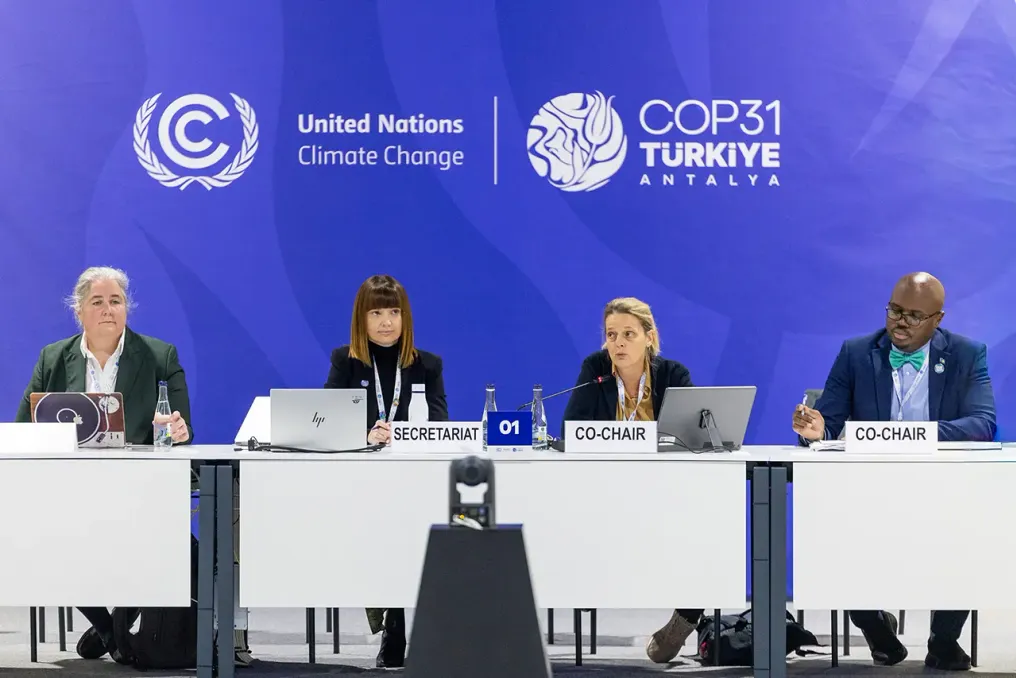
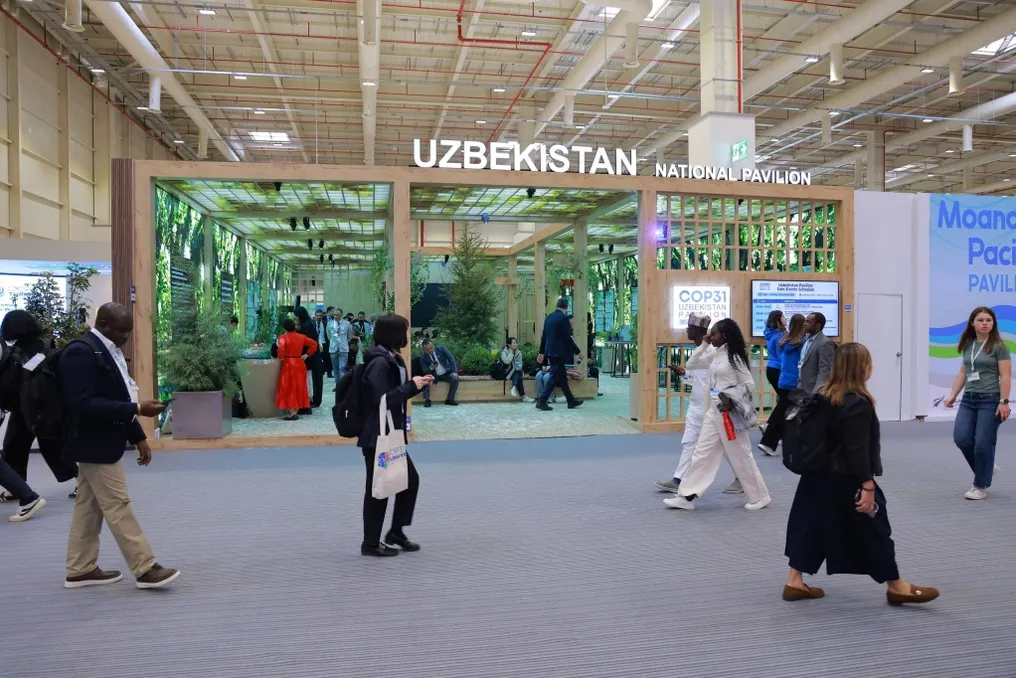
Uzbekistan is among the five countries selected to participate in the Climate Implementation Bridge (BRIDGE) international initiative, which aims to help transform national climate commitments into investment-ready projects. At the UN Climate Conference COP31, opened on November 9th in Antalya, the need to mobilize up to $1.3 trillion annually for climate finance, accelerate the transition to renewable energy sources, and protect economies from growing climate threats was discussed.
The 31st Conference of the Parties to the UNFCCC (COP31) began in Antalya, Turkey, on November 9th. One of the key issues for international negotiators is the transition from stated climate goals to practical investment projects. The conference, which will run until November 20th, brings together representatives of governments, international financial institutions, businesses, the scientific community, and civil society. The main priorities are climate finance, energy security, climate adaptation, and infrastructure resilience.
The President of COP31, Turkey's Minister of Environment, Urbanization, and Climate Change, Murat Kurum, called on countries to focus on fulfilling previously agreed-upon commitments. Turkey's presidency at COP31 positions the summit as an implementation-oriented platform where climate goals must be translated into concrete projects, investments, and tangible benefits for the population.
Kurum emphasized that the climate crisis is inextricably linked to economic instability, geopolitical conflicts, food security issues, and increasing inequality in access to technology and finance. Droughts, floods, extreme heat, and water shortages affect not only the environment but also food production, industry, energy infrastructure, economic stability, and public health. Furthermore, Kurum confirmed that limiting global warming to 1.5°C above pre-industrial levels remains a central objective of international climate policy.
One of the most important aspects of the COP31 agenda for Uzbekistan is the Climate Implementation Bridge (BRIDGE) initiative, presented by the Turkish Presidency in September 2026. Uzbekistan was chosen as one of the first five pilot countries alongside Ethiopia, Fiji, Indonesia, and Pakistan. The goal of this initiative is to bridge the gap between national climate commitments and the necessary funding for their implementation. It aims to support countries in developing investment-ready projects, strengthening institutional capacity, and establishing connections with potential financial partners. The United Nations Development Programme (UNDP) is the implementing partner for BRIDGE.
For Uzbekistan, participation in the program can provide an additional mechanism for preparing climate-related investment projects in the fields of energy, infrastructure, and other capital-intensive sectors. However, it should be understood that BRIDGE is not an independent investment fund, and selection as a pilot country does not guarantee automatic access to funding. It is critically important to determine exactly which projects Uzbekistan will present, how well they are prepared to attract capital, and which international financial institutions might agree to support their implementation.
Climate finance has become one of the central themes of the opening discussions at COP31. Murat Kurum recalled the goal achieved at the UN climate conference in Baku—to ensure developing countries receive at least $300 billion in annual climate finance by 2035. A broader goal involves mobilizing at least $1.3 trillion annually from public and private sources. Nevertheless, the stated amounts are only part of the equation; the conditions under which countries can access these resources are equally important.
Developing economies continue to face high borrowing costs, difficulties in preparing financially viable projects, limited institutional capacity, and challenges in attracting private investment in infrastructure. Against this backdrop, initiatives like BRIDGE are designed to help countries move from national strategies to projects that can be assessed and financed by potential investors. This is particularly relevant for Uzbekistan given the need to modernize its energy infrastructure, improve resource efficiency, and adapt the economy to climate change.
Accelerating the electrification of the global economy is another major priority at COP31. The Turkish Presidency is promoting the '35 by 35' initiative, which aims to increase the share of electricity in final energy consumption to 35% by 2035. Key areas of this initiative include expanding renewable energy sources, modernizing power grids, implementing energy storage systems, improving energy efficiency, electrifying transport, and reducing industrial carbon intensity.
Australia's Minister for Climate Change and Energy, Chris Bowen, who is leading the COP31 negotiations, stressed the direct link between international climate cooperation and global energy security. He noted that the conference should promote investment attraction, infrastructure development, and economic resilience. Simon Steele, Executive Secretary of the UNFCCC, also highlighted the economic consequences of fossil fuel price volatility. According to data presented by him, renewable energy saved the global economy $265 billion in the first half of 2026.
For Uzbekistan, discussions on electrification are practically significant against the backdrop of growing electricity demand, expansion of solar and wind generation, construction of new power plants, and the need to increase grid reliability. At the same time, developing energy infrastructure requires a comprehensive approach that considers not only electricity generation volumes but also technology costs, access to investment, and system resilience to climate risks.
As part of the preparations for COP31, the Turkish Presidency also introduced the Antalya Pact on Energy-Efficient Buildings. This initiative aims to reduce the operational energy intensity of the global housing stock by 25% by 2035 compared to 2020 levels. This area is becoming increasingly important amid rising electricity consumption for air conditioning, cooling, and heating. For Uzbekistan, improving the energy efficiency of residential and commercial buildings can help reduce the load on energy infrastructure and lower consumer costs. Such measures are especially relevant in cities where extreme summer temperatures increase electricity demand, and expanding housing construction creates additional long-term energy needs. However, implementing energy efficiency projects requires accessible financing mechanisms, technical standards, and economic incentives for developers and property owners.
The first thematic day of COP31, held on November 9th, was dedicated to food, agriculture, and health. Participants discussed the impact of climate change on food security, agricultural sustainability, water resource management, and public health. Among the initiatives proposed is the Antalya Initiative for Sustainable Health Systems (AIR), developed with the participation of the COP31 Presidency, the Turkish Ministry of Health, the World Health Organization, and international partners. Its task is to help countries strengthen their health systems' ability to forecast, adapt to, and respond to climate-related threats.
Discussions on climate finance for agriculture, the role of women and youth in transforming food systems, and improving water resource management were also included in the first day's agenda. Special attention is paid to the Turkic Alliance—an initiative aimed at connecting sustainable water resource management, food security, and climate adaptation. These issues are critically important for Central Asia, as irrigated agriculture heavily depends on water resources, hydrological conditions are changing, and water demand is rising in households, agriculture, and the energy sector.
The opening of COP31 coincided with the publication of new data from the World Meteorological Organization (WMO). According to the global climate update presented on November 9th, the last 12 years have been the warmest in instrumental record, and the last four years are among the four hottest. These trends underscore the growing urgency of adapting to extreme weather events, including droughts, floods, and periods of abnormally high temperatures. Prior to the Turkish Presidency, Australia, Brazil, and Azerbaijan also presented the Belem Mission report on the 1.5°C target of the Paris Agreement, analyzing the opportunities and obstacles to achieving this temperature goal.
For Uzbekistan, the conference outcomes will be particularly significant in three interconnected areas: access to climate finance, energy infrastructure resilience, and adaptation to growing water and climate risks. Participation in BRIDGE provides an additional opportunity to prepare projects for international financing. However, its practical value will depend on the quality of the proposed project portfolio, the readiness of national institutions, and the terms of securing investment.
Electrification and energy efficiency initiatives can support the modernization of the energy system, reduce losses, and help cities become more resilient to intense heat. At the same time, discussions on water and food security point to the need for better coordination between energy, agricultural, and climate policies in Central Asia. The central question is whether international initiatives and financial commitments can be translated into concrete investments and measurable results.
COP31 will run until November 20th. During these two weeks, participants expect to discuss mechanisms for implementing climate commitments, adaptation finance, the energy transition, and other areas of international climate policy. For Uzbekistan, a practical measure of success will be its ability to move beyond participation in international initiatives and begin developing and implementing projects that strengthen the national economy's resilience to climate change.