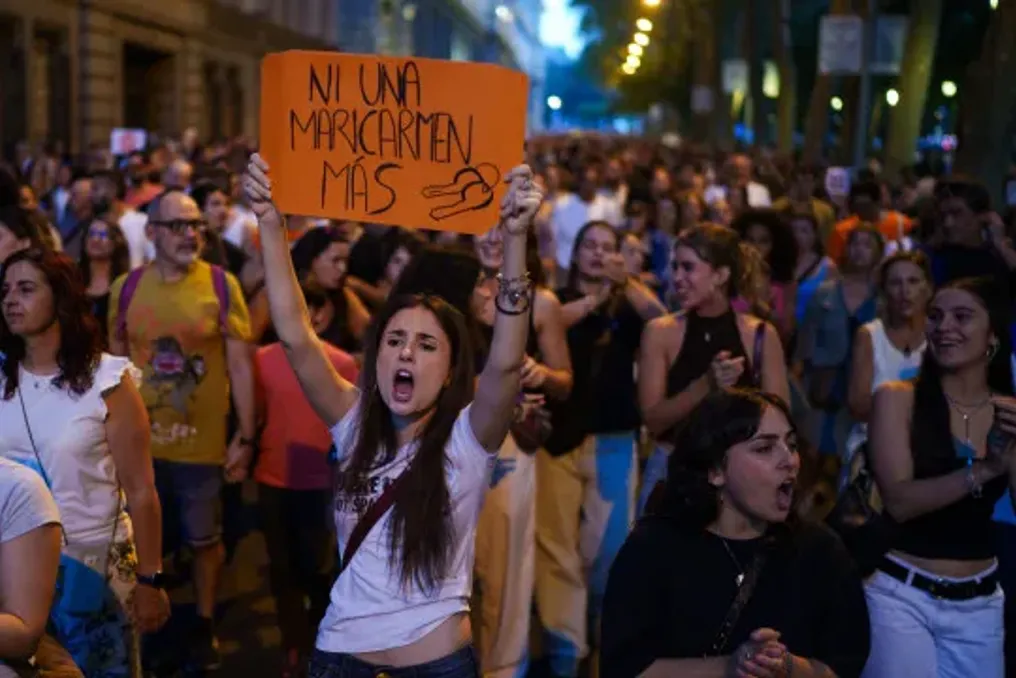
Spain holds first general strike in 14 years over wages and housing
Read more
Noticias ao Minuto
noticiasaominuto.com

Spain holds first general strike in 14 years over wages and housing

Spain is preparing for its first general strike in 14 years, scheduled for midnight (23:00 Lisbon time today), aimed at defending the rights to decent housing and wages. The strike will last 24 hours and takes place against the backdrop of the start of the election campaign scheduled for November 29th.

This nationwide protest was announced following the Prime Minister, socialist Pedro Sánchez's, announcement of early national elections, and union centers have characterized it as 'atypical.' In addition to participating in the strike, unions have called for mass rallies and demonstrations, including marches planned for Wednesday evening in various cities, including central Madrid.

According to union centers, the success of this 24-hour protest will depend primarily on participation in rallies rather than on influencing the activity of the country's businesses and services. The call for the strike was initiated by the two largest Spanish unions (CCOO and UGT) in response to demands from associations gathered in the Tenants Confederation, which advocates for the right to housing and mobilized thousands of people in the streets of Spain since September 23rd.

CCOO and UGT appealed to the country's citizens to mobilize for improved wages, guaranteed decent housing, and price control amid inflation that undermines purchasing power. The first demand of the unions and associations supporting this call is that 'all state administrations promote policies that end real estate speculation.'

The announcement of the strike during an election period has drawn criticism from business associations and right-wing opposition parties. Business groups have questioned the legality of the action, arguing that it is not focused on labor issues, and have also questioned its timing given the upcoming elections on November 29th. Antonio Garamendi, president of the Spanish Confederation of Business Organizations, noted that the strike has a 'clear political and electoral component' and appears aimed at the opposition rather than the ruling left-wing government.

Major opposition parties, the Popular Party (PP, right-wing) and Vox (far-right), have also criticized the strike, emphasizing that it occurs just before the elections and is the first organized by unions in 14 years and since Sánchez took office in 2018. Borja Sempere, a representative of the PP, stated: 'This decision is essentially political, with the intention of promoting political actions by Pedro Sánchez.' The PP highlighted that the 'unions agreed' after eight years of governments led by Sánchez, whose 'major failure' is the housing issue, as house and rent prices have risen sharply in recent years.

Meanwhile, Prime Minister and leader of the Spanish Socialist Workers' Party, Pedro Sánchez, stated that there 'will be a general strike on one issue'—access to housing, which he believes 'affects many workers and their families,' and therefore 'the only thing the government can do is respect this constitutional right.'

Unions insist that the general strike was conceived before the election announcement and has multiple targets, including CEOE, regional governments, or the central executive body. The last general strike in Spain, organized by UGT and CCOO, took place in 2012.

According to a poll published Monday by the newspaper El País, 48.8% of respondents do not support the strike, while 46.3% agree with the protest. However, the same poll showed that 53% condemn the housing camps that were created—and still exist in many cities—after the eviction of Mari Carmen Abascal, an 87-year-old woman, on September 23rd.

The 24-hour strike takes place just before the official start of the election campaign, set for October 5th by Pedro Sánchez, amidst street protests against the housing crisis and after right-wing forces rejected government decrees with measures in this area in parliament. On Thursday, the parliamentary standing committee will discuss and vote on the housing decrees, which the government has re-approved.

Similar stories

France faces strikes amid economic problems that could affect other countries
Read more
noticiasaominuto.com

France faces strikes amid economic problems that could affect other countries

The economic and social situation in France is deteriorating, and the country has faced a general strike. Analysts believe these problems could affect other European economies, including Portugal.

The country is facing protests over issues such as the rising cost of living, leading to school blockades by students and episodes of violence, culminating in today's general strike.

France's economy and public finances are going through a difficult period. Karsten Brezski, global head of macroeconomics at ING bank, noted that 'France is not Greece,' referencing the 2009 financial crisis that shook the European Union.

However, the root of France's economic difficulties lies in the government's inability to meet target expenditures and growth rates, as well as in austerity goals.

National debt has reached 119% of GDP, and the government reported that the budget will again exceed European Union spending limits, pushing national debt close to 122% of GDP, a new record.

On October 30, Fitch revised its sovereign debt outlook for France from 'stable' to 'negative,' although it maintained the long-term credit rating at 'A+' due to worsening growth prospects, increased financing costs, and strained public finances.

Fitch forecasts that France's national debt will rise from 115.7% of GDP in 2025 to approximately 124% in 2028, higher than their previous estimate of 122.7%.

Regarding the economy, the Bank of France signaled a possible downward revision of the 2026 growth forecast after French GDP contracted by 0.1% in the third quarter compared to the previous quarter, driven by a decline in net exports and capital investment.

According to the Competitiveness Forum analysis, political and budgetary problems in France 'significantly affect its interest rates and are likely to slow down this economy (our third trading partner), affecting other European countries.'

The text notes that French interest rates have risen significantly, returning to levels seen during the 2011 and 2012 crises and surpassing similar rates in Italy, and subsequently Spain and Portugal in 2025. This political deadlock and sharp rate increase 'should affect growth in France and harm its main trading partners, including Portugal.'

According to Forum economists, high interest rates on debt issued in Paris could trigger a debt crisis that spreads beyond the country, reaching even Lisbon.

Nevertheless, the Forum notes that the depreciating euro exchange rate may counteract the recessionary consequences of this situation.

The Banque Caregoza also emphasized that France is increasingly standing out with a negative position in the Eurozone sovereign debt market. Despite the 'A+' rating assigned by Fitch, which is identical to Portugal's, 10-year French treasury bonds offer a yield of 5%, the highest since July 2002, compared to 3.95% for Portuguese debt, while France pays more than Italy and Greece.

The reason lies in the trajectory of national debt against budget deficits exceeding 5% and weak economic growth. Portugal, conversely, 'is following the opposite path, with a falling debt ratio and more balanced public finances, which explains the lower yield than its rating suggests.'

However, analysts warn that since France is the second-largest economy in the Eurozone, maintaining this deterioration of its public finances represents an 'increasingly higher risk for the entire European Union.'

Oxford Economics also warns that France's budget crisis may worsen before improving. Spreads could rise above the peak of 200 basis points, projected in the base scenario until the presidential elections in April, without triggering a debt crisis.

Risks that could cause a new rise in spreads include protracted mass protests, a government collapse due to budgetary disagreements, a decrease in the polling gap between Jean-Luc Mélenchon and Marine Le Pen in the second round, and persistent doubts about the budgetary reliability of Le Pen's party, the 'National Rally' (RN).

Macron cannot run for a third consecutive term in 2027, and ultra-right leader Marine Le Pen leads in polls ahead of the first round of presidential elections on April 18. The second round is scheduled for May 2.

Organizers of today's stoppage and mobilization include trade unions, student associations, and 'yellow vests,' who expect to gather hundreds of thousands of people across the country.

The day of strike and national mobilization was dedicated to protesting against the rising cost of living and defending public education and healthcare.

Train drivers' union considers postponing strike after accident claims 64 lives
Read more
noticiasaominuto.com

Train drivers' union considers postponing strike after accident claims 64 lives

The Spanish Railway Drivers' Union (Semaf) announced that it will make a decision today regarding the suspension of the 24-hour strike that was called for Thursday, due to a new railway accident that resulted in the death of 64 people.

Drivers from all companies within the Renfe group, totaling approximately 6,000 workers, were mobilized for the 24-hour strike starting at midnight, as called by Semaf.

The stoppage was motivated by the administrative blocking of agreements reached on railway safety, protocols for climate emergencies, hiring of new drivers, assistance in run-overs, and the reliability of rolling stock, according to Semaf's allegations.

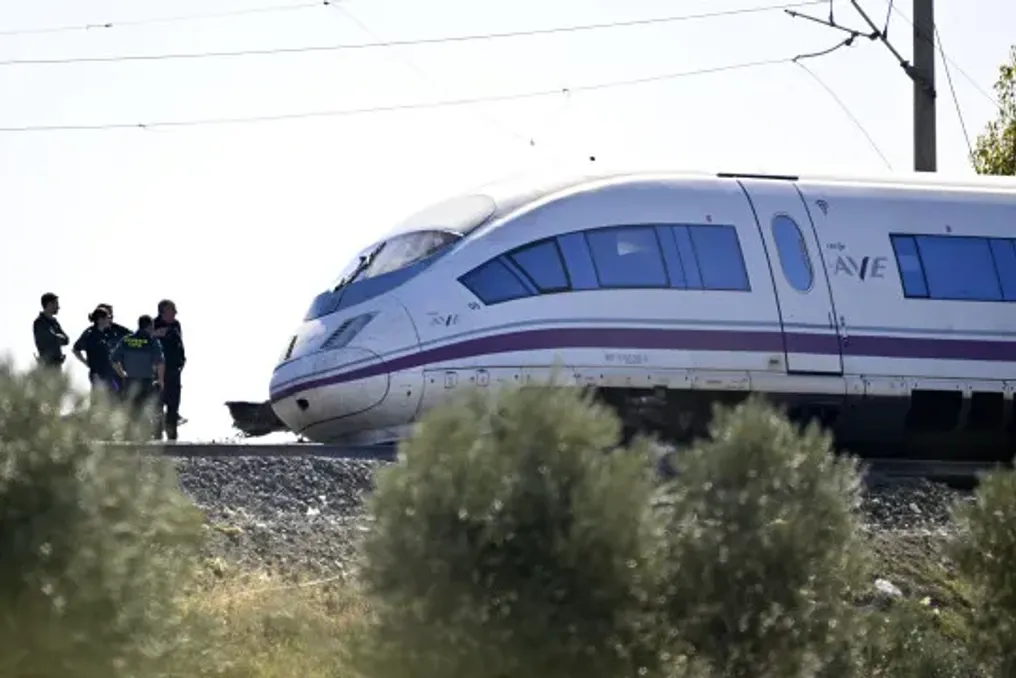
Two high-speed trains collided this morning near the station of Urda, in the province of Toledo, on the Madrid-Andalusia line. The preliminary balance indicates 64 dead and several injured victims.

In a statement cited by the Spanish agency EFE, Semaf declared that, at this moment, they are receiving conflicting information about the Urda accident, which leads them to consider it irresponsible to make any official statement.

The union, which represents about 85% of drivers in Spain, expressed its deep dismay over the recent railway incident and informed that it is in the process of investigating the facts, scope, and impact with professionals and passengers.

Additionally, the union structure emphasized that it does not wish to issue any statement while the real dimension of the accident remains unknown.

Semaf had called the stoppage for October 16th, after the previous attempt at resolution through the conflict commission proved unsuccessful. The action was also justified because, after a meeting with the Ministry of Transport, Adif, the State Railway Safety Agency (AESF), and Renfe, the union concluded that the situation remained as stagnant as before.

A previous event, which occurred on January 18th in Adamuz (Córdoba), causing 46 deaths, led Semaf to call a strike in February. On that occasion, working groups were established to ensure compliance with all commitments made to the Ministry of Transport and Sustainable Mobility and to Renfe, aiming for the de-mobilization of the strike.

According to Semaf, there were meetings between February and April during which drivers presented technical proposals, but these did not advance. Despite claiming to be complying with the terms, Semaf denounced that the situation is identical to that of late April, representing about 85% of drivers in Spain.

Furthermore, Semaf will decide whether to maintain the call for a six-day strike at the operator Ouigo, scheduled to begin on Friday. This stoppage aims to respond to repeated failures by the company's management regarding the provisions agreed upon and contained in the current collective agreement.

Popular