Astronomical images of the week highlight cloud on Mars and Jupiter's occultation by the Moon
Read more
Olhar Digital
olhardigital.com.br

Astronomical images of the week highlight cloud on Mars and Jupiter's occultation by the Moon

In the program Olhar Espacial, two notable astronomical images are presented weekly. Last week, photos of two interesting phenomena that occurred in the Solar System were shown.

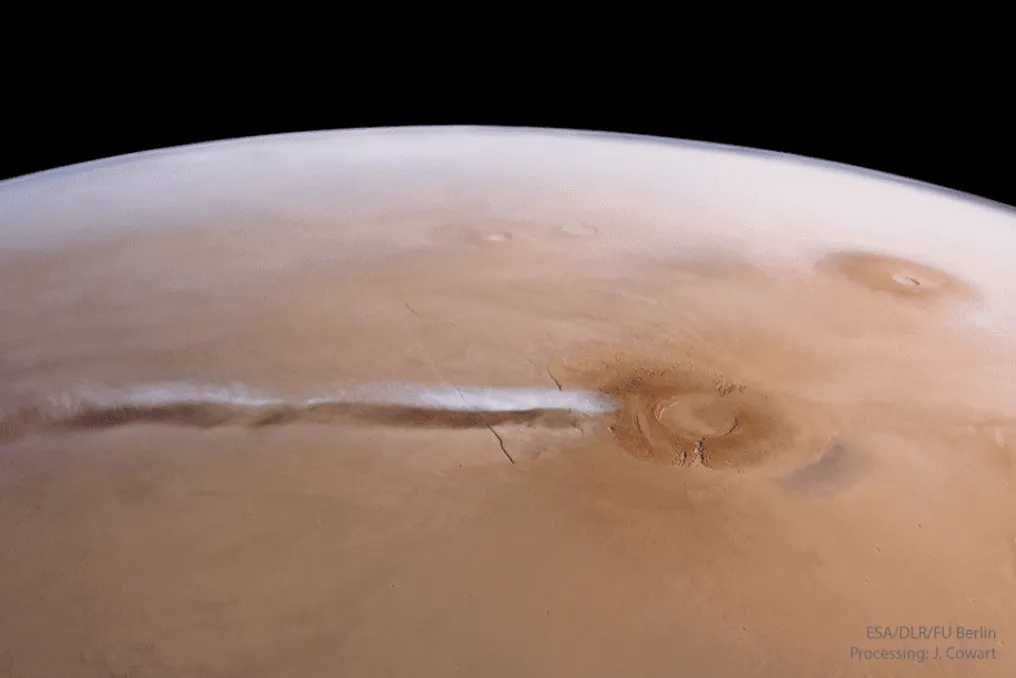
One of the images is a photograph of Mars that displays the Arsia Mons Elongated Cloud, a mystery of the Red Planet that is gradually being clarified. This phenomenon was first recorded by the Viking orbiter in 1977 and continues to fascinate scientists. During spring and summer mornings, this cloud develops over the Arsia Mons volcano, being carried by local winds until it reaches a remarkable length of 1500 kilometers.

It is known that the cloud is composed of ice crystals, although the detailed explanation of its formation has only recently emerged. The current theory suggests that Arsia Mons generates wind currents that cause a sharp drop in temperature above it, promoting the condensation of air moisture and the subsequent formation of ice crystals.

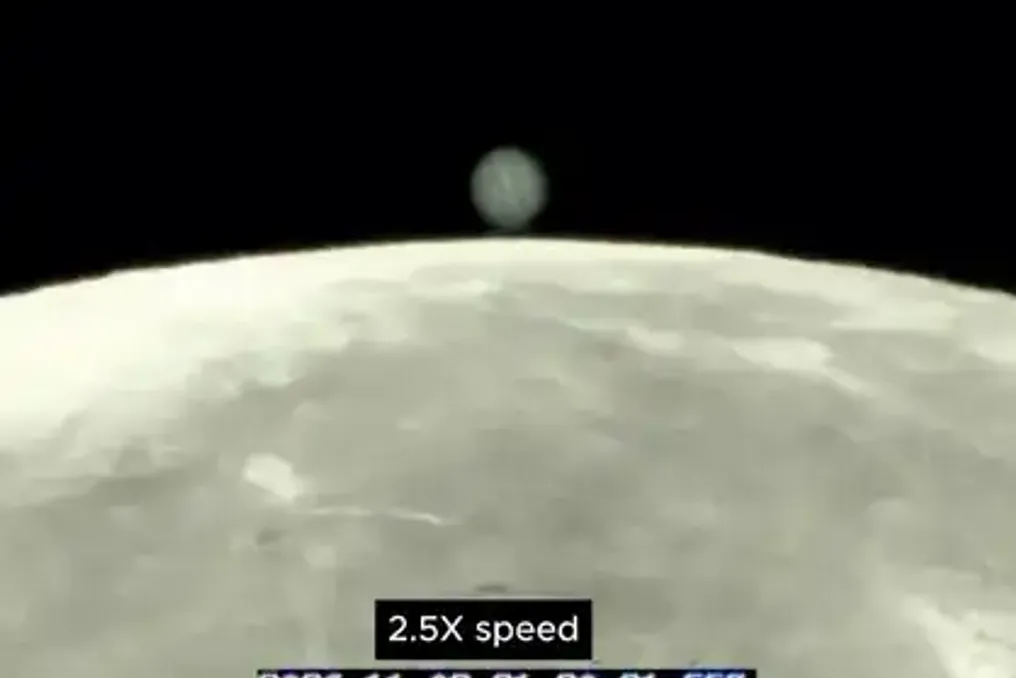
The second image illustrates the moment when Jupiter is obscured by the Moon, an event called the lunar occultation of Jupiter. This occurrence requires the perfect alignment between the planet, the Moon, and the Earth in space, resulting in the blocking of the Gas Giant for certain areas of the planet.

The occultation that occurred on November 3rd was observable in Southeast Asia and Oceania. It represents the third of a total sequence of eight occultations of Jupiter, which began in September and will only end in May 2027. Unfortunately, none of these occasions will be visible from Brazil; the next recording of this phenomenon in the country is only expected in December 2030.

Similar stories

Moon and Jupiter Demonstrate Cloaking Effect in New Stunning Images
Read more
olhardigital.com.br

Moon and Jupiter Demonstrate Cloaking Effect in New Stunning Images

According to Olhar Digital, on Monday (the 2nd), the Moon passed in front of Jupiter, causing a phenomenon known as a lunar eclipse, which can only be observed in specific regions of Earth.

In Kuala Lumpur, Malaysia, where it was already early Tuesday morning (the 3rd), astrophotographer Shahrin Ahmad captured a striking effect during this event. In the resulting images, the planet appeared as if it were melting, disappearing behind the edge of the Moon.

A lunar eclipse occurs when the Moon passes in front of another celestial body, temporarily obscuring it from observers on Earth. Since the visible position of celestial bodies depends on the observation location, this phenomenon cannot be recorded across the entire planet simultaneously.

The visibility zone for the Jupiter lunar transit this week covered island nations such as the Maldives, Sri Lanka, Seychelles, and Mauritius, as well as Reunion, a French territory in the Indian Ocean. In southern and southeastern Asia and Oceania, the transit occurred during the day, which made observation difficult due to the brightness of the sky.

In Brazil, the celestial bodies did not come into contact, so no eclipse occurred. However, the Moon and Jupiter were very close to each other, in a configuration called an astronomical conjunction.

Other specialists and astrophotography enthusiasts worldwide were also able to capture this moment. Michael Theo from Ipoh, Perak, also in Malaysia, managed to capture not only the Moon and Jupiter. He reported to the platform EarthSky.org that during this lunar transit, two Galilean moons of the gas giant were visible. 'At the ingress phase (upper line), Io moves west of Jupiter, while Europa passes over the planet's surface. But at this moment, Europa was not visible due to resolution limitations, poor visibility conditions, and low contrast with the Jovian disk. At the egress phase (lower line), Io, trailing Jupiter, was still blocked by the Moon, while Europa appears, emerging from the eastern limb of Jupiter, thanks to much better visibility conditions and greater contrast with the darker Jovian limb.'

A recording by Atarva Maurya from Bhadohi, India, shows the Moon and Jupiter very close to each other in the sky, clearly demonstrating craters on the lunar surface and the characteristic bands of the planet in the background.

Jeljeta Walinski, at the Desert Bloom Observatory, Arizona, USA, photographed the Moon, Jupiter, and Mars. 'Sometimes astrophotography teaches us that capturing the universe is not always about magnification. Sometimes we need to broaden our perspective to appreciate the overall picture.'

Nishat Khan shared a picture taken in Vaughan, Ontario, Canada, on Instagram.

The phenomenon captured by Ahmad is an expression of the so-called black drop effect, which is mainly known from planetary transits when a planet passes between the Earth and the Sun.

According to Marcelo Zurita, president of the Paraiban Astronomy Association (APA), member of the Brazilian Astronomical Society (SAB), technical director of the Brazilian Meteor Observation Network (BRAMON), and columnist for Olhar Digital, no optical equipment can create images with absolutely perfect focus. Differences in focal lengths of frequencies, such as infrared and ultraviolet, can generate very weak secondary images that usually go unnoticed.

'This creates a kind of 'ghost' that we barely see in the image because it is very faint, very dim. But since this effect occurs in both bodies, in this case the Moon and Jupiter, when the 'ghosts' of each approaches and overlaps each other, it ultimately creates a slightly brighter bubble that expands the objects next to each other,' he explains.

This effect became particularly famous during the Venus transits in the 18th century. Since the planet has a dense atmosphere, observers of that time attributed the deformation to the presence of this layer of gases. However, observations also held significant scientific value: calculating the distance between the Earth and the Sun.

Zurita emphasizes that the idea originated with astronomer Edmund Halley, who proposed using parallax for such a measurement. This initiative led to the organization of expeditions in different parts of the world to observe the transit of Venus. Nevertheless, the deformation caused by the black drop effect complicated the determination of the exact moments of the planet's entry and exit from the solar disk.

'Halley suggested observing the transit of Venus as a way to measure the distance between the Earth and the Sun using parallax. Expeditions were then organized in different parts of the world to observe this phenomenon, and when it happened, it was impossible to determine the exact moments of Venus's entry and exit from the solar disk due to this effect known as the black drop,' the specialist explained in detail.'

The hypothesis that Venus's atmosphere caused the deformation lost its validity in 1999 when NASA's TRACE (Transition Radiation and Anisotropy Explorer) probe observed the same effect during Mercury's transit across the Sun. Since the planet has virtually no atmosphere, it was proven that this characteristic is not necessary for the phenomenon to occur.
Video shows Jupiter appearing to melt behind the Moon; specialists explain the optical phenomenon
Read more
olhardigital.com.br

Video shows Jupiter appearing to melt behind the Moon; specialists explain the optical phenomenon

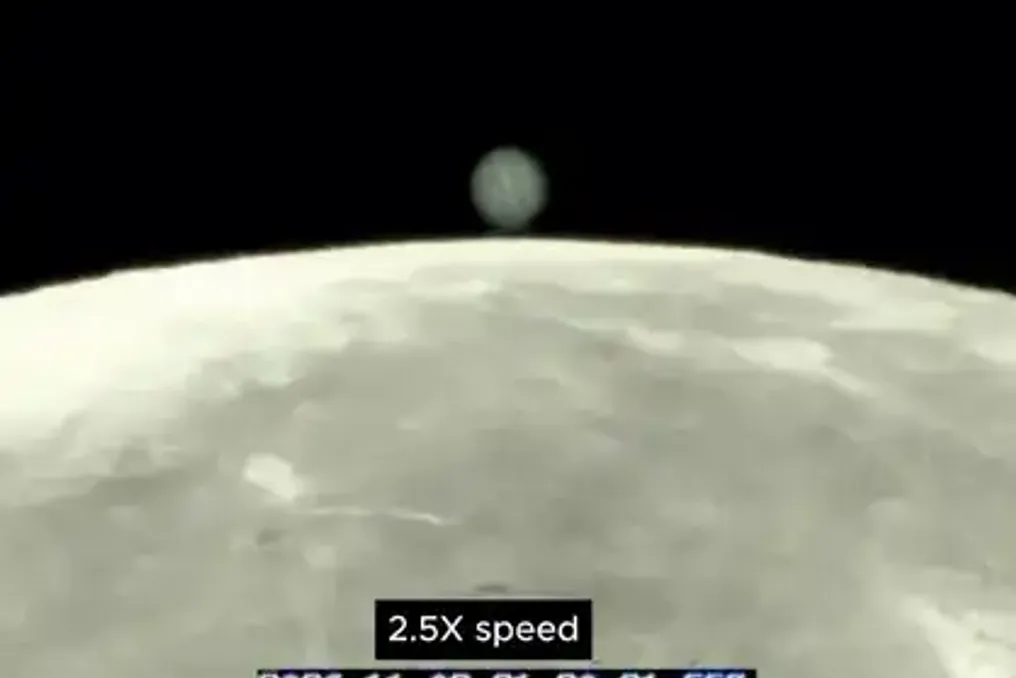
A captured video shows Jupiter appearing to melt as it disappears behind the Moon, an event classified as a lunar occultation. This phenomenon can only be seen in certain areas of the Earth.

In Kuala Lumpur, Malaysia, early Tuesday morning (3), astrophotographer Shahrin Ahmad documented this remarkable effect. In the images, the planet appears to liquefy as it is obscured by the lunar limb.

Ahmad shared his capture with the platform Spaceweather.com after an intense fog covering Southeast Asia dissipated. In the video, as the Moon moves over the planet, its outline seems to stretch, creating a luminous structure resembling a drop sliding down the lunar surface.

It is important to note that despite the unusual appearance, Jupiter suffered no physical alteration. The effect is purely optical and is related to the limitations of the instruments used to observe celestial bodies.

This recording made by Ahmad is a manifestation of the so-called black drop effect, which is better known for occurring during planetary transits, when a planet passes between the Earth and the Sun.

Marcelo Zurita, president of the Paraíba Astronomy Association (APA) and member of the Brazilian Astronomical Society (SAB), explained that no optical equipment can produce images with perfectly sharp focus. Differences in focal point between frequencies such as infrared and ultraviolet can generate very weak secondary images that are usually unnoticed.

He detailed that 'this creates a kind of 'ghost' that we practically don't see in the image, which is very weak, very faint. But since this effect occurs on both bodies, in this case the Moon and Jupiter, when the 'ghosts' of each approach and overlap, this ends up creating a slightly clearer bubble that widens the objects close to each other.'

The effect gained notoriety during the transits of Venus in the 18th century. At that time, observers attributed the deformation to the planet's dense atmosphere. However, these observations also had a crucial scientific purpose: calculating the distance between the Earth and the Sun.

Zurita emphasized that the idea originated from astronomer Edmund Halley, who suggested using parallax for this measurement. This motivated global expeditions to track Venus's passage. However, the distortion caused by the black drop effect complicated the determination of the exact moments of Venus's entry and exit from the solar disk.

'Halley proposed observing the transit of Venus as a way to measure the distance between the Earth and the Sun by parallax. And then expeditions were organized in different parts of the world to observe this phenomenon, and when it happened, it was not possible to determine the exact moments of Venus's entry and exit from the solar disk due to this effect known as the black drop,' the specialist clarified.

The theory that Venus's atmosphere caused the deformation was weakened in 1999 when NASA's TRACE probe observed the same effect during Mercury's transit across the Sun. Since Mercury has almost no atmosphere, it was proven that this characteristic was not essential for the occurrence of the phenomenon.

A lunar occultation occurs when the Moon passes in front of another celestial body, temporarily covering it for those observing from Earth. Due to the dependence on the apparent position of the celestial bodies relative to the observation location, the event cannot be followed across the entire planet.

The visibility range for this week's Jupiter lunar occultation covered island nations such as Maldives, Sri Lanka, Seychelles, and Mauritius, as well as Réunion Island, a French territory in the Indian Ocean. In parts of South and Southeast Asia and Oceania, the passage occurred during the day, which complicated observation due to the brightness of the sky.

In Brazil, the celestial bodies did not overlap, so there was no occultation. However, the Moon and Jupiter appeared very close, in a configuration called astronomical conjunction.

Mercury enters inferior solar conjunction, making it difficult to observe in the sky
Read more
olhardigital.com.br

Mercury enters inferior solar conjunction, making it difficult to observe in the sky

On Wednesday (4th), at 11:20 AM Brasília time, Mercury began a phase termed by astronomers as 'inferior solar conjunction.' During this event, the planet passed between the Earth and the Sun, approaching approximately 0.674 astronomical units (AU), which corresponds to about 100.8 million kilometers.

According to information from the astronomical observation guide In-The-Sky.org, this conjunction occurs once every synodic cycle of the planet, which is the time required for Mercury to return to the same position relative to the Sun when viewed from Earth; this cycle lasts 116 days.

At the moment of the inferior solar conjunction, Mercury was located only 0°22' (zero degrees and twenty-two arcminutes) from the Sun. This extreme proximity causes the bright light of the main star to obscure the planet, which had already made its observation challenging in previous days. This phase represents Mercury's 'disappearance' in the night sky and its subsequent movement to become a morning object in the coming weeks.

The unit 'arcminutes' is used in astronomy to measure very small angles in the firmament. Considering that a full arc has 360°, 60 arcminutes equal one degree, meaning the apparent distance between Mercury and the Sun will be slightly more than one-third of that value.

Simultaneously with reaching inferior conjunction with the Sun, Mercury also reaches perihelion, which is the point closest to Earth, reaching a distance of 0.67 AU from us. This implies that the smallest planet in the Solar System will be only 100.2 million kilometers from Earth.

Regarding when it can be seen again, Marcelo Zurita, president of the Paraíba Astronomy Association (APA), member of the Brazilian Astronomical Society (SAB), technical director of the Brazilian Meteor Observation Network (BRAMON), and columnist for Olhar Digital, informed that Mercury will become visible again on the eastern horizon, shortly before dawn, around November 20th, when it will be further away from the star in the sky.

Additionally, an article published in the scientific journal Icarus mentions the possibility that fragments of Mercury have been found on Earth. Meteorites analyzed by British scientists exhibit characteristics suggesting a probable origin on this planet closest to the Sun. If this hypothesis is confirmed, it would constitute the first record of Mercurian rocks on terrestrial soil, providing a valuable opportunity for study.

Popular