NASA has plans to create a permanent facility in the lunar south pole area, with completion expected by 2032. This project involves various missions, both robotic and crewed, intended to deliver equipment, assemble structures, and prepare the site for astronauts' arrival.
The central objective is to convert part of the lunar surface into an outpost where people can reside, work, and conduct explorations. To realize this vision, the agency will divide the construction into phases and partner with private companies in developing energy systems, vehicles, and communication equipment.
Implementation will be progressive. The first phase, expected by 2029, will focus on sending robotic equipment, testing technologies, and proving that the necessary infrastructure can be transported and installed on the Moon. These missions will also serve to map terrain conditions and prepare for future human activities.
The second stage, scheduled between 2029 and 2032, will be dedicated to expanding the structure, aiming to install all essential resources for the base's operation. The third phase will only begin once the outpost is operational, although NASA has not yet set an exact date for this milestone.
To manage these missions, the agency has instituted CLPS 2, a new arrangement of long-term contracts with private companies. This program establishes a combined maximum ceiling of US$10 billion (approximately R$54.5 billion) over ten years, without this meaning that the entire amount has been contracted or will be spent immediately.
Eight companies have been selected to participate in this competition: Blue Origin, Firefly Aerospace, Intuitive Machines, ispace-U.S., Lockheed Martin, Northrop Grumman, SpaceX, and Voyager Technologies. This change also aims to increase flexibility in mission organization, as Jared Isaacman, NASA administrator, stated that the previous model was rigid, limited to one or two annual missions, and hindered scalability.
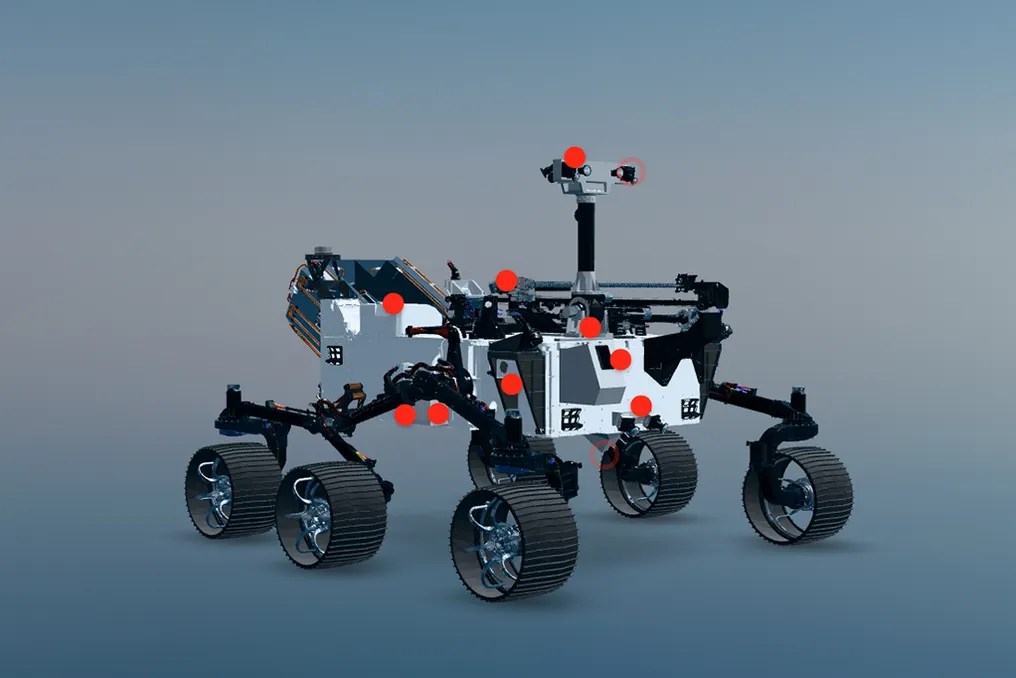
One of the first tasks will be to investigate the lunar south pole for vital resources to sustain human presence. For this, NASA will send PROMISE (Polar Rover for Observation, Mapping, and In-Situ Exploration). This vehicle will be powered by nuclear energy and is set to begin its explorations in late 2028, investigating the soil and searching for volatile materials, such as water ice, which is crucial for future operations.
The rover will be equipped with a drill and scientific instruments capable of analyzing both the surface and subsurface, allowing studies in areas inaccessible only through remote imaging. NASA intends to adapt an engineering model used in the Perseverance and Curiosity rovers, deployed on Mars, for lunar conditions. The transport of this vehicle will be done by the Blue Moon Mark 1 landing module, provided by Blue Origin.
In addition to rockets, cargo transport and equipment movement in orbit, as well as the development of terrestrial and inter-crew communication systems, will be fundamental. The VADR program, focused on commercial launch and space transport missions, will participate in these tests, with goals such as demonstrating cargo transfer between Earth and lunar orbit, testing navigation with the CAPSTONE 2 mission, and conducting surface reconnaissance with MoonFall drones.
Companies such as Arrow Science and Technology, Blue Origin, and Impulse Space will be involved in the operations. Launches will utilize rockets like New Glenn (Blue Origin), Falcon 9 (SpaceX), and Terran R (Relativity Space). Communication will be ensured by SpaceX's selection to launch satellites in 2028 using the Starship rocket, creating a lunar network similar to Starlink to maintain contact with astronauts and equipment.
Components of miniCAST, a tower intended to provide power and communication on the Moon, will be developed by other companies, including Honeybee Robotics, Redwire, and Yank Technologies. With all these actions, NASA seeks not only to ensure transport to the south pole but also to establish the necessary conditions for a more stable human presence in the region, transforming lunar exploration into a lasting presence.