In recent months, the main difficulties facing the future of space travel have been examined. It has been shown that stability and the development of new technologies are critically important for returning to the Moon, reaching Mars, and possibly exploring other worlds in the solar system. However, when it comes to distances beyond these boundaries, they become so vast that the journey could take centuries, exceeding a human lifespan.
Therefore, in the last chapter of the series on space travel, we will set aside budgetary and technological limitations to present a very distant future. What would it be like to land on a giant ship capable of accommodating a small civilization, where people are born, live, and die during a multi-century or millennia-long journey through interstellar space?
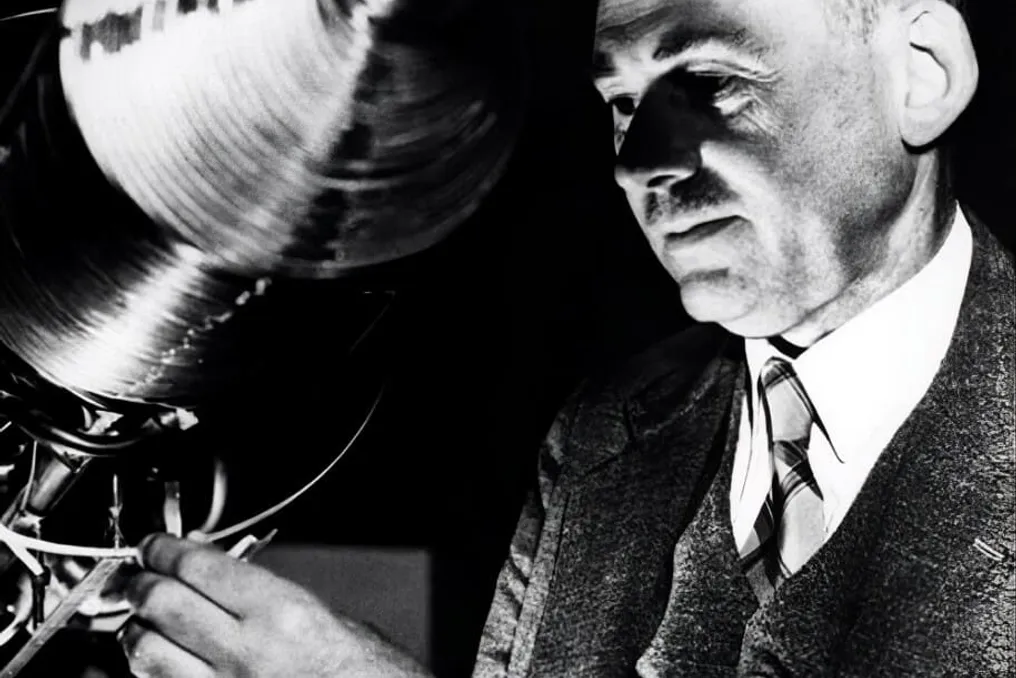
Despite the futuristic nature of the idea, it is not new. In January 1918, American rocket engineer Robert Goddard hypothesized that when the Sun and Earth cool down, humanity will have to build giant ships that will allow us to travel through space in search of a new home. Since such ships would carry several generations of space travelers, they became known as generation ships.
Inside such a ship, there must be residential quarters, recreation areas, schools, hospitals, workshops, factories, and, most importantly, extensive agricultural lands. This is not about a traditional spacecraft with a few astronauts in small compartments, but about an environment capable of reproducing all the conditions necessary for life on our planet.
One of the most famous projects is the Stanford Torus, a giant ring with a diameter of about 1.8 km, designed to accommodate approximately 10,000 inhabitants. It would rotate around its axis, creating artificial gravity similar to Earth's, allowing residents to stay on the floor and conduct normal activities.
A huge stationary mirror installed outside would reflect sunlight onto a set of secondary mirrors, directing it inside the ring. This way, the residential and agricultural areas could be illuminated, and day and night cycles could be simulated. However, this system would only work when the ship was relatively close to the Sun. When moving into interstellar space, a different energy source would be required to illuminate crops, power mechanisms, and heat the inhabitants.
A nuclear source would be one of the most suitable options. Fission could provide electricity and heat for long periods. Nuclear fusion, if it ever becomes more practical and reliable, could offer an even more interesting source for extremely long missions. Nevertheless, energy would have to be used with maximum rationality; it could not be wasted on creating AI cat videos, for example.
Building this space city would be an extremely complex task. It would need to function for hundreds of years without external support. Water, air, and nutrients would have to be constantly recycled. Organic waste could be processed and turned into fertilizer. Plants would produce food and help replenish oxygen. In this colossal ship, microorganisms would play a fundamental role at various stages of these cycles.
We are still far from being able to sustain a human population indefinitely in a completely closed ecosystem. But research is already underway in this direction, helping to understand the problems that a generation ship must solve. One example is the European Space Agency's (ESA) MELiSSA project, which studies how to reproduce biological cycles capable of regenerating water, producing oxygen, and generating food from waste.
Radiation protection would also be vital. And here we are not talking about temporary or partial protection, as most travelers on this ship would be exposed to cosmic radiation throughout their lives. A structure with a large amount of water or hydrogen-rich materials would not be enough to reduce the impact. We would certainly need additional protection, such as a magnetic shield surrounding the ship, so that it doesn't leave with the people and arrive at its destination with a squad of X-Men.
But the problems associated with a generation ship go beyond technology. The social organization of this space civilization would depend on laws that, in addition to ensuring order and good coexistence, would also guarantee the preservation of the environment, which would be vital for the survival of the entire population. People would be born, live, and die aboard. The ship would be the only world they knew. Freedom, opportunities, cultural diversity, and decent living conditions would need to be guaranteed. We would need to find ways to govern and raise children so that the mission of this civilization could be passed down from generation to generation.
Now imagine the emotions of this population when they finally reach their cosmic destination. Entire generations of travelers, who have never seen a world other than the artificial environment of their ship, will encounter a vast planet, with landscapes, oceans, and horizons they have never seen for the first time. A world different from Earth, which may require new adaptations. And the choice of this destination had to be extremely careful, as the amount of fuel needed to accelerate and decelerate this ship would be so enormous that we are unlikely to find a 'gas station' for refueling and heading elsewhere.
The generation ship would be much more than just a vehicle. It would become a way to take not only people but also the entire ecosystem, society, and part of our history on Earth with us. Certainly, we are far from creating anything like this. But contemplating these possibilities helps us understand the scale of the problems we will have to overcome if we ever want to cross the distances between stars.
In this series, we have seen how curiosity and the desire to explore the universe stimulate the development of technologies that allow us to expand our boundaries within the solar system. But when we look beyond it, we realize that the problems are so extraordinary that perhaps we will dare to venture into interstellar space only when this journey ceases to be merely a desire and becomes a necessity.
And if that day comes, perhaps our descendants will look up at the sky on a distant planet with the certainty that it all began here. In the small blue world where you looked at the stars and dared to call them home.