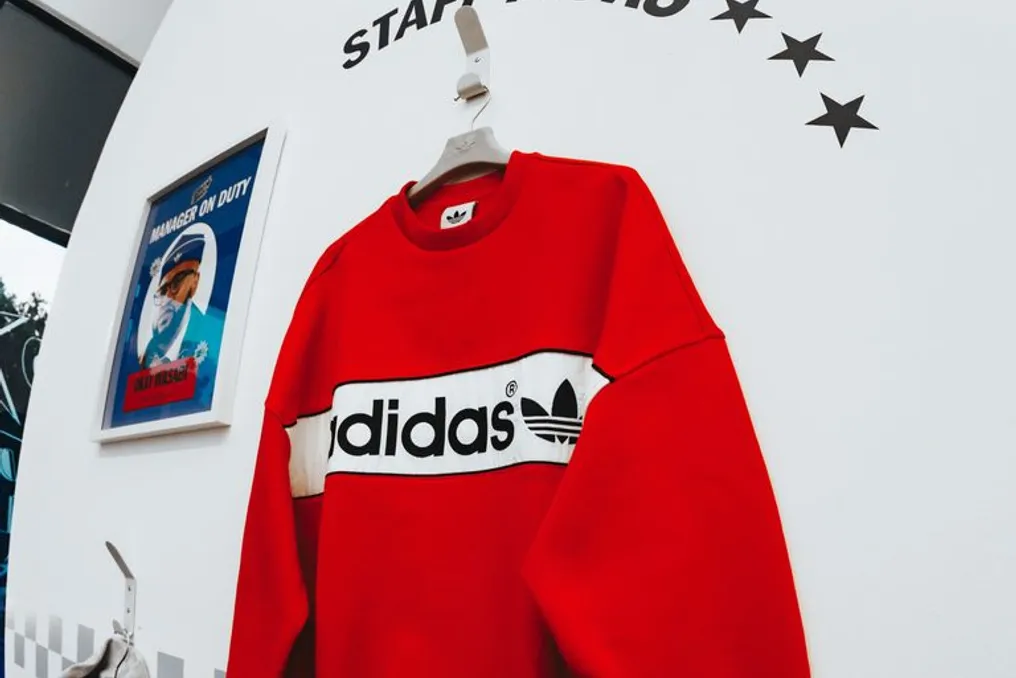
Adidas Originals held a three-day event in Johannesburg dedicated to creativity and self-expression
Read more
10and5
10and5.com

Adidas Originals held a three-day event in Johannesburg dedicated to creativity and self-expression

Adidas Originals Studio organized a three-day event in Johannesburg, bringing together various manifestations of the city's creative culture. The program covered themes of personal branding, fashion, film production, and self-expression, starting with an evening visit to the Star Mart store.

The event, which took place from November 6 to 8, was a joint project by Adidas Originals and Studio88. Over three days, participants immersed themselves in retail, music, discussions, and creative workshops, gaining opportunities to interact with various aspects of sport, fashion, and culture.

Friday Evening: Visit to Star Mart

The first day began on Friday evening with an event at Star Mart, which combined retail and cultural activity supported by Adistar. The event took place at Stanley Studio in the Braamfontein Werf area, near 44 Stanley, merging elements of commerce, music, and culture in an atmosphere fitting the spirit of Adidas Originals. The store attracted a large number of visitors who explored the space, examined the collection, and enjoyed the overall ambiance created by the visual design.

The evening program was enhanced by performances from Mamthug and Nkuley, setting the tone for the launch. Star Mart served as an introduction to the broader event, gathering people through fashion, music, and surrounding culture.

Saturday: Where Sport Meets Style

On Saturday, the focus shifted to creative workshops where participants analyzed the relationship between sport, fashion, and personal self-expression. One session, 'Kit Check,' led by Kabelo Kungwane and Alex Zono, examined the influence of sport on clothing choices and how sports culture shapes individual style. The discussion went beyond mere style, covering the process of building one's own brand—from the initial idea to budgeting and defining creative direction.

In parallel, the workshop 'Build Your Original,' conducted by Sonia Tona and Zéshaan Haku, offered a practical session. Participants worked with Adidas products, mastering customization and upcycling techniques to transform existing items into bags. This allowed them to experiment with materials and reimagine the potential of clothing outside its original purpose, encouraging the creation of something that reflects their own approach to fashion rather than starting from scratch.

Sunday: Signature Moves and Finding Your Purpose

Sunday added another dimension to the program, focusing on personal branding and the importance of understanding what one wants to convey through their work. The 'Signature Moves' session, moderated by Pamela Mtanga and Rabia Ghoor, explored the significance of defining one's goal and consistently returning to one's 'why' in endeavors. Both facilitators shared personal experiences and insights on building identity, developing a business, and establishing an online presence.

The discussion prompted participants to approach how they present themselves and what their personal brands should embody more consciously. It was emphasized that personal branding extends beyond appearance or social media posts; it begins with understanding one's own values, acknowledging the uniqueness of one's perspective, and finding ways to communicate this to others. The session concluded with a showcase of stylized content featuring the latest Adistar XLG and Control 5 models, integrating themes of personal identity and creative self-expression into a visual format.

A View from the Outside: Finding Voice Through Film

The final workshop, 'Double Take,' led by Meghan Daniels and Hallie Haller, immersed participants in the world of film production and visual storytelling. It encouraged them to explore the uniqueness of their perspectives and ways of translating these ideas into creative works. Through interactive discussions and exercises, participants reflected on their values and the voices they wished to bring to their narratives.

Working in teams, participants were tasked with creating short films using Adidas footwear, following a 30-second, single-shot brief. This prompted them to think creatively about how to convey a story within a limited timeframe. The session concluded with a screening of the films, providing an interesting finale to the program, demonstrating how personal self-expression can move beyond conversation and become something visual that can be shared with others.

More Than Just a Weekend Activation

In addition to the workshops, retail continued throughout Saturday and Sunday, as Studio88 featured Adidas Originals products at the heart of the event. Music also remained an important part of the entire process. Besides Mamthug and Nkuley on Friday, Doowap, Jade T, Que DJ, and Jinji performed over the weekend. These performances added atmosphere to the event.

OKAY Wasabi and Violy also participated in the retail activation on Saturday, while OKAY Wasabi continued hosting events on Sunday. Over the three days, the program offered more than just an opportunity to attend an event; it created a space for learning, experimentation, idea exchange, and viewing creativity from different angles. Perhaps the main takeaway was that originality should not follow any single formula. It can be found in repurposed clothing, in the stories we choose to tell, in the brands we build, and in the ways we express ourselves. Sometimes, all it takes is the right space to begin exploring how it looks.

Similar stories

Decorex Africa presents 2026 holiday season decor and design trends
Read more
10and5.com

Decorex Africa presents 2026 holiday season decor and design trends

Decorex Africa gathered leading specialists from South Africa in the fields of retail, decor, and event design to review ideas that will define the festive period in 2026, allowing each season to be unique. Modern holiday decor encourages the expression of personal style and the celebration of one's own stories, offering elements such as edible centerpieces, table floral arrangements that do not require a florist, unexpected color combinations, and the revival of family heirlooms.

For 2026, Decorex Africa brought together the opinions of trend forecasters and creative specialists from Woolworths Home, @home, Babylonstoren, and Poetry, as well as interior design studio Cocoon Lifestyle and experiential company Food, I Love You. Experts shared their vision on approaches to choosing colors, decorations, gifts, and other aspects, presenting a guide to the trends expected in stores, social media, and events this season.

The color palette is shifting from unconventional combinations towards botanical greens and earthy monochromes, providing an opportunity to work with home coziness and the mood of a celebration outside the framework of traditional holiday hues.

Creative Executive Johan Van Der Merwe from Poetry noted that the expanding range of furniture and home goods presented at Decorex Joburg links personal style with the home. He believes this individuality should also be transferred to color choices that will be relevant not only during the holiday period. 'Rich tomato reds combined with soft pinks, buttery yellows, olive greens, warm earth tones, and unexpected splashes of blue can feel just as appropriate in January as they do in December.'

Babylonstoren's collection for 2026, titled 'A Garden of Gifts,' utilizes a botanical concept in embroidered tablecloths, garden-inspired spheres, and natural textures. New product development and procurement specialist Carisa Meaker explains the direction: 'The palette moves through shades of green, from soft olive to deeper leaf tones, complemented by fresh yellow-green and touches of muted gold.'

Mpho Phalane, founder of Food, I Love You, suggests creating a dramatic and sculptural table using a single tone. Her focus is on 'sensory immersion within a single palette, which prioritizes rough texture over chaotic color,' using deep ochre, terracotta, or charcoal colors to create an 'incredibly serene, cinematic mood.'

After traveling and participating in partnership exhibitions such as Salone del Mobile, Maison&Objet, and Paris Design Week, Creative Directors of Decorex Africa and 100% Design Africa, Garreth van Niekerk and Alan Hayward, see that expressive decor will evolve in the future. They draw attention to a more local approach to what the online retailer Etsy has called 'Craftmas' and 'Merrymaxxing,' as well as the 'Neo Deco' trend identified by Pinterest Predict for 2026, which reflects a global interest in handmade items, whimsical ornaments, and a refreshed Art Deco glamour.

Van Niekerk notes: 'The international interest in crafts brings a very important element to the holiday season this year, especially in South Africa. While the world seems unstable in many ways, handmade decoration, inherited textiles, or something made by a local artisan serves as a reminder of human labor and the people you value.'

Hayward adds: 'There is also theatricality present in these international directions. We like how designers create bold combinations of plaid patterns with stripes, colored glass next to chrome, large bows among slightly kitschy spheres, and play with unexpected combinations that give existing items a completely new energy.'

All these ideas open up space for various types of celebrations: expressive color from Poetry, garden inspiration from Babylonstoren, edible compositions from Food, I Love You, artistic pieces from Cocoon Lifestyle, personal style from @home, and sensory details from Woolworths Home. The common thread is the freedom to make the season your own, with the people, objects, and rituals that give character to the home.

How DRUM Magazine Documented Youth Culture and Shaped a Generation in South Africa
Read more
10and5.com

How DRUM Magazine Documented Youth Culture and Shaped a Generation in South Africa

Long before the advent of social media, viral moments, and digital media platforms, one South African magazine documented the sounds, images, fashion, and personalities that defined an entire generation. DRUM Magazine did not just cover culture; it helped define this generation's self-perception.

When Instagram Explore pages or TikTok trends did not yet exist, there was DRUM—a publication that captured something extraordinary in the spirit of Black South Africa. It documented a generation finding its voice, its identity, and its place in a country striving to restrict all three aspects.

The Launch of DRUM Magazine in 1951

Initially launched in 1951 under the name The African Drum, and later transformed into the modern DRUM, the magazine appeared during one of the most significant periods in South African history. While the apartheid regime intensified, a completely different story was unfolding on the streets of Johannesburg, especially in Sophiatown.

A new urban culture was forming. Jazz clubs were filled with patrons, musicians found their audience, fashion became a form of self-expression, and young Black residents of South Africa created new identities through music, language, style, and nightlife. This generation possessed an energy that could not be contained by the political and social structures surrounding it.

DRUM recognized this phenomenon. Instead of merely documenting the political reality of the time, the publication focused on the people who lived, created, and shaped this culture. Its pages reflected the world of jazz musicians, writers, photographers, boxers, fashion, entertainment, relationships, and daily life in the townships.

The magazine also became home to a remarkable generation of creative voices. Journalists and writers such as Henry Nkumalo, Kahn Temba, Todd Matsikiza, Casey Motsisi, Blouk Modisane, Arthur Maiman, Lewis Nkosi, Nat Nakasa, and Es'kia Mphalele helped shape DRUM's distinct editorial voice. Photographers, including Jürgen Schadeberg, Bob Gosani, Peter Magubane, Ernest Cole, and Alpha Kumalo, worked behind the lens, documenting the people, places, and moments that defined that era.

Rather than just recording political realities, the publication paid attention to the people creating and shaping the culture. Its pages presented the world of jazz musicians, writers, photographers, boxers, fashion, entertainment, relationships, and ordinary life in the townships. It offered readers something particularly powerful: the chance to see themselves represented in a way that mainstream media rarely allowed.

A Generation Finding Its Voice

At the heart of DRUM's influence was its ability to understand that the lives of Black South Africans were about more than just the struggle against apartheid. There were stories of aspiration, love, success, style, music, friendship, and the everyday experiences of people navigating an increasingly urbanized society. These stories held equal weight because they reflected the humanity of a generation constantly being defined by others.

The magazine became a haven for an exceptional collection of writers and photographers, including Henry Nkumalo, Kahn Temba, Peter Magubane, Jürgen Schadeberg, Nat Nakasa, and Todd Matsikiza. Together, they helped create a unique editorial style that was intelligent, fearless, visually compelling, and deeply rooted in the streets.

Henry Nkumalo, known as Mr. Drum, gained fame through his investigative journalism, including undercover reporting on farm worker exploitation. Kahn Temba brought wit and complexity to the literature of township life, while photographers like Peter Magubane and Jürgen Schadeberg created an extraordinary visual archive of the people and places that defined that era.

The result was not just a magazine, but a cultural document. It captured the personalities, environments, and moments that ultimately entered the collective memory of South Africa. The clothes people wore, the music they listened to, the places they gathered, and how they expressed themselves became part of an important historical chronicle.

Georgia Presents Its Culture Through Gastronomy and Art at the CIIE Exhibition in Shanghai
Read more
cgtn.com

Georgia Presents Its Culture Through Gastronomy and Art at the CIIE Exhibition in Shanghai

At the ninth China International Import Expo (CIIE) in Shanghai, Georgia is showcasing its rich cultural heritage through cuisine and art. In the Georgian pavilion, a Georgian chef prepares traditional dishes for visitors, turning the stand into a vibrant showcase of Georgian cuisine.

Nearby, a local artist uses grape juice for painting, drawing inspiration from the country's renowned wine heritage as creative material. Thus, the Georgian pavilion offers a vivid representation of the tastes, traditions, and people of this country, covering the journey from kitchen to canvas.

Popular