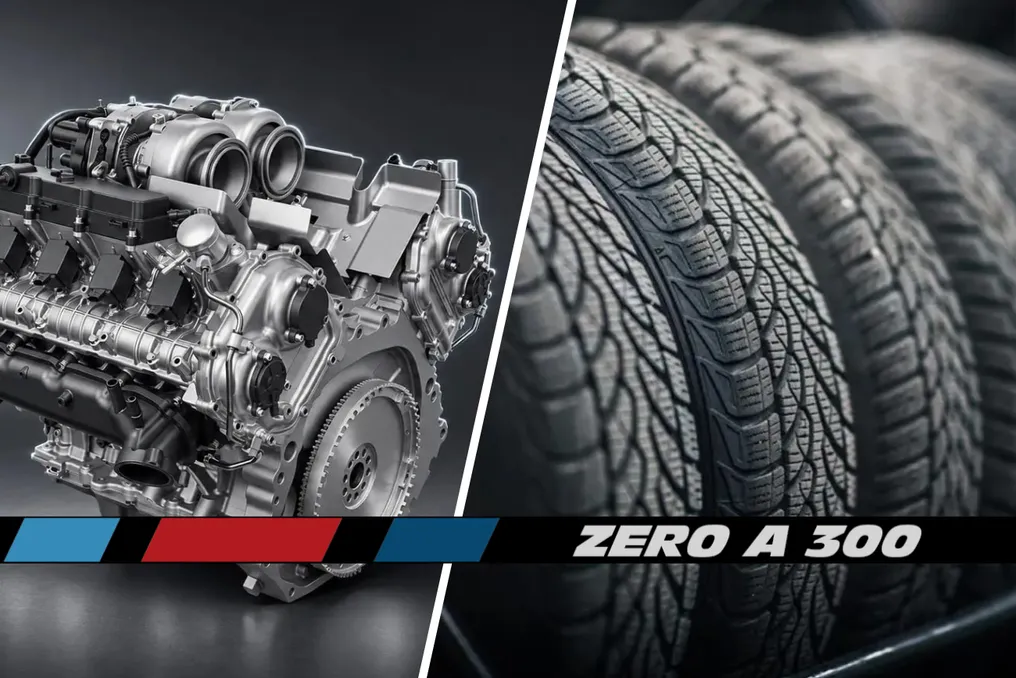
Lotus reveals new 680 hp twin-turbo V8 engine; government increases import tax on tires
Read more
FlatOut
flatout.com.br

Lotus reveals new 680 hp twin-turbo V8 engine; government increases import tax on tires

Lotus announced the engine that will be incorporated into its new Esprit: a four-liter twin-turbo V8 engine named W40. This engine was developed by Horse Powertrain, a joint venture formed by Geely and Renault, and generates 680 hp along with 81.6 kgfm of torque.

Although Lotus has not officially confirmed yet that the supercar, currently known as Type 135, will be the new Esprit, rumors point to this possibility. The engine features a hot V configuration, with the exhaust manifold located between the cylinder blocks, resulting in a more compact package and optimizing gas flow. Thanks to the use of lightweight materials and direct fuel injection, Horse Powertrain managed to produce a relatively light engine, weighing less than 200 kg.

Together with the engine, a new eight-speed dual-clutch gearbox was created, capable of performing gear shifts in just 20 milliseconds. This transmission is designed to support up to 108 kgfm of torque. It is important to note that the V8 will not operate in isolation, as Lotus has already stated that the Type 135/Esprit will be a hybrid vehicle, using two electric motors to assist the combined power, aiming to exceed 1,000 hp.

The developers assure that lightness remains a priority, which is why the car will not be a plug-in hybrid, thus avoiding a large battery pack that would add unnecessary weight. Despite the speculation, the revelation of an entirely new V8 engine is already generating excitement. A supposed Lotus Esprit with over 1,000 hp may not be faithful to the original spirit, but it represents a logical industry trend.

The hybrid arrangement suggests that the new Esprit will have all-wheel drive, with the combustion engine powering the rear axle and the electric motors responsible for the front axle. It is suggested that Lotus consider including a mode to deactivate the front axle, allowing driving solely with the combustion engine. Additionally, it would be interesting if Lotus created a version that completely eliminated the hybrid system, keeping only the 680 hp of the twin-turbo V8, which might appeal to the more traditional public.

It is likely that the new V8 will not be limited to the Esprit, which may also have a simpler V6 version. The Chinese company Geely, owner of Lotus, holds other brands such as Volvo, Polestar, Zeekr, and Lynk & Co, and any of them could use the W40 engine, which has good low-speed torque and would be suitable for a luxury SUV.

On another front, the federal government raised the Import Tax from 25% to 30% on passenger car tires, meeting the request of national manufacturers. This change, valid for 12 months until November 9, 2027, aims to curb the entry of imported tires, especially Asian ones, but may increase the maintenance costs of Brazilian vehicles.

The new rate was defined by Resolution Gecex No. 978/2026. The standard tariff is 16%, but it was already temporarily at 25% since 2024, resulting in an immediate five percentage point increase. The National Association of Tire Industry (Anip) points out that the share of tires manufactured in Brazil in the replacement market has dropped drastically, from 66% in 2019 to only 30% in September 2026, with the remainder supplied by cheaper Asian imports.

On the other hand, importers, represented by Abidip, criticize the measure, claiming it harms competition and the consumer, potentially increasing maintenance costs, especially for low-income families. They argue that combating fraud, such as under-invoicing and tax evasion, would be a more appropriate solution.

Both national and imported tires are subject to the 9.75% IPI for new passenger tires, in addition to PIS and Cofins, which use a concentrated taxation regime. In the case of imported tires, taxation begins before the first sale in Brazil, applying the 30% Import Tax on the customs value (goods, freight, and international insurance), which raises the IPI calculation base. There are also PIS-Importation of 2.68% and Cofins-Importation of 12.35%, added to the state ICMS, whose national average in 2026 was 19.3%.

The situation of Chinese tires may be aggravated by specific anti-dumping duties, charged by weight, which, according to the Ministry of Development, Industry, Trade, and Services, can reach US$ 1.77 per kilogram until July 2030. The final impact will depend on how costs are passed on to consumers and the reaction of local producers.

Additionally, VWCO, Volkswagen's commercial vehicle division in Brazil, launched the Tempest van line. This family includes four models: Cargo (van), Window (with side windows), Minibus (passenger van), and Truck (cab chassis). The models vary in 11 versions, with load capacities between 3.5 and 4.1 tons, requiring at least Category C driver's license.

All variants share the same mechanics: a 2.0L turbodiesel engine producing 174 hp and 40.8 kgfm of torque, coupled with a six-speed manual gearbox that transmits power only to the rear wheels. Available trims are Comfort and Prime. The Comfort package offers a digital dashboard, a 12-inch multimedia center with Apple CarPlay and Android Auto connectivity, in addition to digital air conditioning and traction control. The Prime includes a 360-degree external camera, tire pressure monitoring, and a complete ADAS suite, such as blind spot monitoring and automatic emergency braking.

While prices have not yet been disclosed, sales of the Volkswagen Tempest are expected at the beginning of next year. Finally, regarding Chinese hybrids, it has been noted that some cars announce powers higher than reality due to a legal loophole. In Brazil, during homologation via Siscat (administered by Senatran), companies must report the individual power and the combined power of the hybrid system, but there is no clear regulation on which value should be displayed to the consumer, allowing manufacturers to highlight the total installed power, which is the simple sum and generally higher than the combined power.
Similar stories

Aston Martin Dreadnought to participate in Dakar 2027; Toyota Tacoma may reach Brazil and Ford Ranger Tremor will be launched
Read more
flatout.com.br

Aston Martin Dreadnought to participate in Dakar 2027; Toyota Tacoma may reach Brazil and Ford Ranger Tremor will be launched

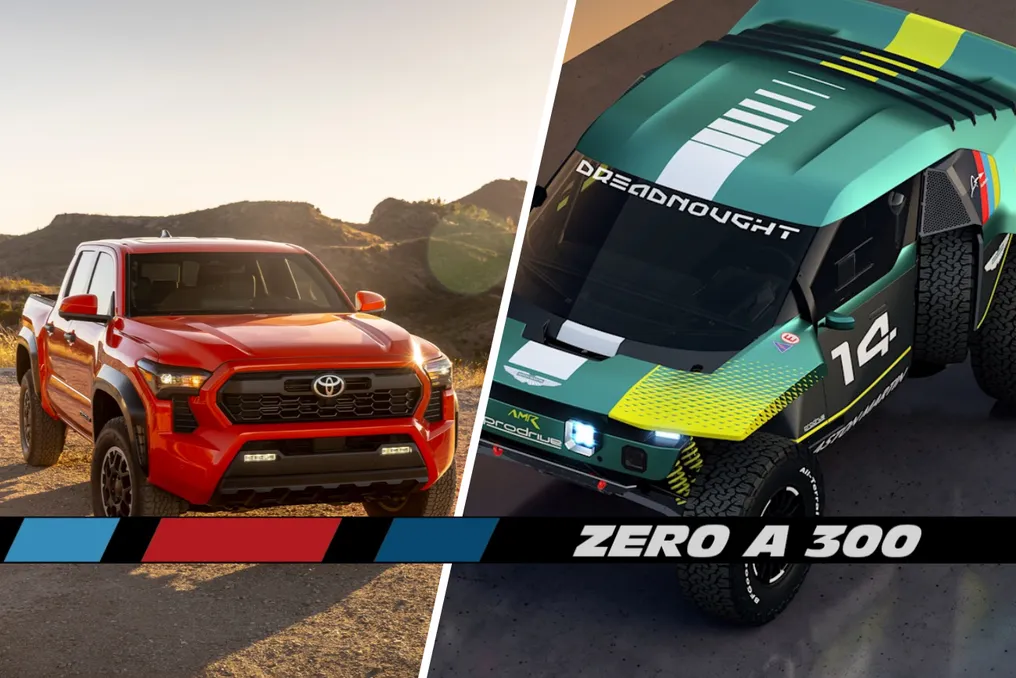
Toyota announced that it will produce the Tacoma pickup, considered the larger sibling of the Hilux, in Argentina. The automaker will invest US$ 1.3 billion, equivalent to approximately R$ 7.5 billion at the current exchange rate, in the factory located in Zárate, near Buenos Aires. Production is scheduled to begin in 2030.

With this change, Argentina will become the second country in the world to manufacture the Toyota Tacoma, as it is currently only produced in Mexico to supply mainly the United States. According to Yoichi Miyazaki, the brand's executive vice president, this decision fits into Toyota's electrification strategy in Latin America.

The version to be produced will have a 2.4-liter four-cylinder gasoline turbo engine, complemented by an electric motor positioned between the combustion unit and the eight-speed automatic transmission. The 1.87 kWh battery is recharged both through energy recovery during braking and by the combustion engine itself, delivering a combined power of 326 hp and 64.2 kgfm of torque.

Although Toyota has not yet confirmed the sale of the Tacoma in Brazil, Argentine production considerably simplifies homologation and import processes. Given the growing success of pickups in the national market, the absence of the Tacoma would be seen as a missed opportunity, especially considering the consolidation of the Hilux and the emergence of the future Corolla Deck as competitors.

Aston Martin will take prototype to Dakar 2027

Aston Martin, which had presented the Dreadnought in a game, revealed that the futuristic off-road vehicle will come to life and compete in the 2027 edition of the Dakar Rally. This will be the first time Aston Martin participates in such a significant rally raid event, justifying the immediate investment.

Prodrive will be responsible for developing, building, and testing the three units that will participate in the competition. The team has vast experience in rallies, having secured a podium finish three times in the last five years in Dakar and winning the last edition with its Dacia Sandrider in the Ultimate category.

Definitive technical details of the real Dreadnought have not been released, and it is unlikely to use a V12 like the virtual version. Internally, the vehicle features characteristics closer to a traditional racing car, despite its exterior referencing the game's design.

A highlight for the Brazilian public is the presence of Lucas Moraes among the three drivers selected by Aston, alongside Fernando Alonso and Sébastien Loeb. Moraes has a relevant history in these types of competitions, having finished third in Dakar in 2023 with the Toyota Hilux T1+ and being champion of the FIA World Rally-Raid Championship the previous year. Thus, Aston has assembled a very competitive lineup for Dakar 2027.

The race will take place from January 9 to 23, starting from Portugal, crossing the Mediterranean, and continuing to Marrakech, Morocco, covering a total distance of 6,805 km.

China reduces domestic sales but increases exports

October data confirmed the trend that Chinese overproduction would be directed abroad. According to the China Passenger Car Association (CPCA), retail car sales in China fell by 27.1% in October compared to the same month last year, reaching 1.64 million units. Year-to-date, the drop is 22.3%.

Conversely, passenger car exports saw a significant increase of 68.5%, reaching 928,000 units, representing 35% of the total sold by Chinese manufacturers, a jump from the 19% recorded the previous year. Exports of electric vehicles and plug-in hybrids more than doubled, with a rise of 144.7%.

Government data released on Monday (16) indicates that production fell by 7.7% in October, totaling about 3 million vehicles, and that the added value of the automotive industry grew by only 0.9%, the slowest pace since 2022. This growth in added value occurs even with lower production volume, driven by a 17.1% increase in the production of electric and plug-in hybrid vehicles.

Electric and plug-in hybrid vehicles (NEVs) reached a record participation rate, accounting for 67.5% of sales. However, their sales decreased by 13.7%, marking the tenth consecutive annual decline. They gained ground due to the even sharper drop in combustion engine cars, which registered only 534,000 units in October, a reduction of 44% compared to last year.

The main reason for this slowdown is the end of government financial support. Since January, the purchase tax exemption for electrified vehicles has been halved, and subsidies for trading in used cars are being withdrawn. The price war, in which about 90% of Chinese manufacturers operate at a loss, exacerbates the situation, leading consumers to postpone purchases while waiting for discounts.

Tesla also felt the impact, selling only 8,817 cars in China in October, the worst month since July 2022, while its Shanghai factory redirected 87% of its production abroad. However, there is a deadline for this escape valve, as Cui Dongshu, Secretary-General of the CPCA, predicts that export growth will fall to about 10% in 2027 due to trade barriers and pressure from the European Union.

Part of the October shipments was brought forward to avoid the decrease in export tax incentives, which inflates current figures and could result in a weaker first quarter next year. With European pressure and calls for bans by American manufacturers, Brazil remains an open market. According to Fenabrave, Chinese brands sold 460,900 light passenger and commercial vehicles in Brazil between January and October, corresponding to 19.1% of the market.

Ford Ranger Tremor launch with flex turbo engine in 2027

Ford recently presented the Ranger Tremor, an off-road version of its mid-size pickup truck. The most significant innovation is that it will be marketed in Brazil equipped with a flex turbo engine, making it the only version with this feature among the others that use four-cylinder or V6 diesel engines. The official launch is scheduled for early 2027, although prices have not yet been disclosed.

The chosen powertrain is the 2.3 turbo with direct injection from the EcoBoost family, identical to the one used in the future Ranger plug-in hybrid (PHEV). In the United States, where it is offered only with gasoline, this engine generates 274 hp and 42.9 kgfm of torque. In Brazil, it can be fueled with ethanol, but performance data is still pending release.

The vehicle will feature a ten-speed automatic transmission and permanent 4x4 traction. The Ranger Tremor has also received improvements to handle difficult terrain, including reinforced suspension, all-terrain tires, and greater ground clearance and approach and departure angles compared to other versions.

Aesthetically, the version is distinguished by darkened grille and bumpers, as well as matte black details and decals with the Tremor name on the bed, which also appear on the seats.

With the introduction of the Tremor and the future PHEV version, the Ranger will offer three engine families in Brazil. Currently, the pickup is sold with the 170 hp 2.0 turbodiesel in entry-level versions and the 250 hp 3.0 V6 turbodiesel in the most expensive configurations. The inclusion of the flex option represents the return of this type of powertrain to the mid-size pickup segment, which has not had a flex representative since the discontinuation of the Chevrolet S10 2.5 turbo in 2022.

Porsche launches 911 GT3 S/C and Targa 4 GTS in Brazil; Cadillac plans to introduce Escalade V8
Read more
flatout.com.br

Porsche launches 911 GT3 S/C and Targa 4 GTS in Brazil; Cadillac plans to introduce Escalade V8

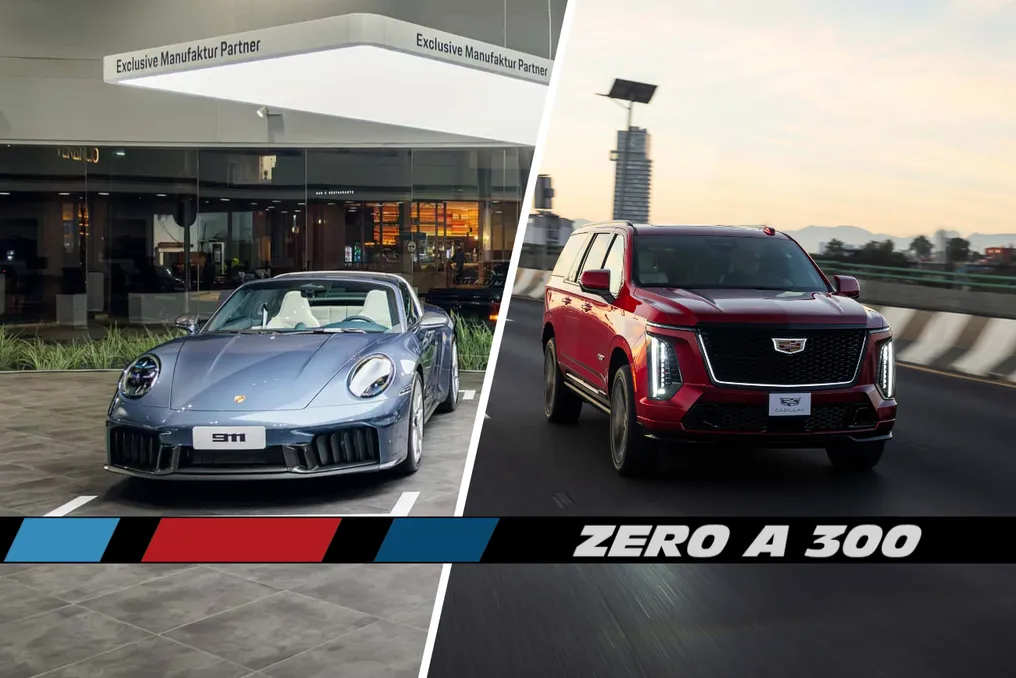
Porsche announced the launch of two variants of the 911 model in the Brazilian market this Wednesday, the 11th. The new arrivals are the 911 Targa 4 GTS and the new GT3 S/C. Both vehicles will be displayed to the public during the Porsche Fest event, scheduled for November 28th at Interlagos.

The GT3 S/C represents Porsche's first regular production convertible version, taking a position similar to the 2019 911 Speedster. It shares the same mechanical package as the GT3, utilizing the 4.0-liter naturally aspirated boxer engine, which generates 510 hp and 45.9 kgfm, coupled with a six-speed manual transmission.

To mitigate the weight added by the automatic roof, which opens in 12 seconds, Porsche employed materials such as carbon fiber and magnesium, in addition to carbon-ceramic brakes. Consequently, the GT3 S/C weighs 1,497 kg, only 35 kg more than the GT3 coupe with a manual gearbox. Despite this weight increase, the convertible maintains the performance of the closed model, reaching 100 km/h in 3.9 seconds and a top speed of 313 km/h. Its price in Brazil is set at R$ 2,060,000.

Meanwhile, the Targa 4 GTS operates with the T-Hybrid system, which integrates a 3.6-liter turbocharged boxer engine with an electric motor connected to the eight-speed PDK gearbox and an electric turbocharger. This setup delivers a combined output of 541 hp and 62.2 kgfm, allowing for 0 to 100 km/h acceleration in 3.1 seconds and reaching 312 km/h. The model features all-wheel drive, a steering rear axle, and active aerodynamic devices. It has been available for pre-sale since June and costs R$ 1,440,000.

The presentation is part of the celebrations of Porsche's 75 years in the automotive sector. In addition to these two additions, the manufacturer exhibited three customized GT3 Touring units through the Sonderwunsch program, which allows customers to request exclusive paint jobs, upholstery, and finishes. If the reader is in São Paulo, the cars are available for viewing at the Porsche Center São Paulo in Vila Olímpia.

GM advances plans to commercialize Escalade V8 in Brazil

It appears that General Motors (GM) is progressing with its plans to officially sell the Cadillac Escalade in Brazil. In an interview given to journalists this Wednesday (11) in Detroit, Fábio Rua, Vice President of GM South America, stated that introducing the SUV to the Brazilian market has become a matter of honor for the company. When questioned about the arrival of the model, he stated: 'It comes, or I am not called Fábio Rua.'

According to information from Jornal do Carro and Estadão, the Escalade is already undergoing the homologation process in the country, although there is no official launch date yet. The main hurdle lies in the differences between American and Brazilian homologation standards. While Brazil adheres to safety requirements aligned with international UN regulations, the United States uses its own standards, which are not automatically accepted locally. This implies adaptations and new certifications, whose costs may make official low-volume importation unfeasible. Additionally, the V8 engine needs adaptation for Brazilian gasoline, which contains 30% ethanol.

The Escalade is one of Cadillac's flagship models since its launch in 1998 and ranks among the largest American SUVs. In the standard configuration, it measures 5.38 meters in length, and the extended ESV version reaches 5.76 meters. In the US, the vehicle is equipped with a 6.2L naturally aspirated V8 producing 426 hp and 63.6 kgfm, linked to a ten-speed automatic transmission. There is also the Escalade-V, which uses a supercharged version of the 6.2L V8, generating 691 hp and 90.3 kgfm. Its interior accommodates up to eight passengers and features a 55-inch digital dashboard, massage seats, and an audio system with up to 42 speakers, often used as executive transport in the US.

The arrival of the Escalade would signify Cadillac's effective entry into Brazil, as the brand currently sells only the electric SUVs Lyriq and Vistiq in very small volumes. Although they opted for electric vehicles to start operations, the brand recognizes the demand for the Escalade, which is already being brought to Brazil by independent importers with some success. GM has not yet specified which versions will be offered, nor has it provided prices or a debut date.

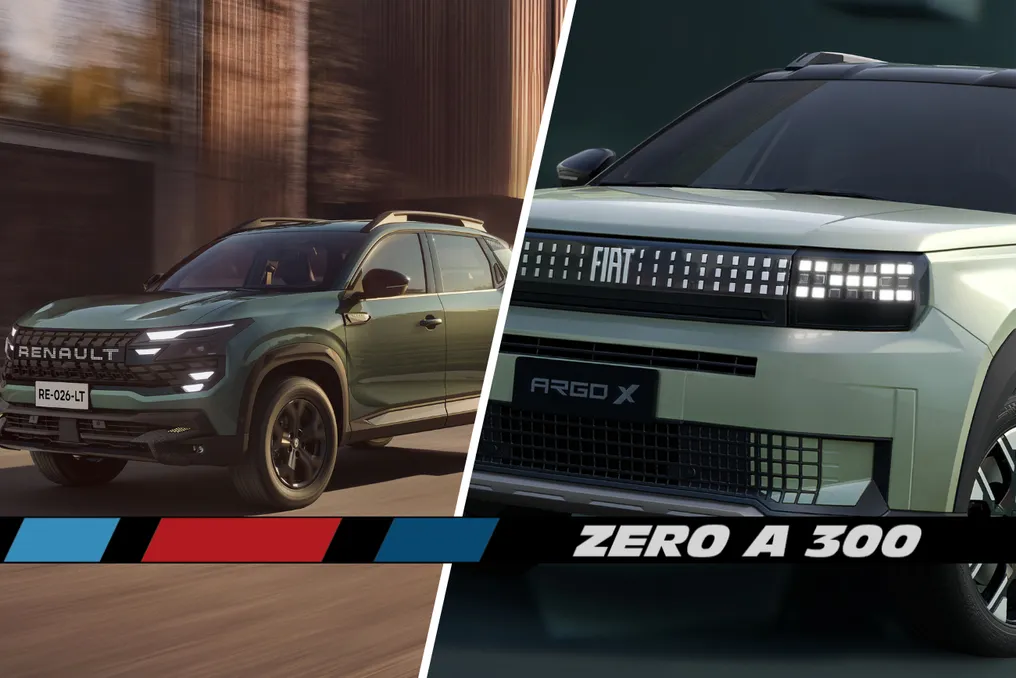
Renault lança Niagara no Brasil; Fiat revela Argo X híbrido leve; Ford confirma retorno do Mustang Cobra
Read more
flatout.com.br

Renault lança Niagara no Brasil; Fiat revela Argo X híbrido leve; Ford confirma retorno do Mustang Cobra

O mercado automotivo brasileiro recebeu novidades significativas com o lançamento da Renault Niagara, a revelação do novo Fiat Argo X e a confirmação do retorno do Mustang Cobra pela Ford.

A Renault introduziu a Niagara no Brasil em quatro versões distintas, com preços a partir de R$ 139.990. Este novo modelo de picape intermediária com construção monobloco entra em pré-venda com descontos de lançamento que podem chegar a R$ 15.000. As variantes incluem Evolution MT, Evolution AT, Iconic AT (todas com tração dianteira) e Outsider 4×4 AT, sendo que esta última tem previsão de chegada apenas em março de 2027. As três primeiras versões já estão disponíveis para reserva no site da Renault, com promoções válidas até 23 de novembro.

O motor utilizado em todas as versões é o 1.3 turbo flex TCe, que gera 160 cv e 27,5 kgfm de torque, o mesmo usado no SUV Boreal. A versão de entrada, Evolution MT, possui câmbio manual de seis marchas, enquanto as demais utilizam caixa de dupla embreagem de seis velocidades. Diferenças notáveis existem nos modos de condução: as Evolution oferecem Eco, Normal, Snow e Terrain, enquanto a Iconic apresenta os modos Sport e Smart, focados no uso urbano. A Outsider, por sua vez, terá modos específicos para condução off-road, ainda não detalhados.

Em relação aos equipamentos, a Evolution MT já vem equipada de série com faróis de LED, central multimídia de 10,1 polegadas, painel digital de sete polegadas, ar-condicionado digital, chave presencial, seis airbags e o pacote ADAS com 17 itens. A Evolution AT adiciona o controle de cruzeiro adaptativo com função Stop & Go. A versão Iconic eleva o nível com um painel de 10,2 polegadas, central multimídia aprimorada com assistente de IA Google Gemini e câmera externa de 360 graus. Seu pacote ADAS conta com 26 itens de assistência, e a caçamba recebe uma cobertura rígida retrátil de série.

Comparativamente, a Niagara demonstra maior atenção ao design e acabamento quando comparada à sua antecessora, a Renault Oroch. Embora a Oroch fosse competente, seu estilo mais utilitário e suas raízes no Sandero não a tornaram tão desejada quanto a Fiat Toro. Apesar da Toro permanecer como concorrente, a Niagara pode apresentar melhor custo-benefício, mesmo após o término das ofertas especiais. A Toro, por sua vez, não dispõe de câmbio manual e começa em R$ 167.490 na versão Endurance, equipada com motor turbo flex T270 de 1.3 litro, 176 cv, acoplado a caixa automática convencional de seis marchas.

Fiat revela novo Argo X com visual de Grande Panda e motor híbrido leve

A Fiat apresentou novas imagens do Argo X, seu futuro hatchback compacto, que será exibido em um evento na fábrica de Betim, Minas Gerais, nesta quarta-feira (11). Inspirado no Grande Panda europeu, o modelo deve ser lançado no Brasil em 2026, visando competir com o Volkswagen Polo no segmento de carros de passeio. Esta novidade também marca a introdução da nova identidade visual da Fiat no mercado brasileiro.

Mantendo o formato quadrado do Grande Panda, o Argo X contará com faróis de LED pixelados, lanternas verticais e uma carroceria que mescla características de hatch e crossover. Existem diferenças em relação ao modelo europeu, como o logotipo Fiat posicionado centralmente na grade e a ausência do nome do modelo estampado nas portas. O interior será simplificado, substituindo os revestimentos de fibras de bambu do Grande Panda por um painel de plástico convencional.

A linha de motorização prevista para o Argo X incluirá duas opções. As versões de entrada utilizarão o motor 1.0 Firefly aspirado de três cilindros, gerando 75 cv e 10,7 kgfm de torque, acoplado a câmbio manual de cinco marchas. As versões mais potentes virão com o 1.0 turbo flex equipado com sistema híbrido leve de 12 volts, sinalizado pelo emblema MHEV na traseira, com expectativa de 116 cv e 20,4 kgfm, utilizando transmissão automática CVT. Este sistema elétrico auxilia o motor a combustão durante acelerações e recupera energia em desacelerações, mas não opera o veículo sozinho.

É importante notar que o Argo X não substituirá o Argo atual; ambos serão comercializados simultaneamente. O modelo lançado em 2017 continuará sendo uma opção mais acessível, enquanto o Argo X ocupará uma categoria superior. Os detalhes finais sobre preços, especificações e equipamentos serão divulgados no lançamento comercial, esperado para as próximas semanas.

Ford confirma volta do Mustang Cobra para 2027

Recentemente, houve especulações sobre o retorno de uma versão clássica do Mustang para o próximo ano, posicionada entre o Dark Horse normal e o Dark Horse SC (com supercharger). Embora alguns especulassem sobre um sucessor espiritual do Shelby GT350, visto que a Ford não utiliza mais o nome Shelby devido aos altos custos de licenciamento, a informação veio de um teaser oficial da Ford.

A Ford liberou um breve vídeo nas redes sociais contendo apenas o nome “COBRA”, com o R destacado em azul, o que sugere uma ligação clara com o Mustang SVT Cobra R da quarta geração, acompanhado pelo som de um V8. A legenda da publicação indica que o novo Cobra será “all-motor”, sugerindo que não haverá sobrealimentação. Isso confirma o renascimento da família Mustang, mas sob a nomenclatura Cobra, e não Boss.

Brabus prepara Porsche 911 Turbo S de 800 cv

A Brabus anunciou sua nova customização para o Porsche 911 Turbo S, elevando a potência total do trem de força híbrido de 711 cv para 800 cv, e o torque de 81,6 kgfm para 91,8 kgfm. Nomeado Brabus 800, este modelo está disponível nas carrocerias cupê e conversível, apresentando modificações mecânicas, aerodinâmicas e de acabamento.

O incremento de potência é alcançado através do módulo eletrônico PowerXtra P36-800, que ajusta os parâmetros de injeção, ignição e pressão do turbo. O sistema elétrico T-Hybrid permanece inalterado, contribuindo com 52 kW (71 cv). Com esta preparação, o cupê consegue atingir 100 km/h em 2,4 segundos, um décimo mais rápido que o Porsche original, enquanto o conversível leva 2,5 segundos. A velocidade máxima permanece limitada a 322 km/h.

Além do motor, a Brabus desenvolveu um pacote aerodinâmico feito de fibra de carbono, incluindo novos difusores traseiros, saias laterais e spoilers. As rodas forjadas Monoblock ZL Platinum Edition possuem 21 polegadas na frente e 22 atrás, rodando pneus Continental SportContact 7. A preparação também engloba suspensão esportiva ajustável e um escapamento com válvulas para controle sonoro. Internamente, o Brabus 800 é equipado com revestimentos de couro costurados em padrão de losangos, detalhes em fibra de carbono e acabamentos exclusivos. A Brabus estabeleceu o preço de um cupê completo em aproximadamente 420.000 euros na Alemanha, sendo que essas modificações podem ser compradas separadamente.

Honda Civic Type R continua à venda no Brasil em 2027 apesar das baixas vendas

A Honda confirmou que o Civic Type R permanecerá disponível para venda no Brasil em 2027, mesmo registrando baixos volumes de vendas. Atualmente, o Civic migrou de um sedã médio de grande volume, competidor do Toyota Corolla, para um modelo de nicho, com foco no hot hatch Type R e no sedã Advanced Hybrid.

Os dados de emplacamento mostram essa tendência: entre janeiro e outubro de 2026, foram registrados apenas 79 Civic no Brasil, sendo 58 unidades do sedã híbrido e 21 do Type R. Apesar desse baixo desempenho, a Honda optou por manter o hot hatch no mercado. Para 2027, o Type R receberá atualizações importantes. Externamente, um novo para-choque dianteiro com spoiler mais proeminente foi implementado, o que não é apenas estético, mas também otimiza o fluxo de ar e o resfriamento do motor. Internamente, há uma nova central multimídia com funcionalidades Google, duas portas USB-C, bancos redesenhados com novo revestimento e outros refinamentos de acabamento.

As assistências de condução também serão revisadas, com ajustes na detecção de pedestres e ciclistas, no controle de cruzeiro adaptativo e no auxílio à mudança de faixa. Adicionalmente, foram recalibrados o sincronismo de rotações nas trocas de marcha no modo +R (conhecido como “punta-tacco eletrônico”) e a resposta do pedal de freio. A mecânica principal permanece inalterada, mantendo o motor 2.0 turbo VTEC de dois litros com 297 cv e a caixa manual de seis marchas. Os preços atuais são de R$ 266.500 para o Civic Advanced Hybrid e R$ 430.500 para o Type R, embora os valores para 2027 ainda não tenham sido divulgados.

Bosch vai fabricar motores elétricos no Brasil — até para caminhões a diesel

A Bosch anunciou que iniciará a fabricação de motores elétricos destinados a caminhões no Brasil em 2027, em sua unidade de Campinas, São Paulo. Este projeto faz parte de um investimento de R$ 1 bilhão da companhia e envolve uma colaboração com a Suspensys, pertencente ao grupo Randoncorp, para a produção de eixos de tração elétricos.

Essa tecnologia pode ser aplicada tanto em caminhões totalmente elétricos quanto em modelos a diesel, convertendo estes últimos em híbridos. O sistema é possibilitado pelo e-Sys, um eixo desenvolvido pela Suspensys que integra um motor elétrico. Em vez de depender unicamente do motor diesel, o sistema aproveita a energia dissipada durante as frenagens, armazenando-a em baterias para auxiliar na movimentação do veículo. Segundo as empresas, essa tecnologia pode diminuir o consumo de diesel em até 40%, dependendo das condições operacionais. Ademais, o eixo pode ser instalado em veículos e carretas já existentes, sem a necessidade de substituição completa.

A parceria também contempla a produção de um segundo tipo de eixo, destinado a caminhões e ônibus puramente elétricos. Neste cenário, o motor elétrico é integrado ao eixo de tração e à transmissão, formando um conjunto compacto capaz de mover veículos com cargas entre 30 e 50 toneladas. A fábrica da Bosch em Campinas terá capacidade inicial para produzir 20.000 motores elétricos anualmente. A empresa já está em negociações de fornecimento com cinco fabricantes de caminhões, incluindo montadoras chinesas que estão se estabelecendo no país, além de conversas com duas montadoras de automóveis sobre a possível produção nacional de motores elétricos para carros de passeio.

Popular