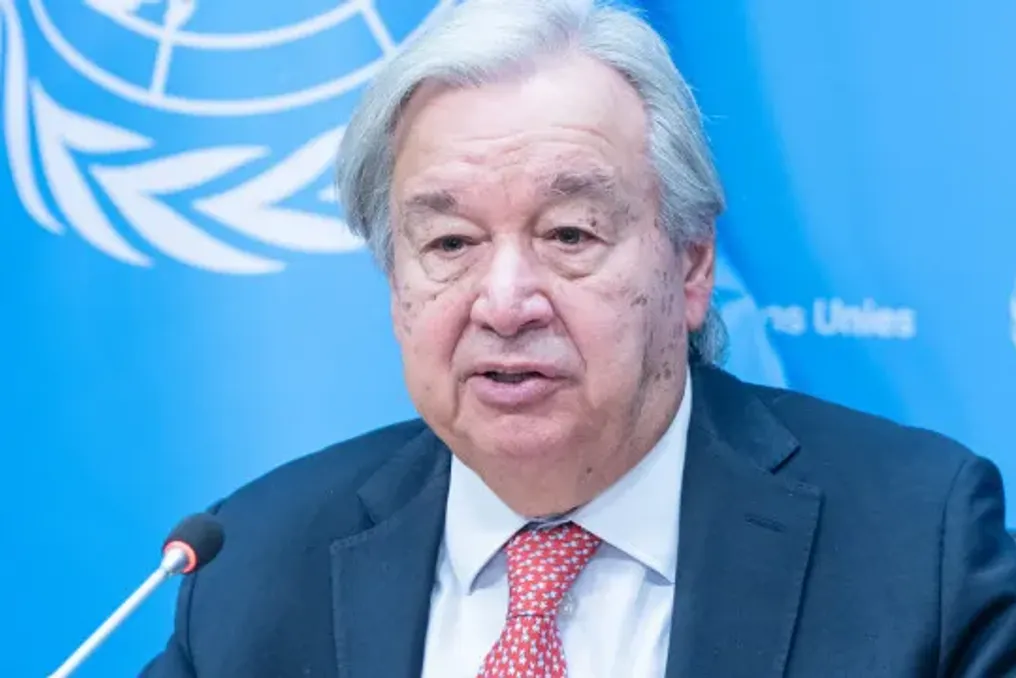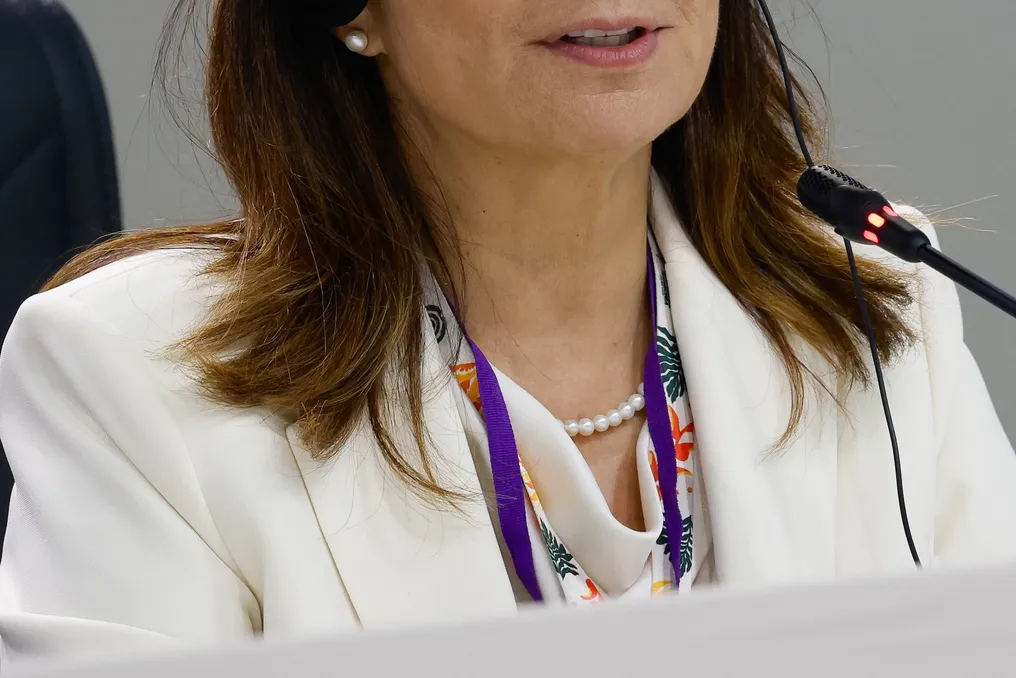
Ana Toni discussed the roadmap for transitioning away from fossil fuels at COP31 conference
Read more
China Dialogue
chinadialogue.net

Ana Toni discussed the roadmap for transitioning away from fossil fuels at COP31 conference

Ana Toni, who chaired the climate conference COP30 in Brazil last year, led the development of the Roadmap for Transitioning Away from Fossil Fuels. This map was presented in Brasilia on November 3, six days before the opening of the current COP31 conference.

The roadmap suggests that each country conduct a self-assessment of its dependence on and readiness to abandon fossil fuels using a special tool. It then points to relevant policy options, divided into three phases calculated up to 2033. Although countries are not obliged to follow these recommendations, the presidency hopes they will prompt states to develop their own national plans.

To date, three major countries have taken such steps: France, the Netherlands, and Germany. Reducing and ceasing the burning of fossil fuels is critical to preventing the worst consequences of climate change, but at UN climate conferences, this has not always been clearly reflected in final decisions.

At COP28 in Dubai, there was a call for 'transitioning away from fossil fuels in energy systems,' but progress slowed due to resistance from oil-producing countries and the United States' withdrawal from the Paris Agreement. At COP30, a large group of countries insisted on including the roadmap in the final document, but opposition prevented this. As a result, the presidency announced it would develop such a map outside the UN process, based on the results of the first international conference on the transition away from fossil fuels, which took place in Colombia in April with the participation of 57 countries.

In an interview with Dialogue Earth, Ana Toni spoke about the potential of these roadmaps in combating climate change. She emphasized that the map aligns with the 1.5°C goal but is not a universal solution, as it recognizes the different starting points, energy resources, and capabilities of countries.

Citing China as an example, she noted that the country has historically been heavily dependent on coal but is rapidly expanding renewable energy sources, whereas about 90% of electricity in Brazil already comes from renewable sources. These differences must be considered when planning the transition.

The first step is understanding the degree of dependence on fossil fuels in terms of demand, supply, and the broader economy. Without this understanding, it is impossible to determine suitable policies and levers for moving forward. Therefore, a readiness index and various country archetypes were developed to help states assess their dependence and identify the most relevant policy options for their specific conditions.

Ana Toni added that beyond simply transitioning from one technology to another, it is necessary to plan the exit from fossil fuels while considering the social and economic consequences of this process. Feedback from organizations in China showed the need to account for the social impacts of the transition on the elderly, which could improve the roadmap and national plans before COP33.

China has demonstrated the ability not only to create plans but also to implement them, sometimes exceeding its own targets. Many developed and developing countries can learn lessons from this experience. There are two views on China's role: some believe it can accelerate efforts to decarbonize the economy and energy, especially regarding peaking emissions; others see its role in assisting other countries with decarbonization. Without China's contribution, the transition for countries like Brazil and many African nations would be much more difficult. Its participation in expanding access to renewable energy technologies helped make them more accessible and cheaper.

Ultimately, China's climate impact must be viewed in two dimensions: its domestic decarbonization efforts and international support for the transition. Both aspects are crucial for global climate efforts.

The hope is that the roadmap, along with the national plans being developed, will help assess the progress made, identify gaps, and determine what else needs to be done to have a clearer picture of the steps required to abandon fossil fuels by that time.

If we do not discuss the difficulties of the transition and simply add renewable sources, we will always have two parallel systems. The next key opportunity will be the second Global Stocktake (GST 2), which begins this year and concludes in 2028 at COP33. At COP28, the first Global Stocktake set main goals for the energy sector: tripling renewable energy capacity, doubling the annual rate of energy efficiency improvement, and transitioning away from fossil fuels. At GST 2, progress on these three goals must be assessed, for example, noting that the energy efficiency goal remains far from being achieved.

This roadmap was adopted by the COP30 presidency and does not have a mandate from the UNFCCC. Unfortunately, there is currently no comprehensive UN-based institute covering energy. The International Energy Agency (IEA) has about 35 member countries, and the International Renewable Energy Agency (IRENA) has a much wider membership but focuses only on renewable sources. There is a lack of a specialized international forum to address energy issues in general, especially the transition away from fossil fuels.

Such an body may appear in the future. However, the priority now should remain understanding our dependence on fossil fuels—not only in terms of energy supply but also considering broader economic consequences. Ana Toni believes that policymakers, governments, civil society, and the media do not fully grasp how deeply this dependence is woven into tax systems and local and regional economies. Without this awareness, it is impossible to determine the right levers for moving forward.

Within the COP30 agenda, there are many items on which multilateral groups, countries, or multilateral groups are already working. For example, countries and companies are working on reducing methane emissions from the oil and gas sector. China is a very active participant in methane commitments. We need to focus on smaller contributing topics instead of viewing it as something magical. For instance, Ethiopia adopted legislation banning the import of internal combustion engine vehicles, allowing only electric vehicles from this year, and Rwanda is following this example.

Attention is now focused on many aspects necessary for the transition. The proposed '35 by 35' electrification target is obviously an important part of this. This proposal, put forward by the COP31 presidency earlier this year, calls for setting a global target to increase the share of electricity in final energy consumption from approximately 20% currently to 35% by 2035.

Other key elements that need to be addressed include fossil fuel subsidies, the economic dependence of some countries on fossil fuel exports, and methane emissions. COP31 can help deepen discussions on these issues. While our roadmap may provide a broader framework for addressing various elements over time, future COPs will advance specific aspects.

Civil society can support this work, but it would be valuable if an organization like the IEA, IRENA, or the UN Environment Programme supported the overall structure. Since each COP advances individual priorities, someone is needed to ensure a holistic view of progress across all policies required for a successful transition away from fossil fuels.

Similar stories

NGOs demand fossil fuel phase-out commitments from COP31
Read more
noticiasaominuto.com

NGOs demand fossil fuel phase-out commitments from COP31

Representatives of Portuguese branches of two international environmental organizations called today for the final COP31 agreement to reinclude a commitment to phasing out fossil fuels and promoting financing following the publication of the latest draft final text.

The Director of Greenpeace Portugal, Toni Melajoki Roseiro, told Lusa that the new document represents an 'open door for the fossil fuel industry to continue burning our future.' Bianca Mattos, Coordinator for Policy and Climate at WWF Portugal, also informed Lusa that the most important point excluded from the text was the 'mention of transitioning away from fossil fuels,' emphasizing that 'this decision was made in Dubai' at COP28 in 2023.

Bianca Mattos further noted that progress must be made within the agreed frameworks, insisting on the introduction of mandatory development of national roadmaps for each country, which were also absent in the second draft. The publication of the second version of the document under the summit's chairmanship marked the beginning of the final stage of negotiations in Antalya, Turkey, where nearly two hundred countries aim to reach a consensus before the scheduled close on Friday.

Both organizations also criticized the wording of the goal to increase the share of electricity in final energy consumption to 35% globally by 2035. Greenpeace Portugal insisted that this goal should be linked to the 'actual cessation of oil and gas use,' while Bianca Mattos considered the goal weakened because 'it is no longer binding, but voluntary.'

The WWF Portugal representative also pointed out the lack of progress in climate change adaptation financing and called on COP31 chairpersons to present a more substantive document. She stated: 'Everyone acknowledges that this should be a COP of implementation, but it ends up being an empty document in this way.'

Toni Melajoki Roseiro reminded that 'Portugal has announced a roadmap for phasing out fossil fuels' and supported the position that the Portuguese government and the European Union should reject the text that retains references to 'false solutions such as carbon capture and storage.' The Director of Greenpeace Portugal added: 'Only those who live in Portugal know that diplomatic loopholes do not stop storms, floods, and fires.'

Toni Melajoki Roseiro also urged the Portuguese delegation to demand the exclusion of 'any mention of carbon capture' and the inclusion of a 'clear commitment to phasing out fossil fuels, already with a horizon until 2040.' He stressed: 'The Portuguese delegation must demand that the final COP31 text excludes any mention of carbon capture, adopts a clear commitment to phasing out fossil fuels, already with a horizon until 2040, and also guarantees tripling financing for climate adaptation, making major polluters pay the bill.'

COP31, which is set to conclude on Friday, is focused on moving from commitments to actions, particularly in phasing out the use of fossil fuels, which was explicitly mentioned in the first version of the conclusions but subsequently removed. Fossil fuels, such as oil, coal, and gas, are no longer featured in the draft final text of the UN climate conference published today, although they were present in the previous version.

The text contains a call to increase the share of electricity in final energy consumption to 35% globally by 2035. This goal does not specify the source of electricity and is presented as a supplement to efforts to triple the global renewable energy production potential and double the annual rate of energy efficiency improvement by 2030. This latest version of the final text appears on the eve of the UN climate conference concluding in Antalya, Turkey. Electrification is one of the priorities of the Turkish COP31 chairmanship, which initially intended to offer this goal to countries wishing to join voluntarily. At COP28, held in Dubai in 2023, countries committed to starting the transition away from fossil fuels. Since then, negotiations on this issue have stalled, as producing countries oppose references to these energy sources, whose use is the main cause of global warming caused by human activity.

Coalition at COP31 demands clear mandates for phasing out fossil fuels
Read more
noticiasaominuto.com

Coalition at COP31 demands clear mandates for phasing out fossil fuels

Countries of the Beyond Oil and Gas Alliance (BOGA) today demanded that the final agreement of the UN climate conference include clear mandates for the gradual elimination of fossil fuels.

This demand increases diplomatic pressure on the 31st climate conference (COP31), which is taking place in Antalya, Turkey. It arose after the publication of the first draft agreement, which mentions the gradual phase-out of fossil fuels.

The Minister of Environment of Vanuatu, Ralph Regenvanu, warned that the current text of the first version, published on Monday, is 'insufficient.' He noted that the fossil fuel phase-out plan (TAF) is placed in paragraph 140 of 144 of the document, considered a 'legacy voluntary initiative' of the Brazilian presidency at COP30 in 2025, and lacks 'binding monitoring mechanisms.'

At a joint press conference with representatives from various countries, Spain's Minister of Ecological Transition and Demographic Challenges, Sara Agaesen, announced that Spain will present its own national fossil fuel transition plan, although she did not specify a timeline. She called on other nations to 'set an example.' The official stated that the published version 'does not meet' the delegation's expectations and demanded that the final decision explicitly include references to such plans as the only way to achieve the Paris Agreement and the goals of limiting global warming to 1.5°C.

Spain also distanced itself from the Turkish-Australian presidency's proposal to achieve 35% global electrification by 2035 if this electrification does not guarantee clean energy sources. It emphasized: 'We agree that the energy matrix is important, but that does not mean we just want to support it; we want to support electrification that is also linked to renewable energy sources.' It was noted that Spain already generates about 57% of its electricity from renewable sources, having increased its capacity by 200% in recent years.

The delegation of Denmark, which co-chairs BOGA with Quebec (Canada), expressed regret that not all conference participants are ready to take on the same level of commitment, despite the fact that price volatility and the energy crisis directly affect households. As a producing country, Denmark confirmed that it has set 2050 as the deadline for stopping oil and gas extraction, and stated that new reserve exploration has 'become obsolete.'

The first version of the COP31 final document calls for the 'acceleration of the gradual elimination' of fossil fuels, including an 'immediate' transition away from hydrocarbons in energy systems. This text confirms the decision made at COP28 in Dubai (2023), which required accelerating the transition away from fossil fuels in energy systems and called on countries to speed up its implementation.

On the same day, European Commissioner for Climate Action, Wopke Hoekstra, criticized the document, calling it a 'wish list.'

In recent UN conferences, the Arab group, led by Saudi Arabia, along with Russia and India, has been accused of blocking mentions of fossil fuels, once again pitting the parties against each other at the meeting in Turkey.

BOGA is an alliance led by Denmark and Costa Rica, launched five years ago at COP26, uniting countries committed to the gradual phase-out of fossil fuels, including Portugal.

COP31 begins in Turkey with divergences over climate finance and action targets
Read more
noticiasaominuto.com

COP31 begins in Turkey with divergences over climate finance and action targets

The 31st United Nations Climate Change Conference (COP31) has begun in Turkey. The event takes place after a year marked by extreme weather events, such as floods and heatwaves, generating tensions regarding the financial resources needed for adaptation and mitigation of the climate emergency.

António Guterres, UN Secretary-General, called on leaders to 'be up to the task,' while Murat Kurum, Turkish Minister of Environment and conference president, emphasized during the opening session that 'any delay weighs particularly heavily on climate action.'

In 2026, the planet was again affected by climate change, evidenced by fatal floods in Nepal, heatwaves in Europe, and fires in Indonesia. Simultaneously, the energy crisis, driven by the Middle East conflict, has pressured costs and created significant budgetary challenges for governments, which ultimately diminishes climate ambition.

Held at the large exhibition center of the Turkish coastal city of Antalya, COP31 aims primarily to transform commitments made in previous UN meetings into practical measures. Maria da Graça Carvalho, Portugal's Minister of Environment and Energy, had previously argued that COP31 should be a conference focused on actions.

COP31, which brings together nearly 200 nations under the UN umbrella and has 68,544 accredited participants, is expected to be the forum for the 'implementation' of promises, according to Murat Kurum. Delegations spent the early hours of the start day negotiating the agenda. The main point of disagreement lies in the funding promised by developed countries—historically the largest greenhouse gas emitters—to developing countries.

A representative from the European Union had already signaled on Friday a lack of political will to increase spending. Jasper Inventor, leader of the Greenpeace delegation, described the start of COP31 as 'difficult,' warning that rich countries are refusing, especially, to include certain funding items on the agenda.

The 'Climate Finance Working Programme,' a mechanism defined at COP30 in Brazil in 2025 to discuss financial agreements, will be officially discussed. However, the tripling of funding for climate change adaptation, crucial for protecting nations most susceptible to droughts, floods, or sea-level rise, is not guaranteed.

The UN reported last week that developing countries will need $305 billion annually by 2035, an amount almost ten times higher than what they currently receive from wealthy nations. Simon Stiell, the UN's Climate Change Officer, acknowledged that 'frustration is palpable' in this context.

Another controversial issue is Turkey's intention to make electrification a central focus of COP31, suggesting that countries commit to raising the share of electricity in global energy consumption to 35% by 2035, compared to the current 20%. The European Union supports electrification with renewable sources, a position also defended by Maria da Graça Carvalho. However, several hydrocarbon-producing countries show resistance to accepting this proposal.

COP30, held in Belém, in the Brazilian Amazon, concluded without explicitly mentioning fossil fuels. In contrast, Brazil presented last week a 'roadmap' for countries to voluntarily replace oil, coal, and gas with renewable energies.

During a summit co-chaired by Turkey and Australia, Chris Bowen, Australian Minister for Climate Change, encouraged delegations to overcome divergences and prove that international cooperation can still yield results. He argued that 'we will show the world that multilateralism works,' despite the boycott by the US government, motivated by President Donald Trump's denial of climate change.

Popular