Chainlink (LINK) Price Forecasts for the Period 2026 to 2030
Read more
Ventureburn
ventureburn.com

Chainlink (LINK) Price Forecasts for the Period 2026 to 2030

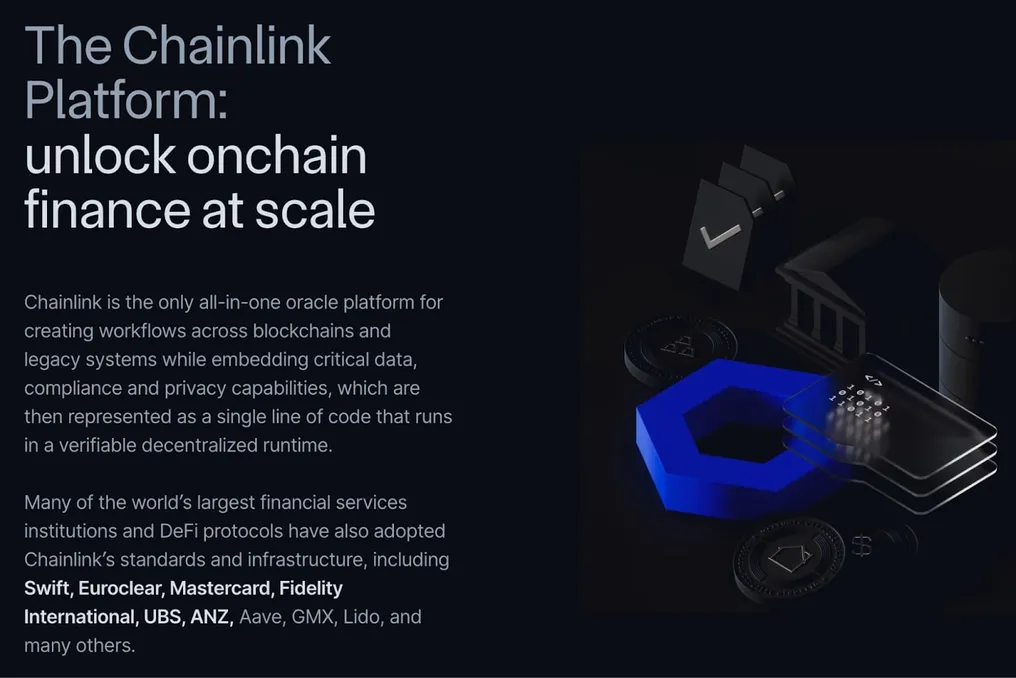
Chainlink (LINK) has established itself as a fundamental element of the Web3 ecosystem, ensuring reliable data transmission between blockchains and the real world. As a leading decentralized oracle network, it supports applications in DeFi, gaming, and the corporate sector across more than 60 blockchains.

Key products of the Chainlink platform include price feed channels for trusted asset data, the Cross-Chain Interoperability Protocol (CCIP) for seamless communication between blockchains, and a Proof-of-Reserve mechanism for transparent asset verification. The network, supporting over 60 blockchains and collaborating with major partners such as Mastercard, Fidelity, Aave, and GMX, plays a critical role in linking Web3 with traditional systems.

Through the LINK token, the network rewards node operators for providing accurate and secure data. In 2025, the Total Value Secured exceeded $93 billion, confirming Chainlink's status as a cornerstone of Web3 and one of the most important infrastructure projects in the crypto industry.

VentureBurn analysts use a combination of fundamental and technical factors to forecast the LINK price. Their predictions are based on historical price trends, statistical data, and various indicators such as RSI, MACD, support and resistance zones, trend lines, Fibonacci corrections, and momentum metrics. To increase accuracy, the team integrates artificial intelligence models with expert manual assessment.

The report also notes that expectations of a potential Federal Reserve rate cut and strengthening risk-on market sentiment contribute to capital inflow into cryptocurrencies, including LINK.

The US economy in August 2026 shows moderate but slowing growth, with Q2 GDP growth falling to 1.5%. Despite resilient consumer spending and a labor market with unemployment around 4.2%, inflation issues persist. The Fed's preferred Consumer Price Index continues to run above the target at 3.7%, creating an uneven economic landscape characterized by moderate growth and stubborn core costs.

Global markets face a complex geopolitical situation marked by energy supply volatility and ongoing trade tensions. Although recent diplomatic efforts have temporarily eased the conflict in the Middle East and stabilized vital maritime trade routes, structural tensions remain. Monetary policy remains tight, as the Federal Reserve holds benchmark interest rates between 3.50% and 3.75%. Internal disagreements have arisen within the FOMC, with pessimistically inclined members advocating for rate hikes to curb persistent inflation. Lowering forward guidance increases market volatility, subjecting broad financial markets to prolonged monetary tightening and high borrowing costs.

The asset is in a prolonged downtrend macro trend following a sharp drop from the previous significant high of around $14. This structural break has established a sequence of higher lows, indicating that sellers maintain primary control over the overall trend. After finding a temporary bottom around $7.00, an attempt to rebound to the $9.00 area was quickly halted by intense overhead supply, returning the market to a phase of local correction.

When investing in Chainlink, it is important to monitor the platform's expanding role in the DeFi ecosystem, as growing demand for decentralized oracle services directly impacts the value of LINK. Key network metrics, such as Total Value Secured (TVS) and node participation, must be tracked as they reflect real usage and the overall health of the network. Partnerships are also a strong signal—collaboration with financial institutions and blockchain projects often accelerates adoption and enhances token utility.

From a technical perspective, attention should be paid to support and resistance zones, as these levels often serve as key decision points for traders and can indicate shifts in market sentiment. Finally, it is important to track regulatory changes and upcoming innovations, such as the Chainlink Cross-Chain Interoperability Protocol (CCIP). These developments will play a crucial role in shaping Chainlink's long-term position and competitiveness in the decentralized oracle market.

In the current late 2026 market environment, where geopolitical tensions and uncertainty regarding Federal Reserve rates continue to influence investor sentiment, Chainlink (LINK) is consolidating around $10, forming a solid base supported by strong fundamentals and key demand around $9. The platform's expanding ecosystem and increasing network interaction underscore sustained institutional confidence despite a broader macroeconomic downturn.

Despite cautious macroeconomic conditions noted by persistent inflation and tight Fed policy, market sentiment may improve as systemic risks stabilize. Chainlink's momentum is further reinforced by major real-world adoption achievements, including its live integration with S&P Global to provide Stablecoin Stability Assessments (SSA) on the blockchain, as well as the Chainlink Reserve programmatic mechanism, which systematically converts protocol revenues into open-market buybacks of LINK.

If global trade uncertainty subsides and investors restore appetite for risk assets, Chainlink is strategically positioned to begin the next bull phase, testing key upper resistance and expanding its influence in Real World Assets (RWA), DeFi, and cross-chain infrastructure.

Based on technical analysis and market outlook, Chainlink (LINK) is expected to trade around $19 by the end of 2030, with potential highs up to $22 if ecosystem growth and positive market conditions continue. Reaching the $100 mark is possible in the long term, but this would require sustained network growth, mass adoption of decentralized oracles, and favorable market dynamics.

Chainlink possesses strong long-term potential due to its vital role as a decentralized oracle network connecting smart contracts with real-world data. The growing ecosystem, integrations across multiple blockchains, and partnerships with major firms like Coinbase strengthen its leadership in both DeFi and traditional finance.

Innovations such as the Cross-Chain Interoperability Protocol (CCIP) enhance Chainlink's value by enabling seamless connectivity between blockchains. As the demand for secure and transparent data channels grows—especially in sectors like gaming, insurance, and capital markets—Chainlink is poised to remain a key player.

Although performance may depend on competition and macro trends, the project's fundamentals support a bullish long-term forecast. LINK's price is determined by a combination of internal developments and external market forces: strong fundamentals and continuous updates support long-term growth, while negative sentiment or technical setbacks may cause temporary volatility.

Despite persistent macroeconomic caution and restrictive Federal Reserve policy, Chainlink stands out as a foundational infrastructure asset for the crypto market. Its core function in connecting smart contracts to real-world data and supporting Real World Assets (RWA) makes it an indispensable utility for both decentralized finance and institutional TradFi adoption.

Similar stories

Wikipedia Anniversary: Lessons on Collaboration, Curation, and the Role of Information on the Internet
Read more
super.abril.com.br

Wikipedia Anniversary: Lessons on Collaboration, Curation, and the Role of Information on the Internet

Wikipedia has completed 25 years, and its impact transcends the mere compilation of articles. To contextualize its magnitude, it is compared to the Yongle Encyclopedia of 15th-century China, which, under the command of Emperor Yongle, took five years and 2,000 specialists to produce 22,000 handwritten volumes, dominating the world scene for six centuries until being surpassed by Wikipedia around 2007.

Like the Yongle, Wikipedia is built by thousands of collaborators and has a vast scope, reaching over 68 million articles in almost 350 languages in a short time. However, unlike the imperial encyclopedia, Wikipedia does not have a centralizing emperor; its authors do not need to be specialists, and access is universal via the internet.

Born in 2001, the term 'Wiki' derives from Hawaiian to mean 'fast' and represents a collaborative method of creating web pages. Most volunteer users make minor modifications, such as punctuation adjustments or date updates, although a minority makes substantial contributions, and a select group holds the power to maintain order through various rules established over the years.

The expansion of Wikipedia raises crucial questions: is it enough to have available memory on the internet for it to be filled without criteria? This doubt has persisted since the 1990s and divides the community of editors between inclusionists, who advocate for vigorous content addition, and deletionists, who act rigorously in removing material.

Discussions about what should or should not be included in Wikipedia take place on each article's Discussion tabs, representing a large part of internal activity. The construction of the platform depends on consensus among editors, which becomes complex on sensitive topics, such as armed conflicts or political figures. In moments of tension, so-called 'edit wars' can occur, leading to the punishment or banning of users, which results in the blocking of more sensitive articles.

Clay Shirky states that the final articles are the result of these discussions, what everyone agrees upon. Studies indicate that ideologically polarized groups generate higher quality articles because the dispute forces the use of more solid sources and logical argumentation. The result is a free resource with verifiable information, free from ads and defining feed algorithms.

Wikipedia is the ninth most accessed site globally, excluding search engines, and is the only one in the Top 50 without profit motives. Despite its popularity, the platform faces criticism regarding how its articles are produced and has been the target of attacks from governments, politicians, and businessmen.

Wikipedia's trajectory began within the company Bomis, which operated a web portal in the early 2000s, whose revenue came from advertising. Bomis's portfolio included Nupedia, an online encyclopedia elaborated by specialists, along with other commercial products. Jimmy Wales, one of the founders of Bomis, felt dissatisfied with the slow pace of Nupedia and proposed creating a publicly editable version. The idea of using a wiki system came from Larry Sanger, a philosophy student and chief editor of Nupedia.

In 2001, Wikipedia was launched as a component of Nupedia, still linked to Bomis. Sanger was dismissed the following year, and to this day, he and Wales debate the authorship of the site. While Nupedia was perceived as slow and bureaucratic, Wiki aimed to be the opposite, allowing anyone to create or edit content, insert or delete items, and propose formatting rules, enabling writing on various topics.

In the first weeks, the freedom of Wiki allowed one in ten English articles to cover 'The Atlas Revolt.' These 350 articles were written by Tim Shell, a partner of Wales at Bomis. Faced with initial obstacles in building the articles, Shell suggested implementing Discussion pages, where debates began that culminated in new rules, some of which restricted the very specific writing Shell appreciated.

From the beginning, articles adhere to the 'neutral point of view' (NPOV) policy to avoid bias. However, neutrality is more challenging in practice, given that the selection of the topic (or the article) itself is not a neutral act. This is a central challenge of the encyclopedia: determining what is sufficiently notable to deserve an article.

Wikipedia's coverage reflects, in part, the majority interests of the editors, who are predominantly men (80%), and the proportion of administrators is 93%, with the majority being white and highly educated. This low diversity can contribute to informational gaps. Currently, only 20% of articles about people on Wikipedia in Portuguese mention women, and among featured History articles, only 4% address African History, compared to 58% dedicated to Europe.

Efforts are underway to mitigate this disparity. In 2022, Karin Komati, a professor at the Federal Institute of Espírito Santo, started a project for high school students to create articles about Brazilian researchers. Initially, these articles were removed because they were based on the Lattes platform curriculum, as Wiki rejects self-declared and easily falsifiable sources. Wikipedia requires that information comes from secondary sources, such as journals and newspapers, not original research.

Komati reported difficulties in finding news about these researchers, facing the problem of invisibility. Even when valid bases were found, some profiles were blocked due to lack of 'notability indication.' This happened with Ethel Maciel, a Capixaba epidemiologist, whose article was initially taken down. In 2018, Donna Strickland, a Nobel Prize laureate in Physics, also did not have an entry, despite a user having previously tried to create one.

Komati's project was inspired by Emily Temple-Wood, a pioneer in exposing the inequality between articles about men and women. Emily's work on the Anglophone Wiki was so effective that, in 2014, she managed to reverse the situation, causing articles about female researchers to surpass the general average.

Wikipedia's relevance lies in being a 'type of factual web that sustains the entire digital world,' according to journalist Jon Gertner. Thus, content quality is vital, as errors and biases are replicated on the web. Although there are no studies confirming a dominant political bias, the site is frequently the target of lawsuits and accusations.

Twenty-one nations have already attempted to censor Wikipedia in some way. Today, it is completely blocked in China, Myanmar, and North Korea. There are partial censors in Russia, Saudi Arabia, and Belarus, where editors have already been imprisoned. In Syria, there was an execution case related to the content.

In 2025, Elon Musk criticized Wikipedia's alleged left-wing bias, calling for a boycott and creating Grokipedia, an AI-based encyclopedia aligned with his worldview.

In 2003, Wikipedia separated from Bomis and was transferred to the Wikimedia Foundation, a non-profit organization, becoming supported mainly by donations. In 2025, revenue reached US$ 208.6 million. The Wikimedia Foundation manages 11 other projects, such as Wikimedia Commons (media), Wikispecies (biological data), and Wikifunctions (programming codes), all under the Creative Commons 4.0 license.

The availability of copyright-free information is crucial. During the Covid-19 pandemic, the World Health Organization (WHO) provided official data and guidelines for the Wikimedia Foundation's sites, assisting in the fight against disinformation and increasing the WHO's own reach. To facilitate this dissemination, Wikidata functions as a platform that organizes Wikipedia's knowledge using codes to interconnect and unify information across different languages and articles.

Starlink adopts dynamic pricing and adjusts internet access charges according to demand
Read more
tecnoblog.net

Starlink adopts dynamic pricing and adjusts internet access charges according to demand

Starlink has implemented a dynamic pricing system for its satellite internet services in the United States, meaning that the amount charged to subscribers can vary monthly, increasing or decreasing depending on demand and network capacity in the specific area.

This billing model is compared to the operation of platforms like Uber. When demand is high, costs increase; when there is idle capacity, prices tend to fall or remain at a minimum established value to attract more users.

According to PCMag, this new policy has resulted in a cost increase fluctuating between 10% and 20% for affected customers, although in other areas, values have decreased by the same proportions. In all cases, customers are notified of any price change via email.

The changes have been noticed by users on social media. In discussions on Reddit, it was reported that a subscription jumped from US$ 130 to US$ 143 due to dynamic pricing. Another user mentioned a variation from US$ 85 to US$ 120, followed by a reduction to US$ 102.

The implementation of these dynamic prices began in recent weeks in certain American locations, including cities in the states of Oregon, Washington, New York, and Colorado. However, there are records of dynamic tariff increases in Toronto, Canada.

In Brazil, there have been no reports yet of Starlink applying dynamic charges, and the probability of this occurring is considered low. This is partly because Starlink's network in the country still has room to absorb more customers without causing overload. Additionally, regulation by the National Telecommunications Agency (Anatel) represents a significant hurdle.

Anatel regulations stipulate that telecommunication service prices cannot be readjusted at intervals shorter than 12 months, and the criteria for such adjustments must be clearly defined in the contract. Although Starlink can apply different prices in different regions of the country, it must comply with current commercial rules. If the price change is too frequent and conflicts with these guidelines, the company may face issues with Anatel and be subject to scrutiny by consumer defense bodies.

Popular