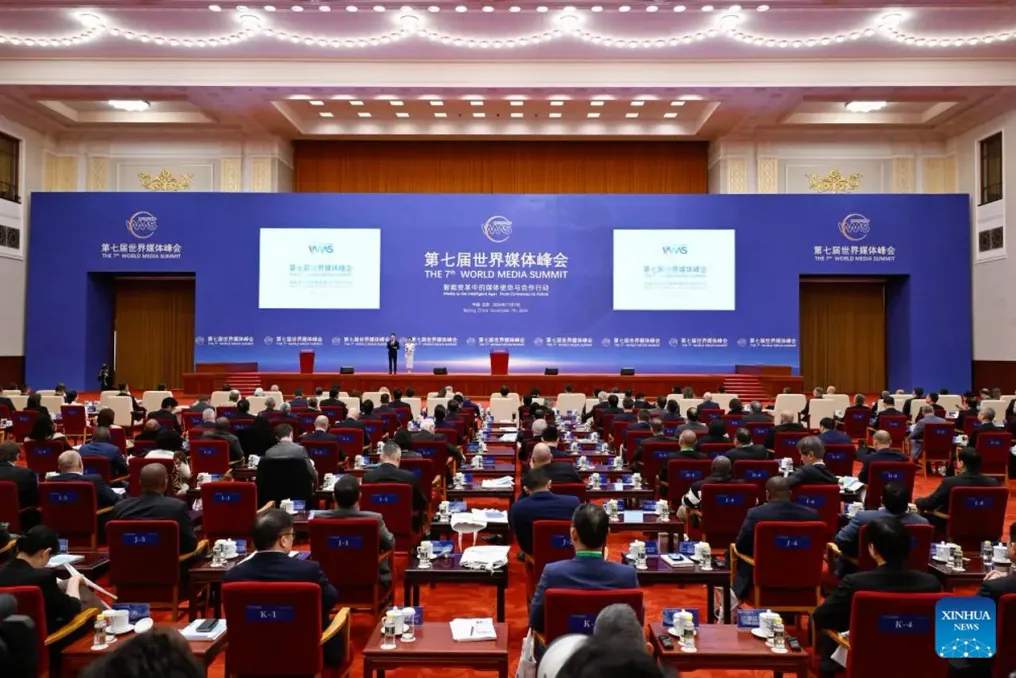
Xinhua introduced its AI agent Xinhua Yudian at the Beijing summit
Read more
UzDaily
uzdaily.uz

Xinhua introduced its AI agent Xinhua Yudian at the Beijing summit

The Xinhua News Agency introduced its artificial intelligence, Xinhua Yudian, at the VII World Media Summit held in Beijing. According to the agency, this platform operates based on verified Xinhua content and is designed to assist users in searching, verifying, and utilizing news information.

A Xinhua representative stated at the summit that the platform was launched on June 26, 2026. The summit materials characterize Xinhua Yudian as an authoritative assistant in current events, built upon what the agency calls a 'clean and reliable' data corpus.

The platform integrates four service modules: AI chat, subscriptions and notifications, a knowledge base, and an AI assistant center. Users can utilize seven core functions, including theoretical study, sourcing primary documents, receiving news recommendations, asking news questions, information verification, topic analysis, and article preparation.

Xinhua asserts that the service is designed to provide authoritative, reliable, secure, accurate, and traceable information throughout the AI's operation. The project's goal is to move beyond simple content dissemination from mainstream media towards deep knowledge and services.

The representative noted that the development of the project was driven by the growing number of people relying on AI for information, as well as the widespread adoption of intelligent tools by media organizations for data collection, content creation, and research.

She emphasized that this trend raises questions about the veracity of AI-generated responses, the ability to verify their sources, and the correctness of systems' understanding and citation of professional news reports. These aspects, she said, relate to public trust and the future of professional journalism.

According to Xinhua, the service leverages the agency's 95 years of event coverage experience. To cover key statements by Chinese President Xi Jinping, the system integrates over 100 volumes of documents and hundreds of thousands of full news reports. The agency has developed specialized knowledge graphs and entity relationship networks to ensure accurate content understanding, extraction, and citation.

From a technological standpoint, the Xinhua representative stated that the agency independently develops the platform's core architecture, basic algorithms, and main modules. To combat AI hallucinations and enhance information traceability, the system combines multi-channel search in the knowledge base, knowledge graphs, and deep semantic search. Security is ensured by a three-level protection system covering the entire knowledge infrastructure and the AI application process. The agency has also taken the initiative to promote standards in related industries.

Xinhua reported that leading experts in cognitive technologies from the Chinese Academy of Sciences view this project as an attempt to create a highly reliable, content-based AI with potential demonstration value for authoritative media services.

According to the agency, Xinhua Yudian is already being used in practice for public opinion research, policy studies, and text composition assistance. Xinhua invited media organizations from other countries for practical cooperation, offering to share experience in creating specialized text corpora and jointly discussing ways to more effectively organize and utilize historical materials, research data, and professional knowledge. The agency is also interested in collaboration in multilingual and intercultural services that account for the history, culture, and communication practices of different countries. Previously at the summit, Xinhua presented its Global Media Initiative for joint development of AI usage standards, after which participants adopted the Beijing Consensus.

Similar stories

Xinhua launches global initiative to develop AI usage standards in media
Read more
uzdaily.uz

Xinhua launches global initiative to develop AI usage standards in media

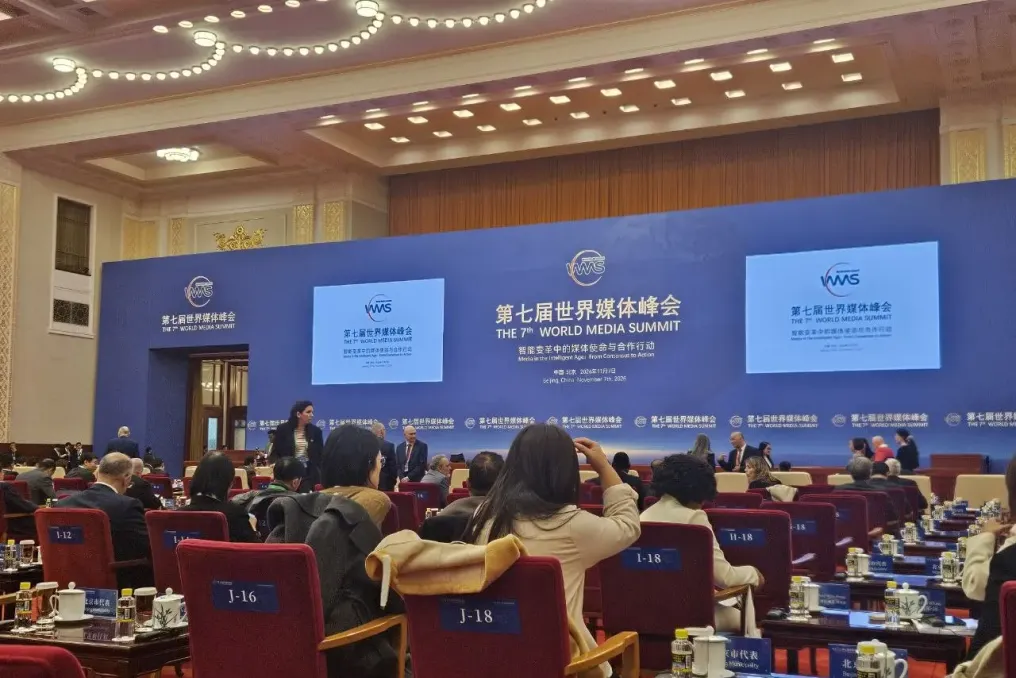
The Xinhua News Agency has initiated a Global Media Initiative aimed at jointly developing standards for the application of artificial intelligence in journalism. These standards were presented as a Document on Global Cooperation in Media and AI at the World Media Summit 2026.

The goal of this initiative is to promote experience exchange and cooperation in the responsible and standardized use of AI in journalism. Key areas of work include sharing practices, joint testing of solutions, collective research, and enhancing participants' professional skills. The initiative aims to help partners contribute by leveraging their strengths.

The first group of partners consists of eleven Chinese and eleven international organizations. Among the Chinese participants are entities such as People's Daily, Xinhua News Agency, China Media Group, Peking University, Tsinghua University, Renmin University of China, China Copyright Protection Centre, China Academy of Information and Communications Technology, Institute of Automation of the Chinese Academy of Sciences, China National Institute of Standardization, and China Association of Printing Technology.

International partners include TASS, Vietnam News Agency, Rossiyskaya Gazeta, Union of OIC News Agencies, Qatar News Agency, Independent Online (South Africa), La Nueva Televisión del Sur, Malaysian National News Agency, Agencia Peruana de Noticias Andina, Uganda Broadcasting Corporation, and Tunis Afrique Presse.

The framework document is based on Xinhua's practical experience in creating a system of standards for using AI in the news industry. It is designed to facilitate the exchange of experience in risk management and the application of AI in areas such as data management, model deployment, and content security. Furthermore, the document seeks to establish communication channels between global media organizations and is presented as a voluntary reference guide.

A central principle of the document is that AI must remain an auxiliary tool, and ultimate responsibility for news content must remain with journalists. Media organizations are advised to adhere to journalistic ethics of truthfulness, combat AI hallucinations and disinformation, strengthen accuracy guarantees, and pay attention to testing and evaluating model capabilities. The importance of respecting cultural diversity and considering the different levels of development of media organizations is also emphasized, aiming to build a reliable and diverse global information environment.

The practical basis covers three key areas. The first is content labeling and provenance verification. Materials substantially created, rewritten, or synthesized with the help of AI must carry visible labels and embedded metadata. These labels must inform the audience about the use of AI, while the metadata must record the degree of AI involvement, the model version, and the creation time. For synthetic content with high risk, more robust anti-forgery measures are provided, including digital watermarks where appropriate. The framework structure also requires maintaining records at every stage of AI production, from prompts and source materials to edits by editors and reviewers. Labels must be retained upon content republication.

The second area is AI model evaluation. Xinhua's standard system for the news industry combines automated testing with professional journalistic expertise, which includes checking factual accuracy and logical coherence. Participants are urged to share evaluation tools and test scenarios that have been verified in real practice. Evaluations must be objective and impartial, results reproducible, and reports standardized.

The third area is security and risk management. The document provides a closed-loop risk management system covering pre-deployment assessment, access control, logging during operation, and post-implementation incident response. Before system operation begins, they must be tested for risks, including factual hallucinations, malicious prompt injection, deepfakes, and algorithmic bias. Clear operational boundaries and access rights must be established for AI agents and automated news systems, along with mechanisms for human intervention and emergency shutdown. AI-generated results can only be used as drafts or reference materials; all content intended for publication must undergo professional fact-checking across multiple sources. Using AI to fabricate quotes or event details is prohibited. Simulated or reconstructed multimedia materials must be clearly labeled and must not be presented as authentic on-site recordings. Personal data used in training and processing AI materials must be anonymized, and access to confidential materials must be strictly limited.

Participants may form a working group and an open review mechanism after consultations to ensure regular updates and improvements to the document. They are also encouraged to share practical experience from media operations and conduct joint case analyses. Participation formats, including practical implementation, case sharing, joint model evaluation, and thematic discussions, are voluntary. The document is not mandatory and is voluntary. Participants can adapt it to their local legal systems, and it imposes no obligations. Media organizations and specialized institutions worldwide are invited to join this initiative, and the document is expected to be updated periodically to reflect the development of AI technologies.

China introduces AI agent identification registry in Uzhgen; 20 organizations sign self-discipline pact
Read more
pandaily.com

China introduces AI agent identification registry in Uzhgen; 20 organizations sign self-discipline pact

At the forum in Uzhgen dedicated to trust, interconnectivity, and agent compatibility, a platform for registering and resolving AI agent identification data was presented on November 4th. This was reported by IT Home and the Chinese website China Daily. As part of the same event, 20 companies, including Huawei, Alibaba, Tencent, Xiaomi, and Baidu, adopted a convention on self-discipline in the development of AI agents.

The platform is currently under development. According to available data, it is being created jointly by state structures to ensure identifier coding, cross-domain resolution, and reliable compatibility. Additionally, operational environments will be placed on top of the platform to host access and publish agent capabilities. A pilot program has already been launched, connecting several service providers and operating platforms.

Ant Group was one of the first participants. The company integrated its agent collaboration infrastructure into the operating platform. Early services, such as the Alipay and Sesame Credit government service agents, established and completed trusted connections with agents on other platforms. Chen Liang, Vice President of Ant Group and CTO of its Alipay and Security business group, emphasized that the age of agents requires a trust infrastructure that embeds identification, authorization, and accountability into every interaction. He also mentioned Ant's unified identification account APASS and the ASL protocol, which the company is developing with over 20 partners.

The convention was developed by the Chinese Academy of Information and Communications Technology (CAICT) together with companies such as Huawei, Alibaba, Tencent, Xiaomi, Baidu, Volcano Engine, Ant Group, and Douyin. It includes eight commitments concerning agent trust systems, interconnectivity infrastructure, compatibility, security protection, management mechanisms, user rights, industry implementation, and open technology exchange. Signatories pledged to develop compliance verification and rule embedding technologies, as well as jointly combat the use of agents for fraud and algorithmic exploitation.

The infrastructure section requires establishing common standards for agent registration and resolution, capability discovery, intent translation, routing, and protocol compatibility. The forum was hosted by the Cyberspace Administration of China and GSMA. Wang Jintao, Deputy Director of the Cyberspace Administration of China, called for establishing basic rules for agent identification, trusted interconnectivity, authorization management, and appropriate operation, expanding online governance from content and model security to verifiable subjects, controlled behavior, and traceable accountability. Parties that signed the convention stated their readiness to accept supervision from industry bodies and the public.

NetEase Yidun introduces Agent Guard in Wuzhen to control AI agent actions
Read more
pandaily.com

NetEase Yidun introduces Agent Guard in Wuzhen to control AI agent actions

NetEase Yidun, the content safety and risk management division for NetEase's enterprise services, unveiled its native AI product suite at the World Internet Conference Light of Internet Expo in Wuzhen on November 3, 2026, according to Sina Tech and IT Home.

The company asserts that security must shift from controlling what AI says to controlling what it does, as agents gain access to corporate systems, tools, and knowledge bases.

Zhu Haoci, Deputy General Manager of NetEase Enterprise Services and head of Yidun, presented a dual model: using AI to enhance security operations and applying security tools to constrain AI functionality within defined boundaries. He noted that current risks include AI content generation, deepfakes, automated fraud, model jailbreaks, confidential data leaks, and agents performing actions outside their permissions.

The product suite consists of three levels. The first level covers AI content and data security, including AI content analysis and moderation, as well as the CMA moderation agent. The second level focuses on interaction and identity security, encompassing business risk control, device fingerprints, behavioral CAPTCHA, and DeepGuard anti-spoofing protection. The third level is responsible for model and agent security, providing mechanisms for large model protection, an agent security platform, and agent supply chain verification.

The system received first-version certification at the exhibition. At the agent level, protection mechanisms filter model inputs and outputs, while Agent Guard verifies agent actions against user intentions, ensures permission compliance, flags risky tool calls, and blocks behavior.

The agent security platform detects utilized AI assets, scans Skill and MCP supply chains, and protects against confidential data leakage. It targets shadow AI—tools used by employees without IT department awareness—by offering blocking, auditing, alerting, and data masking options.

Yidun provided examples of other product effectiveness. CMA integrates an internal content safety model with specialized smaller models and operates 24/7. The company reported that when analyzing complaints for one client processing over 2.5 million tickets monthly, CMA's initial review combined with human checks reduced the average review time from 35.7 minutes to 12.3 minutes with 99.2% accuracy. DeepGuard, which searches for improbable content rather than just known forgery traces, received top marks in the Chinese Academy of Information and Communications Technology's anti-face spoofing assessment and demonstrated 99% completeness and 96% accuracy against screen replay attacks in phased testing.

At a separate forum, Rao Xiaoyan, Head of Yidun's Content Security Department, stated that malicious instructions can be hidden in web pages, files, APIs, tools, or MCP responses, so systems must differentiate between task data and behavioral commands. She described implementing injection defenses both before model calls and before context assembly, as well as output checking during streaming: questionable content is flagged for review, and high-risk content is rejected.

Popular