Fiat Tempra: How Betim demonstrated the capacity to produce large vehicles
Read more
AutoPapo
autopapo.com.br

Fiat Tempra: How Betim demonstrated the capacity to produce large vehicles

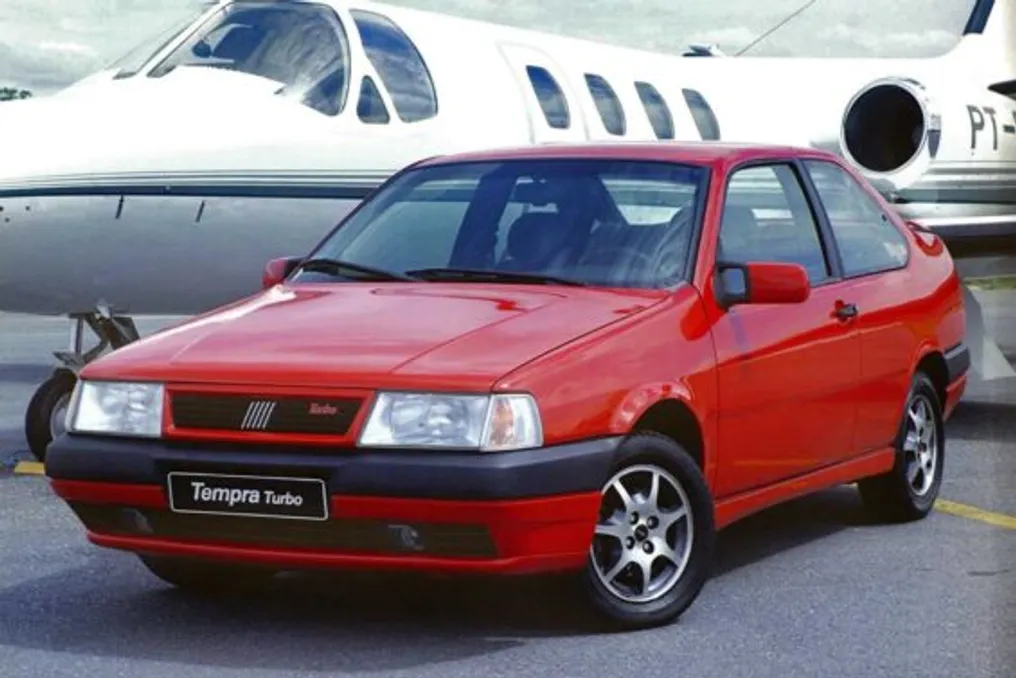
The Fiat Tempra was introduced in Europe in 1990 and later arrived in the Brazilian market in November 1991. This imposing sedan marked Fiat's entry into the segment of larger and more luxurious cars, an area previously dominated by models such as the Chevrolet Monza and the Volkswagen Santana. The Italian brand presented a design that was simultaneously modern, attractive, functional, and aerodynamic, surpassing its competitors.

The high and robust rear housed a large trunk with 552 liters, facilitating access to luggage through its lid. The doors featured an innovative construction characteristic, curving at the top and integrating with the roof, which aided the vehicle's aerodynamics, achieving a notable drag coefficient (Cx) of 0.32 at the time.

In terms of mechanics, the engine and transmission were transversely mounted at the front. The 2.0 engine featured dual overhead camshafts, hemispherical combustion chambers, and centralized ignition spark plugs. Despite this refined engineering, the Fiat engine delivered only 99 hp of maximum power, a value that coincided with the tax payment limit for a specific bracket, as an increase of just one hp would elevate the car to a more burdensome tax category.

The transmission, always manual, offered five quick and precise shifts. The suspension system was advanced, being independent on all four wheels. However, the rear used a different solution than that employed in the European model, as the assembly chosen for the Brazilian Tempra provided greater resistance to handle the conditions of local roads and streets. This rear suspension also conferred greater handling sensitivity, requiring smooth and cautious steering movements near the adhesion limit to prevent the rear from losing control.

Initially launched in Brazil only in the four-door sedan version, the Tempra gained a two-door configuration, affectionately nicknamed 'coupe' due to the slope of the rear pillars. This sportier variant was made available in the Brazilian market in 1992, already under the 1993 model year.

In 1994, the wagon version of the Tempra appeared, equipped with a 2.0 engine and multi-point injection. It is important to note that this configuration, called Tempra SW, was imported from Italy, as its sales volume was estimated to be too small to justify domestic production.

Throughout its trajectory, the Tempra introduced constant innovations for the Brazilian consumer. In 1994, the market received the four-door sedan, the two-door coupe, and the SW family version. Mechanically, the Tempra pioneered in Brazil by incorporating a 16-valve head. Again, coincidence or not, this new 16-valve engine generated 127 hp, approaching an important tax threshold of the time. In the first half of 1994, the Turbo version of the Tempra was also launched, which maintained the eight-valve engine but produced 165 hp, offering impressive performance for a Fiat sedan and making it the fastest national car in the Brazilian market during that period.

Production of the Fiat Tempra in Brazil continued until the end of 1998, when it was succeeded by the Fiat Marea, available in sedan and wagon versions, both with four doors. During these seven years of manufacturing, just over 204 thousand units of the national Tempra were produced, including the two- and four-door versions. The wagon imported from Italy was not included in this total due to low sales volume in the country. On average, about 30 thousand Tempras were sold annually during the national production period, a modest number compared to higher-volume models, but relevant for a segment where Fiat had just entered.

Similar stories

Used Audi A3 Sedan: 10 Facts About the Model Produced in Brazil
Read more
autopapo.com.br

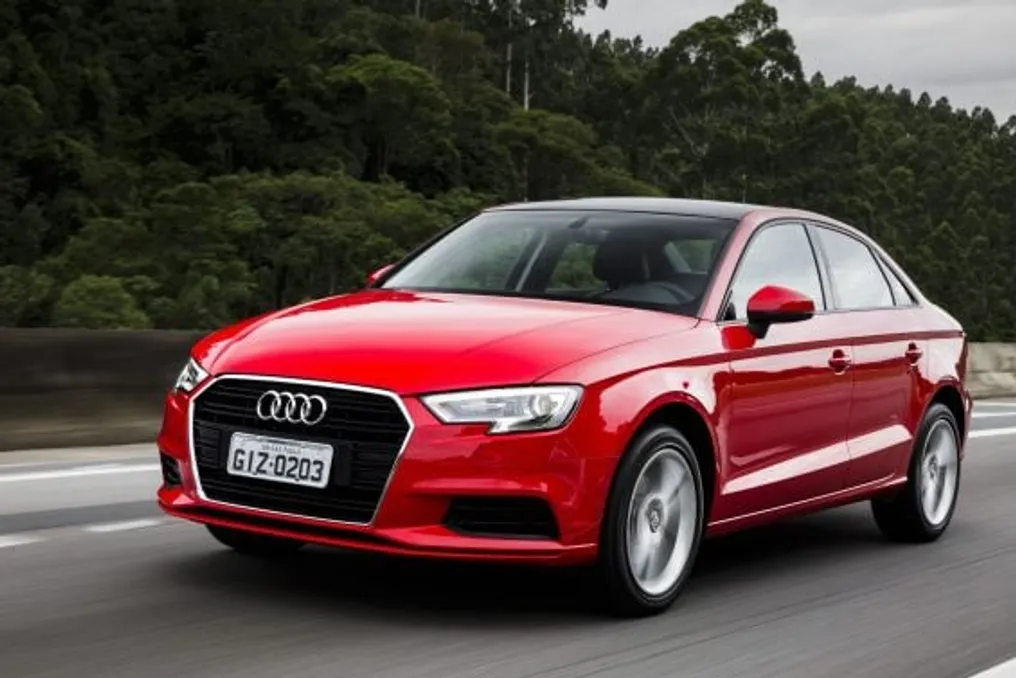
Used Audi A3 Sedan: 10 Facts About the Model Produced in Brazil

Inovar-Auto, a governmental sectoral program launched in the early 2010s, introduced specific features to the Brazilian market, allowing luxury brands like Audi to begin local vehicle assembly, including the A3 Sedan.

The German manufacturer resumed its activities at the plant shared with Volkswagen in Paraná after an operational period between 1999 and 2006. This time, Audi focused on producing the A3 Sedan. Although the model received adaptations for national manufacturing, it preserved the refined dynamics, robust performance, and luxury characteristic of the German brand.

Model History and Evolution

The third generation of the Audi A3 was responsible for introducing the Sedan version. This model was presented globally at the New York Auto Show in 2013 and arrived in Brazil in January 2014, initially imported from Hungary. Initially, the car used the 1.8 TFSi engine with 180 hp. Later, an entry-level version appeared with a 122 hp gasoline TFSI 1.4 engine, which became flex with the national assembly line in 2015.

The Audi A3 Sedan also offered a more powerful option, the 2.0 with 220 hp, and underwent an aesthetic redesign in 2017. In 2019, a special 25th Anniversary edition was launched, limited to 600 units, celebrating the brand's anniversary in Latin America. This first generation of the sedan ended its production in 2020.

The relaunch of the A3 Sedan marked the reopening of the Audi assembly line in São José dos Pinhais, Paraná, all under the umbrella of Inovar-Auto, which offered tax incentives for local production. Other manufacturers benefited from this program included BMW in Araquari (SC), Mercedes-Benz in Iracemápolis (SP), and Jaguar Land Rover in Itatiaia (RJ).

It is worth noting that the factory used by Audi had been inaugurated in 1998 to produce the Volkswagen Golf IV, and from 1999 to 2005, it manufactured the first generation of the A3 Sportback. At this Paraná unit, besides the A3 Sedan, the Q3 was also produced. The unit's operations were suspended in December 2020 because the manufacturer alleged a lack of definition regarding accumulated IPI credits that were not fully returned.

Currently, the unit operates under the SKD regime for the assembly of the Q3, a process where the vehicle arrives almost complete, and only the joining of the body with the chassis occurs at the plant.

Brazilian Adaptations and Mechanical Changes

Upon receiving the Brazilian passport in 2015, the Audi A3 Sedan underwent several adaptations, some mechanical aspects being simplified to reduce production costs. A notable change occurred in the rear suspension: Audi replaced the independent multi-link system with a torsion beam, a configuration common in mid-size sedans from generalist brands of that era.

Another significant change was in the transmission system. The S tronic automated gearbox, known for its seven-speed dual-clutch system, was replaced by a six-speed Tiptronic automatic gearbox with a torque converter. In compensation, the Audi A3 Sedan gained a considerable increase in power. The 1.4 TFSI engine, which originally delivered 122 hp, was adapted to be flex, received variable exhaust valve control, and began generating 150 hp.

An important difference in the A3 Sedan manufactured in Paraná is the vehicle height. To suit the local asphalt standard, the suspension was raised by 1.5 cm compared to the imported model.

Performance and Finish

Analyzing specifically the 1.4 flex model, despite the transmission changes, the 150 hp from the EA211 family turbocharged direct injection engine provide a satisfactory level of driving pleasure. Accelerations are agile, and the Tiptronic gearbox, although less sophisticated than the S tronic, delivers a 0 to 100 km/h time of 8.8 seconds, according to the manufacturer.

On highways, the Audi A3 Sedan demonstrates good evolution, quickly reaching the permitted 100 km/h. For overtaking, 25.5 kgfm are available between 1,500 and 4,000 rpm, and the turbo acts quickly to overtake other vehicles.

German engineering is evident in the solid construction of the sedan, which maintains firmness in sharp curves and high-speed sections. The steering is described as precise and firm, giving the sensation that the car is firmly planted on the ground. The torsion beam suspension in the Brazilian model has a softer calibration, without compromising the stability or dynamics of the vehicle.

Inside, the A3 Sedan manufactured in Brazil maintains the brand's identity. The dashboard features injected foam with a pleasant touch surface, and the door and column coverings with fabrics also stand out, as does the smooth finish of the glove box. The front seats offer good density and quality material, although they are not extremely enveloping. The analog instrument cluster is considered classic and easy to view, with the steering wheel being the only element that could have a smaller diameter.

The rear space comfortably accommodates two adults and one child. The softer suspension compared to the Hungarian example reflects internal imperfections more, but without being a serious problem. The acoustic insulation is efficient, and the trunk offers 425 liters, a suitable volume for mid-size sedans.

2016 Ambiente Version and Equipment

Considering the 2016 Audi A3 Ambiente 1.4 TFSi, already adapted to the Brazilian market, it includes six airbags, stability control systems, traction and hill start control, reverse sensor, xenon headlights, daytime running lights, and Isofix. Additionally, the sedan has air conditioning, electric window controls, electronic parking brake, rain and dusk sensors, start-stop system, steering wheel with height and depth adjustments, and multimedia center with CD and memory card reader.

However, this transition to the Ambiente model simplified some features. The air conditioning was no longer automatic, the seats changed from leather to fabric upholstery, and the multimedia center does not have Bluetooth. Higher packages, however, included ADAS technologies, such as adaptive cruise control, frontal collision warnings, and lane departure warnings, as well as emergency automatic braking. Other optional extras available were a rearview camera, front parking sensors, semi-automatic parking assistant, leather trim, keyless entry, panoramic roof, native GPS, and DVD player.

When checking average prices for the 2016 Audi A3 Sedan Ambiente on KBB Brazil, it is important to remember that it is a luxury vehicle requiring specialized maintenance, and the trim and body parts tend to be more expensive. It is positive that the 1.4 flex engine is well-known and that the Tiptronic gearbox generally presents fewer problems than the S tronic. It is recommended to check the prices of specific components and the problems reported in discussion forums and on Reclame Aqui.

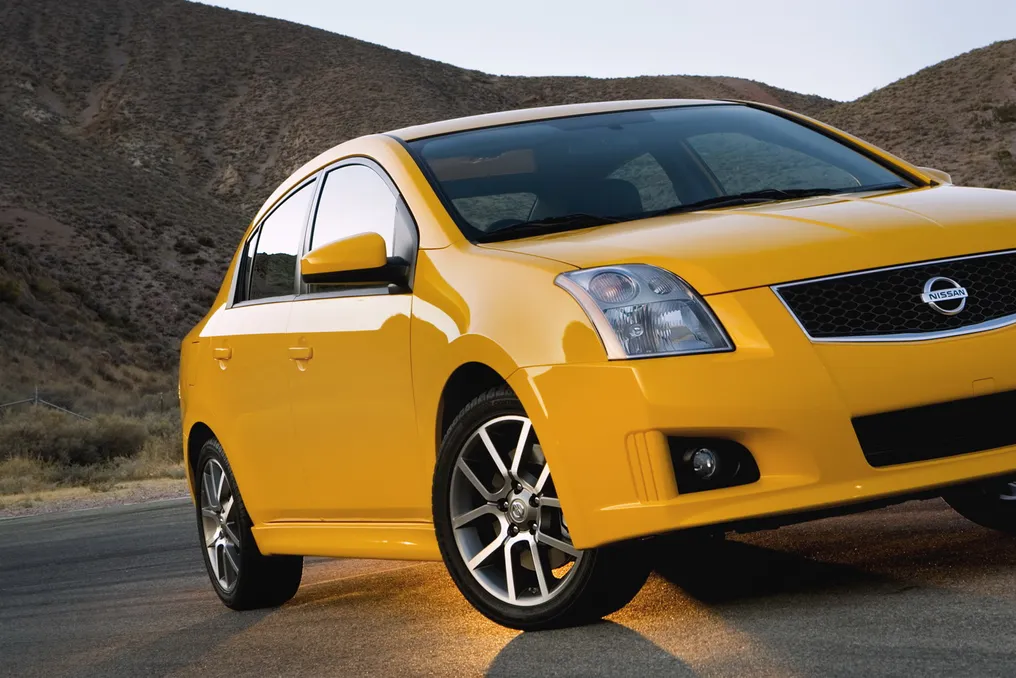
Nissan Sentra SE-R Spec V: A sporty competitor missing from the Brazilian market
Read more
flatout.com.br

Nissan Sentra SE-R Spec V: A sporty competitor missing from the Brazilian market

It is currently difficult to name a sporty sedan available for purchase, as examples like the BMW M3 or Dodge Charger Scat Pack are considered ultra-specialized. This difficulty causes common-use sports cars to lose the relevance they once had, which is regrettable.

This week, Nissan presented a modified Sentra as part of its projects for the SEMA Show 2026. This vehicle is based on the ninth generation, launched late last year, a version that is unlikely to be commercialized in Brazil.

The previous generation was discontinued last August after unsatisfactory sales performance, registering only 341 units from January to June, while the Toyota Corolla sold 13,021 units in the same period. Because of this, there is no prospect of seeing the new Sentra in the country, which currently offers the lineup composed of the Kait and Kicks SUVs, in addition to the Versa. There are rumors that Nissan plans to introduce an electric successor of Chinese origin, but this still lacks official confirmation.

It is notable to see a Versa prepared for SEMA, especially considering that it uses a 304 hp 2.0 turbo engine, equipped with a Garrett turbocharger, intercooler, and forged internal components, coupled with a six-speed manual gearbox. Its look resembles special Nismo models, with white paint and red details on the body kit, in addition to a prominent rear spoiler. The brakes and seats are sourced from the Nissan GT-R Nismo, and the 19-inch wheels use high-grip tires. With a limited-slip differential, this Sentra promises to be a pleasure to drive, and the most optimistic expect it to inspire a sporty version of the sedan in the United States.

What is most regrettable is knowing that the Sentra once had a genuine sporty version, which was a worthy rival to the legendary Honda Civic Si in the early 2000s.

The mid-size sedan segment has never been the most attractive in the industry. Generally, enthusiasts viewed the mid-size sedan as a sensible option: a practical, functional, and sensible car, ideal for those who need to balance family life with daily commuting, offering a large trunk, rear space, and smooth driving for long trips. Although design was important, it rarely was the decisive factor, and sportiness usually was limited to more aggressive aesthetic packages.

In Brazil, the most notable exception in this segment is the eighth-generation Honda Civic Si, launched in 2007. Manufactured in Sumaré (SP), it is revered as one of the best national sports cars. The Si featured the K20Z3 engine, a two-liter four-cylinder with i-VTEC camshaft, capable of reaching 192 hp at 8,000 rpm. Combined with a precise six-speed manual transmission, a limited-slip helical differential, it could accelerate from 0 to 100 km/h in about 7.9 seconds. Furthermore, it was an excellent base for modifications, consolidating it as an expensive cult classic in the used market.

While Honda prospered with the Civic Si, other mid-size sedans in the country seemed content with a more conservative profile. The Nissan Sentra, officially imported starting from the fifth generation in 2004 and receiving the sixth in 2007, offered a solid and rational proposal, with good build quality, efficient sound insulation, and abundant equipment. However, it never managed to challenge the market leadership of the Corolla and the Civic, partly due to the popularity of these rivals and the stigma of being a 'dad's car'. Nissan itself used advertising campaigns to joke about this reputation, trying to change the perception, but this did not arouse the enthusiasm of enthusiasts.

The history of the Sentra in Brazil could have been different, because the necessary element to change this view already existed and was popular in the United States since 2001: the Nissan Sentra SE-R.

In 2000, Nissan launched the fifth generation of the Sentra. In the US, European, and Japanese markets, it began to be classified as a compact sedan, equivalent to a mid-size sedan in the Brazilian market. The versions imported to Brazil used the QG18DE engine, a 1.8-liter four-cylinder with 115 hp, focused on comfort and economy, usually with a four-speed automatic transmission.

In the United States, the Nissan division maintained a strong legacy with the acronym 'SE-R'. In the B13 generation (early 90s), the SE-R with the 2.0-liter SR20DE engine was an icon, compared to the '90s BMW 2002' due to its light chassis and rotary engine. After a pause in the acronym in the B14 generation, Nissan sought to revive the sporty spirit on the B15 platform, launching the Sentra SE-R Spec V at the end of 2001.

The difference lay in the engine: instead of the 1.8L, engineers installed the QR25DE, the largest available four-cylinder. The 'QR' engine family was developed in the early 2000s to replace the SR family. The QR25DE, a 2,488 cm³ four-cylinder, had an architecture focused on low and mid-range torque and efficiency. In its normal applications (such as in the Frontier pickup and Altima), it delivered about 154 hp and 24.1 kgfm of torque.

For the Sentra SE-R Spec V, Nissan tuned the engine: the compression ratio increased from 9.5:1 to 10.5:1, the cam profile was modified to lengthen the breaths, and the exhaust system received an optimized manifold. This resulted in an increase to 177 hp at 6,000 rpm and 24.9 kgfm of torque at 4,000 rpm. The Spec V received a short-ratio six-speed manual transmission and a locking differential to direct power to the front wheels.

The name 'Spec V' was a subtle reference to the V-Spec versions of the Skyline GT-R, which also inspired the design of the front bumper air intakes. Externally, the car featured prominent side skirts, blacked-out headlights, exclusive 17-inch alloy wheels, and a functional rear spoiler. The suspension was stiffer, with firmer dampers, PU bushings at the rear, and a front sway bar. The brakes included ABS on all four wheels, with an option for a four-piston Brembo setup up front.

Internally, the seats had greater side support inspired by the Skyline, the gear lever was leather-wrapped with an aluminum top, and the three-spoke steering wheel was thicker. The B15 generation Sentra SE-R Spec V was a legitimate sports sedan, capable of reaching 100 km/h in about 7.1 seconds and completing a quarter mile in approximately 15.2 seconds, although it is little known outside the US.

When Nissan launched the sixth generation of the Sentra (B16) in 2006, there was a notable evolution, utilizing the global C platform of the Renault-Nissan alliance. The sedan became larger, wider, stiffer, and more sophisticated. Nissan also prepared a Spec V variant for this new generation, paying special attention to the engine, which was completely redesigned.

The intake received a redesigned polymer manifold with direct flow ducts and a larger throttle body. The camshafts had a more aggressive profile and reinforced springs. To support the high rev limit of 7,000 rpm, the pistons received reduced skirts and a special molybdenum resin coating to reduce friction, along with lightweight and balanced forged steel connecting rods. With reworked combustion chambers and new electronic programming, the engine reached 203 hp at 6,600 rpm and 24.9 kgfm of torque at 5,200 rpm, allowing it to accelerate from 0 to 100 km/h in 6.7 seconds with the six-speed manual transmission and helical locking differential.

Improvements to the suspension and brakes were similar to the previous generation, but added a 'V' brace in the trunk. The 17-inch alloy wheels had ten spokes and housed 12.6-inch (320 mm) front discs, larger than those on the contemporary Nissan 350Z. Visually, the B16 Spec V featured exclusive bumpers, integrated side skirts, a dark front grille, a trunk spoiler, and a large-diameter chrome exhaust tip. The interior included red seatbelts, sporty seats with pronounced side supports, 'SE-R' embroidery, aluminum pedal covers, and additional gauges on the center panel to measure G-force and oil pressure.

At that time, Nissan Brazil had already recognized the success of the Honda Civic Si and planned its launch in the country between 2008 and 2009. The Brazilian market was rapidly expanding, and the brand needed to dissociate the Sentra from the image of a 'dad's car'. The strategy seemed ideal: importing the car directly from the Aguascalientes factory in Mexico, where the versions already came from.
Lexus LS400 challenged Mercedes-Benz and forced changes in the development of the S-Class
Read more
autopapo.com.br

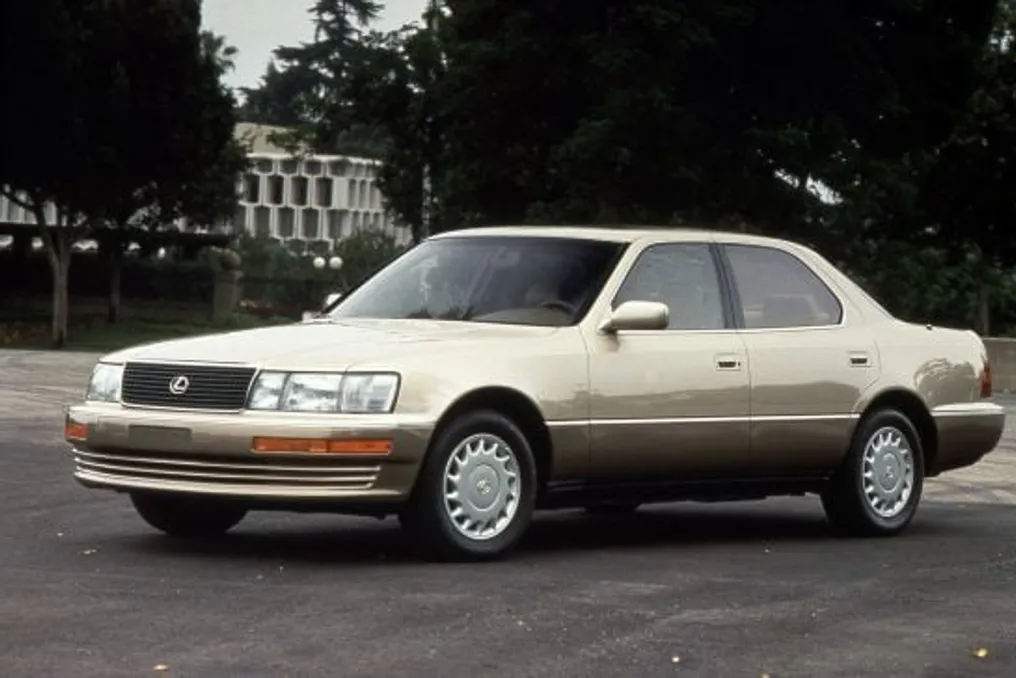
Lexus LS400 challenged Mercedes-Benz and forced changes in the development of the S-Class

Luxury vehicles function as technological showcases for manufacturers, demonstrating their capabilities. Although Toyota was already recognized as a good general manufacturer, it created Lexus with the aim of proving that it could go beyond that level. This strategy has been imitated by Chinese brands, which introduce expensive models to lend credibility to higher-volume cars.

The first Lexus vehicle was the LS400 sedan, launched in 1989, which caused a great impact on competitors such as Mercedes-Benz, BMW, Jaguar, and Cadillac. For many Brazilians, this car is known for being the one that must be destroyed in a bonus phase of Street Fighter II.

Toyota already had an exclusive luxury model for Japan, the Century, launched in 1967. This car followed a typically Japanese philosophy, focused on discretion, smoothness, and silence. The Lexus division maintained these characteristics but combined them with high technology and performance.

The main benchmark in this segment has always been the Mercedes-Benz S-Class, which was frequently chosen by heads of state, diplomats, and celebrities. In 1983, Eiji Toyoda, then president of Toyota, initiated the project to create a 'Japanese Mercedes.' The defined goals did not include deadlines or budget, but rather surpassing European manufacturers in aerodynamics, interior quietness, top speed, and fuel efficiency.

This ambitious project mobilized 60 designers, 1,400 engineers distributed across 24 teams, 2,300 technicians, and over 200 support staff. 450 prototypes of the car and 900 of the engine were produced, totaling 2.7 million kilometers driven. The car reached its final forms in 1987, undergoing durability tests and validation until its launch in early 1989. Toyota's initial goal was to sell 50,000 units annually, with 40,000 destined for the United States.

All this effort resulted in the Lexus LS400, the pioneer of the division's luxury line. Its design was conservative, without excessive grilles or hood ornaments, but featured precise panel fits and attention to aerodynamics. The LS400's engine was an unprecedented 4.0 V8, the 1UZ-FE, which used a cylinder bore larger than the piston stroke to ensure greater smoothness.

One of the launch announcements illustrated this smoothness with the car accelerating on a dynamometer with stacked cups on the hood, which remained stable due to the V8. This engine generated 260 hp and 36 kgfm, reaching 100 km/h in 8.5 seconds and a top speed of 250 km/h. The four-speed automatic transmission incorporated electronic control, which was innovative for the time. Furthermore, the Lexus LS400 offered electric adjustments for the steering wheel and seatbelts, an electroluminescent dashboard with a holographic effect, air suspension, a Nakamichi sound system, and an integrated mobile phone; in Japan, where it was sold as the Toyota Celsior, it could include GPS.

While Toyota was developing the LS400, Mercedes-Benz was designing a new S-Class, also scheduled for release in 1989. However, the arrival of the Japanese sedan forced the Germans to revisit their designs. The new S-Class was already facing delays due to the development of a V12 engine, necessary to compete with the BMW 750i. After acquiring a Lexus LS400, Mercedes-Benz engineers were impressed by the assembly precision and acoustic insulation of the vehicle.

Consequently, the new S-Class project was postponed by 18 months to improve these aspects and complete the V12 engine. This delay incurred extra costs amounting to US$ 1 billion. Although every unit sold of the first Lexus LS400 resulted in a loss for Toyota, this loss was offset by sales of models like the Corolla, Camry, and Hilux. Mercedes-Benz also recorded losses with the S-Class, but this impacted its financial balance more significantly. During the 1990s, the German brand tried to cut costs, and certain decisions ended up increasing losses, with recovery from the impact caused by Lexus only beginning in the following decade.

Popular