New 'Koltsevaya' Substation Commissioned in Tashkent and Region to Enhance Power Supply Reliability
Read more
Gazeta.uz
gazeta.uz

New 'Koltsevaya' Substation Commissioned in Tashkent and Region to Enhance Power Supply Reliability

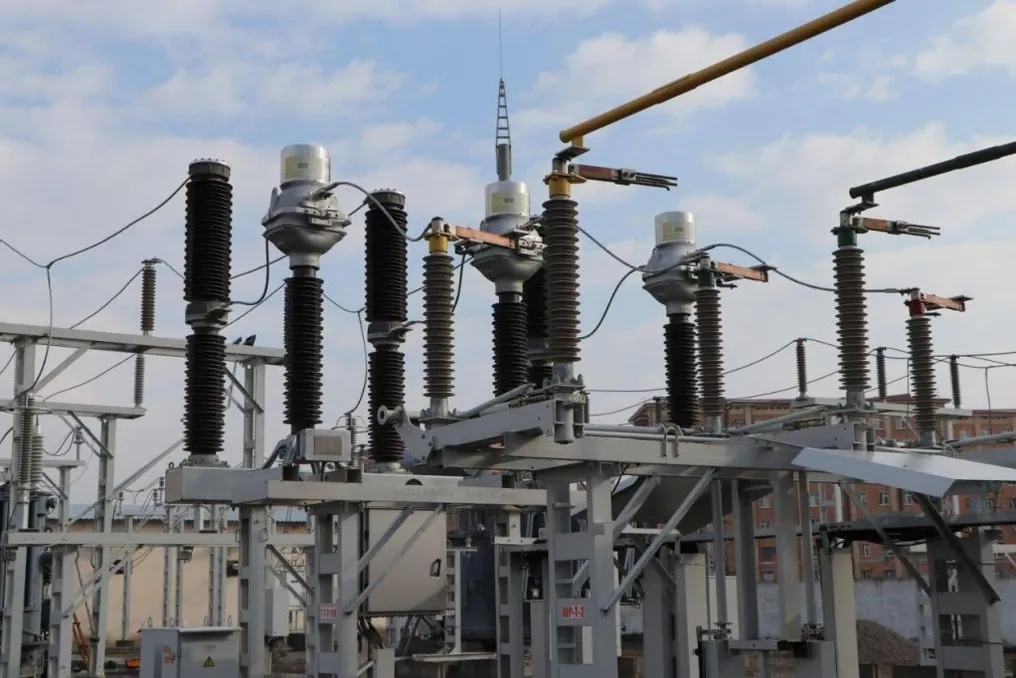
On November 7, the 'Koltsevaya' substation with a voltage of 500 kV was launched in Tashkent region. This facility is designed to improve the reliability of electricity supply to the capital and certain districts of Tashkent region, as well as ensure more efficient load distribution across existing electrical grids.

According to information provided by the press service of the Ministry of Energy of Uzbekistan, the total cost of the entire project, implemented with the assistance of the World Bank, reached 171.4 million US dollars. The 'Koltsevaya' substation has a capacity of 1602 MVA and is considered one of the most modern and largest high-voltage infrastructure facilities in Uzbekistan.

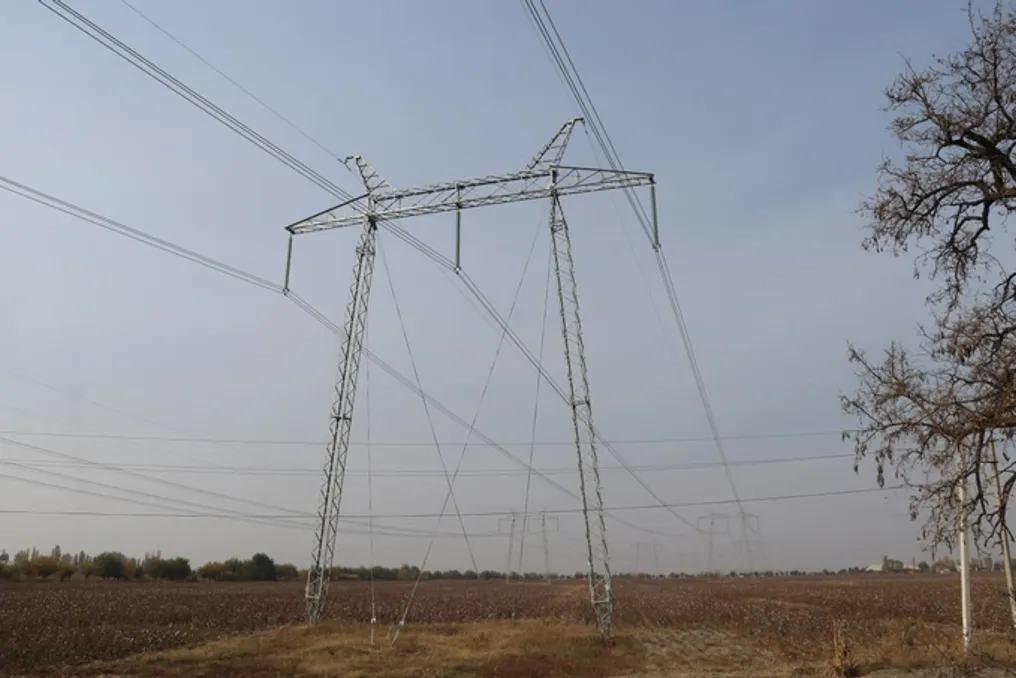
Air power transmission lines were constructed as part of this project. The length of 220 kV lines is 213 kilometers, and 500 kV lines is 72 kilometers, totaling 285 km of new high-voltage lines. Currently, the process of integrating these new elements into the country's overall power system is underway.

The Ministry of Energy noted that due to the redistribution of load in the capital region, the load on the Tashkent Thermal Power Plant will decrease, which will allow for the discontinuation of fuel oil burning. The World Bank previously indicated that 'Koltsevaya' is the first substation in the country where control and monitoring are conducted using advanced digital technologies. The facility will receive energy from both power plants in the Syrdarya region and wind farms located in the southwestern parts of the country.

This project is part of a larger initiative called 'Transformation of the Electric Power Sector and Sustainable Power Transmission.' It is being implemented by 'National Electric Networks of Uzbekistan' with financial support from the World Bank and has a total cost of 380 million dollars. This project was approved in 2021 and includes not only the construction of the 'Koltsevaya' substation but also the modernization, reconstruction, and expansion of twenty-two outdated high-voltage substations, as well as the laying of power lines in almost all regions of Uzbekistan, and the introduction of modern solutions for energy transmission management and monitoring.

Similar stories

Choshtepa Station Opened in Tashkent for Metro and Commuter Train Connections
Read more
podrobno.uz

Choshtepa Station Opened in Tashkent for Metro and Commuter Train Connections

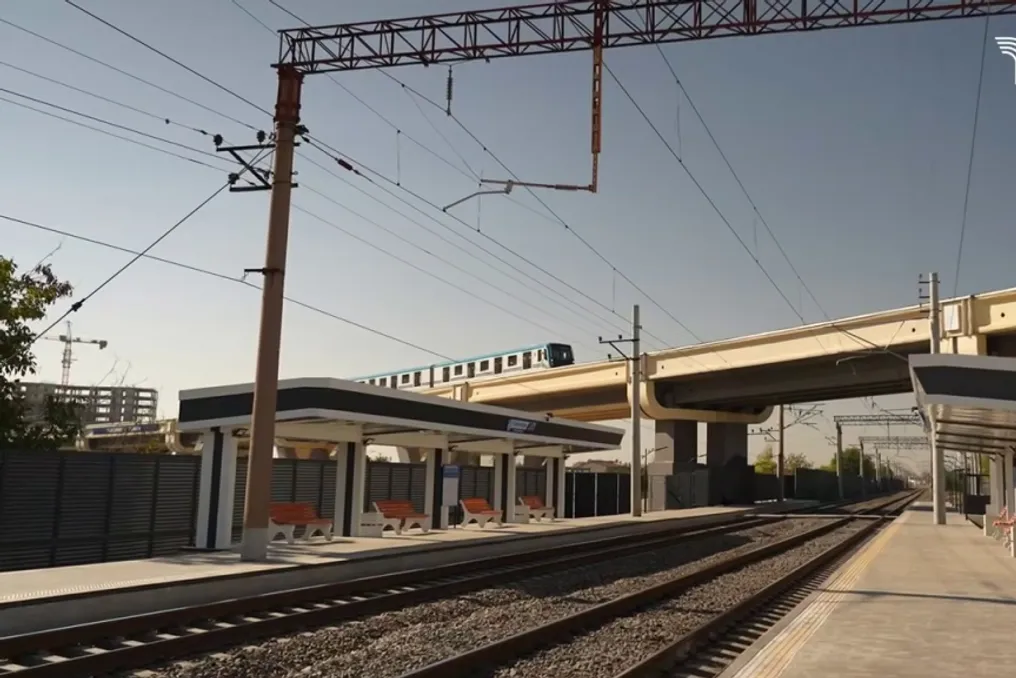
The 'Choshtepa' railway station has begun operating in Tashkent, providing connections between the metro, commuter trains, and buses.

Passengers planning to travel to Syrdarya, Gulistan, Khavast, and Bekabad can now transfer to a commuter train, eliminating the need to go to the Southern Station.

The station's operation commenced on October 23, 2026, as part of efforts to develop passenger transport on domestic railway routes. This opening is intended to facilitate transfers between different modes of transport and provide residents of the capital and surrounding regions with alternative travel options.

Passengers traveling from Tashkent to the listed settlements can take the metro to 'Choshtepa' station and then switch to a commuter train. For those arriving in the capital, the station offers the option to continue their journey by metro or bus.

The integration of the railway and urban transport systems aims to reduce transfer times and increase travel comfort. The creation of this station was planned by a presidential decree with the goal of increasing passenger traffic on local railway routes by 2030.

Furthermore, it should be noted that starting November 15, a new commuter bus route No. 194 will operate from the Southern Station in Tashkent, with its final destination being the 'Niyozboshi' mahalla in the Tashkent region.

Plans to connect Tashkent's new airport with the Northern Railway Station
Read more
podrobno.uz

Plans to connect Tashkent's new airport with the Northern Railway Station

As part of the passenger transport development strategy until 2030, which is currently under discussion, it is planned to connect Tashkent's new airport to the 'Tashkent-Severny' railway station with a rail line.

According to this document, Uzbekistan plans to build three railway lines by 2030 to connect airports with stations. These routes are planned not only for Tashkent but also for Bukhara and Urgench. The project also includes the Parkent—New Tashkent section.

The construction of the first line is scheduled for 2026, and the remaining two for 2029, with all three projects expected to be completed by 2030. To secure funding for the lines in Tashkent and Bukhara, the possibility of attracting loans from commercial banks is being considered. Preliminary allocations for the projects in Tashkent and Bukhara amount to about $30.6 million in 2029 and $37.4 million in 2030, although the exact cost of each facility has not been determined.

Furthermore, a unified transport system is planned for implementation in the Tashkent agglomeration starting in July 2027. This system should integrate the 'Tashkent-Severny' and 'Tashkent-Yuzhny' stations, Tashkent International Airport, and the central bus terminal.

Within these plans, there is an intention to increase the number of electric trains from Chirchik, Yangiyul, Angren, and Almalyk by one and a half times. Direct transfers to the metro are also provided for passengers. Another initiative is the creation of a unified electronic platform called 'Bir yo'l', which will allow purchasing tickets for trains, airplanes, and buses. Additionally, twenty bus routes are planned to connect airports, railway stations, and bus terminals, with the transfer time between different modes of transport to be reduced from twenty to ten minutes.

It is worth noting that the construction of the new Tashkent International Airport was approved by a presidential decree dated November 25, 2025, and will occupy an area of 1,310 hectares. In the initial phase, two runways, each four kilometers long, a passenger terminal covering 208 thousand square meters, 98 aircraft parking spots, a refueling complex, and a control tower will be built.

Under the terms of the agreement, a private consortium will take on the tasks of constructing and operating the station forecourt and passenger terminal, while the state side is responsible for the construction and operation of the aerodrome complex. After the airport becomes operational, which is planned for the end of 2030, it will be able to accommodate up to 20 million passengers and handle up to 300 thousand tons of cargo annually, becoming an important element of the country's logistics and transport infrastructure.

Modernization of Ten Substations Underway in Tashkent to Increase Power System Capacity
Read more
podrobno.uz

Modernization of Ten Substations Underway in Tashkent to Increase Power System Capacity

The modernization of ten electrical substations is being carried out in the city of Tashkent with the aim of increasing their throughput capacity and ensuring more stable electricity supply. The replacement of power transformers will lead to an increase in total additional capacity by 333.2 megavolt-amperes, allowing the entire system to cope with increased loads.

The work covered the following substations: 'Risovaya', 'SAZIIT', 'Istikbol', 'Yangi Tuzel', 'Tuzel', 'Karasu', 'Charogon', 'Gornaya', 'Bibliotechnaya', and 'Vystavochnaya'. More powerful transformers were installed at each of these stations, which contributed to the increase in throughput capacity and the creation of additional reserve.

The most significant increase in capacity was recorded at the 'Karasu' substation, where the indicator rose from 53.6 to 138.6 megavolt-amperes. Additionally, the capacity at 'Yangi Tuzel' increased almost fourfold—from 12.6 to 50 megavolt-amperes. At the 'Istikbol' station, after the completion of the work, the capacity will reach 126 megavolt-amperes, exceeding the previous 80 megavolt-amperes.

Overall, this modernization will enable Tashkent's energy infrastructure to better withstand loads, minimize the probability of outages, and improve the overall quality of electricity supply for all consumers. It should be noted that as of the end of 2025, Uzbekistan has commissioned 11 substations with a total capacity of 1,614 megavolt-amperes and 420 kilometers of electrical networks.

Popular