1500-year-old statuette of an adorned heroine with hairstyle and necklace found in Panna
Read more
Aaj Tak
www.aajtak.in

1500-year-old statuette of an adorned heroine with hairstyle and necklace found in Panna

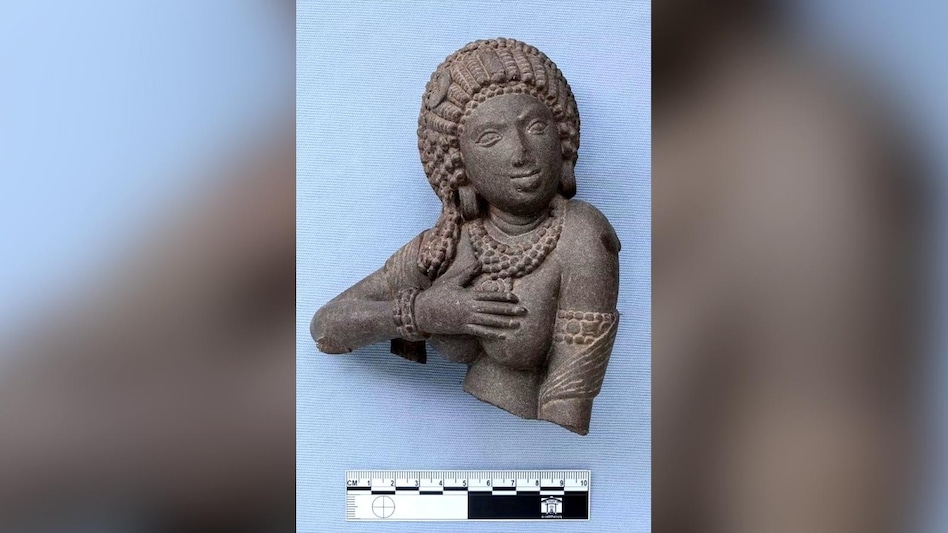
An archaeologically significant find was made in the Panna region of Madhya Pradesh state. During excavations conducted by the Archaeological Survey of India (ASI) in the historic village of Nachna, located in the Salha district, an ancient statuette of an adorned heroine was discovered.

This artifact, estimated to be approximately 1500 years old, is important evidence for understanding the art, culture, and beauty traditions of women from that era, belonging to the Gupta period.

The statuette, about 20 centimeters high, is made of gray sandstone and has a glossy polish. The sculpture depicts a woman attending to herself. Particular attention is drawn to how meticulously the artisan carved her hairstyle and ornaments.

Decorative elements resembling hairpins are visible on the woman's head, and a seven-strand necklace is on her neck. Additionally, bracelets are visible on her arms, and armlets are on her forearms. These small details suggest how developed the traditions of jewelry and cosmetics were among Indian women more than fifteen hundred years ago.

According to archaeologist and ASI chief Shivkanta Bajpai, this statuette is about 1500 years old. This artifact, dated to the 4th-5th centuries, demonstrates the artistic achievements and cultural richness of that time. The extremely fine depiction of jewelry, hairstyle, and makeup on the stone testifies to the outstanding craftsmanship of the artisans of that period.

This statuette is considered special because the image of an adorned heroine in Gupta art is rare. Other well-known works, such as 'Dama Gyaraspura' and 'Sukhanaika', housed in the Khajuraho museum, should also be noted, but the find from Nachna is considered significantly older, making it an important discovery for studying the evolution of Indian sculpture.

The village of Nachna in the Panna district is already known for its temple architecture from the Gupta period. It houses the Parvati Mandir and Chaumkhanaat Mandir, which hold significant historical and religious importance. The discovery of the statuette of the adorned heroine has further enriched the archaeological significance of this village.

This discovery goes beyond simply finding an ancient statue; it provides an opportunity to study the lifestyle, aesthetic preferences, beauty, and socio-cultural traditions of that time. The jewelry and hairstyle depicted on the statuette point to a deep connection between beauty and art during the Gupta era.

It is planned that this historical statuette will be exhibited and preserved in a museum in the future. This will allow the general public to view a unique example of Gupta period art up close. For archaeologists and history enthusiasts, this artifact will be of particular interest.

The heroine's statuette found in Nachna serves as a reminder of the glorious period of Indian history when works of art carved in stone served not only as decoration but also as a living document of the society, culture, and way of life of that time. Even after almost 1500 years, the form of the adornment on this statuette remains, telling the story of artistic mastery and cultural prosperity of ancient India.
Similar stories

Sasanian rock carvings of human hands discovered in Marvdasht
Read more
www.tehrantimes.com

Sasanian rock carvings of human hands discovered in Marvdasht

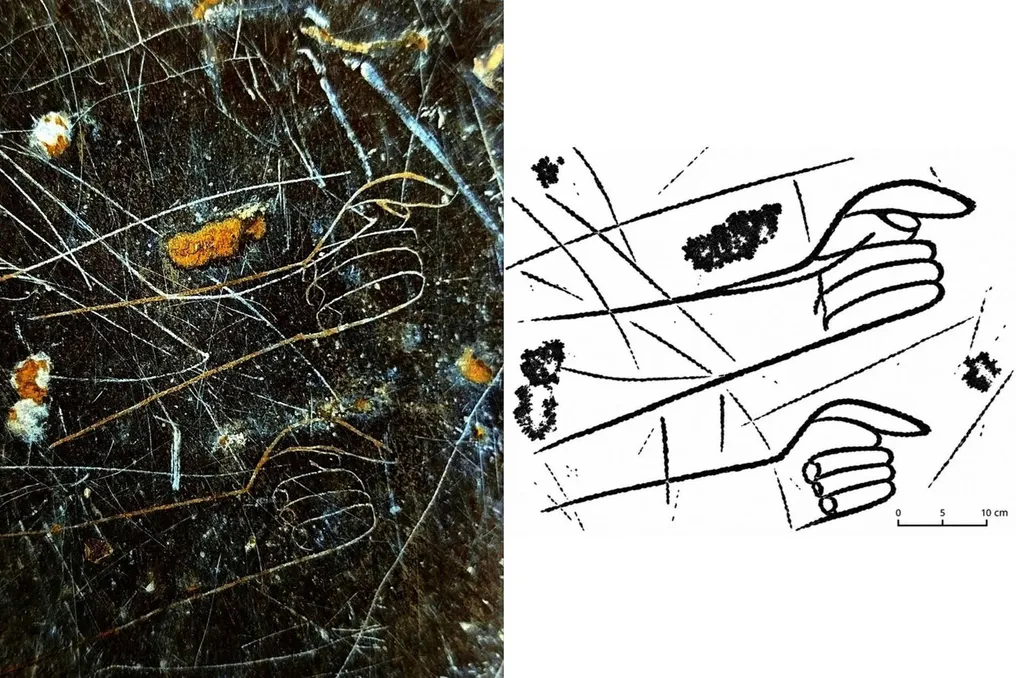
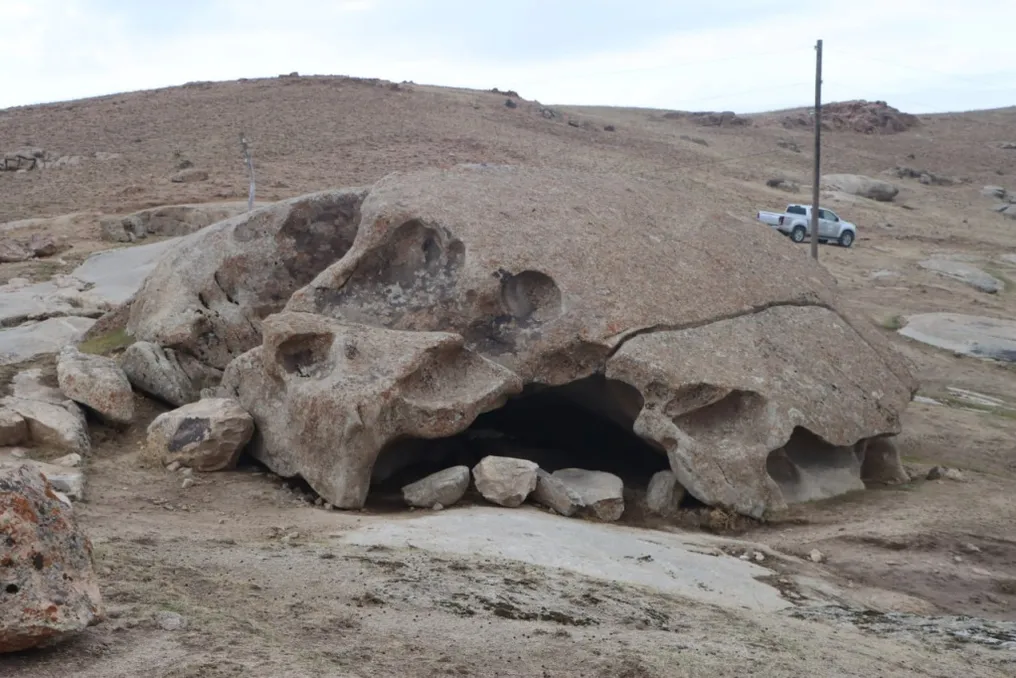
Archaeologists have discovered previously undocumented rock carvings from the Sasanian era depicting human hands without any accompanying figures on the historical plain of Marvdasht in Fars province, southern Iran.

These unusual engravings were found near an inscription in Persian (Pahlavi) from the Sasanian period. They may shed light on ancient practices of prayer, oaths, and religious rituals.

Archaeologist and historian Abolhassan Atabaki reported this finding during current archaeological surveys and documentation on the Marvdasht plain, as reported by the Ana agency on Sunday.

He specified that the newly identified images are human hands along with parts of forearms, engraved directly onto the stone surface, without any other human figures. Their artistic style and visual features indicate that they belong to the Sasanian period (224–651 AD).

Atabaki noted that while hands often appear in Sasanian rock reliefs as symbols of respect and reverence, their isolated depiction also has precedents in seals and seal impressions from that period.

Examples held in the collections of the British Museum, Bandar Abbas, Takht-e Soleyman, Tell Abu Shaaf in Iraq, and the University of California, Berkeley, demonstrate that Sasanian artists sometimes depicted hands independently of other parts of the human body.

Studies of Sasanian art suggest that the motif of the hand was associated with concepts such as greeting, benevolence, and kindness. In some cases, researchers have also hypothesized a connection to treaties, the deity Mithra, and religious ceremonies.

One notable example is a seal impression found at Takht-e Soleyman, which depicts a hand with the Pahlavi inscription 'abestan o yazdan', meaning 'appeal to the help of the gods.'

In this regard, historian Najmeh Ebrahimi stated that the available evidence suggests that the independent depiction of hands could have served as a symbolic way of expressing prayer, oaths, treaties, and good wishes.

She explained that since the hand plays a central role in performing such actions, its separate depiction could convey the intended meaning without the need to show the entire human figure.

Ebrahimi added that the rock drawings from Marvdasht might also have had a cultic character, possibly representing prayers or appeals for divine help. This interpretation is supported by the discovery of an inscription from the Sasanian period containing a prayer next to one of the hand images.

The depiction of a forearm section ending in a straight line, combined with the characteristic arrangement of fingers, gives the recently documented drawings particular archaeological and artistic significance. Researchers believe that further study and documentation will be required to more accurately determine the meaning and function of these unusual motifs.

Petroglyphs and Bronze Age Settlement Traces Discovered in Nurata Mountains
Read more
podrobno.uz

Petroglyphs and Bronze Age Settlement Traces Discovered in Nurata Mountains

Archaeologists have discovered petroglyphs, presumably created during the Mesolithic and Neolithic periods, as well as traces of a Bronze Age settlement in the Nurata mountain range. These findings were made during fieldwork in the Koshrabad district of the Samarkand region and will allow for a deeper study of how ancient people settled this region and their contacts with neighboring tribes.

In October, researchers from the Yakhye Gulomov Samarkand Archaeological Institute conducted surveys of the mountainous and foothill areas of this district. On the walls and ceilings of stone shelters in the locations of Egrizarsay, Khodzhasay (Badimin), Galajinsay, and Sumbulsay, which are part of the Akchabsay mahalla, investigators identified images executed with natural ochre. According to preliminary data, these drawings date back to the Mesolithic and Neolithic eras.

Furthermore, another significant discovery was made in the Pangat mahalla area. Archaeologists found and studied fragments of Bronze Age pottery in three different locations. At one site, located approximately 700–800 meters east of the village Kumolokli, specialists began trial excavations measuring 2 by 1 meter.

A cultural layer about sixty centimeters thick was revealed beneath the ground surface, serving as evidence of a Bronze Age settlement. During the excavations, a large number of pottery shards and bone remains were found. The discovered artifacts require further excavation work, as they may provide new information about the lifestyle, occupations, and daily life of the ancient inhabitants of the Nurata mountains.

The scientists intend to compare these findings with archaeological data obtained from other regions to gain a more complete understanding of the history of Nurata's settlement. It is worth noting that traces of a presumed palace of 8th-century rulers have previously been discovered in the Samarkand region.

Nine Ancient Indian Historical Monuments Older Than a Thousand Years That Retain Their Beauty
Read more
www.aajtak.in

Nine Ancient Indian Historical Monuments Older Than a Thousand Years That Retain Their Beauty

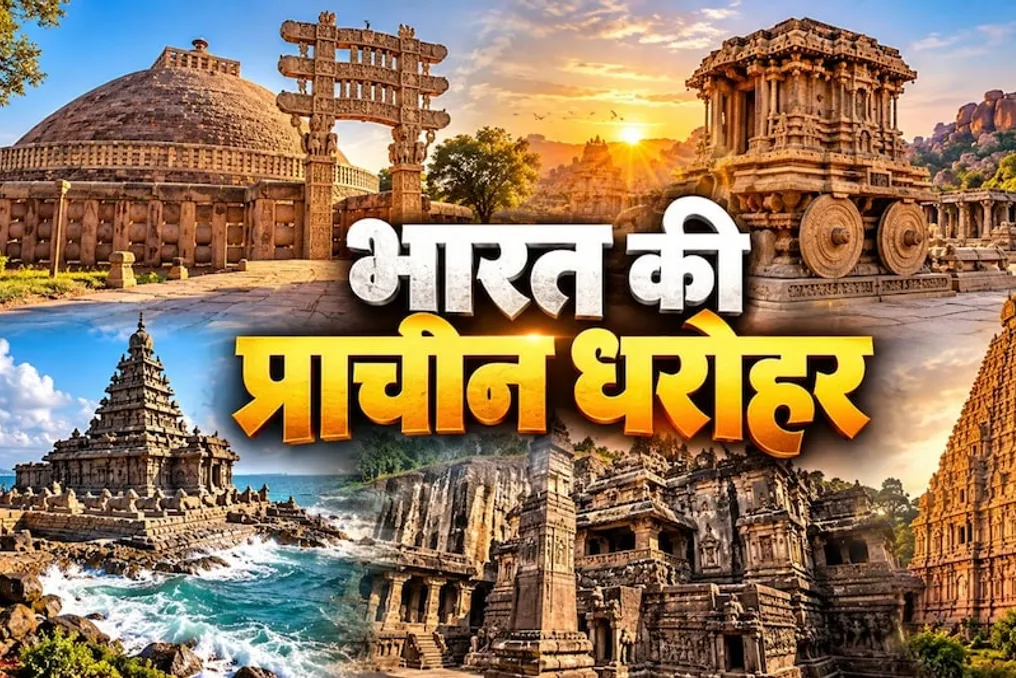
India is home to numerous sites renowned not only for their beauty but also for their long history. Ancient temples, massive stupas, and rock-cut caves are outstanding examples of Indian art and architecture. Notably, many of these monuments are older than a thousand years, yet they continue to impress visitors with their grandeur and unique design.

Detailed carvings on the walls, tall spires, and the finest craftsmanship demonstrate the skill of artisans from that era. Those interested in history and travel should learn about these historical structures of India. Some serve as major centers of religious faith, while others are known worldwide for their unique structure and historical significance. Let us examine eight such historical monuments of India.

Sanchi Great Stupa, Madhya Pradesh

The Great Stupa at Sanchi, located in Madhya Pradesh, is one of the oldest Buddhist monuments in India. Its construction began during the reign of Emperor Ashoka in the third century BCE. This stupa is known as a repository of relics associated with Buddha. The delicate carvings on its entrance gates attract tourists, offering an opportunity to study the history of Buddhism and ancient Indian art in detail.

Shore Temple, Mahabalipuram, Tamil Nadu

The Shore Temple, situated in Mahabalipuram, Tamil Nadu, dates back to the eighth century. It was built during the reign of the Pallava king Narasimhavarman II. Located on the coast of the Bay of Bengal, this temple is famous for its magnificent stone construction. It is considered one of the early stone temples of South India. This temple is included in the UNESCO World Heritage List and serves as a brilliant example of ancient Indian architecture.

Kailasa Mandir, Ellora, Maharashtra

The Kailasa Mandir in Ellora, Maharashtra, is famous for its unusual form. This temple, built in the eighth century, was created by carving out of a single giant rock. The temple is dedicated to the god Shiva, and its structure is believed to be inspired by Mount Kailash. The carvings on the walls, columns, and sculptures of the temple demonstrate the skill of ancient masters. The creation of such a temple from one enormous rock is an example of the amazing engineering of that time.

Hajuraho Temples, Madhya Pradesh

The temples in Khajuraho, Madhya Pradesh, were built during the Chandelas' rule, approximately between 950 and 1050 CE. These temples are known worldwide for their intricate sculpture and magnificent carvings. The stones depict scenes related to deities, dancers, and daily life. The art of these temples reflects the Indian culture, religious beliefs, and way of life of that period. Initially, there were about 85 temples here, of which about 25 have survived to this day.

Barabar Caves, Bihar

The Barabar Caves, located in Bihar, are considered among the oldest rock-cut structures in India. Their construction dates back to the third century BCE, during the Mauryan period. These caves were used by followers of the Ajivika sect. The granite walls and the smooth, glossy surface of the interiors are particularly valuable. Such precise work without the use of modern machinery testifies to the technical understanding of ancient India.

Brihadeeswarar Temple, Tamil Nadu

The Brihadeeswarar Temple in Thanjavur, Tamil Nadu, was completed around 1010 CE during the reign of the Chola emperor Rajaraja I. This temple is dedicated to the god Shiva and is known for its monumental structure. Its high vimana, or main spire, is visible from afar. A huge statue of Nandi is also located within the complex. Despite being over a thousand years old, religious rituals are still performed here.

Lingaraj Temple, Odisha

The Lingaraj Temple in Bhubaneswar, Odisha, is presumed to have been built in the 11th century. It is dedicated to the god Shiva and is a fine example of Kalinga architecture. The temple's tall spire and small shrines within the complex lend it beauty. The fine stone carving makes it unique. In addition to its religious significance, this temple reflects the ancient art and architectural style of Odisha.

Virupaksha Temple, Hampi, Karnataka

The construction of the Virupaksha Temple in Hampi, Karnataka, dates back to approximately the 7th century. It is dedicated to the form of Shiva Virupaksha. The temple's beauty is enhanced by a high entrance, mandapas with massive columns, and delicate sculptures. During the Vijayanagara Empire, the temple was expanded. It is important to note that religious services have been held here for centuries, and this temple is an integral part of Hampi's historical identity.

Badami Caves, Karnataka

The cave temples in Badami, Karnataka, were created between the sixth and seventh centuries. They are considered an example of the magnificent architecture of the Chalukya dynasty. These four caves, carved into red sandstone, contain sculptures belonging to Hinduism and Jainism. Among the main attractions are depictions of Nataraja Shiva and various forms of Vishnu.

Why Are These Ancient Indian Monuments So Important?

These historical monuments of India hold great significance...

Popular