Spacecraft crash, Mercury's disappearance, and El Niño record: Science and space events of the week
Read more
Olhar Digital
olhardigital.com.br

Spacecraft crash, Mercury's disappearance, and El Niño record: Science and space events of the week

This week, the global scientific community noted several significant events: the fall of a space telescope to Earth, the temporary disappearance of Mercury from the sky, and the achievement of a historical temperature record by the El Niño phenomenon. These events became among the main topics of recent days.

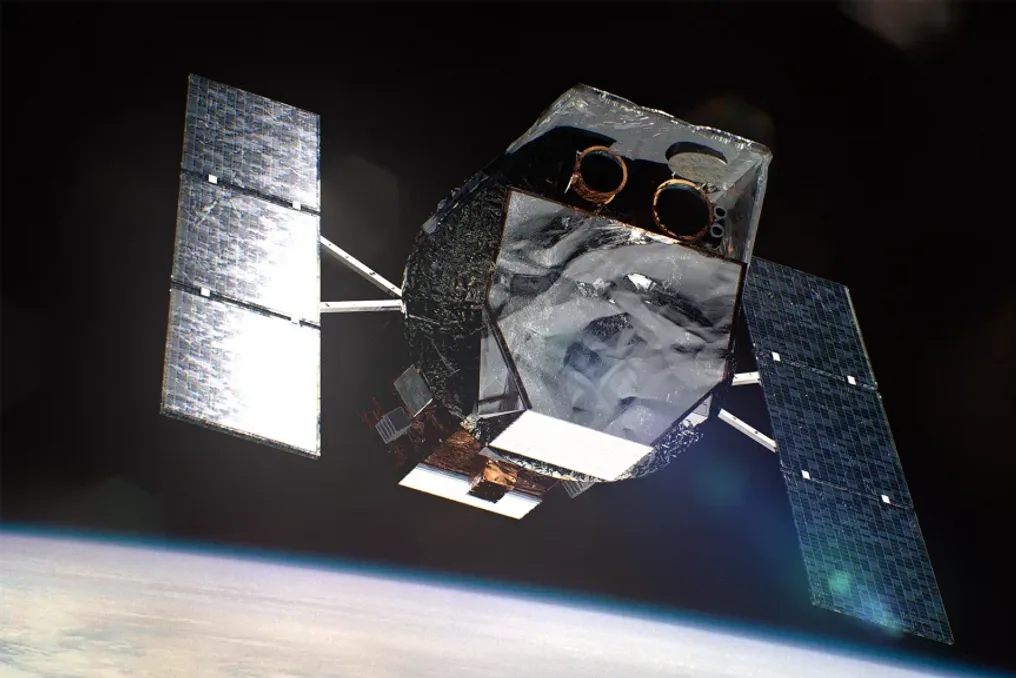
NASA's Swift Space Telescope completed its mission after operating for over two decades in Earth's orbit. On Thursday (the 4th), the spacecraft entered the Earth's atmosphere uncontrollably, three months after an unsuccessful rescue attempt by a private company.

This satellite, officially named the Neil Gehrels Swift Observatory, was launched in November 2004 to study gamma-ray bursts—one of the most powerful phenomena in the universe.

The interstellar comet 3I/ATLAS also attracted interest. Data obtained using NASA's James Webb Space Telescope showed that the object consists of ice grains mixed with dust, which differs from the composition of comets born in the Solar System.

This object, discovered near our system in July 2025, is only the third visitor from distant regions of the Milky Way observed by humanity after the flybys of asteroid 1I/’Oumuamua and comet 2I/Borisov. Due to this rarity, the global scientific community used Webb's infrared instruments to closely track the trajectory of this celestial body.

On Thursday (the 4th) at 11:20 AM Brazilian time, Mercury entered a phase astronomers call 'solar inferior conjunction.' It passed between the Earth and the Sun, approaching it by approximately 0.674 astronomical units (AU), which is about 100.8 million kilometers. This phenomenon occurs once per the planet's synodic cycle, which is 116 days.

During this conjunction, Mercury was only 0°22′ from the Sun. This proximity caused the intense light of the star to eclipse the planet, which was already becoming difficult to observe in recent days. This phase marked the 'disappearance' of Mercury in the night sky and its transition to a morning star in the coming weeks.

According to data from the National Institute of Meteorology (Inmet), as reported by Olhar Digital, El Niño reached a historical warming in October. The anomaly in the Niño 3.4 region reached 2.47 °C above the average, surpassing the October 1982 figure of 2.07 °C. Weekly measurements also set records: in the Niño 3 region, the temperature reached 3.7 °C above average in the last week of the month, beating the 1981 mark. In the Niño 1+2 zone, located near Peru and Ecuador, the difference was over 4.6 °C, matching the peak of June 1983.

When this phenomenon was confirmed in June of this year, the World Meteorological Organization (WMO) was already pointing to a high probability of intensification. In an interview with Olhar Digital, then-climatologist Carlos Nobre, a meteorology doctor from the Massachusetts Institute of Technology (MIT) in the USA and an international authority on global warming, warned about the seriousness of the potential 'Super El Niño' scenario.

Similar stories

Brazilian wins scientific award; record greenhouse gas levels and fireball forecast for Halloween
Read more
olhardigital.com.br

Brazilian wins scientific award; record greenhouse gas levels and fireball forecast for Halloween

The week featured several scientific and news highlights. Politically, Luiz Inácio Lula da Silva was re-elected as President of Brazil, and Olhar Digital analyzed his government plan focused on science and technology.

On another front, the United States Department of Defense granted SpaceX access to confidential data tracking orbital objects. This agreement, signed between Elon Musk's company and the US Space Force, allowed a private entity enhanced access to the US Space Command's High Precision Catalog, which monitors bodies in orbit, sparking discussions about national security and the company's role in commercial space traffic.

In the field of scientific communication, biomedical engineer Daniel Dahis was honored with the Eric and Wendy Schmidt Awards for Excellence in Science Communication. He is the first Brazilian to receive this award, granted by the National Academies of Sciences, Engineering, and Medicine of the United States (NASEM), with the announcement made on Monday (26).

This award aims to value professionals who make science accessible to the public. In the 2026 edition, 24 individuals were honored across eight distinct categories, encompassing researchers, journalists, and content creators. Each category has a main winner, who receives US$ 40 thousand (approximately R$ 216 thousand), in addition to two recognized recipients each receiving US$ 20 thousand (about R$ 108 thousand).

Dahis received the award in the 'Research Scientist: Early Career' category, designated for scientists in the early stages of their careers. His recognition highlights the science outreach work he conducts on social media, where he has over 750 thousand followers, sharing videos on topics such as vaccines, diseases, treatments, and recent discoveries.

Regarding astronomical phenomena, intensely bright fireballs can be observed during Halloween. This event is linked to the Taurids, an annual meteor shower that attracts astronomers due to its visual spectacle and the potential presence of larger fragments.

The Taurids are segmented into two streams: the Southern Taurids and the Northern Taurids. The first occurs between September and November in the Southern Hemisphere, characterized by continuous activity and a low hourly rate of meteors. Its peak is predicted for Thursday (5), although observation depends on weather conditions, darkness, and the apparent position of the meteors. The second stream takes place between October and December, peaking in November, also showing a low hourly frequency but potentially surprising with very luminous fireballs.

The distinguishing feature of this shower is the fireballs, which are exceptionally bright meteors capable of surpassing the brightness of Venus and remaining visible longer than other light trails. Coinciding with the Halloween period, on October 31st, these flashes are known as Halloween fireballs.

Additionally, a report from the World Meteorological Organization (WMO), released on Tuesday (27), indicated that the concentration of greenhouse gases in the atmosphere reached record levels in 2025. This accumulation of gases intensifies heat retention on the planet, contributing to global warming.

Carbon dioxide (CO2) reached 426.8 parts per million, while methane and nitrous oxide also registered historical highs. The WMO projects that CO2 concentration will continue to rise throughout 2026.

Japan's Mars Mission, Orionids Meteor Shower, and Retrograde Mercury in This Week's Science News
Read more
olhardigital.com.br

Japan's Mars Mission, Orionids Meteor Shower, and Retrograde Mercury in This Week's Science News

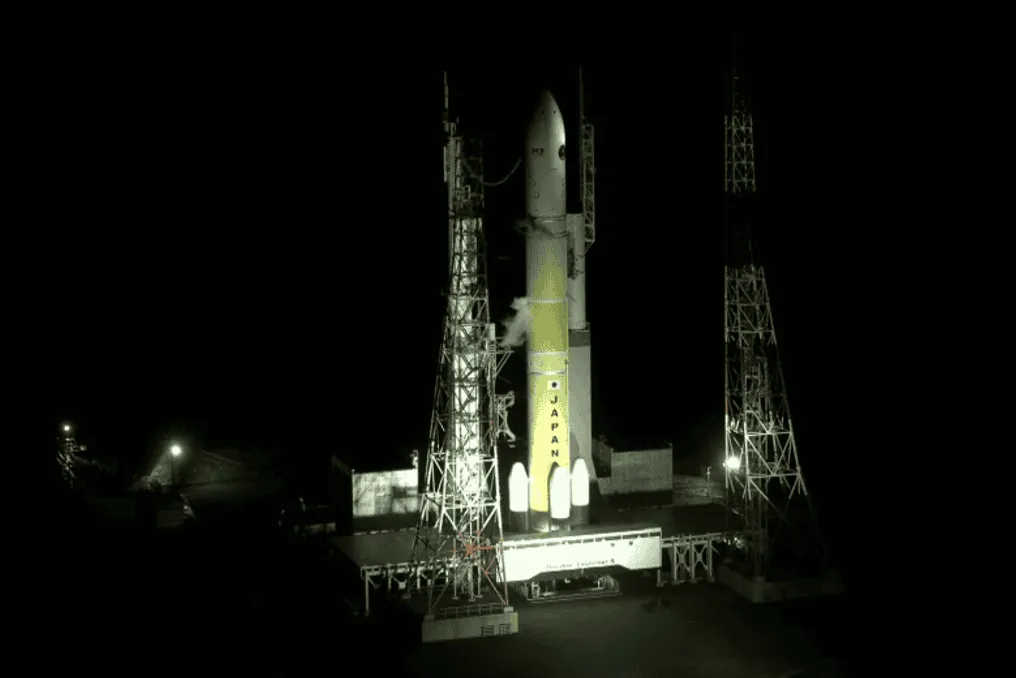
On Monday the 19th, an extremely important space mission aimed at Mars was launched. The goal of this mission is to deliver samples from one of Mars' moons back to Earth. The MMX probe (Mars Moon Exploration) launched from the H3 rocket at the Tanegashima Space Center in Japan, beginning an approximately five-year journey to study Phobos and Deimos, two natural satellites of the Red Planet.

The mission, led by the Japan Aerospace Exploration Agency (JAXA), plans to land on Phobos, collect at least ten grams of material from its surface, and return it to Earth. If all plans proceed as scheduled, the samples are expected to arrive in 2031, allowing for detailed analysis in ground laboratories.

NASA, European space agencies, and other institutions and companies are also participating in the project, responsible for developing and providing the scientific instruments and technologies necessary for the operation.

The Orionids meteor shower peaked between Thursday night (the 21st) and early Friday morning (the 22nd). This phenomenon occurs annually from October 2nd to November 7th, although the peak can vary year to year, falling between October 21st and 23rd. During this period, observers can expect to see between 10 and 20 meteors per hour.

This shower occurs when Earth passes through the debris trail left by Comet Halley, which traverses the inner solar system every 76 years. As these particles enter the Earth's atmosphere, they ignite, creating luminous trails known as meteors. The name 'Orionids' derives from the constellation Orion, the point in the sky from which these trails appear to originate, located near the star Betelgeuse.

The discovery of two statues belonging to one of Egypt's most long-lived and significant pharaohs has been made. The discovery was made by local worker Khaled El-Shahat, who found the remains on his property in the village of Behbait El-Hagar, in the Gharbia governorate.

Upon finding the fragments, Khaled notified the Egyptian Ministry of Tourism and Antiquities, which dispatched a team to the excavation site. This find was publicized last week in an organization's Facebook post.

The village of Behbait El-Hagar is part of an important archaeological site in Lower Egypt. Located on the bank of a Nile tributary, this site once housed a temple dedicated to Isis, one of the most revered goddesses of Ancient Egypt.

A Russian satellite conducted maneuvers to approach US commercial equipment that provides imagery to Ukraine. This movement raised suspicions among experts, who are considering the possibility of espionage or even an attack in orbit.

Identified as Cosmos 2612, the satellite is already moving away from ICEYE-X36. Although there is no confirmation of hostile intent, such proximity draws attention to the risks faced by commercial devices amid geopolitical conflicts between powers.

The final 'retrograde Mercury' of 2026 will begin this Saturday (the 24th). For those who believe in astrology, this term seems somewhat alarming, as beliefs suggest that this planetary movement exerts a turbulent energetic influence on various aspects of life.

Popular