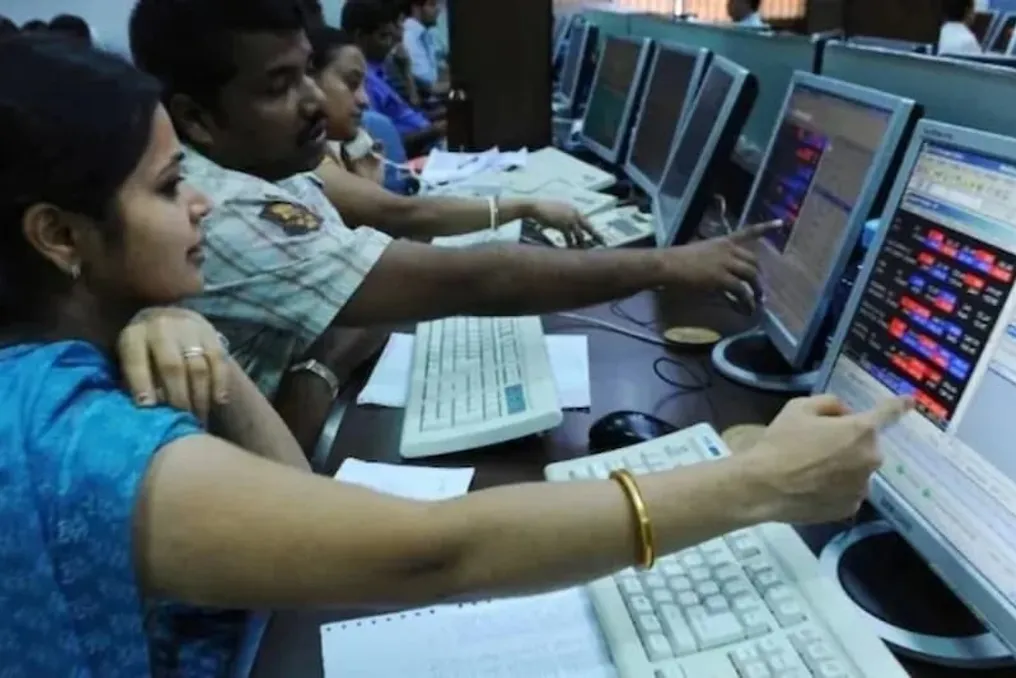
Muhurat Trading in Honor of Diwali to Take Place on November 8; Market Operating Hours Information
Read more
Aaj Tak
www.aajtak.in

Muhurat Trading in Honor of Diwali to Take Place on November 8; Market Operating Hours Information

Investors who traditionally buy stocks in honor of Diwali can take advantage of the trading opportunity on this festive day. Consequently, on November 8, Diwali day, the stock market will open for a limited time. Trading will continue on both the BSE and NSE, allowing investors to purchase desired shares.

Buying stocks during Diwali is considered auspicious because, according to the Hindu calendar, the New Year begins on this day. The trading Muhurat is held only once a year in honor of Diwali. As in previous years, this year's trading Muhurat will last for one hour. The BSE and NSE exchanges have provided information regarding the timing of this trading period.

Although the stock market is usually closed on Sundays, it will be open this time for the trading Muhurat because Diwali falls on a Sunday. The market will operate for only one hour: the trading Muhurat is scheduled from 14:20 to 15:30 on November 8, and the stock market will be available only during this interval.

The BSE and NSE exchanges will be closed on November 10 due to the Diwali-Bali Pratipada holiday. Additionally, on Tuesday, November 24, the stock markets will also be closed due to the Prakash Gurupurva festival.

Before Diwali, the stock market witnessed impressive growth. On November 6, Indian stock markets demonstrated an upward trend for the seventh consecutive day. The Nifty index closed at 25,030, showing a growth of 2.01 percent, or 493.75 points, while the Sensex finished trading at 81,028, increasing by 2.17 percent, or 1,718 points.
Similar stories

Indian stock market shows slowdown: Sensex and Nifty experience sharp decline amid global sell-off
Read more
www.aajtak.in

Indian stock market shows slowdown: Sensex and Nifty experience sharp decline amid global sell-off

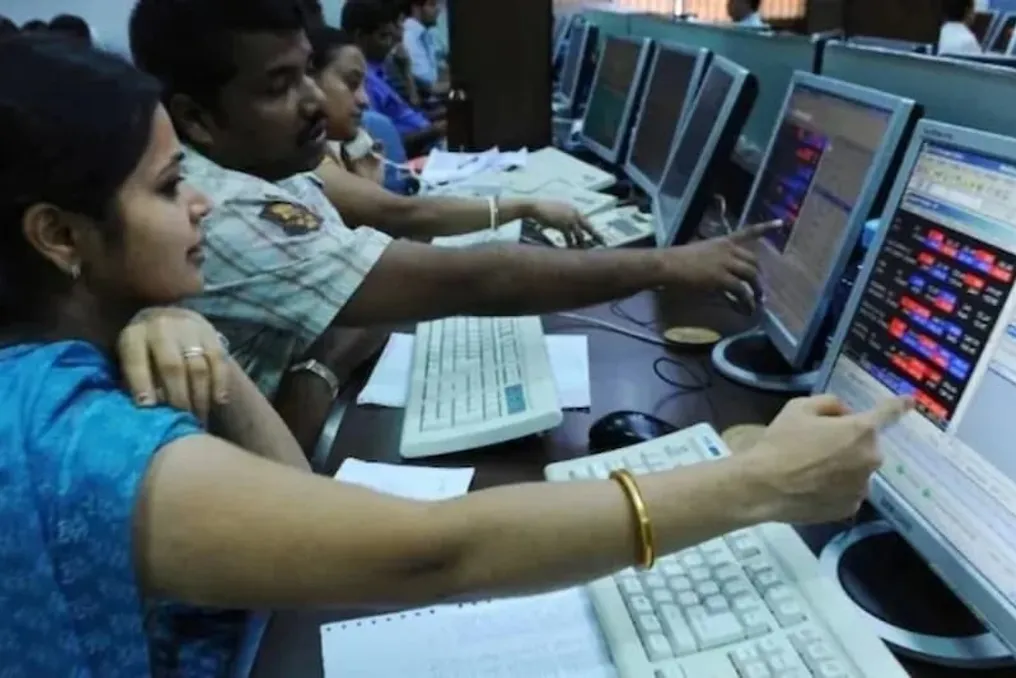
The Indian stock market started weakly on the last trading day of the week. Volatility was observed during the first hour of trading. The market initially showed a slight increase: Nifty 50 approached the 23,000 level, rising by approximately 50 points, and Sensex grew by more than 100 points, reaching around 74,500. However, Bank Nifty showed a drop of over 200 points. Shortly after this, Sensex and Nifty shifted from the green zone to the red.

Experts note that rising crude oil prices create difficulties for the market and limit the potential for sustainable growth. The market is being pressured by active selling in global technology stocks and rising oil prices. Nevertheless, purchases by domestic institutional investors provided some support to the market and helped prevent a more significant downturn.

Due to concerns about Houthi attacks on oil fields in Saudi Arabia, the price of Brent Crude exceeded $116 per barrel, and the price of West Texas Intermediate (WTI) Crude rose above $103 per barrel. Furthermore, reports have emerged about a possible start of US military action against Iran following the mid-November elections, which heightens geopolitical uncertainty.

Meanwhile, US benchmark indices NASDAQ and Dow Jones closed lower yesterday evening. Although selling by FIIs has recently weakened and periodic buying has been observed, the overall market situation does not look favorable for growth. For Nifty, the 23,000 level remains the most important; if the index strengthens above this level, the next target could be 23,200–23,250. Meanwhile, the zone of 22,650–22,700 may act as important support during a decline.

For maintaining weekly growth, it is critical that Nifty closes above the 22,600 mark, so investors are closely watching the market close on the last trading day of the week. Earlier, Bank Nifty closed near its daily high, which is considered a positive signal for the market. For the banking index, the 55,000 level is important; a breakthrough above it could simplify the path to 55,500, while support remains around 54,500. If Bank Nifty holds above this level, market stability may be maintained.

Attention will also be paid to the second-quarter results of companies, which may play an important role in determining the direction of the stock market. Second-quarter results for Reliance Industries and Jio Platforms will be announced today, and investors are awaiting the financial reports of these two companies. The financial results and management comments may influence stock movements in the next trading session, and fluctuations in stock prices will be monitored after the publication of quarterly reports, although the most significant results will appear after the market close.

Stock market crash preceded Jio's IPO: Sensex and Nifty indices fell, IT stocks suffered
Read more
www.aajtak.in

Stock market crash preceded Jio's IPO: Sensex and Nifty indices fell, IT stocks suffered

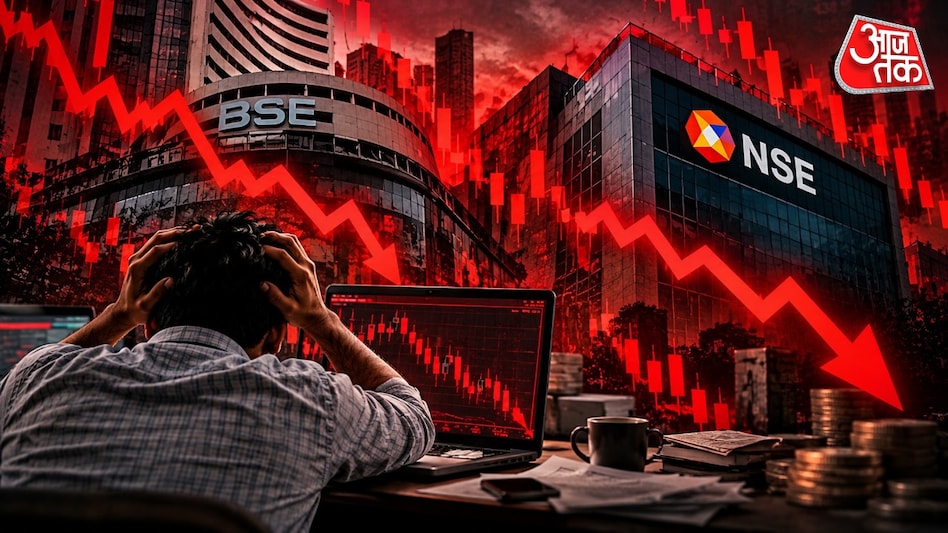
The stock market experienced another crash (Stock Market Crash). Tuesday, the third working day of the week, began with both market indices opening in a state of significant decline. The BSE Sensex index, comprising 30 stocks, started falling by more than 800 points, while the NSE Nifty showed a decline of over 200 points.

Of particular note is the fact that the listing of the country's largest IPO in history—Jio Platforms, owned by Mukesh Ambani—is planned for this same day. However, before this event, the market experienced a serious disruption that led to a sharp drop in the Sensex and Nifty. The strongest decline was recorded among IT sector stocks.

Under negative global signals, the market opened in the red zone. The BSE Sensex index, compared to the previous closing level of 73,598, dropped to 73,253 immediately after opening, and then lost 826 points just a few minutes later, reaching 72,872.

A similar panic was observed on the NSE Nifty. This index of 50 stocks opened in the negative relative to the previous close of 22,749, first reaching 22,678, and then, following the example of the Sensex, continued to fall, trading at 22,540 at the time of writing.

IT company stocks contributed the most to the stock market crash. During the initial trading period, IT stocks plummeted sharply: Infosys shares fell by 4.50%, Tech Mahindra shares by 3.50%, TCS by 3%, and HCL Tech by 2.50%. Additionally, other shares belonging to large companies also showed a decline: ITC Share fell by 2.20%, Bajaj Finserv Share by 2%, and ICICI Bank Share by 1.70%.

Sensex and Nifty stock indices experienced sharp fluctuations: strong growth followed a decline
Read more
www.aajtak.in

Sensex and Nifty stock indices experienced sharp fluctuations: strong growth followed a decline

Significant fluctuations were observed in the stock market on Monday. The start of trading surprised traders as both indices initially plummeted, but half an hour into the trading session, the situation changed drastically, and Sensex and Nifty began a rapid ascent, recovering from their fall.

The BSE Sensex, which opened at 72,990, fell compared to last Friday's close of 73,123, beginning its descent. In just five minutes, the index lost 609 points, reaching 72,514. However, after half an hour of trading, the direction of movement reversed, and the decline turned into a rise. By the time of writing, this index had risen by more than 360 points, trading at 73,491.

The NSE Nifty demonstrated similar dynamics. After an initial decrease, it also returned to a growth trajectory. This index, composed of 50 stocks, opened at 22,524, lower than the previous close of 22,600, and then dropped by 213 points to 22,387. Following the rise of the Sensex, it also started to grow, showing an increase of more than 60 points by the time of publication, trading at 22,659.

Popular