Exhibition at Uzbekistan's National Pavilion in Doha introduces traditions through miniature, glass, and Suzani
Read more
Gazeta.uz
gazeta.uz

Exhibition at Uzbekistan's National Pavilion in Doha introduces traditions through miniature, glass, and Suzani

The second Design Doha Biennial 2026 has launched in Doha, the capital of Qatar. The event is scheduled from November 5 to January 31, 2027. The central theme of the exhibition is the study of how accumulated knowledge, materials, and cultural traditions help to understand modernity and open new horizons for the future. Special emphasis is placed on craftsmanship as a way of transmitting experience between generations and on the interaction of different cultural and professional fields.

This international event has gathered representatives from over 50 countries. Among them, Uzbekistan presented its National Pavilion, located in the historic Fareej Al Asmak area, in a building stylized like a traditional house with an inner courtyard.

The participation of Uzbekistan in the biennial was organized by the Fund for the Development of Culture and Arts of Uzbekistan. For this fund, participation in the event not only means continuing cooperation with Qatari cultural institutions, which began in 2024, but also provides an opportunity to present Uzbek art, design, and crafts more widely on the world stage.

The National Pavilion features an exhibition titled 'Leaf from a Rose Garden,' which examines traditional Uzbek art as a 'living practice capable of developing through individual creative search.' The fund's press release indicates that the literary source for this project was the preface to a collection by the Persian poet Saadi, dated 1258. In this preface, the poet contrasts the garden created by words and impervious to the wind with the transience of cut flowers, which serves as a metaphor for living artistic heritage transforming from one form to another.

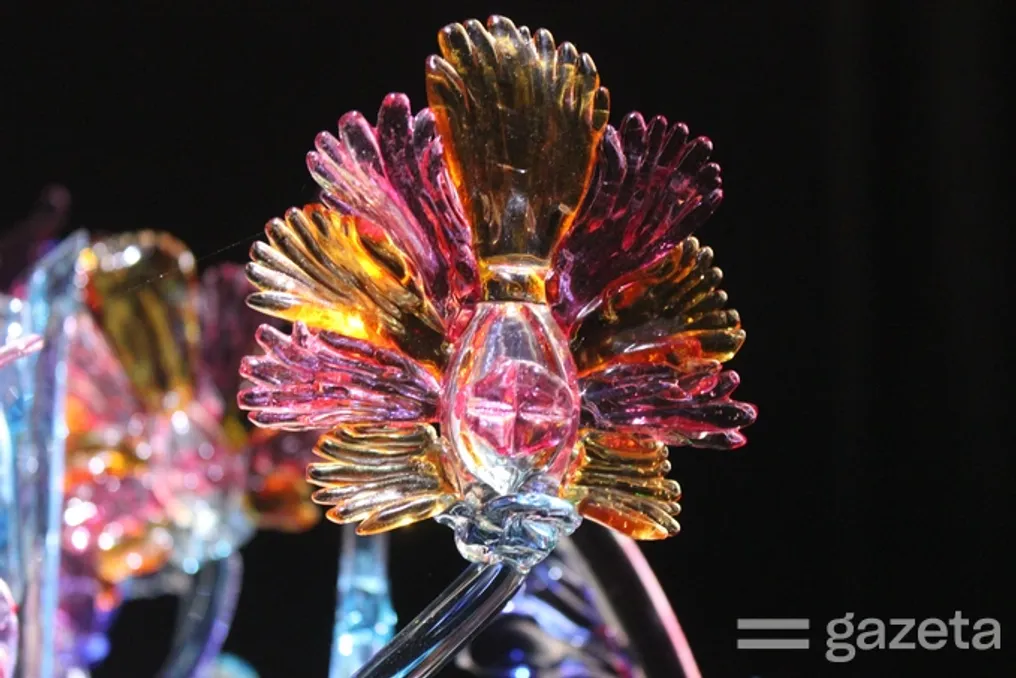
In this exposition, the floral motif is explored through three different materials: glass, thread, and pigment. Invited specialists are working with these materials: florist artist Ruben Saakyan, Suzani embroidery master Madina Kasimbayeva, and miniature painter Davlat Toshev.

Ruben Saakyan demonstrates the potential of Murano glass. His impressive installation, inspired by the traditions of Bukhara embroidery, includes over five hundred handmade glass items. Madina Kasimbayeva presents traditional Suzani embroidery, which takes on a new dimension thanks to her unique approach to composition and scale. Davlat Toshev focuses on the traditions of Bukhara miniature painting and the Ebru technique, which involves creating patterns on water and subsequently transferring them onto paper.

Within the exhibition, glass functions as a separate artistic language complementing the other two techniques. The joint works of these three artists illustrate how the same image can receive many different interpretations depending on the chosen material and creative concept.

During the biennial, Madina Kasimbayeva and Davlat Toshev will organize informal meetings. During these meetings, visitors will be able to observe the artists' working process and learn more deeply about the methods of traditional miniature painting and Suzani embroidery.

The biennial in Doha is held every two years. In 2024, 74 designers from MENA countries (Middle East and North Africa), as well as foreign studios and creative professionals, attended this cultural event. In 2026, the circle of participants expanded to include creative figures from South Asia, changing the format of regional participants to MENASA.
Similar stories

Exhibition 'Levitation' held in Tashkent dedicated to the memory of sculptor Bayat Mukhtarov
Read more
gazeta.uz

Exhibition 'Levitation' held in Tashkent dedicated to the memory of sculptor Bayat Mukhtarov

The exhibition titled 'Levitation' was held at the Uzbekistan National Museum of Fine Arts (NBU) in memory of the Uzbek sculptor Bayat Mukhtarov, who lived from 1946 to 2015. The exposition showcases works created by the artist in the final years of his life, during which he sought to move away from traditional concepts of sculpture.

The exhibition features works from the collection of the National Bank of Uzbekistan, as well as from the artist's private collection, provided by his relatives. Bayat Mukhtarov was born in Andijan, but his personality developed in Tashkent. In 1979, he studied at the Tashkent Theatre and Art Institute, specializing in monumental and decorative plasticity.

Nevertheless, in his creative process, the sculptor consciously refused to adhere to academic standards. He was interested in non-standard forms and avant-garde approaches. As recalled by his classmate Ludvig Nesterovich, Bayat always possessed a spirit of freedom and disliked naturalistic copying, preferring to find new methods of expressing thoughts through composition, combining various materials, and using symbolic imagery.

After graduating from the institute, when the demands for realistic portraits lessened, Mukhtarov began working in his own unique style. Ludvig Nesterovich notes that the value of his work lies precisely in this individuality, in being unlike others.

One of the significant influences on Bayat Mukhtarov was the British sculptor Henry Moore, known for his monumental semi-abstract figures. Mukhtarov was attracted to the expressiveness of unusual forms, and according to Nesterovich, he saw energy and monumentality in Moore's works even where proportions might seem incorrect or the solution quite simple. However, Mukhtarov never copied others' methods, striving to create his own artistic language.

Literature and philosophy also played an important role in Mukhtarov's life. Among his favorite authors were Kant, Hegel, Hemingway, Vonnegut, Bradbury, Lao Tzu, and Confucius. Marina Borodina, a sculptor, emphasizes that, like many members of his generation, the artist was fascinated by science fiction, and this interest was reflected in his works. Fantastic and mythological plots served as a tool for discussing the real world and its potential.

Marina Borodina notes that in Mukhtarov's works, Eastern Islamic art, classical American literature, and philosophy are uniquely combined. Islamic art often features the fragmentation of large surfaces into numerous small details, which removes weight from the volume and creates a sense of dissolution in space. The artist achieved a similar effect by using details to impart a light feeling. He avoided precise anatomical depiction, allowing figures to be guessed at through silhouettes and motifs, which attests to the artist's broad scope in culture and history.

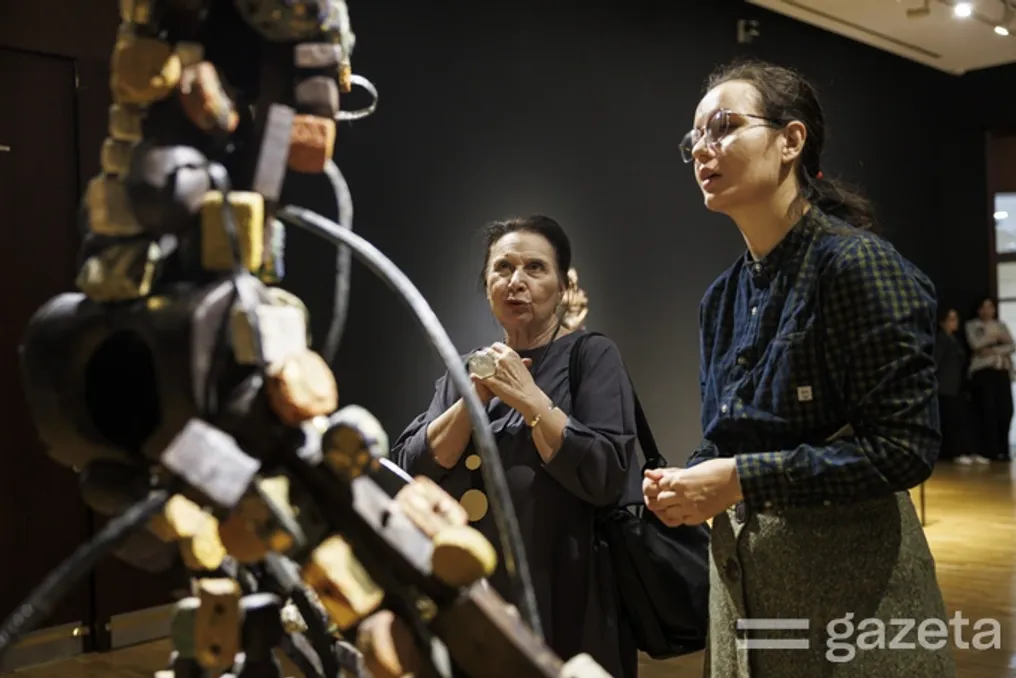
Mukhtarov worked with diverse materials, including metal, stone, ceramics, glass, enamel, and sand. In his layered compositions, rough textures are placed next to shiny metallic elements and colored inserts. Individual components retain their independence and are not mixed into a single mass.

Borodina explains that, unlike academic sculpture, which is based on power and monumentality, Mukhtarov dismantled these canons, striving to give the sculpture an almost weightless appearance. Even heavy metal in his works seems to 'float' in space due to his unconventional approach to materials, allowing him to create a multilayered synthesis that is relevant today.

The name of the exhibition is directly related to the central work—a sculpture from 2009 made of wood, metal, and enamel. This sculpture lacks a single solid volume. Its core consists of wooden beams and plates, metal details, and blue-and-white enamel fragments. The composition is framed by metal arches that freely curve around it and extend beyond its boundaries. The space between the elements allows the viewer to see through the sculpture, and the open structure creates a sense of movement and lightness.

Ludvig Nesterovich believes that the title reflects not only the visual impression of the work but also the inner state of the artist during its creation, comparing it to a state of 'floating.' He asserts that Mukhtarov's works evoke such otherworldly sensations.

In addition to sculptures, the exhibition also features relief canvases. Marina Borodina shares that the artist initially found the image in graphic works and only later transferred it to three-dimensional space. Over time, the drawing acquired independent value.

Borodina concludes that Mukhtarov's works require careful study. Initially, the viewer's attention is drawn to individual details—be it the curve of metal, a fragment of wood, a colored insert, or an image on a panel. Then, these details come together to form an image that can transform when viewed from different angles. Mukhtarov's example demonstrates that there is no need to follow established rules in art; one can find their own path and create something original.

The 'Levitation' exhibition will be available until November 14th. The gallery operates from Tuesday to Saturday from ten in the morning to six in the evening, and entry to the exhibition is paid.

TMoCA Exhibition Explores the Representation and Conceptualization of Iran in Artworks
Read more
www.tehrantimes.com

TMoCA Exhibition Explores the Representation and Conceptualization of Iran in Artworks

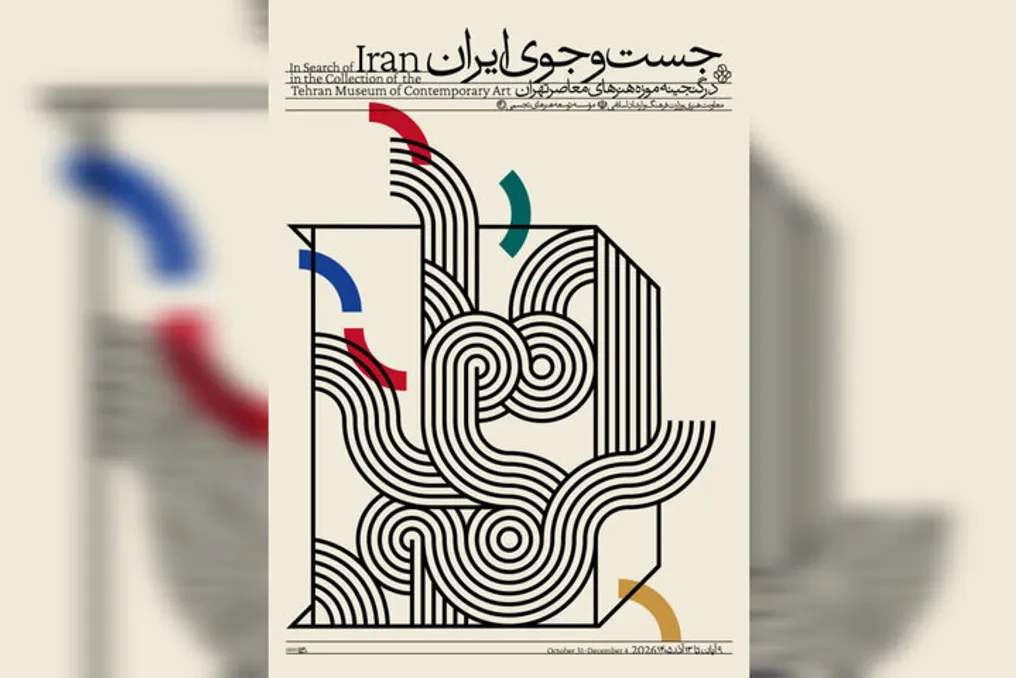
The Tehran Museum of Modern Art (TMoCA) will present an exhibition titled 'In Search of Iran: From the Collection of the Tehran Museum of Modern Art,' which opens on Saturday afternoon. According to Mehr, the exposition analyzes how the concept of 'Iran' is presented and understood through the lens of works by various artists held in TMoCA.

The exhibition touches upon the national significance of the TMoCA collection in the history of modern Iranian art, examining the diverse ways in which artists experience and interpret 'Iran.' A statement for the exhibition reads: 'We are not asking which work is more Iranian; rather, we are asking how Iran has served as an object of vision and representation, and how it persists in modes of seeing and creation. The exploration of Iranian identity in this exhibition begins with the unique experience of the artists—an experience that is sometimes explicitly the subject of the work, and sometimes manifests in the style of expression and construction. Belonging to Iran can be accompanied by memories of place, daily life, migration, or a sense of loss, taking various forms in each artist's work.'

'The 'In Search of Iran' exhibition invites the viewer to reconsider their own perception of Iran when encountering these works. In these pieces, the soil sometimes becomes the material of the work itself, writing transforms into a mode of seeing, and objects retain traces of life and human memory. The presence of familiar symbols does not predetermine the meaning of the work, just as their absence does not necessarily imply a detachment from the Iranian experience.'

The exposition is divided into seven sections, each curated around a specific question, offering the viewer parallel paths for interpreting the artworks. These paths do not follow the chronological sequence of art history; instead, visual and conceptual connections between the works allow for exposure to different interpretations. From this perspective, no single landscape, face, or motif serves as the sole representative of the Iranian experience.

More than one hundred pieces from the collection of modern Iranian art will be featured in the exhibition, including works by artists such as Sohrab Sepehri, Parviz Tanavoli, Parviz Kalantari, Hossein Zenderoudi, Farah Osuli, Reza Maafi, Mohammad Ehsaei, Bahman Mohasses, and others. The exhibition will be open to the public from Sunday until mid-December.

Founded in 1977, the museum houses over 4000 exhibits, including world-class Iranian, European, and American paintings, engravings, drawings, and sculptures from the 19th and 20th centuries. As the largest collection of Western art in the East, it encompasses works from almost all artistic periods and movements.

The museum was designed by Iranian architect Kamran Dibay, who incorporated elements of traditional Persian architecture. The building itself can be seen as an example of contemporary art in the style of the underground Guggenheim museum. Most of the museum grounds are underground, featuring a circular path descending below and galleries branching outwards. In the museum gardens, Western sculptures by artists such as Ernst, Giacometti, Magritte, and Moore can be found.

Popular