Recipe for Famous Mawa Kachori from Jodhpur: A Festive Dessert
Read more
Aaj Tak
www.aajtak.in

Recipe for Famous Mawa Kachori from Jodhpur: A Festive Dessert

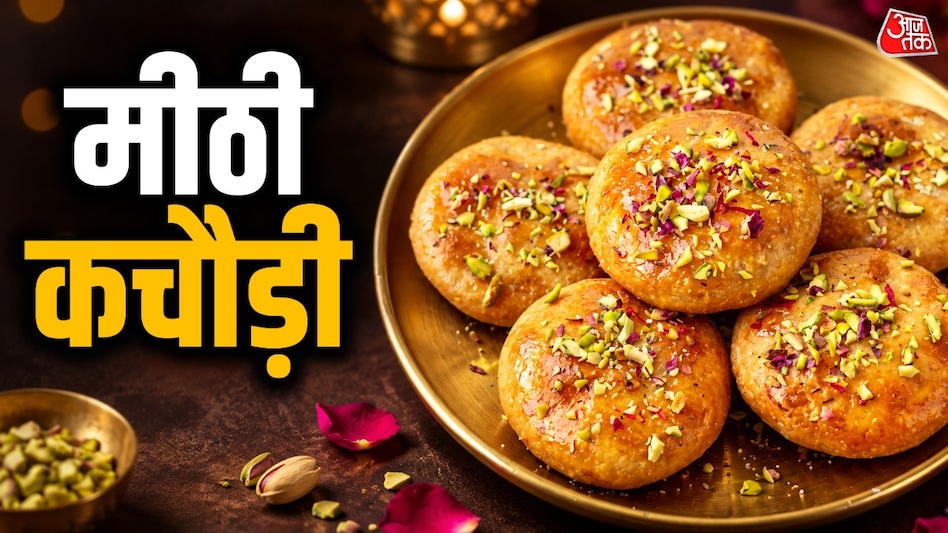
The famous Mawa Kachori from Jodhpur is a sweet treat that might appeal to everyone. This kachori is distinguished by its crispy outer shell and a sweet filling of mawa and dried fruits inside. It can be easily prepared at home for holidays or any other special occasion.

Although the word 'kachori' is often associated with spicy and savory dishes, it is worth trying the sweet version—the famous Mawa Kachori from Rajasthan. This dessert is very popular due to its unique taste. It has a crispy outer crust and is filled with the aroma of mawa, dried fruits, and cardamom, making it incredibly delicious.

The preparation involves filling dough made from flour with a sweet filling of mawa and nuts. The item is then deep-fried in ghee until golden and crispy, after which it is dipped into a sweet syrup. Whether you are celebrating a holiday or simply gathering with family, you can prepare this dessert to treat your guests. The advantage of this recipe is that it requires not many ingredients to make.

To begin, mix flour, clarified butter (desi ghee), and a pinch of salt in a large bowl. Then, gradually add water as needed to knead a firm dough. The dough should be covered and allowed to rest for about 10 minutes.

Next, in a separate bowl, thoroughly crush the mawa. Add almonds, pistachios, raisins, cardamom powder, sugar, and saffron to it. After mixing, you get the sweet filling for the Mawa Kachori.

Small balls are formed from the dough and slightly rolled out. The mawa filling is placed in the center, and then the edges are carefully joined and sealed tightly. The kachoris are shaped by gently pressing them so that the filling does not leak out during frying.

After this, clarified butter is heated in a pot. When the oil is hot, the kachoris are dropped into it over low heat and turned until they become golden and crispy. The finished items are placed on a plate.

To make the syrup, sugar and water are boiled in a pan for about 7-8 minutes. When the syrup is ready, saffron is added to it. Finally, the finished Mawa Kachoris are placed on a plate and drizzled with the syrup. It is advisable to garnish them with sliced almonds and pistachios. Thus, the famous sweet Mawa Kachori from Jodhpur is ready to be served to guests or family members, allowing them to enjoy the sweetness of Rajasthan.

Similar stories

Rajasthani Mawa Bati Recipe: A Traditional Diwali Sweet Treat
Read more
www.aajtak.in

Rajasthani Mawa Bati Recipe: A Traditional Diwali Sweet Treat

During the Diwali festival, there is an inevitable desire to fill the home with the aromas of sweets. Although many people buy various sweets from stores, the taste of homemade baking remains unparalleled. In every city, something special is prepared during Diwali, and in Rajasthan, Mawa Bati holds a special place, often being made for any celebration.

Mawa Bati is a dessert that you want to repeat after the first taste. It is characterized by a crispy outer shell and a soft filling inside. Thanks to the sweet filling made of mawa, dried fruits, and syrup, this dessert becomes truly special. Below is a simple recipe for making Mawa Bati at home, similar to how professional pastry chefs do it.

For preparing the dough for Bati:

For the filling:

For making the syrup:

First, take flour (maida) into a large bowl. Add ghee and a pinch of salt, mixing thoroughly. Then, gradually add water and knead a firm dough. It is important not to make the dough too soft, otherwise the Bati may crack when frying. Cover the finished dough and let it rest for 15–20 minutes.

In a pan, heat a little ghee and fry the mawa on low heat. When the mawa acquires a light golden hue, turn off the heat and let it cool. After that, add sugar, chopped almonds, cashews, raisins, and cardamom powder to the mawa, mixing all ingredients thoroughly. This results in a delicious mawa filling.

Small balls are formed from the kneaded dough. Each ball is lightly rolled with the palm and the prepared mawa filling is placed in the center. Then, the edges are carefully pinched to give the Bati a round shape. It is necessary to ensure that the dough completely covers the filling so that it does not leak out during frying.

Heat ghee in a pan, but it should not be too hot. The ready Batis are placed in the oil and fried over low heat until they become golden and crispy. The Batis are occasionally turned over to cook evenly inside.

In another vessel, heat sugar and water. Boil the mixture until a one-thread syrup is obtained. Cardamom powder is added to this syrup, and the heat is turned off. The hot Batis are then dipped into the slightly warm syrup and left there for a few minutes. After that, they are removed and served on a plate, garnished with sliced almonds and pistachios.

Rajasthani Kadhi Pakora Recipe: A Dish That Pairs Perfectly With Rice or Flatbreads
Read more
www.aajtak.in

Rajasthani Kadhi Pakora Recipe: A Dish That Pairs Perfectly With Rice or Flatbreads

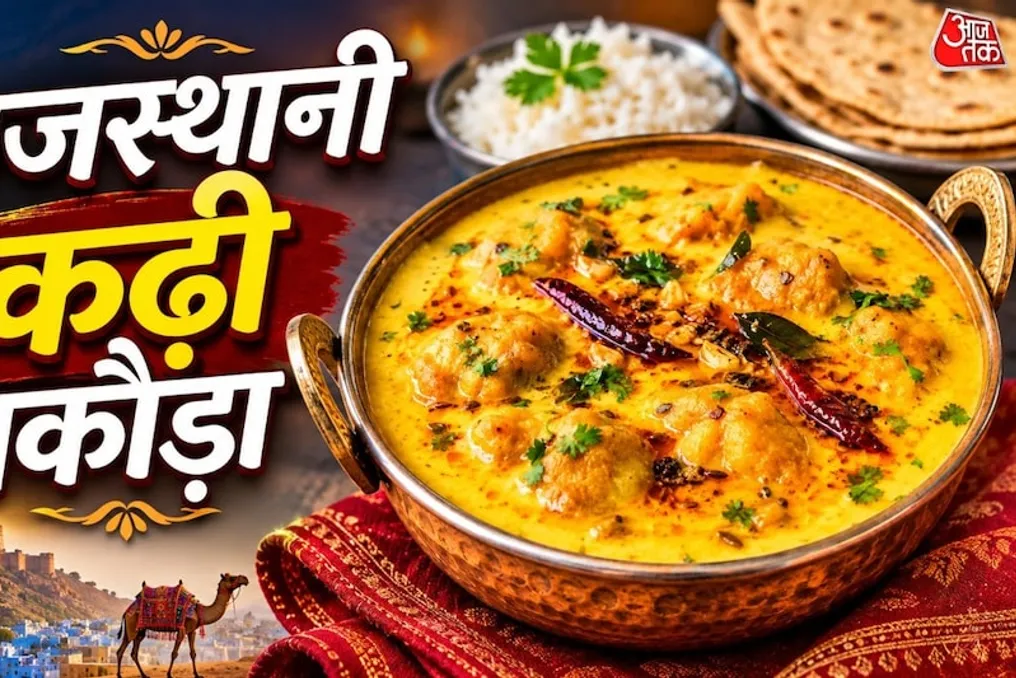
Kadhi is one of the favorite dishes in Indian homes, traditionally served either with rice or hot flatbread. Although each region has its own method of preparing kadhi and its own flavor characteristics, Rajasthani Kadhi Pakoda is distinguished by its unique taste and aroma of spices.

In this recipe, the kadhi is made from sour yogurt and chickpea flour (besan) and is cooked with spices. Then, small besan pakoras are added to it. The final touch is provided by garlic, dried red chili, and ghee.

If you want to diversify your menu by moving away from ordinary vegetable dishes and dal, you can prepare Rajasthani Kadhi Pakoda at home.

Rajasthani Kadhi Pakoda Recipe

To begin, sift a large amount of chickpea flour (besan) into a large bowl. Add the sour yogurt to this flour and whisk thoroughly, ensuring that no lumps remain in the mixture. Then, add two cups of water and stir again. After that, incorporate turmeric, red pepper powder, coriander powder, asafoetida (hing), and salt, mixing all ingredients well. The consistency of the mixture should be neither too thick nor too thin.

Heat a deep pot on the stove and pour in the ghee. When the oil heats up, add cumin seeds (rai) and cumin (jeera). As soon as they start sizzling, add bay leaves, cloves, cardamom, cinnamon, and whole black peppercorns. After a few seconds, sauté the ginger and green chili. If curry leaves are used, add them at this time as well. All these components are fried for about a minute.

Then, gradually pour the prepared chickpea flour and yogurt mixture into the pot, stirring constantly to prevent lumps from forming. Add a little water as needed and cook over medium heat. When the kadhi boils, reduce the heat. Cook it for about 5-10 minutes, stirring occasionally so that the besan does not stick to the bottom. It must be cooked until the raw taste of the besan completely disappears.

Preparing the Pakoras

While the kadhi is cooking, prepare the pakoras. For this, put chickpea flour, red pepper powder, turmeric, ajwain (fennel), cumin, and salt into a bowl, mixing them. Then, add ghee and gradually pour in water to obtain a thick batter. It is important that this batter is not too runny.

In another pot, heat oil. When the oil reaches medium temperature, add the chickpea batter in small portions. Fry the pakoras until golden and crispy, then remove them and place them on a plate.

When the kadhi is completely ready, add the prepared pakoras to it. Gently stir with a spoon so that the pakoras do not fall apart. Then, leave it on low heat for a few more minutes. This will allow the pakoras to absorb the flavor of the kadhi and become soft inside. If the kadhi becomes too thick, a little hot water can be added.

Adding Garlic Flavor

To enhance the taste of Rajasthani Kadhi Pakoda, a garlic sauce is prepared at the end. For this, heat ghee in a small pot. Add slightly crushed garlic to it and fry until golden brown. Then, add whole dried red chilies and cook for a few seconds. Reduce the heat and immediately mix in the red pepper powder, ensuring that the chili does not burn. The finished sauce is immediately poured over the kadhi.

Rajasthani Kadhi Pakoda is ready. Garnish with finely chopped fresh cilantro. It is served hot with plain rice or cumin rice; it can also be enjoyed with flatbreads.

Bengali Basanti Pulao Recipe: A Traditional Festive Dish
Read more
www.aajtak.in

Bengali Basanti Pulao Recipe: A Traditional Festive Dish

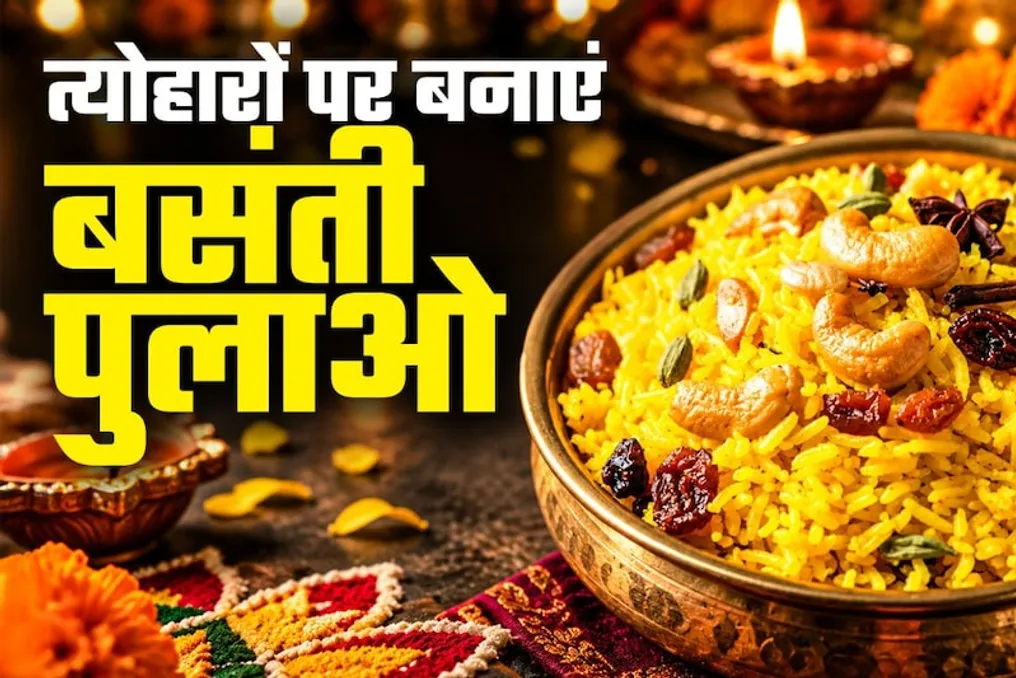
During festive periods, various dishes such as puri and kachori are traditionally prepared. However, if you wish to delight guests and family with something more exquisite, you should try the famous and traditional Bengali dish—Basanti Pulao.

This yellow, slightly sweet rice is made from aromatic Gobindobhog rice, using coconut oil, a pinch of turmeric, saffron, and plenty of nuts. Its distinctive aroma makes it very appealing, and it is traditionally served at celebrations such as Durga Puja, Diwali, and any other significant event.

Ingredients needed include: 1 cup of Gobindobhog rice (or small-grained basmati pieces), 2 tablespoons of pure coconut oil, 1/2 teaspoon of turmeric powder, 1/2 inch of grated ginger, 2 tablespoons of sugar (to taste), 1/2 teaspoon of garam masala powder, and salt to taste; 8-10 strands of saffron (soaked in 2 tablespoons of warm milk); whole spices (1 bay leaf, 2 green cardamom pods, 1 cinnamon stick, 4-5 cloves); 10-12 cashews and 10-12 raisins.

First, the rice must be washed and spread on a cotton cloth to dry for 15-20 minutes. Then, in one bowl, mix the rice with turmeric, ginger paste, garam masala, 1 tablespoon of coconut oil, and a small amount of salt, thoroughly mixing by hand. Cover this mixture and let it sit for 20 minutes so that the color and flavor penetrate the rice evenly.

In a frying pan or pot, heat 1 tablespoon of coconut oil. Fry the cashews and raisins in this oil until lightly golden, then transfer them to a plate. In the same oil, fry the whole spices (bay leaf, cardamom, cloves, cinnamon) until fragrant. Next, add the marinated rice to the pan and sauté over low heat for 2-3 minutes, stirring gently.

After this, add 2 cups of warm water (twice the amount of rice) and the soaked saffron to the rice. Cover the pan and simmer over low heat for 10-12 minutes, until 80% of the water has evaporated. When most of the water has gone, top with the fried cashews, raisins, and sugar. Gently stir, cover again, and let it steep over very low heat for another 5 minutes. After turning off the heat, leave the pot covered for another 5 minutes to ensure the rice is fluffy. The finished, aromatic, tender, and delicious Bengali Basanti Pulao is best served hot, for example, with potato or eggplant curry.

Popular