China calls on the US for mutual concession to stabilize and improve trade relations
Read more
CGTN
cgtn.com

China calls on the US for mutual concession to stabilize and improve trade relations

A spokesperson for China's Ministry of Foreign Affairs, Guo Jiakun, stated on Friday that sustainable growth in economic and trade ties between China and the United States serves the interests of both countries and their populations, and also contributes to the development of the global economy.

Guo emphasized that China and the United States must find a compromise, adhere to an approach that is mutually beneficial and advantageous, and strive for continuous, stable, and improving bilateral economic and trade relations.

Similar stories

GST Rules for Gold Jewelry: Single Rate on Full Product Value
Read more
www.aajtak.in

GST Rules for Gold Jewelry: Single Rate on Full Product Value

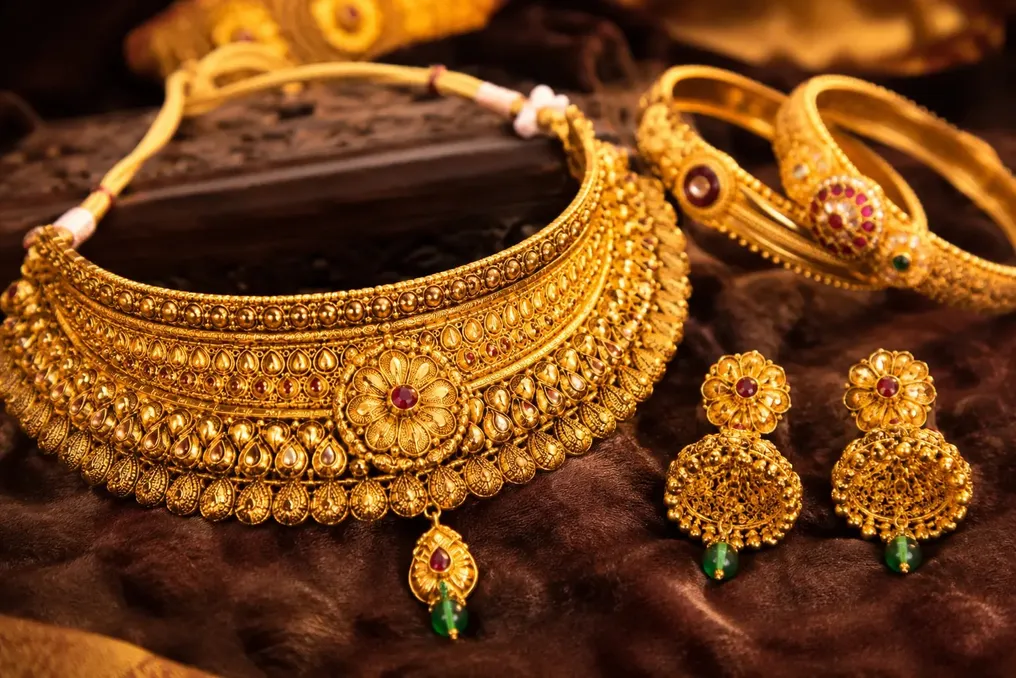
Many buyers assume that different tax rates apply to the cost of gold and the making charge when purchasing gold items, under the Goods and Services Tax (GST). However, current government regulations stipulate otherwise. When purchasing finished items made of gold, silver, or diamonds in a store, the GST is applied at a single rate on the total value. Even if the making charge is listed separately on the bill, the tax rate does not change.

Let's examine how the tax is calculated when buying jewelry. For instance, if a gold chain costing ₹1,40,000 was purchased, including gold worth ₹1,28,000 and a making charge of ₹12,000, then according to the rules, 3% GST will be levied on the entire amount. Thus, the tax amount will be ₹4,200. The tax is not calculated using separate rates for the gold value and the making charge.

Some customers mistakenly believe that a 3% rate should apply to the gold value, and a 5% rate to the making charge. Nevertheless, the GST rules clearly state that 3% GST is charged on the total value of the jewelry transaction. Regardless of whether the making charge is included in the total price or listed separately on the bill, the GST rate remains unchanged.

If the tax were calculated using different rates for the same chain costing ₹1,40,000, a different amount would result. Applying 3% GST to the gold value (₹1,28,000) yields ₹3,840, while applying 5% GST to the making charge (₹12,000) results in ₹600. The sum of these two taxes would be ₹4,440. However, the correct tax, calculated on the full product value including gold and making charge at a 3% rate, is ₹4,200. Consequently, if a jeweler levies taxes using separate rates for gold and making charge, the buyer will have to pay ₹240 more. Therefore, attention should be paid to this when purchasing jewelry and details should be clarified with the seller if there are any doubts.

The 5% GST rule applies to job work. This occurs when a jewelry dealer entrusts their gold to a craftsman for manufacturing, and the craftsman returns the item. In this case, 5% GST may be levied on the craftsman's labor (job charge). This is a transaction between the dealer and the craftsman and should not be considered when calculating GST for the end consumer purchasing a finished item in a store.

If the craftsman who manufactures the items is registered under the GST system, they charge 5% GST for their work. The jewelry dealer can claim this tax as an input tax credit. At the same time, if the craftsman is exempt from GST registration, the dealer may have to pay the tax themselves under the reverse charge mechanism in certain circumstances. This is regulated by the relationship between the dealer and the craftsman and is not grounds for adding 5% GST to the bill for the client's finished item.

Even after the GST 2.0 changes, the tax rate for the gemstone and jewelry sector (James & Jewellery) remains at 3%. This was confirmed at the 56th meeting of the GST Council held on September 3, 2025. The clarification regarding the application of 3% GST to the total value of the jewelry item also remains valid, as stated in Invest India's frequently asked questions for this sector.

According to government FAQs, 3% GST on gold and silver has been in effect since July 1, 2017. This rate was established for gold and silver stocks held by banks and authorized agencies during the transition from the VAT system to the GST system. Furthermore, 3% IGST is levied on the import of precious metals in addition to the basic customs duty, which banks can claim as an input tax credit.

When purchasing jewelry, always check the bill. If you are buying a finished item made of gold, silver, or diamonds, the bill must show a 3% GST rate on the full value. For example, for an item worth ₹2 lakh, the GST will be ₹6,000. The fact that the making charge is listed separately does not change the tax rate. However, if you are sending your gold for manufacturing or repair, the tax calculation may differ. In such cases, you need to request information from the jeweler regarding the GST calculation basis on the bill.
Jio and Starlink prepare to launch satellite internet in India: technology and price comparison
Read more
www.aajtak.in

Jio and Starlink prepare to launch satellite internet in India: technology and price comparison

Most of the territory in India is already covered by internet access via fiber optic cables. However, in some areas where laying fiber optics is difficult, satellite internet can be an optimal solution. The Indian government has granted licenses to three companies to implement this task.

Among the licensed companies are Reliance Jio, Mukesh Ambani's company, Starlink from Elon Musk, and OneWeb from Airtel. Soon, after the security phase and spectrum auction, they plan to launch their services in India.

The question arises regarding the differences between satellite-based internet and fiber optic cable internet, as well as the prices. We will examine these details in more detail.

In India, internet providers such as Reliance Jio and Airtel offer services through fiber optic cables. Their initial tariff plan with a speed of 100 Mbps costs 599 rupees.

As for satellite internet, its cost in India has not yet been disclosed. Nevertheless, Starlink provides its services in several countries, including the USA. In Chicago, USA, the initial residential plan for Starlink costs $60.50 USD (approximately 5600 rupees) per month and provides a speed of 100 Mbps.

Installing fiber optic internet in India is practically free; companies often provide installation free of charge when purchasing a three-month plan. For satellite internet, a terminal must be installed on the roof of the house. According to the Starlink portal in the USA, the equipment cost is zero, provided the equipment is returned upon service cancellation. Professional installation, however, will cost $99 USD, which is equivalent to approximately 9000 Indian rupees.

Starlink is a large and long-established player in the provision of satellite internet services, operating in the USA and other countries. The company installs a constellation of low-Earth orbit satellites. These satellites then form a network. After that, a terminal is installed on the roof of the house, which receives internet signals directly from the satellites. Subsequently, the terminal is connected to a Wi-Fi router by a cable that provides internet access inside the home.

With satellite internet, the internet will become available in regions that have not yet reached fiber optic cables. This will improve connectivity in the mountainous and border areas of India. Furthermore, students and residents of remote areas will be able to use the internet for online learning.

Reliance Jio and Airtel have a significant user base in India, offering internet services through fiber optic cables. The cost of internet services in India is significantly lower compared to other countries. For Indian users, not only the technological aspect but also its price is important. Currently, there is no information on what the cost of satellite internet service in India will be.

Leading Global Executives Discuss Priority Directions at CIIE Exhibition in Shanghai
Read more
cgtn.com

Leading Global Executives Discuss Priority Directions at CIIE Exhibition in Shanghai

At the 9th China International Import Expo (CIIE) held in Shanghai, the main preferences of global CEOs were discussed. Expectations from countries participating in this event for the first time were also voiced.

CGTN Digital journalist Shen Shiwei spoke with leaders of leading companies from the USA, Germany, and Switzerland, as well as with an official representative of Moldova, to learn their views. During the exhibition, particular attention was paid to the implementation of China's 15-year five-year plan.

Many of those surveyed emphasized that the most sought-after products are those focused on innovation, possessing a high technological level, being low-carbon, environmentally friendly, and convenient for the end-user.

Popular