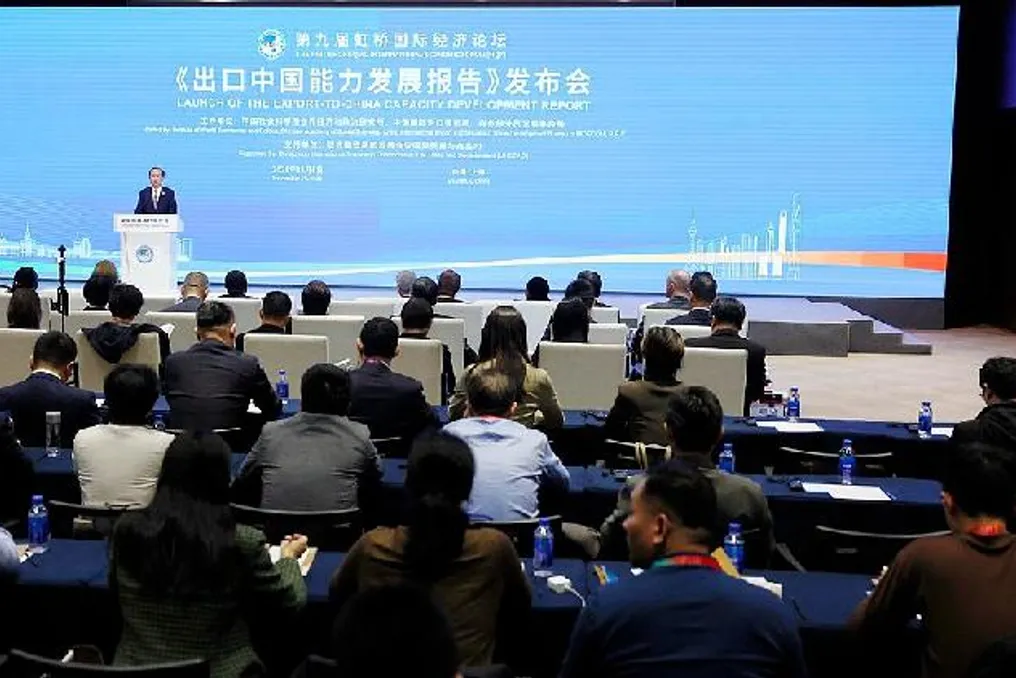
Report indicates growing role of China as a global import market
Read more
CGTN
cgtn.com

Report indicates growing role of China as a global import market

According to the report published on Thursday in Shanghai, China serves simultaneously as a global manufacturing hub and a key source of global demand, possessing an increasing capacity to absorb goods from around the world.

The report on developing export opportunities to China, created to assist other countries in increasing their exports to China, was presented at the Ninth International Economic Forum of Hongqiao, which took place during the recently opened Ninth China Import and Export Fair (CIIE).

It is noted that as household incomes rise and consumer models shift towards higher quality goods and services, China has significant potential to expand its imports of premium products, advanced technologies, and services.

The document states that China's share in global exports increased from 3.2% in 2000 to 9.2% in 2025, while the share of exports from partners of the Belt and Road Initiative to China reached 59.4%.

It is also emphasized that the structure of China's imports has transformed: it is no longer predominantly dominated by industrial goods but has become more diverse, including industrial products, energy resources, raw materials, and agricultural goods.

The report asserts that China's growing demand for both high-quality industrial goods and primary raw materials provides an inclusive market for economies at different stages of development.

This report was jointly prepared by the Institute of World Economy and Politics of the Chinese Academy of Social Sciences and the UNCTAD Department of International Trade and Commodities.

Furthermore, the report analyzes the export activities of ten of China's trading partners, including Colombia, Kenya, Spain, Thailand, and Britain, assessing their potential in the Chinese market and offering recommendations for increasing exports to China.

At the same forum, the 'Global Openness Report 2026' was released, warning of growing tensions regarding global openness amid strengthening trade protectionism, the spread of geopolitical conflicts, and deep restructuring of global industrial chains.

According to the 'Global Openness Report 2026', the Global Openness Index in 2025 was 0.7448, which is 1.09% lower compared to the previous year, and the Openness Effectiveness Index decreased by 0.9% to 0.7458, nullifying the recovery observed in 2023 and 2024.
Similar stories

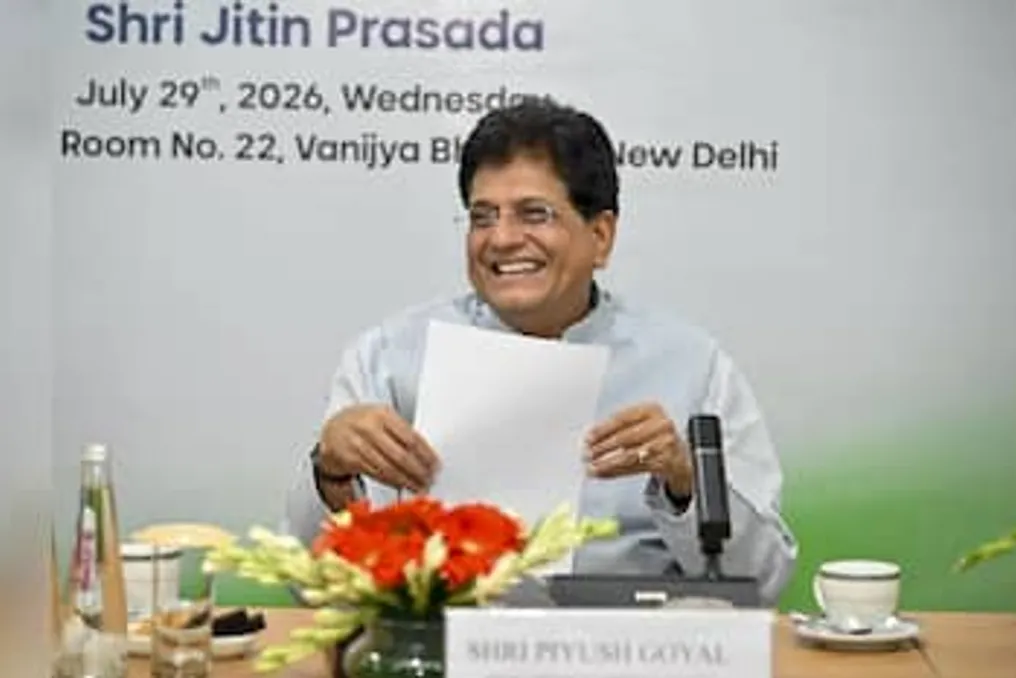
Minister Goyal states India will become a major exporter to China and ASEAN in the coming years
Read more
business-standard.com

Minister Goyal states India will become a major exporter to China and ASEAN in the coming years

Commerce and Industry Minister Piyush Goyal stated on Tuesday that India is ready to welcome Chinese suppliers to meet growing import demands, while emphasizing that established legal procedures will be applied against any unfair pricing policies. He expressed hope that in the near future, India could become a significant exporter to both China and the ASEAN region.

Goyal reported that he had held meetings with his Chinese counterpart in Yaoundé, Cameroon, as well as in New Delhi during the BRICS Summit. He added that India is interested in promoting free and fair trade with all nations.

According to the minister, China provides India with vital raw materials and intermediate products. However, if any violation of fair play or pricing principles is discovered in any product, there is an established judicial process for its resolution. Otherwise, India believes in the rules of open trade and welcomes offers from suppliers wishing to meet India's growing needs.

These statements were made in response to a question about the prospects of trade relations between India and China. The minister was in the country on a two-day official visit. He also noted the desire to open markets in various countries on a mutual basis for Indian goods and services, expressing hope that India would become a major exporter to China and ASEAN.

Members of the Association of Southeast Asian Nations (ASEAN) include countries such as Brunei, Cambodia, Indonesia, Laos, Malaysia, Myanmar, the Philippines, Singapore, Thailand, and Vietnam.

According to the latest data from the Ministry of Commerce, the bilateral trade turnover between India and China increased by approximately 29 percent from April to September of the current fiscal year, reaching $91.76 billion, making Beijing India's largest trading partner in the first half of 2026-27. In April-September 2025-26, the bilateral exchange amounted to $71.24 billion.

Goyal's recent remarks came nearly two weeks after the minister stated on October 14 that India is working to restore relations with China, although a final decision on this matter has not yet been made.

In recent months, both sides have taken several steps to improve ties after facing intense pressure following the deadly clashes in the Galwan Valley in 2020. On September 12, Prime Minister Narendra Modi conveyed to Chinese President Xi Jinping that peace and tranquility along the border remain a 'substantial' foundation for the development of relations between India and China, even though both leaders welcomed 'stable progress' in bilateral relations. Both leaders met on the sidelines of the BRICS summit in New Delhi last month.

After more than four years of strained relations due to military confrontation in Eastern Ladakh, the two neighbors began to restore their ties following the meeting between Modi and Xi in the Russian city of Kazan in October 2024, which took place after the clashes subsided.

India has repeatedly raised concerns about the growing trade deficit with China. Bilateral trade between the two countries grew by 7.9 percent in 2025-26, reaching $127.7 billion compared to $118.39 billion in 2024-25. India's exports to China increased by 36.62 percent, amounting to $19.47 billion in 2025-26 compared to $14.25 billion the previous year. Imports, conversely, rose by 16 percent, reaching $131.62 billion during this period. The trade deficit widened to $99.19 billion in the last fiscal year compared to $85 billion in 2024-25, causing concern in the country.

There are also issues related to Chinese investment, as India has tightened its Foreign Direct Investment (FDI) policy for countries sharing a land border with it. When asked about new Chinese export restrictions on key equipment, including tunnel boring machines, the minister replied: 'We will work on it.'

Restrictions on the export of tunnel boring machines (TBMs) and related items could affect several Indian projects, including underground metros, high-speed rail lines, and tunnels in various locations, including border areas.

Popular