Driscoll's selects Yunnan province in China as main berry production center for Asian market
Read more
CGTN
cgtn.com

Driscoll's selects Yunnan province in China as main berry production center for Asian market

The American berry giant Driscoll's designates Yunnan province in southwestern China as its primary production base for expansion into the Asian market.

During its participation in the 9th China International Import Expo (CIIE) in Shanghai, Jay Chung from Driscoll's Global told CGTN Digital journalist Shen Shiwei that the company began operating in Yunnan 13 years ago. Initially, the activity was aimed at serving the domestic Chinese market under a 'local for local' strategy.

Chung noted that the company now views Yunnan as a production site for both domestic and regional markets. He emphasized the potential to export berries produced in Yunnan to other regional Asian markets, naming Malaysia and Singapore as key destinations.

Similar stories

Report indicates growing role of China as a global import market
Read more
cgtn.com

Report indicates growing role of China as a global import market

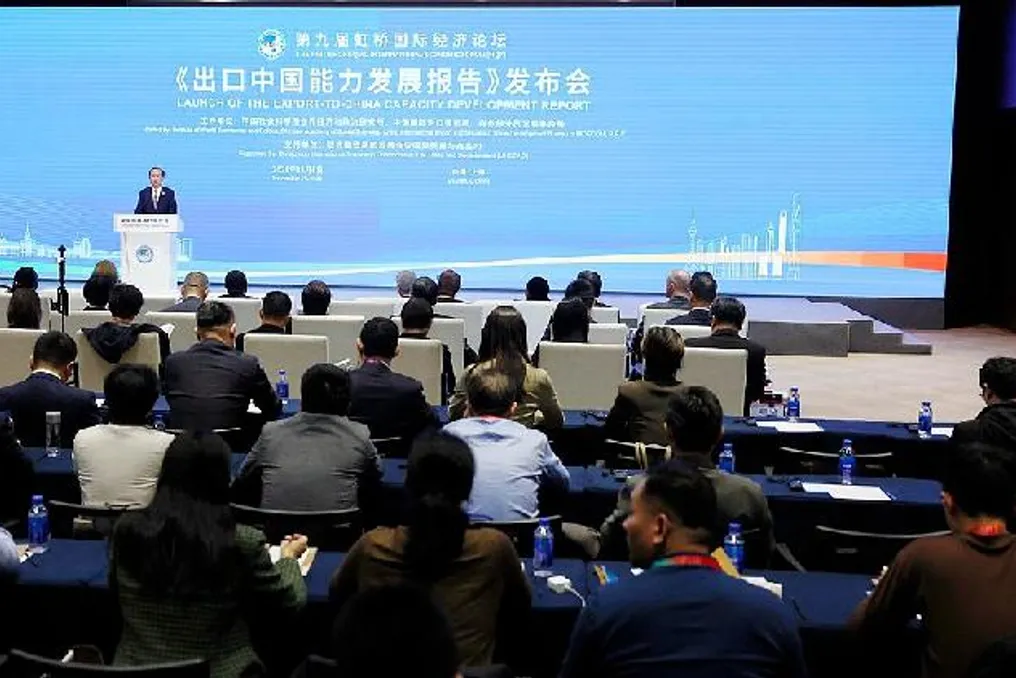
According to the report published on Thursday in Shanghai, China serves simultaneously as a global manufacturing hub and a key source of global demand, possessing an increasing capacity to absorb goods from around the world.

The report on developing export opportunities to China, created to assist other countries in increasing their exports to China, was presented at the Ninth International Economic Forum of Hongqiao, which took place during the recently opened Ninth China Import and Export Fair (CIIE).

It is noted that as household incomes rise and consumer models shift towards higher quality goods and services, China has significant potential to expand its imports of premium products, advanced technologies, and services.

The document states that China's share in global exports increased from 3.2% in 2000 to 9.2% in 2025, while the share of exports from partners of the Belt and Road Initiative to China reached 59.4%.

It is also emphasized that the structure of China's imports has transformed: it is no longer predominantly dominated by industrial goods but has become more diverse, including industrial products, energy resources, raw materials, and agricultural goods.

The report asserts that China's growing demand for both high-quality industrial goods and primary raw materials provides an inclusive market for economies at different stages of development.

This report was jointly prepared by the Institute of World Economy and Politics of the Chinese Academy of Social Sciences and the UNCTAD Department of International Trade and Commodities.

Furthermore, the report analyzes the export activities of ten of China's trading partners, including Colombia, Kenya, Spain, Thailand, and Britain, assessing their potential in the Chinese market and offering recommendations for increasing exports to China.

At the same forum, the 'Global Openness Report 2026' was released, warning of growing tensions regarding global openness amid strengthening trade protectionism, the spread of geopolitical conflicts, and deep restructuring of global industrial chains.

According to the 'Global Openness Report 2026', the Global Openness Index in 2025 was 0.7448, which is 1.09% lower compared to the previous year, and the Openness Effectiveness Index decreased by 0.9% to 0.7458, nullifying the recovery observed in 2023 and 2024.

Xiaomi is changing the South African technology market by offering premium quality at affordable prices
Read more
iol.co.za

Xiaomi is changing the South African technology market by offering premium quality at affordable prices

During an exclusive discussion with Tianshi Lv, Xiaomi's country manager in South Africa, held in Rosebank on Wednesday, it became clear how little people in Mzansi know about the wide range of products offered by the Chinese tech giant.

Xiaomi offers a huge variety of goods, ranging from smartphones to smart home devices and air fryers. According to Lv, the company sees itself as a fast-growing enterprise in the coming years, although it is still small compared to Xiaomi's global scale.

He noted that Xiaomi holds a solid third position in the global smartphone market and considers South Africa an important and even strategic market for the brand's development in the region.

The company emphasizes its mission 'Innovation for all,' striving to create impressive products at fair prices to enable every person to improve their life with advanced technology. In addition to smartphones, Xiaomi offers numerous products in the AIoT sector.

This approach contrasts with Apple's efforts, which is actively developing a smart home ecosystem after releasing devices such as HomeView, HomePod, and Apple TV 4K this month.

When comparing prices, for example, the new Apple TV 4K, which sells for R6,299, with the Xiaomi TV Box S 3rd generation, released last year, the difference becomes obvious. The Xiaomi TV Box costs around R1,500, which is comparable to the price of an acceptable media player. Meanwhile, the Apple TV costs as much as a basic 50-inch smart TV, or even more.

This comparison vividly illustrates the essence of Xiaomi—providing quality products at a significantly lower cost. A similar gap is observed among smartphones. The flagship Xiaomi Redmi Note 17 Pro Max 5G (256GB), released in August, is equipped with a 10,000 mAh battery that lasts up to three days with normal use and is sold on Takealot for R13,999. In contrast, the basic Apple iPhone 16e costs more, currently priced at R14,699.

Xiaomi offers a wide range of goods through online platforms and its own retail stores, so it is impossible to list them all. Nevertheless, budget-conscious technology consumers should explore Xiaomi's full range in the segments of mobile devices, wearables, smart home, and lifestyle products.

Popular