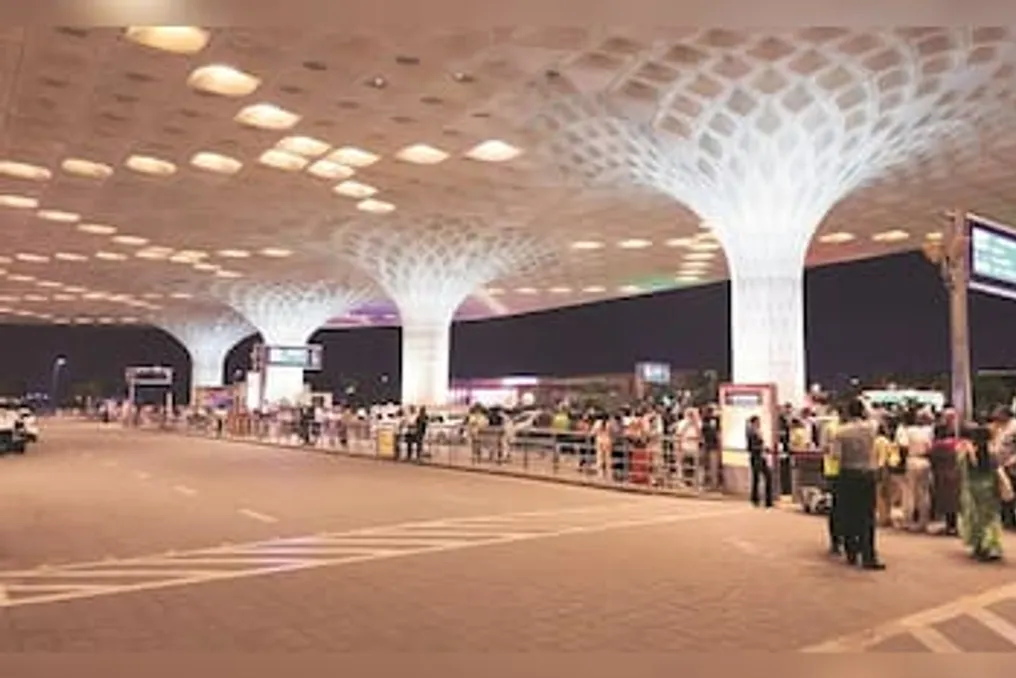
Airlines appeal to Civil Aviation Ministry regarding MIAL plan to relocate Middle Eastern carriers' flights
Read more
Business Standard
business-standard.com

Airlines appeal to Civil Aviation Ministry regarding MIAL plan to relocate Middle Eastern carriers' flights

Airlines operating at Mumbai airport have approached the Ministry of Civil Aviation (MoCA) requesting clarification on the proposal by Mumbai International Airport Ltd (MIAL), which is controlled by the Adani group, to transfer several international flights to Navi Mumbai. Concerns have been raised regarding the loss of historical slots and reduced capacity.

On Thursday, MIAL sent a notification to several Middle Eastern airlines stating that their current flights would not be serviced at Mumbai airport starting from next year's summer season. This was due to the necessity of demolition and reconstruction work on Terminal 1 for safety reasons.

MIAL determined that all flights from Mumbai to 14 international destinations—Bahrain, Dammam, Dhaka, Doha, Fujairah, Jakarta, Jeddah, Kathmandu, Kuwait City, Madina, Muscat, Ras Al Khaimah, and Riyadh, as well as Sharjah—must be relocated to Navi Mumbai by the end of March 2027.

According to Cirium's schedule for November 2026, 16 airlines operate 205 weekly flights from Mumbai to these 14 destinations. Among them, IndiGo, Air India group, and Akasa Air have already announced plans to move part of their services to Navi Mumbai. The remaining 12 airlines operate 102 weekly flights and have not yet made a public statement about route changes.

These twelve airlines include Air Arabia, Gulf Air, Kuwait Airways, Oman Air, Saudia, Qatar Airways, Riyadh Air, Jazeera Airways, SalamAir, Flyadeal, Flynas, and Nepal Airlines. The letter from the Mumbai Airline Operators Committee (AOC) does not specify which airlines received the latest notice from MIAL; it only states that an email was sent to several Middle Eastern carriers.

In the letter to MoCA, submitted on Friday, the AOC reported that MIAL's slot coordination team informed the affected Middle Eastern carriers that the slots they requested (specific time intervals for arrival and departure) in Mumbai would not be available from the following summer. The operator informed the airlines that they would have to temporarily suspend operations in Mumbai until the expansion is completed.

In its address to the ministry, the AOC referenced MIAL's letter to the ministry dated October 30, in which the operator sought the ministry's approval to transfer these flights from Mumbai to Navi Mumbai. 'We understand that the Chief Airport Director of MIAL (CAO) requested MoCA's approval via a letter dated October 30, 2026, regarding the temporary transition from Mumbai airport concerning the historical slots of some international airlines. However, the Slot Coordination Team (MIAL) subsequently rejected the historical slots of several international Middle Eastern carriers, apparently without further consultation or discussion with the affected airlines,' the document states.

The AOC asked the ministry to clarify whether it had approved MIAL's proposal from October 30. Furthermore, it requested MoCA's advice to recommend that MIAL reconsider its decision and restore the historical slots for the affected airlines for the summer schedule. Historical slots are flight time intervals that airlines regularly used at the airport and have the right to retain according to current regulations.

The AOC emphasized that any decision affecting these slots must comply with MoCA guidelines and the World Association of Airport Slot Guidelines (WASG) Global Guidelines, which establish rules for the allocation and retention of flight time intervals at the airport. 'Airport development plans should not inherently lead to the withdrawal, refusal, or reallocation of historical slots. Any capacity adjustments must be strictly within the established legal framework, ensuring transparency, fairness, and non-discrimination towards all airlines,' stated the AOC.

The committee also questioned the basis for MIAL's proposal, as the operator stated the need to reduce Mumbai airport's passenger throughput by five million passengers per annum (MPPA) for the redevelopment of Terminal 1. Currently, the airport handles about 55 MPPA. The AOC noted that the actual operational capacity of Terminal 1, according to information held by airline members, was around 10 MPPA or less, and added that MIAL had not provided an adequate explanation for the capacity assessment underlying the proposed reduction.

The AOC expressed support for the redevelopment of Terminal 1 and the development of airport infrastructure. Nevertheless, it warned that removing international airlines from Mumbai could negatively impact their network planning, connecting flights, interline and codeshare agreements, as well as operational efficiency. These agreements allow airlines to connect or sell flights operated by other carriers.
Similar stories

MIAL instructs several Middle Eastern airlines to relocate flights to Navi Mumbai due to Mumbai airport reconstruction
Read more
business-standard.com

MIAL instructs several Middle Eastern airlines to relocate flights to Navi Mumbai due to Mumbai airport reconstruction

Mumbai International Airport Ltd (MIAL), managed by the Adani Group, has directed certain airlines from Gulf countries to shift their flights from Mumbai to Navi Mumbai starting in the Summer 2027 season. This is necessitated by the ongoing reconstruction of Terminal 1 at the old airport.

If the airlines decline the relocation, they will have to suspend flights and return once the renovated Terminal 1 is ready in 2029. Both airports—Mumbai and Navi Mumbai—are under the management of Adani Group entities.

In a letter dated October 30, MIAL notified the Ministry of Civil Aviation (MoCA) about its plan to transfer all flights from Mumbai to 14 international destinations to Navi Mumbai, beginning in the summer of next year, specifically from late March 2027.

These 14 destinations include Bahrain, Dammam, Dhaka, Doha, Fujairah, Jakarta, Jeddah, Kathmandu, Kuwait City, Madina, Muscat, Ras Al Khaimah, Riyadh, and Sharjah.

According to Cirium's schedule for November 2026, 16 airlines operate 205 weekly flights from Mumbai to these destinations. IndiGo, Air India Group, and Akasa Air have already announced plans to move some of their services to Navi Mumbai. The remaining 12 airlines serve 102 weekly departures on these routes but have not yet issued public statements regarding the relocation of their services from Mumbai.

These 12 airlines are Air Arabia, Gulf Air, Kuwait Airways, Oman Air, Saudia, Qatar Airways, Riyadh Air, Jazeera Airways, SalamAir, Flyadeal, Flynas, and Nepal Airlines. However, it is unknown which of these airlines received the notice sent on Thursday.

Sources indicate that the notification was received by some airlines from Gulf countries. In an email addressed to the affected carriers, MIAL's slot coordination team stated that Mumbai airport's capacity will decrease by five million passengers per annum (MPPA) starting from the next summer season. Consequently, the airport will be unable to accommodate the requested flights for that season.

The letter stated: 'Therefore, Mumbai airport cannot accept the requested slots for your esteemed airline for Summer 2027, which requires a temporary transition from Mumbai starting from early Northern Summer 2027 and subsequent seasons.' The operator requested the affected airlines to move their services from Mumbai to Navi Mumbai airport. MIAL emphasized that this change is temporary, and the existing flight schedules for airlines in Mumbai will be restored after the terminal expansion is complete and additional capacity becomes available.

This notification marked an escalation of the dispute regarding MIAL's plan to shift flights to Navi Mumbai during the Terminal 1 restoration. Previously, the airport operator had asked airlines to voluntarily identify services that could be moved to NMIA to help reduce passenger traffic at Mumbai airport by five MPPA. Foreign airlines opposed this step, demanding more time and better coordination.

In its letter to MoCA dated October 30, MIAL stated that it could transfer all flights between Mumbai and 14 international destinations to Navi Mumbai if the airlines did not submit voluntary relocation proposals by November 3. It noted that consolidating these services into one airport would prevent the splitting of flights between Mumbai and Navi Mumbai.

Currently, Mumbai airport's annual capacity is approximately 55 million passengers. MIAL reported that the temporary reduction of five MPPA would leave about 91 percent of this capacity unchanged.

MIAL requests airlines to submit plans for flight relocations to Navi Mumbai airport by November 3
Read more
business-standard.com

MIAL requests airlines to submit plans for flight relocations to Navi Mumbai airport by November 3

Mumbai International Airport Ltd (MIAL) on Wednesday asked airlines to provide plans for relocating some international flights to Navi Mumbai airport by November 3. This is due to MIAL's plans to temporarily shift traffic equivalent to five million passengers annually from Mumbai airport because of the reconstruction of Terminal 1.

At the meeting held on Wednesday between MIAL and the Airline Operators Committee (AOC), which represents carriers operating at Mumbai airport, a significant number of airlines, especially foreign carriers, opposed the unilateral reduction of slots in the summer 2027 schedule. They demanded that discussions for the next winter schedule begin as soon as possible.

In aviation, the winter schedule runs from the last Sunday of October to the last Saturday of March, while the summer schedule runs from the last Sunday of March to the last Saturday of October. Both MIAL and Navi Mumbai International Airport Limited (NMIAL) are managed by the Adani Group.

Over the past few months, MIAL has requested airlines to move 265 out of 770 weekly international flights from Mumbai airport to Navi Mumbai. This is necessary for the demolition and subsequent reconstruction of Terminal 1 of the old airport due to safety reasons. Airlines strongly oppose this relocation, calling it 'unilateral,' and demand data on traffic, capacity, and proper consultation.

During Wednesday's meeting, a large group of airlines stated that the reconstruction of Terminal 1 should be carried out in phases, similar to the previous reconstruction of Terminal 2, and that any transition must comply with the Ministry of Civil Aviation's (MoCA) guidelines regarding slot allocation.

At the same meeting, MIAL presented its Terminal 1 reconstruction schedule and emphasized the urgency of the work, which, according to it, has been delayed for more than nine years. The airport operator referred to structural audit reports conducted by Structwel in 2017 and IIT Bombay in 2024, which indicated the need for reconstruction.

MIAL reported that IndiGo, Air India, and Akasa Air have agreed on plans to relocate international flights to Navi Mumbai during the period from January to the summer season, which will account for about three million passengers per annum (MPPA). The airport operator specified that the remaining 2 MPPA of traffic must also be relocated by the summer of next year.

The operator informed airlines that Mumbai airport's capacity is about 55 MPPA, and the temporary relocation of traffic equivalent to five MPPA will leave about 91 percent of its current capacity unchanged. MIAL stated at the meeting that the total capacity of Mumbai airport will increase to 65 MPPA after the reconstruction of T1 and the expansion of Terminal 2.

MIAL also mentioned that the temporary reduction in traffic at Mumbai airport has already been accounted for in the approved tariff following consultations with stakeholders. It assured airlines that the international traffic temporarily moved to Navi Mumbai will be restored at Mumbai airport after the completion of Terminal 2 expansion.

The airport operator noted that a phased transition will help ensure passenger safety and minimize operational disruptions while supporting the development of Mumbai's dual-airport system.

Popular