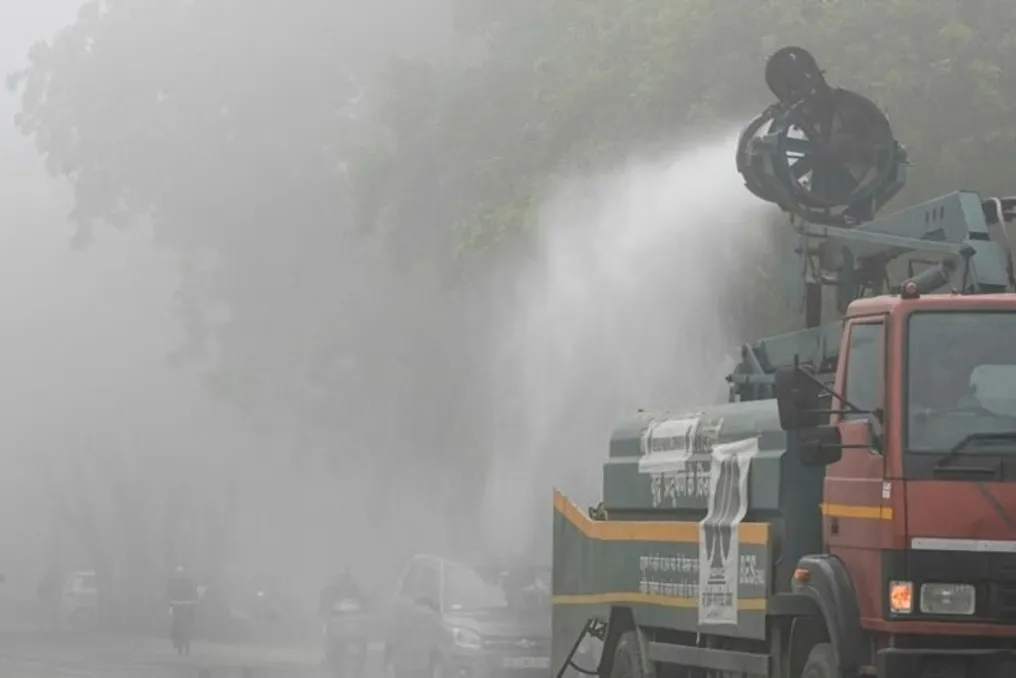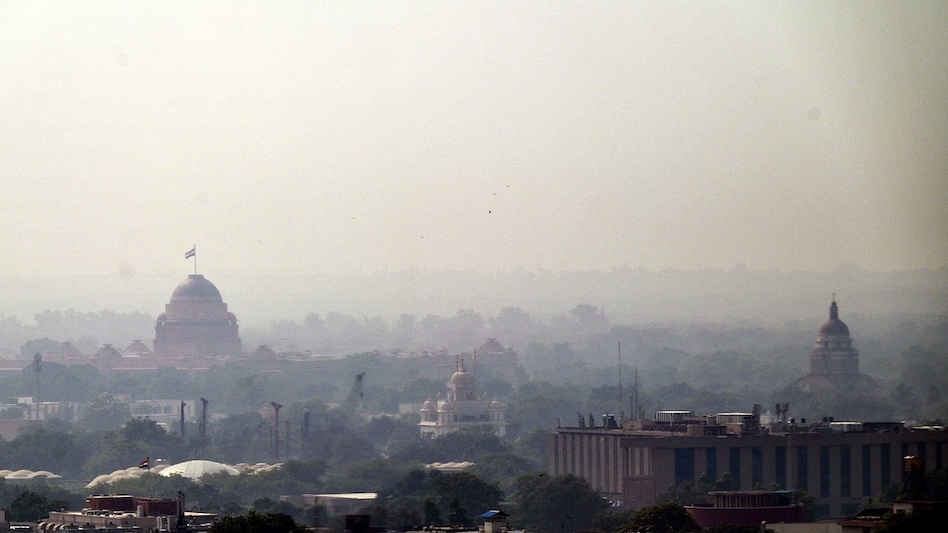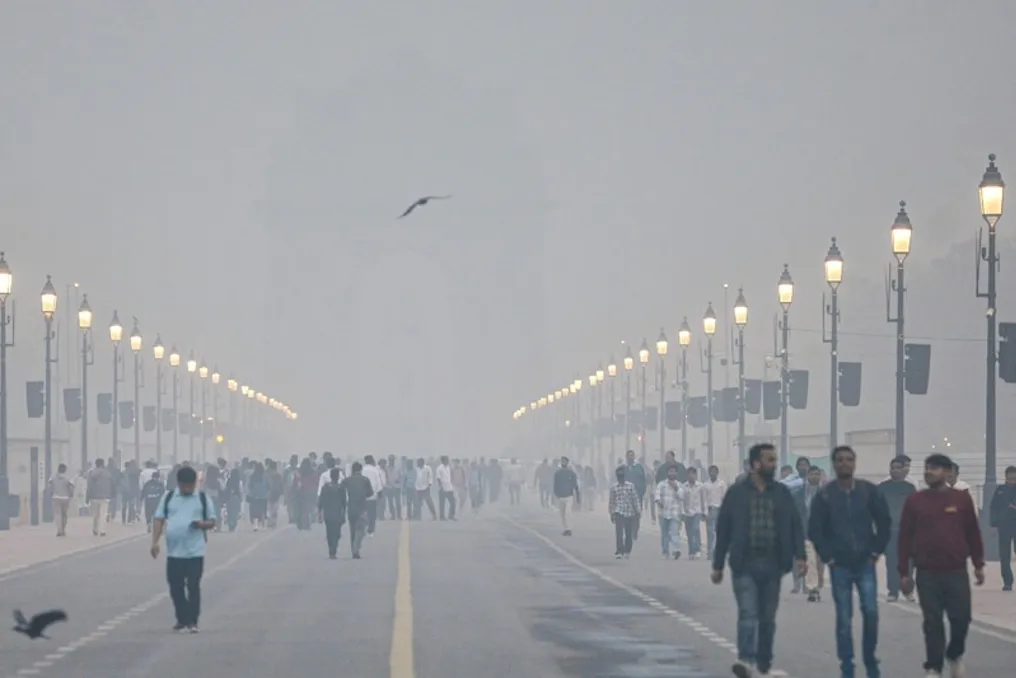
Just before the Diwali festival, the air in the national capital Delhi once again became toxic. Pollution levels reached their peak, and despite all efforts made, the Air Quality Index (AQI) exceeded the mark of 400 in some areas.
Due to the deteriorating environmental situation in Delhi-NCR, the third stage of the Graded Response Action Plan (GRAP) was implemented. Nevertheless, the air in the capital remained heavy and unbearable.
According to data from the Central Pollution Control Board, on the morning of the 6th, most areas of Delhi were registered in the 'severe' category. The AQI in urban areas exceeded 400.
The worst air quality was recorded at IIT Delhi, where the AQI reached 442. This was followed by Punjabi Bagh with a reading of 433, Mundka with 421, Rohini with 418, RK Puram with 417, Sonia Vihar with 414, Najafgarh with 413, as well as Bavana and Dwarka with 411. In these locations, air quality is classified as 'critical.'
Furthermore, an AQI of 409 was recorded in Narela, 402 in Alipur, and 403 in Patpaddanganj. Next, in areas categorized as 'very poor', the AQI was 397 in Chandni Chowk and Mandir Marg, 393 in JNU, 392 in Burari, 383 in Ayia Nagar, 382 on Matura Road, 364 in Nangloi, and 340 at IGI airport.
Other readings included 337 in Vizirpur, 324 in Shadipur, 320 in Ashok Vihar, and 316 in Badarpur. Among the least polluted areas were Lodhi Road (278) and Anand Vihar (276), which fall into the 'poor' category.
The situation in Noida was also challenging; the worst reading was recorded in Sector-62 (IITM) with an AQI of 415. Other sectors showed the following values: Sector-116 – 287, Sector-125 – 281, Sector-39 – 267, Sector-110 – 257, and Sector-1 – 251. The best situation was observed in Sector-150, where the AQI was 230.
Due to the rising pollution levels, the CAQM subcommittee immediately implemented GRAP-3 restrictions for Delhi-NCR. CAQM previously reported that on November 6, 2026, the average daily AQI in Delhi was 382, which falls under the 'very poor' category. Forecasts from the Meteorological Department and IITM indicate a possible further deterioration to the 'critical' category in the coming days. Meanwhile, the measures stipulated by the first and second stages of GRAP remain in effect.
According to established rules, GRAP-1 is applied when AQI is between 201 and 300, GRAP-2 is applied between 301 and 400, GRAP-3 is applied between 401 and 500, and the strictest GRAP-4 is introduced when AQI is above 450.