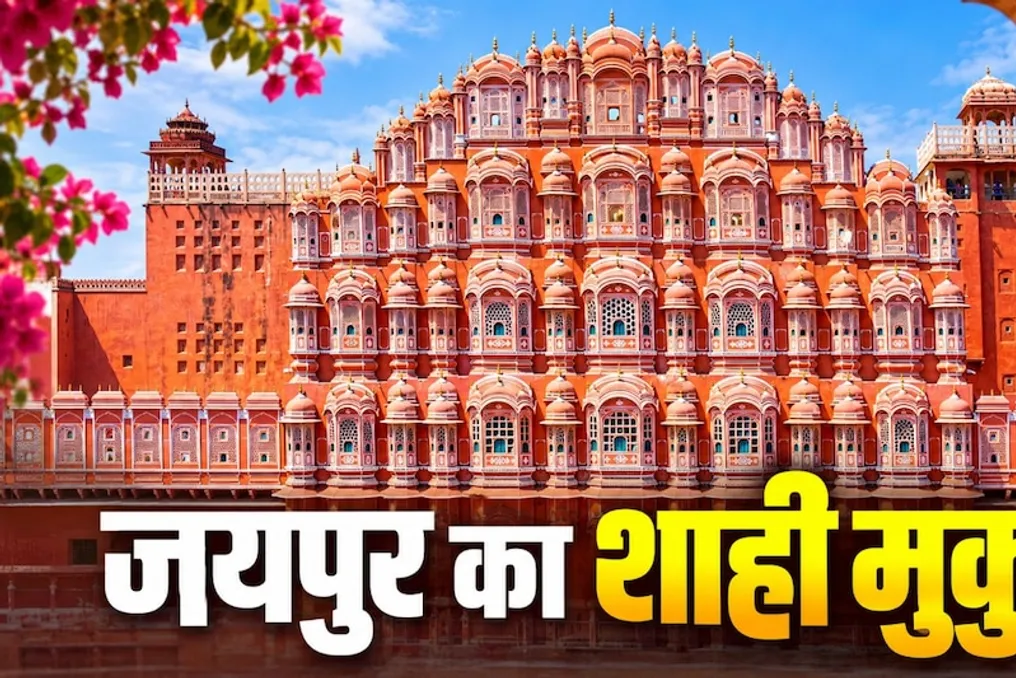
India has numerous historical structures that have gained worldwide fame due to their magnificent design and unique architecture. Hawa Mahal, located in the capital of Rajasthan state, Jaipur, is one such outstanding building. It is also known as the 'Palace of Winds.'
The main feature of this palace is the presence of 953 small and large windows, or jharokhas. Furthermore, this five-story structure is considered the tallest building in the world built without a traditional foundation.
Construction of Hawa Mahal in 1799
Hawa Mahal, situated in the very center of Jaipur, was erected in 1799 by order of Maharaja Sawai Pratap Singh. The design of the building was executed by the architect Lal Chand Ustad. Maharaja Sawai Pratap Singh was the grandson of the founder of Jaipur, Maharaja Sawai Jai Singh. This palace was intended for the royal family's women so they could observe events in the markets and streets from outside while remaining unnoticed.
How 953 Windows Provide Coolness
The most remarkable feature of Hawa Mahal is its 953 windows. These windows are designed to ensure constant air circulation inside the palace. Thanks to this, even in hot weather, the atmosphere inside remains cool and fresh. The honeycomb-like structure of the palace distinguishes it from other historical buildings.
Five-Story Building Standing Without a Foundation
There is also interesting information that Hawa Mahal is considered the tallest building in the world constructed without using a traditional foundation. It has five floors, and its height is estimated to be approximately 50 feet. Its curved shape and special architecture give it strength, allowing the building to stand firm after so many years.
Architectural Style Resembling Krishna's Crown
The construction of Hawa Mahal is also quite unique. Its upper part resembles the crown of the god Krishna, which is why it is also called the 'Crown of Jaipur.' The red and pink sandstones used for its beautiful exterior cladding have become the calling card of Jaipur. The palace's architecture demonstrates elements of both Rajput and Islamic styles.
Different Names for the Five Floors
Hawa Mahal is a five-story structure, and each of its floors has its own name. The first floor is called Sharad Mandir, the second is Ratan Mandir, the third is Vichitra Mandir, the fourth is Prakash Mandir, and the fifth is Hawa Mandir. Inside the palace, there is also a museum where one can see traditional Rajasthani miniature paintings and historical artifacts.
Windows Created for Royal Ladies
The primary reason for the construction of Hawa Mahal was a specific necessity. In earlier times, members of the royal family did not appear in public events before people. Therefore, through these windows, they could observe what was happening in the Johri Bazaar market and on nearby streets. For this purpose, special latticed windows known as Akash Patal Jali were created in the palace.
Today, Hawa Mahal is among the most popular tourist attractions in Jaipur. Its unique architecture, 953 windows, and rich history make it special for tourists from all over the world. Visiting this beautiful palace is a must when traveling to Jaipur.