The Al-Mastaba project, presented at Amman Design Week 2026, was developed by Laith Matarweh Studio for Architecture. The name Al-Mastaba derives from a common term in the Levant referring to leveling the ground for construction, cultivation, or access. This term also describes a flat or raised surface for sitting.
In traditional houses, the mastaba often extends the interior floor outwards, creating a boundary between domestic life and the surrounding environment where daily activities, meetings, and social interaction take place. The installation explores architectural accumulation through the assembly of materials, viewing time not as an external force acting upon architecture, but as the building element itself.
Conceptually, this intervention is based on the folk logic of the mastaba: a modest, grounded surface that accepts life without dictating how it should develop. The structure is more of a basic framework than a finished architectural object.
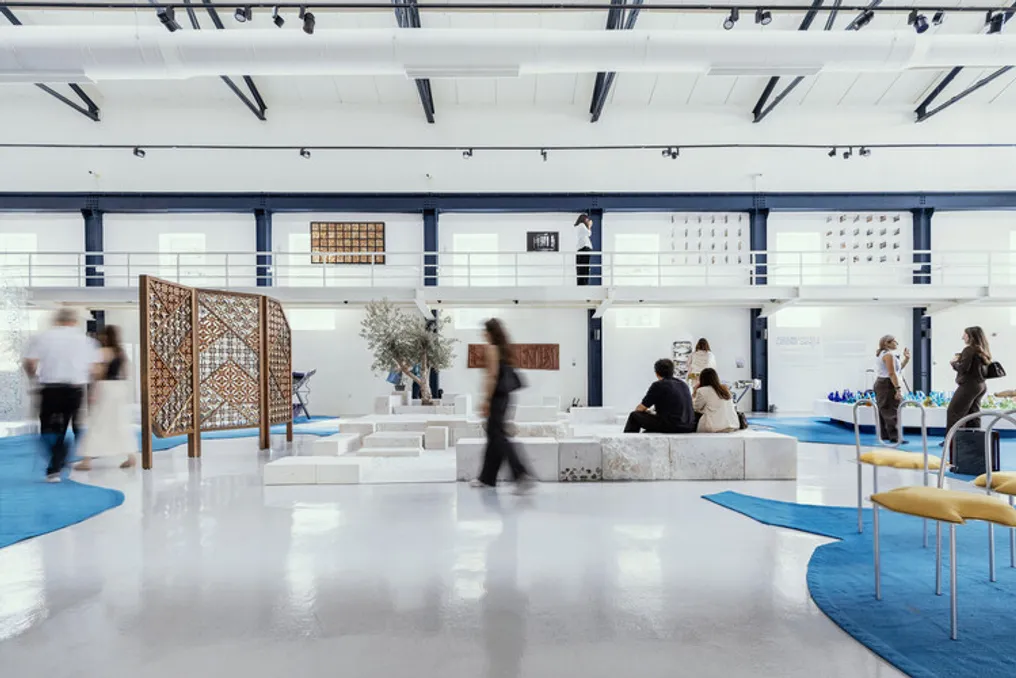
Local stones and prefabricated concrete blocks form a low, fragmented structure. The spaces between the blocks and the gravel-covered ground anticipate the gradual settlement of the object by nature, use, and time. The displaced blocks, interrupted edges, and partially sunken appearance evoke the ambiguity of ruins—a structure that could be excavated, left, or gradually absorbed by the earth.
Al-Mastaba does not offer a fixed and complete composition; it remains open to change. The structure can be adapted for future additions, rearranged for new functions, or, if left untouched, allowed to gradually transform into a flowerbed where vegetation takes root. Its apparent incompleteness is intentional, leaving room for a future that cannot be entirely predetermined by its creators.
Simultaneously, Al-Mastaba is not merely an abstract proposition about time. During Amman Design Week 2026, the project became a place for sitting, resting, meeting, and conversing. The presence of visitors demonstrated how a simple arrangement of materials can facilitate social gatherings and moments of respite. Through its adoption, the installation transcended its physical composition, becoming a stage for life and beginning to accumulate its own experience that it is meant to contain.