Actor Josh Brolin shares a list of 75 essential films according to his opinion
Read more
Super Abril
super.abril.com.br

Actor Josh Brolin shares a list of 75 essential films according to his opinion

In October, actor Josh Brolin appeared on the talk show Jimmy Kimmel Live!. He is known to the public for roles in productions such as The Goonies, Avengers – where he plays Thanos –, Deadpool 2, Men in Black 3, among other box office successes.

On this occasion, Brolin was promoting his latest suspense film, Inside the Whale. In this work, he plays the father of Jay Gardine (played by Austin Abrams), whose death occurs at sea. His son ventures out to find his father's remains and ends up being swallowed by a gigantic sperm whale.

During the conversation with Kimmel, Brolin reflected on his affinity for suspense and horror genres, mentioning that he watched these types of films since childhood alongside his father, which he considers a somewhat delicate aspect in the current climate. When discussing his favorite titles, he presented a list containing 75 films that, in his view, deserve to be seen by everyone, totaling about 150 hours of cinema.

Brolin's selection spans various genres, including romance, drama, and action, and covers productions from several decades. He highlighted that the majority of the list consists of films from the 1970s, a period he considers the peak of cinema. The actor stated that he has watched some of these works countless times, choosing to include only one title from his own professional career.

Among the cited films, Warriors – The Night Wilds, from 1979, is a favorite that Brolin has seen 66 times. Other titles include When Two Women Sin (1966), Eight and a Half (1963), Taken from the Breach (1938), Shampoo (1975), The Dangerous Goodbye (1973), The Devil Said No (1943), Apocalypse Now (1979), and the documentary Hearts of Darkness: A Filmmaker’s Apocalypse (1991).

He also mentioned Parole (1978), Scarecrow (1973), Josey Wales, The Outlaw (1976), Wild Heart (1990), Bitter Nightmare (1972), Strangers in Paradise (1984), Saturday Night Fever (1978), which Brolin has seen 39 times and demonstrated knowledge of the choreography, even performing some dance steps during the Kimmel show. Although Grease, starring John Travolta, is another favorite, it was not included in the list.

The list includes Bicycle Thieves (1948), Julius Caesar (1953), Looking for Trouble (1996), which is the only film from his career present in the selection. Brolin justified its inclusion because of the narrative of his character, a bisexual police officer with an attraction to armpits. Other notable films are Cinema Paradiso (1988), Lenny (1974), The Last Mission (1973), Thirst for Love (1971), Everyone Lives As They Wish (1970), Who's Afraid of Virginia Woolf? (1966), Moon Spell (1987), JFK – The Question That Won't Be Answered (1991), The Last Film Session (1971), Before Marriage (2007), Discreet Charm of the Bourgeoisie (1952), Half Light (1944), Last Tango in Paris (1972), Paris, Texas (1984), Chopper – Memories of a Criminal (2000), Nashville (1975), One Flew Over the Cuckoo's Nest (1974), Waves of Destiny (1996), She Wants Everything (1986), 12 Angry Men (1957), A Day of Dog (1975), The Wild One (1978), Operation France 2 (1971) and Operation France 2 (1975), The Conversation (1974), The Unsuspecting Ones (1961), Star Wars: Episode IV – A New Hope (1977), One Flew Over the Cuckoo's Nest (1975), The Hidden Face (1961) and Dr. Fantastic (1964), in addition to The Godfather (1972) and The Godfather Part II (1974).
Similar stories

Ramayana Part 1 Film Review: Impressive Visualization and Emotional Depth Despite Some Flaws
Read more
www.aajtak.in

Ramayana Part 1 Film Review: Impressive Visualization and Emotional Depth Despite Some Flaws

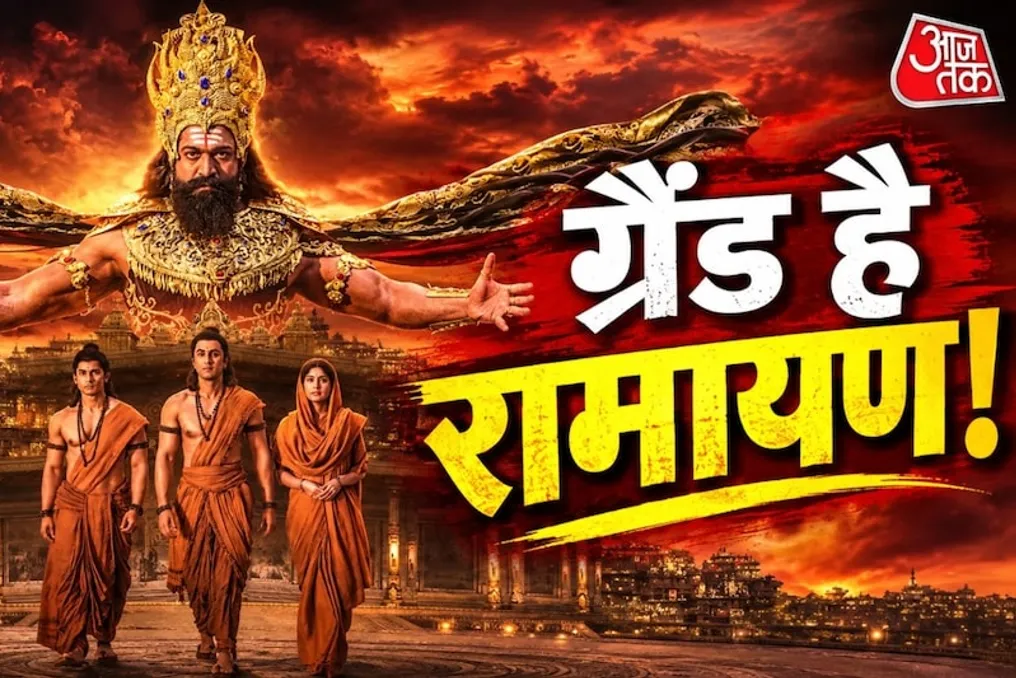
The long-awaited Indian film 'Ramayana' has finally been released in theaters worldwide and has received extensive promotion. While international audiences are offering their opinions, the true reception is forming among the Indian public, as the narrative of Ramayana is deeply connected to the feelings of many who have known this story since childhood.

Previously, there were various versions of Ramayana, including the television version by Ramanagan Sagar and the 90s animated version. The previous attempt at adaptation, the film 'Adipurush,' caused significant disappointment among viewers due to poor visual effects (VFX), dialogue, and character portrayal.

When the new version of Ramayana by Namit Malhotra and Nitesh Tiwari was announced, many began to doubt, especially after the budget of 4000 crore rupees was revealed. Viewers questioned whether director Nitesh Tiwari, known for films like 'Dangal' and 'Chhichhore,' could make this version original.

Unlike most versions that begin with Lord Rama, Nitesh Tiwari started his Ramayana with Ravana. The film depicts Ravana's origins, how he gains the favor of Brahma Deva and Lord Shiva through his devotion and asceticism. After Ravana becomes the king of Lanka, he conquers numerous kingdoms, and his villainy reaches its peak.

At this point, the gods, led by Indra, pray to Vishnu, who takes an avatar in the form of Lord Rama on Earth. King Dasharatha loves all his sons dearly, but Rama is the most beloved. Rama and Lakshmana receive knowledge and valor from Guru Vishwamitra. The story progresses from the killing of Tadaka and Subahu to Sita's wedding ceremony in Ayodhya, where an atmosphere of prosperity reigns.

However, Kaikayi's mother demands that King Dasharatha fulfill two promises, forcing Rama, Sita, and Lakshmana into exile. During their time in the forest, Surpanakha, the princess of Janastana and Ravana's sister, approaches them. She insists on marrying Rama, but due to promises made to Sita, her request is rejected. Lakshmana then cuts off her nose, and she goes weeping to her brothers Har Dushana and Ravana. Subsequently, Rama, Sita, and Lakshmana confront Har Dushana's army and his fourteen thousand demons. The film's plot covers Sita's abduction and Ravana's fierce battle with Jatayu.

So far, there has been little mention of Nitesh Tiwari in the promotional materials and music videos related to Ramayana; it seemed he remained in the shadow, yielding promotion to Ranbir Kapoor, Sai Pallavi, Yash, and Namit Malhotra. However, Tiwari demonstrated his talent at the right moment and justified the audience's trust.

Those who have watched Tiwari's previous films know how powerful and touching the emotions in his works can be. Ramayana is a story based more on feelings than on visual effects. In this film, viewers will feel all the deep emotions of Lord Rama experienced in life: the order to leave his native kingdom and spend years in the forest, the absence of his father in the final moments of his life, and the kidnapping of his wife Sita. Even Jatayu's death evokes deep sorrow. The cinematography of the film is also magnificent, and in many scenes, it is hard to believe that it is an Indian film.

Namit Malhotra and Nitesh Tiwari presented this work to the world, and it is felt after watching it. The first half of the film looks very powerful, as the director masterfully portrays the journey from Ravana's reign to Rama's exile. The second half seems slightly weaker because it tries to show too many events, making it somewhat drawn out. Nevertheless, by the end, the film achieves necessary stability.

The most striking and simultaneously weak aspect of the film is its visual effects. Since the entire film was shot on a green screen, in studios, and on stage, it sometimes looks somewhat artificial. The demons with poor visual effects appear unfinished, as if they still needed more work. However, all other visual elements, whether it be Lanka, Mithila, Ayodhya, the forest, the celestial world, or the underworld, look stunning.

It can be argued that this is the grandest version of Ramayana. If you like the visual effects of the demons...

How Rajinikanth Maintained His Star Status at 75 Thanks to His Style and Perseverance
Read more
www.aajtak.in

How Rajinikanth Maintained His Star Status at 75 Thanks to His Style and Perseverance

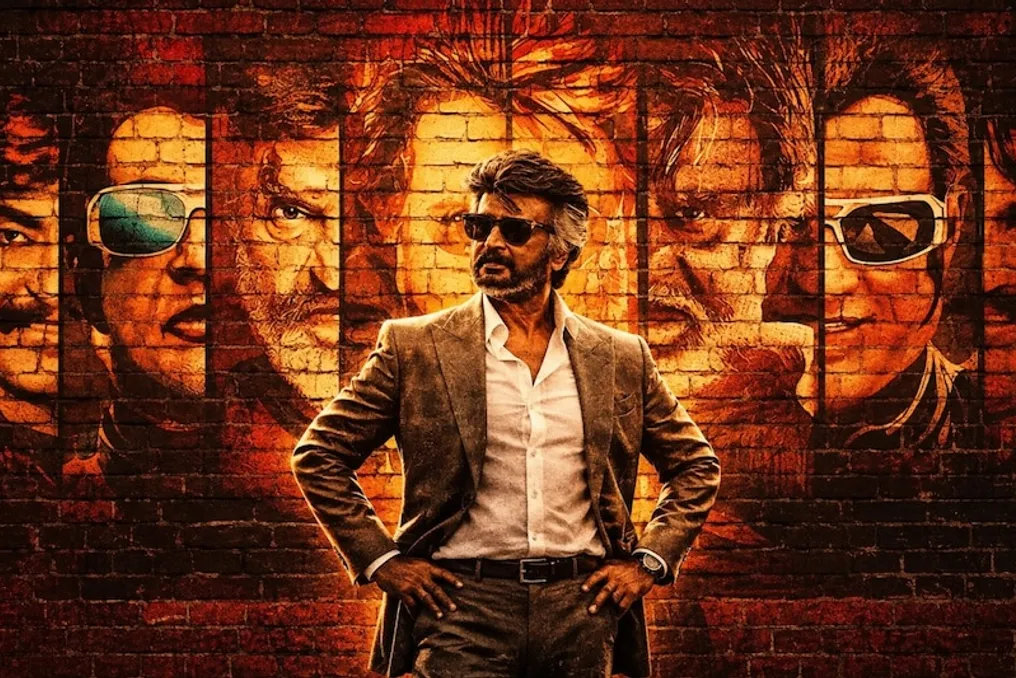
When Rajinikanth appears on screen, cinemas transform into large stadiums. Audiences come not just to see a star, but to find in this personality a reflection of their own struggles, hopes, and victories, as he resembles them—he falls, recovers, but after every failure, he rises even more proudly.

Rajinikanth has proven that age is just a number, and star status is a story of firm intentions, starting from his work in the film 'Apurva Ragangal' in 1975 and continuing through 'Jailer 2'. The recently released film 'Jailer 2' crossed the mark of 800 crore rupees worldwide and became the sixteenth highest-grossing Indian film.

However, Rajinikanth's career did not begin with a grand debut. He started from the bottom. In films like 'Apurva Ragangal' and '16 Vaiyathil', he played characters that turned everything upside down. His slanted gaze or manner of sitting could completely dominate the scene. The phrase 'Idu Appadi Irukku?' (What is this?) was not just a line, but an open challenge to the audience to watch something unconventional.

The situation changed in the late 70s when the film 'Bhairavi' established him as a leading hero. Films like 'Billa' and 'Murattu Kaalai' made him the king of the box office. Moreover, his image was never flawlessly glamorous; he forged his identity from the roughness of his characters. His habit of flicking cigarettes, chewing gum, or adjusting his coat collar became part of his narrative.

His style has been copied by generations. The phrase 'Naa Vazhi, Thaan Vazhi' (My way, my own way) became not just a dialogue of Paiyappa, but Rajinikanth's way of life. Furthermore, a line from the film 'Annamalai' perfectly describes his working principles: 'Naan Solrathaiyum Seivēn, Sollathaiyum Seivēn,' which means: 'What I say, I do, but what I don't say, I also show.'

If one looks at his hits, such as 'Baasha', 'Muthu', 'Annamalai', or 'Paiyappa', all stories point to one thing: anyone can rise from the very bottom. The transformation from a simple conductor to a superstar is the best proof of this. Rajinikanth never considered himself separate from ordinary people. On screen, he showed that a hero can look like anything, as long as the intentions are strong. This is why he is the god of posters and the hero of every street.

It is noticeable that other stars, when appearing in real life, usually pay great attention to their appearance and want to look like they do on screen. However, Rajinikanth surprises everyone. He does not use hairstyles, preferring the dhoti-kurta and slippers, maintaining a connection with his people and reminding them that he is just like them.

People often think that Rajinikanth always played it safe, but in reality, it is the opposite. Whether it was fighting corruption in 'Sivaji: The Boss', the dual role of scientist and villain in 'Enthiran' (Robot), or using motion capture technology in 'Kochadaiiyaappaa', he always took risks. Through films like 'Kabali' and 'Kaala', he openly spoke about serious issues such as caste and politics. Adapting to every era is his true victory.

This is why his fan base exists from generation to generation. Grandfathers, fathers, and children—all are his fans. He connects with the new audience (Gen Z and Millennials) through his work with young directors like Lokesh Kanagaraj and Nelson Dilip Kumar. The huge success of films like 'Jailer 2' is a clear example of this.

Rajinikanth's career has not always been a straight line; there have been ups and downs, films have failed, and people have started to doubt. But every time, he returned with a powerful triumph. Be it the tsunami of 'Kabali' after 'Baba' or the recent historical success of 'Jailer 2', he proved himself again and again.

Off-screen, Rajinikanth is a completely different person. A man who brings a storm to the screen behaves with immense humility in real life, wearing a simple kurta and slippers. He laughs at his own popularity and star status. If you scroll through the pages of Kollywood history, the journey from a 100 crore club to 800 crore passed through this name.

The phenomenal success of 'Jailer 2' showed that at 75, Rajinikanth is not just a star. He is living proof that one can come from anywhere and change the landscape of popular culture through hard work, faith, and firm intentions. In an industry where trends change every Friday, Rajinikanth still draws as many viewers in his films as if he were at the peak of his career.

Review of the film 'Dorothy': An exploration of gender stereotypes and self-identification
Read more
www.aajtak.in

Review of the film 'Dorothy': An exploration of gender stereotypes and self-identification

People often say phrases like 'You are a boy, and you never cry' or 'Boys don't help with housework'—these are attitudes instilled in boys from childhood. There is a concept of toxic masculinity, which was long accepted, although it is discussed more often today, and its meaning has changed. However, there was a time when women did not interfere in a man's life regardless of his actions.

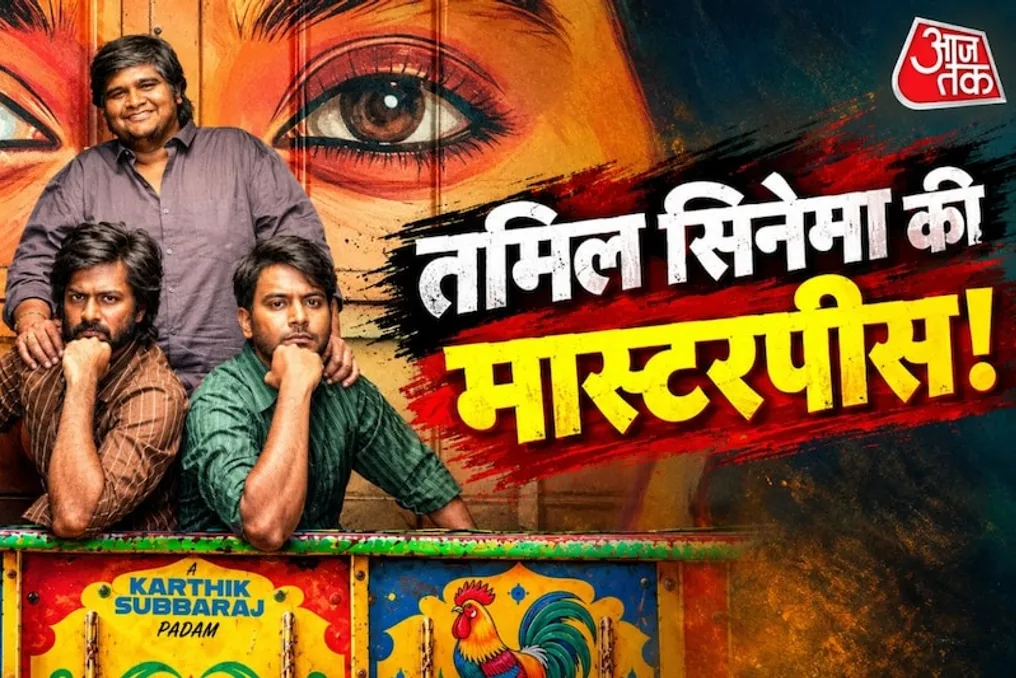
Previously, masculinity was associated with strength and dominance. But what happens if a girl appears in this world built on concepts of masculinity, capable of shaking these ideas? This is the story presented by Thai film director Karthik Subbaraj in his film 'Dorothy,' which recently premiered on Netflix. Before its theatrical release, the film caused a significant stir in Tamil cinema, and after moving to OTT platforms, it is being discussed even more actively, being called one of the best Tamil films of the year.

The plot tells the story of two close friends, Karthik (Rishikant) and Subbu (Sannanth), who have been friends since childhood. In youth, Karthik is portrayed as a weak and frightened child, while Subbu is the bravest. Subbu lost his mother and sister early; his father, Visil (Muthukumar), is a man who is not afraid to display his masculinity, and his older brothers share this view.

Over time, Karthik and Subbu undergo significant changes. Karthik transforms from a timid child into a brave and fearless man, while Subbu becomes weaker and more sensitive, losing his initial courage.

Dorothy (Kirthi Suresh) enters the lives of Subbu and Karthik, bringing joy to Subbu. However, Dorothy dies one day due to men in her house. This tragedy has an extremely negative impact on Subbu, as if someone has ripped out his soul. After losing his mother and sister in childhood, he can no longer cope with the shock of Dorothy's death. As a result, he commits an act that deeply damages his family's reputation, and his entire life turns upside down. The step he takes is revealed to the viewer upon watching the film.

In the trailer, director Karthik Subbaraj did not reveal many details, but a suggestion arises about serious changes in the lives of Karthik and Subbu. However, the changes shown in the film deeply affect the viewer's consciousness. Through Subbu's fate in 'Dorothy,' the viewer can understand the importance of self-identity and acceptance in society. The film shows how a person is forced to hide their true self and wear a mask under societal pressure.

The theme addressed by director Karthik Subbaraj is related to transgenderism. He aimed to show the characters' struggle with complete truth and fearlessness. This film is not for everyone; it is made for a mature audience ready to openly look at such topics. The director deserves credit for daring to present this story on the big screen. The emotions touched upon in 'Dorothy' cause the viewer discomfort and make them think about the value of women in this world.

Although the film is not without flaws, it dedicates a lot of time to plot development. It would have been beneficial to show a bit more of Dorothy's story to strengthen the emotional connection with her character, but the director quickly shifted attention to Subbu and Karthik. Even in the character of Karthik's mother, whom Subbu considers his mother, there is a lack of emotion. The only strong bond between the characters in the film is observed between Karthik and Subbu. The musical score in the film is also good; it creates the necessary emotional moments.

Regarding the main actors, Rishikant's performance as Karthik was very good; the viewer feels an emotional connection with him. His character has his own journey, as does all of Karthik Subbaraj's films. Rishikant fully embodied his character and succeeded in doing so. However, Sannanth attracts the most attention. The transformation he demonstrated in the role of Subbu is praiseworthy. Sannanth breathed life into every scene; the film 'Dorothy' largely depended on him. His performance became the real highlight of the film, and he handled the role perfectly. Through Subbu, Sannanth conveys all the necessary emotions. Furthermore, Kirthi Suresh, although appearing briefly, impresses in the role of Dorothy. Her innocence and smile touch the viewer's heart.

Popular