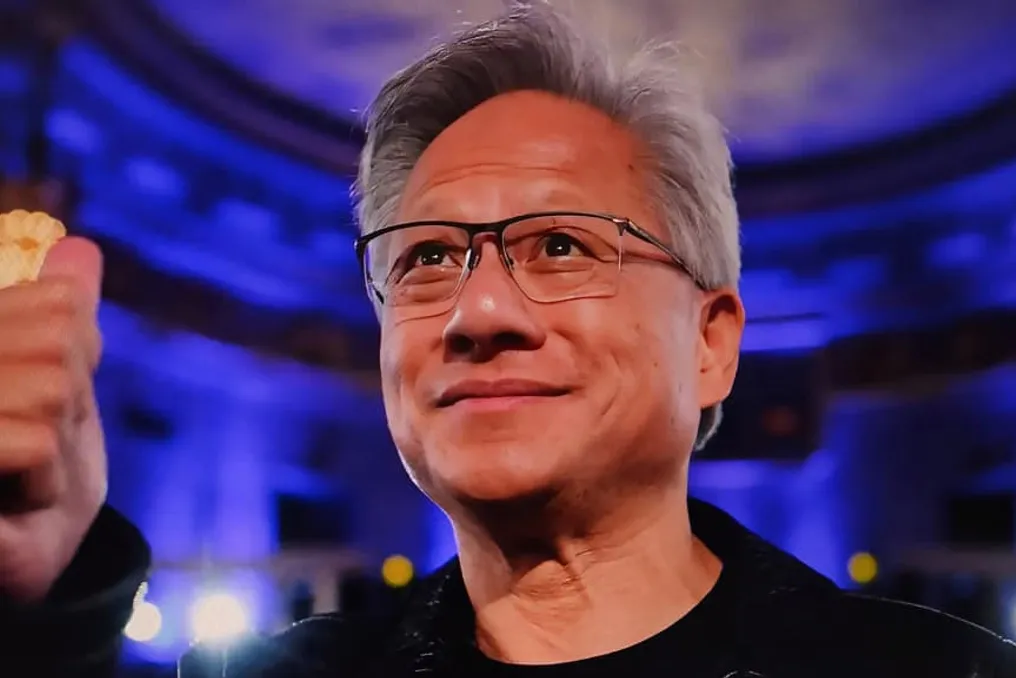
Nearly 600,000 Nvidia chips remain held in Hong Kong awaiting release for mainland China
Read more
Olhar Digital
olhardigital.com.br

Nearly 600,000 Nvidia chips remain held in Hong Kong awaiting release for mainland China

Approximately 600,000 Nvidia H200 chips are stored in Hong Kong, awaiting permission from Beijing authorities to be shipped to the Chinese mainland. Despite high demand for advanced artificial intelligence processors from technology companies, the Chinese government has yet to grant authorizations for large import volumes.

This hesitation from Beijing reflects a concern about technological dependence on the United States. However, Chinese companies need these Nvidia chips to meet the growing need for computing power.

In recent months, there have been approvals for the entry of some H200 units. Sources informed to Reuters indicated that major Chinese internet corporations received about 10,000 chips each. Additionally, small quantities also arrived in the country through indirect routes and intermediaries.

Although the H200 is not Nvidia's latest AI processor, it possesses capabilities that current Chinese solutions have not yet matched. This chip is particularly valuable for training AI models when used in conjunction with the manufacturer's provided software.

The restricted supply is directly linked to export controls implemented by the United States since 2022, which limit Chinese access to advanced Nvidia chips and the equipment necessary for their production. With fewer units accessible through official channels, buyers have turned to the parallel market, resulting in price increases.

At the end of October, servers equipped with these processors were sold in mainland China for prices close to US$ 900,000, which is equivalent to approximately R$ 4.95 million, according to an individual familiar with the matter.

Restrictions on chips are part of a broader trade dispute between the United States and China. Washington had vetoed the export of the H200 to the Chinese market, but the Donald Trump administration changed this policy the previous year, allowing Nvidia to sell the processors to pre-approved Chinese clients after bilateral negotiations.

In May, Reuters reported that the United States had approved sales to ten Chinese companies, including Alibaba, Tencent, and ByteDance. However, Beijing imposed its own restrictions on imports.

In July, The Information reported that Chinese authorities signaled to companies such as Alibaba, ByteDance, and DeepSeek the possibility of acquiring limited volumes of H200 to train AI models. According to the publication, the total number of approvals could be less than 200,000 units. Furthermore, the government wanted these companies to prioritize the use of domestic processors for the inference phase of AI models.

Even with the search for alternatives, new orders for Nvidia products continued. A Reuters report from October showed that ByteDance, Alibaba, and Tencent ordered more than 3 million RTX Pro 5500 graphics cards. This model is less powerful and complies with U.S. export regulations, with a combined list price of the orders exceeding US$ 35 billion.

Similar stories

Chinese startup Moonshot AI seeks access to Nvidia chips via European data centers to circumvent US restrictions
Read more
olhardigital.com.br

Chinese startup Moonshot AI seeks access to Nvidia chips via European data centers to circumvent US restrictions

Moonshot AI, a Chinese startup responsible for developing the Kimi artificial intelligence models, has initiated negotiations to rent computational capacity in data centers located in Europe. These data centers are equipped with advanced Nvidia chips, including the Blackwell systems, whose direct export to China is prohibited by the United States.

According to information obtained by CNBC, the Chinese company plans to gain access to these components remotely, using cloud computing services. This mode of access still has gaps in American legislation.

Four individuals with knowledge of the matter informed CNBC that Moonshot has been in discussions throughout this year with companies known as neoclouds. These companies offer the rental of processing power on cloud infrastructure containing Nvidia GPUs, allowing clients to use the chips without needing to install them in their own data centers.

During the conversations, the Chinese company expressed great interest in leasing cluster capacity that has eight or more Blackwell GPUs installed in Europe. The purpose of this move is to increase access to the computational power necessary to operate its AI models. Two sources cited by CNBC specified that the equipment usage would be for inference, the phase in which models process data and respond to user requests. One of these sources also mentioned interest in capacity for model training.

One informant described the search for these resources as 'very aggressive.' This move comes after the White House declared in July that Moonshot had managed to access Blackwell chips remotely through an installation in Thailand. People familiar with the topic indicated that discussions about renting capacity in European data centers only began after this official declaration.

The interest shown by Moonshot also points to a fragility in U.S. export control policy. Although American regulations restrict the direct shipment of the most sophisticated Nvidia chips to China, current legislation does not grant regulatory bodies sufficient authority to monitor remote access to these components when they are hosted in cloud computing services located in other countries.

Founded in 2023 and headquartered in Beijing, Moonshot AI is among the leading Chinese developers of artificial intelligence models. In July, the company launched Kimi K3, a model that, according to the company itself, reduced the gap compared to systems from Anthropic and OpenAI. This tool has established itself as a lower-cost option compared to American solutions.

The growing demand has put pressure on the company's infrastructure, leading it to temporarily suspend new registrations to prioritize existing users. In a post made on LinkedIn, the company announced that it would be 'adding capacity as quickly as possible and will reopen slots for new subscriptions in batches.'

The demand for processing is also reflected in the commercial terms discussed. In this market, clients usually make an advance payment of a portion of the total contract value to secure access to the infrastructure. A CNBC source reported that it was suggested that Moonshot make an initial payment between 30% and 50% higher than that of a non-Chinese client. Agreements concluded with Chinese companies may result in higher initial values, as cloud operators and investors seek to protect themselves against a potential future ban on remote access.

The possibility of Chinese corporations using American chips through foreign structures is at the heart of regulatory discussions in Washington. Lawmakers have introduced the Remote Access Security Act (RASA), a bill aimed at expanding export controls to cover remote access to strategic equipment and software via cloud services. Although this proposal was approved by the House of Representatives in January, it is still awaiting approval in the Senate.

US authorities investigate Nvidia chip smuggling scheme to China, noting CEO and acquaintance
Read more
www.aajtak.in

US authorities investigate Nvidia chip smuggling scheme to China, noting CEO and acquaintance

US agencies are conducting an investigation into a suspicious network involved in smuggling advanced AI chips into China. The investigation also examines aspects of espionage and the collection of confidential commercial information for Beijing.

This investigation has drawn attention to the connection between Nvidia CEO Jensen Huang and individuals under scrutiny. At the center of attention is Alice Huang, also known as Huang Le, a Chinese businesswoman associated with the Singapore-based data center company MegaSpeed.

According to The New York Times, she is suspected of collecting commercial information for China, and reports have emerged about her close relationship with Jensen Huang. Alice Huang is a Chinese citizen and previously worked at MegaSpeed, based in Singapore, as a senior executive director.

Although little is known about her personal life or early career, her professional position placed her at the epicenter of the global AI chip supply chain. MegaSpeed acquires computing equipment running on Nvidia chips and acts as an intermediary, leasing data center capacity to various Chinese tech giants, including Alibaba.

US authorities are determining whether companies operating through Southeast Asia helped Chinese businesses circumvent restrictions on advanced AI chips. This raises questions about the business model itself. During the investigation, Alice Huang held the position of senior executive director at MegaSpeed. Through her position and interaction with Nvidia, she came into contact with CEO Jensen Huang.

It is reported that the US had already suspected her of assisting in the smuggling of Nvidia chips into China, after which she was placed under surveillance.

Nvidia assumes billions in financial risks to support Artificial Intelligence growth
Read more
olhardigital.com.br

Nvidia assumes billions in financial risks to support Artificial Intelligence growth

Nvidia is expanding its participation in the artificial intelligence (AI) market beyond simple semiconductor production. The company, under the leadership of Jensen Huang, has begun financing corporations that create AI models and build data centers, offering guarantees and other financial instruments to enable large-scale projects. However, this strategy is being tested due to market instability and growing concerns about the indebtedness of its partners.

In recent financial reports, Nvidia indicated holding $36 billion (approximately R$ 194 billion) in off-balance sheet financing agreements and guarantees, intended for cloud computing companies specializing in AI, known as neoclouds. This amount is added to a guarantee of up to $105 billion (about R$ 567 billion) linked to an OpenAI data center project located in Ohio, USA. Additionally, Nvidia has signed contracts to lease future data centers worth $20 billion (about R$ 108 billion), which will subsequently be passed on to third parties.

It is important to note that these commitments do not imply that the manufacturer has already disbursed all these amounts. In most arrangements, the obligation to pay is conditional on specific events, such as the default of project participants or the failure to meet financial obligations.

Despite this, the magnitude of these operations raises questions about the level of risk Nvidia is willing to take to foster the expansion of AI infrastructure. Nvidia's tactic benefits from a crucial advantage: the ability to access credit on favorable terms and move large volumes of capital.

In addition to providing the essential graphics processors for training and running AI models, the company helps its customers obtain financing to acquire equipment and set up operational infrastructure. This support can occur in various forms. In certain pacts, Nvidia guarantees a minimum resale price for the equipment or a minimum contract value for computational capacity. In other cases, it commits to buying the processing capacity if the supplier cannot find another buyer.

Taking CoreWeave as an example, the chip manufacturer committed to acquiring up to $6.3 billion (about R$ 34 billion) in computational capacity if the company fails to find another client. Nvidia also makes direct investments in industry companies. Its portfolio of holdings reached $99 billion (about R$ 535 billion) in the second quarter, including significant investments in OpenAI and Anthropic. The purpose is to increase the number of clients capable of using its systems; the more infrastructure built and models developed, the greater the demand for the company's chips.

Jensen Huang justified this approach by telling CNBC that the demand for neocloud services is at exceptional levels, but there is a shortage of working capital to fund the expansion. According to the executive, although there is demand for computational capacity in various AI niches, the availability of financial resources does not keep pace with this rhythm.

Nvidia's financial records also highlight the scale of this strategy. In August, the company detailed over $500 billion (about R$ 2.7 trillion) in off-balance sheet commitments planned for the coming years, most of which mature by fiscal year 2029. In the same month, Huang announced a collaboration with six major asset managers to boost up to $500 billion (about R$ 2.7 trillion) in funding for AI infrastructure. This plan aims to treat computational infrastructure as an asset class capable of attracting institutional investors. The agreement covers guarantees of up to $125 billion (about R$ 675 billion) related to the residual value of GPU financings, the graphics processors used in AI systems.

Nvidia also participates in specialized infrastructure funds. The company invested $2 billion (about R$ 10.8 billion) in Brookfield's first AI infrastructure fund, which aims to raise $10 billion (about R$ 54 billion). The article also mentions investment vehicles linked to KKR and Valor Equity Partners.

The manufacturer has its own resources to sustain this strategy. In the first half of the year, it generated $70 billion (about R$ 378 billion) in free cash flow, while AMD recorded just over $4 billion (about R$ 21.6 billion). This financial solidity explains Nvidia's ability to accept commitments that other corporations might not support under the same circumstances.

A prominent example of this strategy is the OpenAI data center in Pike County, Ohio, USA. This undertaking could become the world's largest data center and anticipates the use of Nvidia equipment for a minimum period of 20 years. The guarantee of up to $105 billion is tied to different scenarios involving the lease contracts. If OpenAI defaults on payments or goes bankrupt, Nvidia may take over the contract, seek another tenant, or request the sale of the facility. Under certain conditions, the manufacturer will have to cover the difference if the new lease or sale is below a previously established minimum price. However, this guarantee can be extinguished if OpenAI offers its own guarantees or achieves a sufficiently high credit rating.

This agreement demonstrates how the manufacturer seeks to enable projects that require extraordinary investments, but it also exposes its vulnerability if customers fail to meet their financial obligations. The main concern is that the computational capacity currently being built may not generate sufficient revenue to justify the investments made.

David Trainer, founder and CEO of the financial consultancy New Constructs, warned CNBC that demand for processing below high industry expectations could cause problems. The risk affects not only Nvidia but the entire AI infrastructure ecosystem. Companies building data centers must bear installation, energy, and equipment costs, often before receiving returns from contracts with their customers. If demand for computing decreases or contracts lose stability, some of these companies may struggle to honor their debts, making the financial guarantees and purchase commitments assumed by Nvidia more relevant.

New Constructs calculates that the net present value of the manufacturer's off-balance sheet liabilities in fiscal year 2026 will exceed $153 billion (about R$ 826 billion), representing an increase of over $100 billion (about R$ 540 billion) compared to the previous year. Moody's also monitors the growth of off-balance sheet financial commitments across the AI sector. According to the rating agency, guarantees were the type of off-balance sheet financing structure that grew the most in 2026.

This does not imply that all these commitments will turn into losses. The impact will depend on the specific conditions of each contract, the behavior of the customers, and the residual value of the equipment and facilities if they need to be sold. In turn, Nvidia argues that its cloud partners have strong demand and solid sales pipelines but face restrictions in building infrastructure at an adequate scale. The company is also seeking insurers who can absorb part of the risks associated with equipment depreciation. For Tom Hoad, an executive at Howden, insurers can assist in certain operations, but they do not yet constitute a complete solution to the challenge. The test for Nvidia will be maintaining the necessary funding for AI expansion without incurring a financial exposure that becomes unmanageable if industry projections do not materialize.
Popular