Eicma 2026 Summary: Main Launches and News for the Motorcycle Market
Read more
AutoPapo
autopapo.com.br

Eicma 2026 Summary: Main Launches and News for the Motorcycle Market

Eicma 2026 was held for its 83rd edition and stood out as the largest in its history, featuring 765 exhibitors, 2,142 brands from 52 countries, and covering an area of 300,000 square meters distributed across ten pavilions in the Rho complex in Milan. This space represents an increase compared to 2025 and is the largest used by the Italian fair, with 74% of the present brands being foreign.

The event, considered the largest two-wheeled fair in Europe, brought several relevant novelties for both the global and national markets. Although many models displayed in Milan may have potential to reach Brazil, so far, only two brands have confirmed the arrival of models for the country.

News for the Brazilian Market

The most direct confirmation for the Brazilian public came through an Instagram post. Rider Leandro Melo, in a post recorded during Eicma, alongside the official profiles of Kawasaki Brasil and Sonia Harue, announced three models destined for Brazil: KLE 650, Versys 900, and KX 327. Details regarding prices or deadlines were not disclosed.

These three models are recent launches from the brand. The Versys 900 is a crossover that fills the gap between the Versys 650 and the Versys 1100, equipped with four cylinders, 122 hp, and 9.9 kgfm. The KLE 650 is an adventure bike with a parallel twin engine, reviving an old nomenclature, positioned above the KLE 500 and expected in Europe in early 2027.

The KX 327 is notable for being a two-stroke motorcycle with a 327 cm³ single cylinder, liquid-cooled, and using electronic injection instead of a carburetor, focused on off-road use. It is the first two-stroke above 250 cm³ developed by Kawasaki in approximately two decades.

International Models Highlighted

The Chinese-controlled Italian company exhibited two adventure bikes in Milan, with the smaller one, the Coguaro, confirmed for delivery to Brazil, according to Motociclismo at Eicma 2026. Its price or schedule has not yet been defined. The Coguaro is an entry-level enduro that shares a platform with the Kanguro 300, featuring a reinforced rear rack for passengers and luggage, in addition to a repositioned tank. Its engine is a 292.4 cm³ single cylinder, DOHC, liquid-cooled, producing 34 hp at 9,000 rpm and 2.75 kgfm at 8,500 rpm, complying with Euro 5+ standards and having a declared top speed of 145 km/h.

In terms of specifications, the Coguaro follows the enduro standard, with 21 and 18-inch wheels, a conventional 37 mm fork with 230 mm travel, a 230 mm Pro-Link rear suspension, a ground clearance of 255 mm, a seat height of 845 mm, a dry weight of 160 kg, a 14-liter tank, and switchable ABS. In the 300 cm³ segment with a 21-inch wheel, its main competitor in Brazil is the Honda Sahara 300.

The Camel is presented as the main bet, being a 670 cm³ maxitrail that revives the name of the twin-cylinder bike from the 1980s that participated in the Paris-Dakar. It generates 81.5 hp at 10,000 rpm and 7.1 kg.m at 7,000 rpm, and has a reduced power version for the A2 category in Europe. Its chrome-molybdenum steel trellis frame includes an aluminum swingarm, 48 mm inverted fork, 250 mm travel on both ends, 280 mm ground clearance, 850 mm seat height, Brembo brakes (two 300 mm discs in the front and 255 mm in the rear), a 20-liter tank, and a dry weight of 200 kg. The Camel did not receive confirmation for Brazil.

The Africa Twin received its biggest revision since the CRF1000L, which occurred ten years prior. The parallel twin was increased to 1,131 cm³, with a 94 mm bore and a compression ratio of 12.1:1, delivering 119 hp and 12.1 kgfm. The frame and rear swingarm became 1.4 kg lighter, and the tank was redesigned to extend partially under the seat, aiming to reduce the center of gravity. The Showa EERA suspension now incorporates the Skyhook Control system, and the dashboard features two screens, 5.7 and 7 inches, supporting wireless CarPlay and Android Auto.

There are three versions of the Africa Twin with the same engine, frame, and electronics, differentiated by front wheel, suspension, weight, and tank. The standard version uses a 21-inch wheel, an 18.8-liter tank, and weighs 237 kg. The Adventure Sports comes with a 19-inch wheel, a 24.2-liter tank—offering an estimated range of 480 km according to Honda—and weighs 245 kg. The Honda Sensing Ride variant is the first bike from the brand with a rider assistance package, including a DCT gearbox and two radars for adaptive cruise control, collision warning, and blind spot detection, but it reaches 256 kg, almost 30 kg heavier than the lightest version in the line. The Enduro Sports, aimed at off-road, weighs 228 kg, has mechanical suspension of 240 mm (front) and 230 mm (rear), 260 mm ground clearance, a manual gearbox, and HRC tricolor paint, without the adjustable windscreen of the others.

The CBR1000RR-R Fireblade 2027 was also reformulated, with Honda stating that about 75% of the components were changed. Power remains at 217 hp, but the peak torque of 11.6 kgfm is now reached at 10,500 rpm, 1,500 rpm earlier than the 2024 model, aided by variable intake trumpets. The bike weighs 199 kg with a full tank, presents greater front load (53.3% vs. 52.8%), a frame with 20% less lateral rigidity, and a shorter swingarm. The design eliminates winglets, maintaining aerodynamic load with sidepods on the lower part of the fairing. Besides the standard version, there are the SP variants, with semi-active Öhlins S-EC 3.0 suspension, and the HRC Works Edition, intended for the track, with adjustable steering angle and swingarm pivot.

The stand also displayed the V3R 900 E-Compressor, a planned production model with a V-triple engine and what Honda describes as the world's first electronically controlled compressor for motorcycles, according to the manufacturer's own research.

Other motorcycles presented include the ADV125, with a 125 cm³ eSP+ engine and a 5-inch TFT display; the CBR500R Four, equipped with a four-cylinder engine and E-Clutch electronic clutch; the RN0, the brand's first off-road electric bicycle, developed with ROTWILD; and the EV Outlier and Onitsuka Tiger Honda Mid Sports concepts.

Yamaha Innovations

Yamaha focused on a new category in Milan with the RW series, which blends scooter and trail characteristics: flexible riding, long-travel suspension, off-road tires, and foldable foot platforms.

The RW700 uses the 689 cm³ CP2 twin, generating 69.3 hp and 6.6 kgfm, coupled with the Y-AMT automated transmission—the first developed for scooters, with automatic and manual modes controlled by handlebar buttons. It features a six-axis IMU, Road and Gravel riding modes, traction, slip, and braking controls, a 41 mm inverted fork with 160 mm travel, a 155 mm monoshock, switchable rear ABS, 17 and 15-inch spoked wheels with Pirelli Scorpion Rally STR tires, and 170 mm ground clearance. The Explore version adds adjustable fork, heated grips and seat, a center stand, and illuminated controls.

The RW350 introduces a 327 cm³ single cylinder producing 29.2 hp at 7,000 rpm and 3.2 kgfm at 5,750 rpm, along with the Yamaha Dynamic Ride architecture: the engine is rigidly fixed to the chassis, without rubber mounts, allowing only the CVT unit to oscillate. It also features a six-axis IMU, electronic throttle, traction control, cruise control, a 5-inch TFT display, and 185 mm ground clearance.

In the electric segment, the NMAX E employs the new A1 EV platform, with a 3.5 kWh lithium battery, a 7.5 kW (approximately 10 hp) motor, and 3.4 kgfm, an 800 W onboard charger, and a range of up to 104 km in the WMTC cycle. Yamaha compares it to a gasoline 125. The XENTER E follows the same concept, with 16-inch wheels and a 108 km WMTC range. The NMAX E is scheduled to arrive in European spring 2027, with production in Vietnam.

Royal Enfield Presents Novelties

Royal Enfield used Milan to showcase the project that will sustain its next phase: a 743 cm³ parallel twin, the largest displacement ever used by the brand, which will be launched simultaneously in two models: the Himalayan 750 adventure bike and the Continental GT 750 cafe racer. Previously, the top-of-the-line was the 650 cm³ twin.

This engine generates 55 hp at 7,000 rpm and 6.42 kgfm at 5,000 rpm, with 90% of the torque available from 3,500 rpm, according to Royal Enfield. It uses a six-speed gearbox, assisted and slipper clutch, maintaining air and oil cooling, a less common solution in mid-sized adventures, which are usually liquid-cooled. The manufacturer claims this new unit has the same weight as the 650 cm³ unit.

The Himalayan 750 is the most electronic Royal Enfield to date, offering five riding modes, four levels of traction control, cornering ABS, and inclination-sensitive traction control, all managed by a six-axis IMU, in addition to cruise control and tire pressure monitoring. Its four-inch TFT display includes navigation and two USB-C ports (one of 27 W).

The suspension of the Himalayan 750 is Showa on both sides, with a 43 mm inverted fork and 190 mm travel in the front and 175 mm in the rear, 19 and 17-inch wheels, 280 mm (dual) and 255 mm brakes, a seat height of 815 mm, a ground clearance of 205 mm, a 17.8-liter tank, and a curb weight of 224 kg. With 55 hp for 224 kg, the ratio is considered modest for the category, aligned with the proposal of low torque and trail, but an aspect to consider on roads and with luggage.

The Continental GT 750 uses a revised version of this same engine and was announced as the highest-performing bike in the brand's history, although Royal Enfield has not disclosed power, torque, price, or date, making immediate comparisons with the Himalayan impossible. It will come in two configurations: one without fairings and another faired with a lower handlebar, and will feature intentionally simplified electronics.

The brand also exhibited the Flying Flea S6 electric scrambler, derived from the FF C6, with an unprecedented off-road mode and a projected launch for mid-2027, without providing data on power, battery, or range.

In Europe, the Himalayan 750 is already available for pre-order with prices ranging from € 7,390 (alloy wheels), € 7,790 (spoked wheels), and € 9,290 (Flagship version with Givi panniers). These are European launch prices and do not serve as a conversion reference for Brazil. None of the three models had confirmed arrival in Brazil.

Suzuki and BMW Launches

The GSX-10R is a faired sportbike derived from the GSX-S1000, positioned one level below the GSX-R1000. It retains the K5 999 cm³ engine, now in Euro 5+ configuration, delivering 152 hp and 10.8 kgfm, and weighs 214 kg in running order, with an 18-liter tank and a seat height of 810 mm from the ground. The electronic innovation is Slide Control, which manages rear wheel slip in corners, complemented by Brake Hold, which keeps the bike stationary on inclines. Suzuki reports that there are 15 electronic functions, the highest number ever applied to a brand's motorcycle. The certified fuel consumption is 15.8 km/l (WMTC), and sales will gradually begin from mid-2027.

The SV-7S represents the evolution of the SV650, maintaining the 645 cm³ V-twin, now with 73.4 hp and 6.5 kgfm, in addition to electronic throttle, three riding modes, three levels of traction control, and bidirectional quickshifter. The steel trellis frame and 41 mm fork are maintained. Weighing 200 kg, it has a seat height of 785 mm, a 14-liter tank, and a fuel consumption of 24.4 km/l (WMTC). Its arrival in the European market is expected in spring 2027.

BMW exhibited the M 1000 RS in Milan, which the manufacturer calls the most powerful naked bike in the world. Based on the 999 cm³ engine of the M 1000 RR superbike, it delivers 218 hp and 11.5 kgfm. BMW declares a 0 to 100 km/h time of 3.2 seconds and a top speed of 283 km/h. The bike starts as the M 1000 R with the M Competition package, receiving RR footpegs, a 20 mm higher seat (850 mm), titanium exhaust, carbon winglets, 17-inch M Carbon wheels, and DDC electronic suspension. 1,000 units will be manufactured globally, with sales starting in March 2027, and a price of 40,000 euros in Germany, already including 19% VAT, representing a European market value with no direct link to local cost.

The 1390 Super Duke GT EVO uses the 1,350 cm³ LC8 V-twin, producing 190 hp and 14.8 kgfm, with variable Cam-Shift, WP APEX SAT semi-active suspension with thru-rod fork, Brembo Stylema calipers, and an 8.8-inch touchscreen panel with integrated navigation.

An unexpected launch was the 450 RC, a two-cylinder sportbike scheduled to enter production at the end of 2027 as a 2028 model year. KTM detailed its specifications, including a 43 mm WP APEX inverted fork and swingarm.

Similar stories

Royal Enfield unveils a range of new motorcycles at EICMA 2026 exhibition
Read more
www.aajtak.in

Royal Enfield unveils a range of new motorcycles at EICMA 2026 exhibition

Royal Enfield, a brand known for its unique style and passion in the motorcycle world, presented a wide range of new models at the EICMA 2026 exhibition, which began in Milan, Italy. The company commemorates its 125-year journey, preserving its heritage while expanding its ambitions.

At the EICMA show, the company demonstrated various new motorcycles, including the powerful Himalayan 750, Continental GT 750, and the Flying Flea S6 Scrambler model, which is a gift for both custom bike enthusiasts and the general public. Royal Enfield used its 125th anniversary to present a new strategy and an updated product lineup to the world.

Now, in addition to traditional motorcycles, the company is focusing on models with larger engines, electric mobility, and the culture of custom motorcycles.

The centerpiece of the exhibition was the Royal Enfield Himalayan 750. This is the company's first model with a 750cc engine, specifically designed for long-distance travel and tackling challenging routes. Previously, the company popularized motorcycling for enthusiasts with the Himalayan 411 about ten years ago, and now the Himalayan 750 elevates this segment to a new level.

This model is equipped with a new 743cc parallel-twin air and oil-cooled engine. It is capable of generating 63 Nm of torque at 5000 rpm. Notably, 90 percent of this torque, or about 56.7 Nm, is achieved at only 3500 rpm, promising better power in difficult conditions and various riding modes.

The Himalayan 750 features five riding modes, a 6-axis Inertial Measurement Unit (IMU), ABS, lean-sensitive traction control, and cruise control. It has a 19-inch front wheel and a 17-inch rear wheel, both tubeless. The company will offer it with both cast and spoked wheel options. To ensure comfortable long journeys, it includes an adjustable windscreen, separate seats for the rider and passenger, and a load capacity of 195 kg. The motorcycle is designed for those who love traveling on all types of roads, from mountains to long highways.

The next presentation was the Continental GT 750, which is currently the most powerful production motorcycle model in the brand's lineup. It is a sportier version of the company's famous cafe racer series. It retains the signature style of older GT models but emphasizes a more modern design and increased performance.

The Continental GT 750 uses an advanced version of the new 743cc twin-cylinder engine found in the Himalayan 750. The company claims that the Continental GT 750 will be the most high-performance production motorcycle model, offering improved components, premium materials, and numerous modifications to enhance efficiency.

The model is equipped with a special hybrid dual-panel TFT display, which combines retro design with modern technology. It will be presented in two configurations: a standard model with an open fairing and a faired version. In the faired model, the handlebars are positioned lower, providing the rider with a sportier posture. Royal Enfield offers it in three color schemes: Red Line, TT Blue, and Master Clean.

Royal Enfield also introduced the new S6 Scrambler under its electric mobility brand, Flying Flea. This model promotes the concept of the company's City+ electric mobility, showing that electric motorcycles can be used not only for city rides but also for adventures.

The Flying Flea S6 is developed on the basis of the company's light and flexible C6 platform. It is equipped with a high-power electric motor and features an enduro-style seat, giving it a scrambler look. According to the company, it can be easily used in city traffic as well as on rough roads.

The electric motorcycle is equipped with a round touch display running Fleaware.OS, as well as multiple riding modes and driver assistance functions. A special feature is the new off-road mode, presented for the first time. The Flying Flea S6 will be available in two colors—Dart Yellow and Lightning Grey, with a launch planned for Summer 2027.

In addition to new production models, Royal Enfield paid special attention to the custom motorcycle culture. The company, in collaboration with the renowned custom motorcycle brand Deus Ex Machina, presented a special custom edition of the Shotgun 650, named 'Son of Gun'. This motorcycle was crafted with particular care: it combines dark red, cream, and gold colors, features special graphics on the fuel tank, a piano black finish on the 650 Twin engine casing, contrasting aluminum wheels, and a brown leather seat with the signature Deus branding.

Kawasaki presents the quadruped robot Corleo at EICMA 2026 fair in Milan
Read more
autopapo.com.br

Kawasaki presents the quadruped robot Corleo at EICMA 2026 fair in Milan

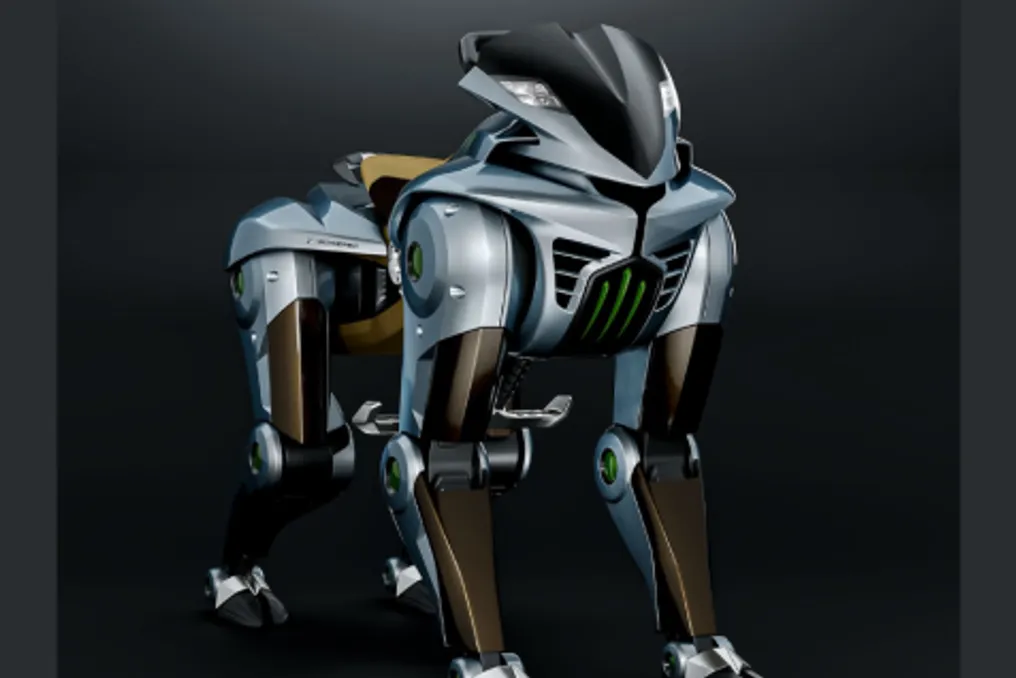
One and a half years after being displayed at Expo 2025 in Osaka, the robotic vehicle Corleo will be presented at EICMA 2026 in Milan. Kawasaki Motors Europe confirmed that the four-legged robot will be present at booth N46 of Pavilion 11, between November 5th and 8th.

However, visitors will not see the robot in motion at this event. According to Kawasaki, the exhibited unit is only a full-size prototype, serving to illustrate the physical dimensions of the project, essentially functioning as a model. In its previous appearance in Osaka, the Corleo demonstrated only limited movement, managing to stand up and perform small postural adjustments.

There is a considerable difference between this static version and the promotional images released by the brand. The promotional videos show the vehicle jumping and running on uneven terrain, a functionality that is still under development and cannot be demonstrated at the fair.

Corleo's Features and Proposal

Kawasaki categorizes Corleo as an RMV (Robotic Multi-legged Vehicle), meaning a multi-legged robotic vehicle. The central idea is to replace the traditional wheels of a motorcycle with four articulated legs equipped with independent actuation. This would allow the vehicle to traverse mountainous and irregular surfaces where conventional vehicles face limitations.

In terms of propulsion, the vehicle uses a 150 cm³ hydrogen-powered engine that acts as an electricity generator. The fuel is stored in tanks located at the rear. During the initial presentation, the company also mentioned features such as anti-slip treads and a vision system equipped with artificial intelligence, capable of identifying terrain, avoiding obstacles, and providing illumination during travel.

Controlling Corleo differs from the methods used in motorcycles or ATVs. The operator guides the robot through body weight transfer, similar to riding a horse, with sensors interpreting these movements to adjust the legs in real time.

Additionally, Kawasaki plans to implement its own navigation system. This system will take into account variables such as weather, temperature, ground condition, and even the presence of wildlife to suggest safe routes. This information will be displayed both on the vehicle's dashboard and on connected devices.

Future Vision and Development

All these innovations are grouped under the concept called "Safe Adventure," which aligns with the company's three pillars of Group Vision 2030: near-future mobility, remotely connected society, and environmental and energy solutions. The development of this project is under the responsibility of the Safe Adventure Business Development team, which reports directly to the president of Kawasaki Heavy Industries, signaling the internal importance of the project.

Shigemi Tanaka, General Manager of Kawasaki Motors Europe, stated that Kawasaki is at the forefront of various research and areas of operation. He emphasized that CORLEO exemplifies not only the company's vast technical, industrial, and environmental experience but also its commitment to building a carbon-neutral future. Tanaka expressed hope that visitors will show interest in the robot, in addition to the 2027 motorcycle line displayed at the booth.

Although Corleo was shown in April 2025 without a defined launch date, Kawasaki now projects its large-scale commercialization around 2035. This implies a development period of nearly a decade before the vehicle achieves the capabilities seen in the videos. For now, participation in the Milan fair offers the chance to view the robot in person.

LEQI aims to transform daily transport by developing innovative mobile devices
Read more
technode.com

LEQI aims to transform daily transport by developing innovative mobile devices

According to the QYResearch report for 2026, LEQI's Megawheels brand ranked fourth among manufacturers in the global market of self-balancing two-wheeled scooters. In Japan, Megawheels topped the rankings with two million users. These achievements reflect LEQI's ambition to enter foreign markets and build a sustainable global business.

In urban environments, where a two-kilometer trip can be problematic due to traffic jams, parking difficulties, or lack of public transport, electric scooters offer an alternative, provided they are portable, reliable, and easy to use.

This is the market segment that LEQI, based in Shenzhen and founded in 2016, has captured. Today, its product line includes electric scooters, self-balancing vehicles, e-bikes, electric luggage systems, and motorcycles.

The company's main objective is to create products that align with local commuting habits, meet regulatory requirements, and gain user trust in unfamiliar territories. Although the idea seems simple, its execution presents a significant challenge.

One of LEQI's new developments is the L3 Smart Electric Suitcase, which goes beyond the traditional scooter. This product was recognized in the Red Dot Award: Product Design list for 2026. It combines luggage with a riding platform: a foldable chassis and handle allow the suitcase to be used as a scooter, while wide wheels ensure stability both while moving and while seated.

According to the Red Dot description, the suitcase is equipped with LED strips and sensors that allow it to follow the owner and avoid obstacles. The design was praised for successfully merging luggage functions with personal mobility. The L3 model demonstrates LEQI's ambition to integrate mobility technologies into everyday objects, offering travelers a way to combine luggage and transport in one device when moving through large airports or stations.

This concept is part of a broader trend in personal mobility—the integration of transport technologies into items people use daily. Currently, LEQI's portfolio covers city travel, active recreation, and sports, offering products ranging from e-bikes and luggage systems to high-speed motorcycles and dirt bikes.

Within these categories, the company develops competencies in electric drive systems, battery management, sensor control, and connected software. LEQI's expertise in battery management and electric drive systems is applicable to both scooters and e-bikes, while sensors and software can support various types of control and vehicle interaction.

However, having common technology does not imply universal design. An urban scooter must be practical and portable for daily commutes, an off-road motorcycle must handle complex terrain, and a riding suitcase must comply with airport transit restrictions.

Thus, LEQI's task is to adapt its core technologies to diverse needs while simultaneously developing products that are complete solutions in themselves. In 2021, LEQI approved a global branding strategy, utilizing two proprietary brands—Megawheels and LEQI. This step was part of the company's efforts to penetrate foreign markets, where it sold goods through platforms like Amazon and eBay, its own website, and B2B channels.

Furthermore, in 2025, LEQI ranked first globally in electric scooter shipments, and its Megawheels brand had 2 million users and led in Japan. Despite LEQI expanding distribution beyond the domestic market, turning overseas sales into brand recognition, repeat purchases, and reliable after-sales support remains a complex task.

Online marketplaces help manufacturers reach international customers without needing to establish their own retail network. Nevertheless, buyers quickly compare prices, features, and reviews, whereas established brands may have more trust regarding repairs and spare parts.

Regulation adds another layer of complexity. Rules governing electric scooters vary across countries, affecting speed limits, road access, and necessary permits. Products may require different specifications to comply with local norms, and adhering to these rules does not end after customs clearance.

LEQI has experience with these issues. In a 2023 review, the German technology publication heise noted the LEQI smart A11 model as one of the few Chinese scooters possessing the German operating permit Allgemeine Betriebserlaubnis, or ABE.

Each market has its own demands. Understanding local expectations and providing after-sales support can be as crucial for international expansion as the vehicle itself.

In March 2026, LEQI completed a Series B funding round with participation from Xiaomi Group and Shunwei Capital. These funds will be directed towards research in high-power density electric drive systems, real-time decision-making based on artificial intelligence and adaptive control, and next-generation interaction systems. The company also plans to accelerate overseas expansion and strengthen global supply chains and distribution.

The next stage of LEQI's development may not only involve launching new products. It requires engineering, manufacturing, and distribution capabilities to support these products in different markets. LEQI's history reflects a broader issue for Chinese equipment manufacturers: engineering and production skills enable products to reach the market, but they do not guarantee the creation of a global brand.

The L3 model illustrates how LEQI explores new ways of combining mobility with everyday objects, while its scooter business provides a stable product category. Whether this becomes a long-term advantage depends on execution: products must comply with local regulations, function as expected, and remain practical to maintain.

Ratings and design awards attract attention, but building a sustainable international business requires something less obvious: products that organically fit into people's lives, backed by service that continues long after the novelty wears off.

Popular