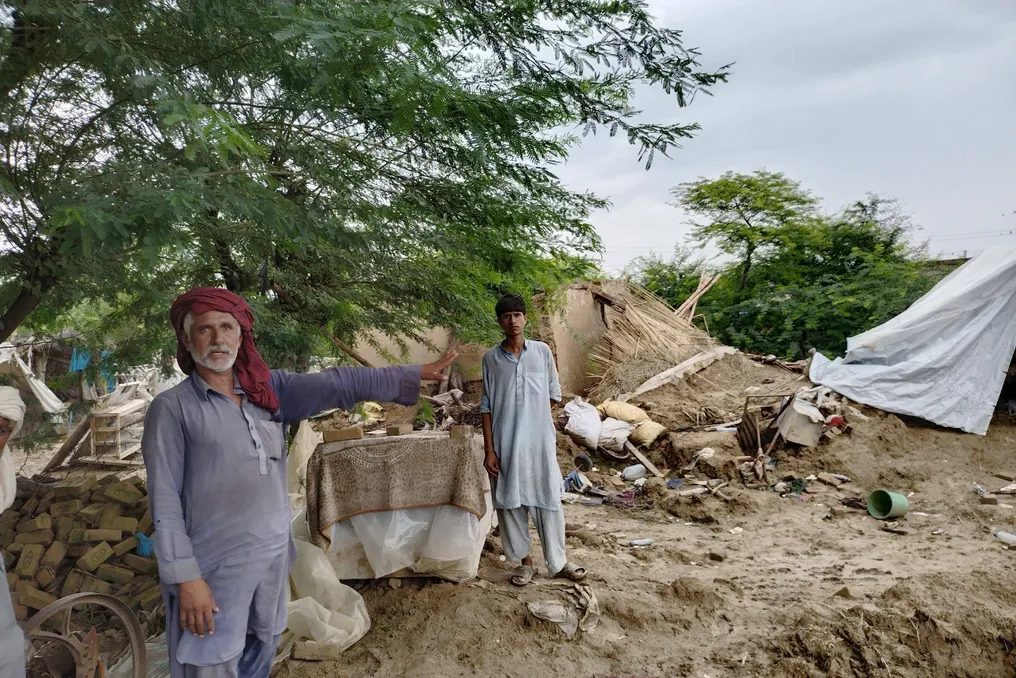
In 2022, devastating floods struck Pakistan, claiming over 1,700 lives and affecting at least 33 million people. Later that same year, the country secured the establishment of a Loss and Damage Fund at the COP27 conference in Sharm El Sheikh.
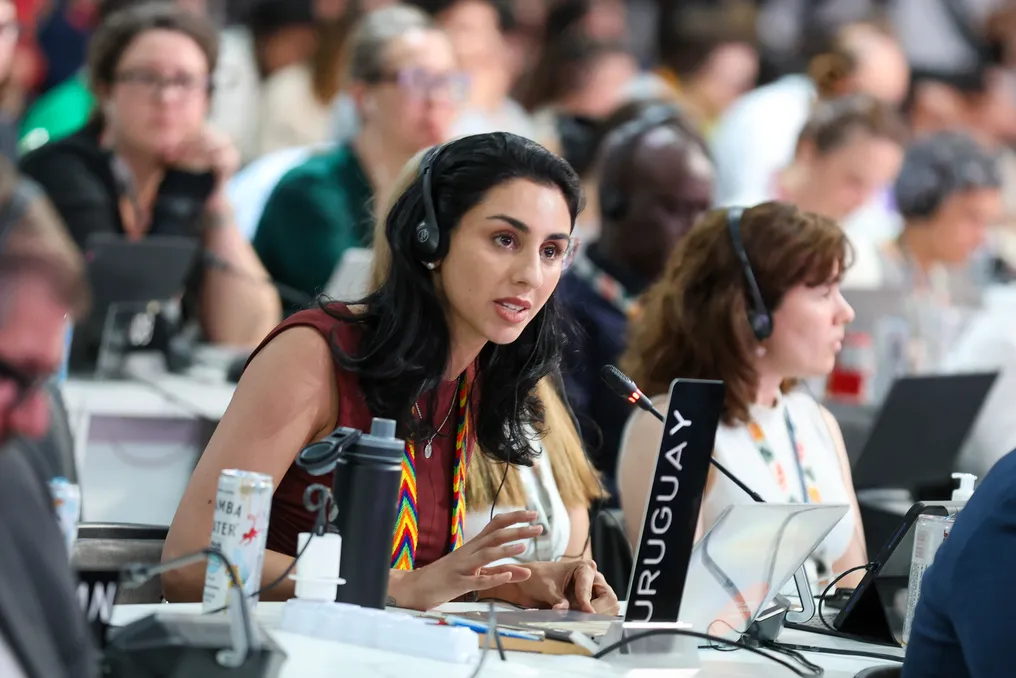
At the upcoming COP31 conference, which she termed the 'Implementation Conference,' it is expected to help translate previous summit promises into measurable results. Shehzad Mansab Haral, Pakistan's State Minister for Climate Change and Environmental Coordination, aims to emphasize this aspect.
Pakistan, one of the world's most climate-vulnerable nations, has yet to receive any funds from the Loss and Damage Fund. Before the November meeting, Haral gave an exclusive interview to Dialogue Earth at her ministry office in Islamabad.
During the conversation, she highlighted the difficulties Pakistan faces in accessing such funding, as well as the country's plans to attract resources at COP31 and the most pressing climate issues facing Pakistan today.
Haral noted that it is now 2026, and those who should have benefited from these funds are still waiting. She emphasized that Pakistan advocated for the creation of this fund because the country required much more than it could provide on its own.
Pakistan possesses diverse landscapes, ranging from the cryosphere to the coast. The country has experienced floods, sudden glacial lake outbursts, heavy rains, and extreme urban weather events. Haral stated that Pakistan has done everything possible at the domestic level to combat climate challenges. However, climate change has created a huge economic burden, forcing the redirection of resources that could go to healthcare, education, or other development projects, towards countering climate-induced disasters.
The current COP conference was dubbed the 'Implementation Conference' or 'COP of the Future,' meaning all previously made promises and commitments must be realized. Developing countries demand to see tangible results from all these declarations.
The Loss and Damage Fund office is now located in Manila. It has requested proposals and project applications from countries, and Pakistan submitted two projects totaling $39.9 million USD, with a limit of $20 million USD per project. Now, they await the results.
Haral pointed out the significant gap between what Pakistan requested and what was promised. The pledged amounts, according to her, are negligible. She also called for a distinction between international pledges, actual contributions to the fund, approved project financing, and the actual disbursement of funds to individual countries, noting that the latter has not yet occurred, although they hope for at least one project approval by December.
Other agencies have provided assistance by offering funds through the Green Climate Fund, the Global Environment Facility, and the Adaptation Fund.
She refuted the common notion that Pakistan has not received many promises due to insufficient transparency or openness, stating that this is a misconception. While acknowledging the critical importance of governance transparency, she stressed that the country pays great attention to this matter.
Haral specifically highlighted that global financing and access to international climate finance have become extremely complex, lengthy, and convoluted processes. Developing countries have to go through complicated and prolonged accreditation procedures. Extensive technical documentation, high costs for project preparation, and long approval processes are required. These barriers can indeed delay funding, even when needs are urgent.
She believes that this architecture of global finance requires serious rethinking and restructuring. Developing countries are the smallest emitters; their contribution is significantly less than that of developed countries. Nevertheless, they are among the main victims of climate disasters. It is unfair to ask developing countries to bear the burden that should fall on developed nations.
The UNFCCC recently stated that the world cannot avoid rising temperatures of 1.5°C agreed upon in the Paris Agreement. The consequences of this are catastrophic, as shown by the recent flooding in Nepal. The Himalayan-Karakoram range spans eight countries, and what happened in Nepal today could happen in Pakistan or any other country tomorrow. Climate disasters recognize no borders.
Pakistan is working on establishing regional partnerships with friendly states. At COP, the country will insist on climate justice. Under the Paris Agreement, this is referred to as 'common but differentiated responsibilities and respective capabilities.' While the entire world bears a collective responsibility to keep temperature rise below 1.5°C, each country can only do what its capabilities allow. The goal may be common, but the responsibilities and capacities differ between developed and developing countries. This must be taken into account when making decisions and conducting negotiations. The country needs technology and capacity building.
If we look at the overall ecosystem of global finance under the Paris Agreement, grants and loans are paradoxically and unfairly directed towards developed countries, which have historically been the largest greenhouse gas emitters. Pakistan is one of the countries with the lowest emissions, contributing less than 1% to the total emissions. Yet, the country is among the most affected. Pakistan and other developing countries receive a very small share of the total allocated funds.
Pakistan's Nationally Determined Contributions (NDC) 3.0 estimates that $565.7 billion USD will be needed by 2035 to address climate vulnerability issues. The Paris Agreement obligates every signatory party to set goals for emission reduction and climate adaptation. These NDCs are presented every five years and must become increasingly ambitious over time.
Despite the challenges Pakistan faces, the country has always demonstrated its commitment to global climate goals. In NDC 3.0, Pakistan forecasts a 50% reduction in greenhouse gas emissions by 2035, of which 17% will be managed domestically, and 33% is conditional reduction dependent on international assistance, provided other parties fulfill their obligations.
The country firmly believes that climate finance should not exacerbate its debt burden, which already weighs heavily on it and other developing nations. Pakistan bears the economic burden of recovery and reconstruction, as well as the need to create early warning systems to prevent the recurrence of disasters.
It is also important to draw a clear distinction between financing commercially viable mitigation measures and financing adaptation and loss and damage. Investments in renewable energy and industrial efficiency improvements can attract concessional loans and private capital. However, flood protection, glacier monitoring, early warning systems, and vulnerable community protection are all necessary public services related to adaptation and resilience. Typically, such interventions do not yield financial returns, thus requiring grant and highly concessional financing.
Pakistan intends to categorically reject additional loans and increases in the debt burden. While the country is prepared to consider highly concessional loans given the required financing volume, grants remain the main priority. Furthermore, the country will advocate for a mechanism that freezes or at least postpones regular debt payments when the country faces a climate disaster. This does not mean that loans should be written off, but they will push for various innovative financial instruments, such as debt swaps.
Pakistan strongly believes in multilateralism and multilateral organizations, considering it the only way forward. One of Pakistan's main problems is the growing gap between required resources and available resources. The country lacks technical potential and institutional governance. The country faces numerous issues: smog, floods, sudden glacial lake outbursts, droughts, urban disasters, urban flooding, heat islands—all of this is present.
Regarding smog and air pollution, the priority is implementing cleaner transport, improving industrial fuel emission standards, air quality monitoring, managing agricultural residues, and controlling pollution, as air pollution poses a serious threat to health and the economy, especially in Punjab. The World Bank supported the Clean Air Program in Punjab with $300 million in funding.
Concerning sudden glacial lake outbursts, monitoring glaciers, hazard mapping, early warning systems, and community preparedness are being strengthened in the Gilgit-Baltistan region. Agriculture is a key priority, as it forms the basis of Pakistan's economy and is extremely vulnerable to climate risks and disasters. To ensure food security and agriculture, more climate-resilient crop varieties, more efficient irrigation systems such as drip irrigation, improved water resource management, heat and drought-adapted farming methods, and climate advisory services to enhance efficiency are being considered.
Pakistan is experiencing variability in precipitation and changing temperatures globally. The country faces both floods and water scarcity, which affects national food security. Pakistan's National Adaptation Plan, like NDC 3.0, incorporates all these issues, providing a framework for ensuring climate resilience in national and provincial development plans.
The author suggests that all stakeholders should work together thanks to the National Adaptation Plan. Mechanisms exist for intergovernmental organizations, interdepartmental structures, and contacts, as well as coordination with provinces, but all of this needs strengthening. The Ministry of Climate Change and Environmental Coordination, together with the Ministry of Energy, is developing a roadmap for the just green transition of Pakistan's energy resources. A special green component is provided in the scheme of the national economic transformation of Urn Pakistan Ministry of Planning. They cooperate closely with the Ministry of Climate Change on this matter.
Climate tagging has been included in the general budget to ensure that any project falling under the State Sector Development Program has a green component. The State Bank of Pakistan has already developed a green taxonomy system that defines economic activities that can be considered environmentally sustainable. Climate-related work is multidisciplinary, and the country is actively working on this.
_