The United States President, Donald Trump, declared this Friday, the 6th, that he intends to offer support to states that show interest in expanding the field of artificial intelligence (AI). In a post on his social media, he praised the technology as a source of prosperity and expressed his support for the advancement of superartificial intelligence.
This declaration comes at a time of strong movement in the stock market of technology companies, coupled with investor apprehension regarding the high costs of AI investment and potential restrictions on building data centers.
Trump assured that he would collaborate with state governments willing to bet on this technology, while criticizing leaders who oppose the expansion of this sector. He wrote: 'As president, I am 100% in favor of Superintelligence (SI) and I will work with the many states in the US that want to become RICH by having it. They are GOLD, and only a foolish leadership will say 'NO' to the wealth it brings!'
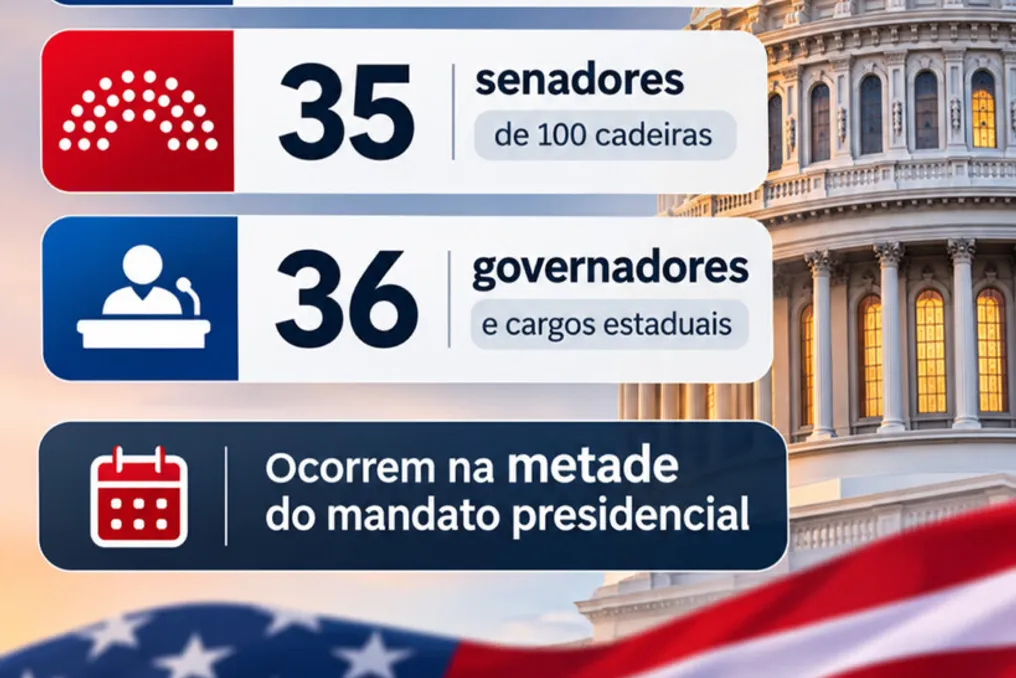
The president did not specify what actions he plans to implement. His statement also follows the victory of the Democrats in the midterm elections held on Tuesday, the 3rd, an event that intensified discussions about possible regulations for the sector.
The electoral outcome introduced new uncertainties into the growth plans of technology corporations. Investors fear that greater resistance to the construction of data centers could hinder new ventures in the United States. Such facilities house the necessary equipment to store and process large volumes of data, which is crucial for the functioning of AI systems, but they face opposition from certain American communities due to high water and energy consumption.
Celso Camilo, a doctor in artificial intelligence and professor at the Federal University of Goiás (UFG), assessed that the Democratic victory did not cause the stock drop, but rather added a risk factor to a market that was already showing signs of weakness. According to the specialist, 'The American election is not the cause of the drop. It was the trigger. The AI market was already fragile.'
Camilo pointed out that the most immediate risks lie in the states, as decisions related to licensing, energy supply, and possible moratoria can impact the construction of data centers. He also mentioned the possibility of changes in tax incentives. The professor emphasized that significant legislative changes usually take time, and the American president holds the power of veto. In his view, the strongest market reaction will be momentary, although the reassessment of valuation expectations for companies linked to AI may persist.
Pressure on technology companies extended to Asian markets this Friday, the 6th. In Japan, the Nikkei index fell by 5.96%, while the Kospi of South Korea declined by 6.02%. During trading, the South Korean index fell by as much as 8.55%, resulting in a twenty-minute suspension of trading.
Among the affected chip manufacturers, the South Korean company SK Hynix lost 10.4%, and Samsung Electronics registered a decline of 6.4%. In Japan, SoftBank plummeted by about 11%. Meanwhile, Taiwanese TSMC closed the day down 4.7%. In the United States, the largest technology companies, known as the Magnificent Seven, also recorded losses. Tesla fell by 10.8%, Nvidia lost 9.3%, and AMD dropped by 17.3%. The Philadelphia semiconductor index showed a decrease of 12.2%.
The performance of these markets also reflects on the Asian technology industry. This region hosts some of the world's leading chip producers, suppliers of vital components for the development of artificial intelligence. A potential slowdown in investments in technological infrastructure could directly affect these companies.