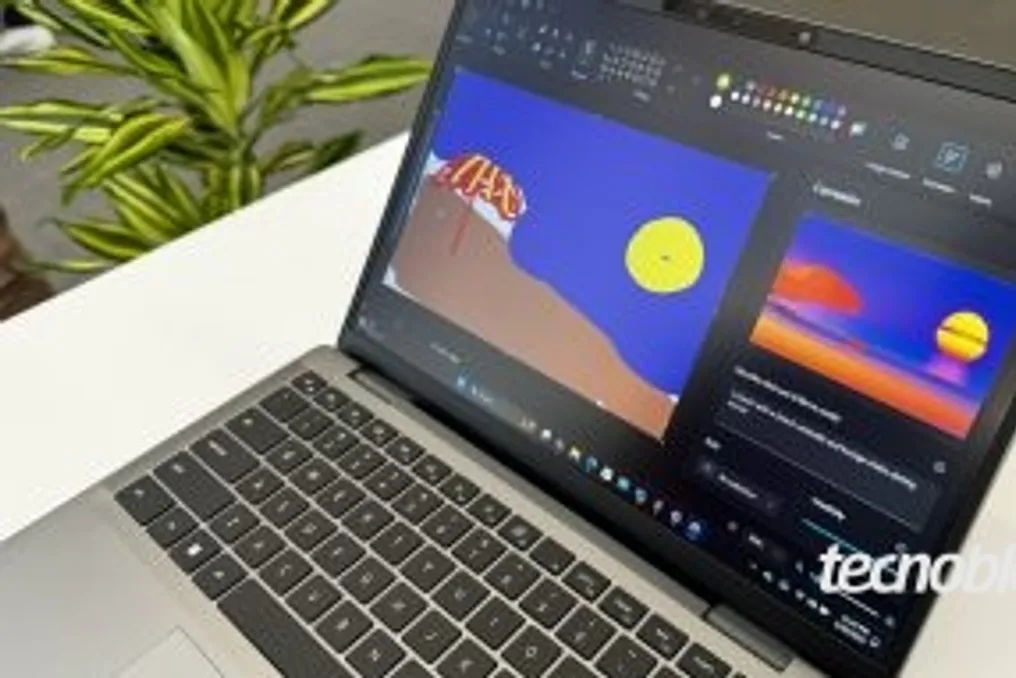
Despite being a seemingly harmless software, Microsoft Paint recently presented a serious vulnerability in the native image editing tool of Windows 11. This flaw allows for the remote execution of malicious code on the affected device.
The vulnerability was classified under the identifier CVE-2026-83844 and received a severity score of 8.1 according to the CVSS 3.1 scale. It is an 'Out-of-bounds Read' type error, which occurs when the software attempts to access a memory region that exceeds the established limits for a specific operation.
In the context of Paint, this flaw can be triggered by opening a malicious image file. This file induces the program to read data beyond the designated memory limits. Such an action can compromise operational structures or security mechanisms, allowing an attacker to inject and execute code using the privileges of the logged-in user.
The possible consequences of this attack are diverse, ranging from the theft of confidential information to the local execution of malicious software.
Microsoft has already made the fix for this vulnerability available in version 11.2609.401.0. However, there is an important detail: this update is not distributed through Windows Update, but rather through the Microsoft Store, which is often less proactive in updating applications.
Therefore, it is recommended to check the version of Paint installed on the computer. This can be done by opening the image editor, clicking the gear icon in the upper right corner, and observing the version displayed on the subsequent screen.
If the version is older than 11.2609.401.0 (such as, for example, 11.2605.81.0), the user should go to the Paint page on the Microsoft Store and select the update or installation option. Often, the update starts automatically when visiting the application page.
It is important to note that this issue specifically affects Paint for Windows 11; as of yet, there are no reports of similar flaws in Paint intended for Windows 10 or other operating system versions.